
10 Videos Showcasing the Remarkable Progress of Artificial Intelligence
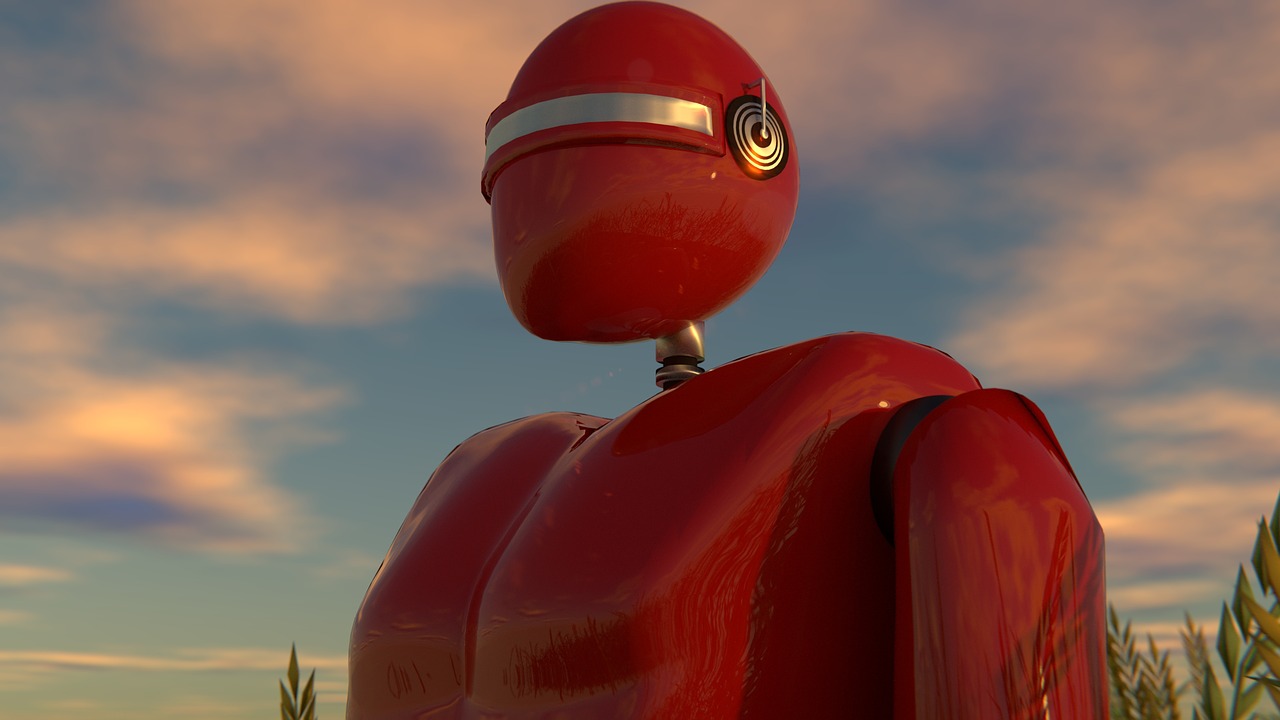
The field of artificial intelligence (AI) has seen astounding advancements in recent years, driven by breakthroughs in machine learning algorithms, increases in computational power and data availability, and growing investment from tech giants and governments. As AI systems become more sophisticated, they are taking on an ever-expanding range of tasks previously thought to be uniquely human – from engaging in open-ended conversations to composing music to discovering novel scientific insights.
To illustrate just how far AI has come, let‘s take an in-depth look at 10 impressive videos showcasing cutting-edge applications of machine intelligence, along with expert analysis of the key techniques and open challenges in each area.
1. Boston Dynamics Robots Demonstrating Superhuman Agility and Dexterity
Boston Dynamics has long been at the forefront of advanced robotics, and their latest AI-powered robots are able to perform physical feats with agility and dexterity that surpass what most humans are capable of. In one remarkable video, their humanoid robot Atlas can be seen running across uneven terrain, leaping over obstacles, and even performing backflips with precise control:
What enables Atlas to perform these dynamic movements is a sophisticated control system that uses deep reinforcement learning to optimize its actions in real-time based on data from its sensors. The robot learns through trial-and-error in simulations, iteratively improving its decision making by exploring different behaviors and receiving feedback on their outcomes (in the form of numerical "rewards"). This allows the robot to learn complex locomotion skills without needing to be explicitly programmed for each scenario.
While the movements of Atlas are incredibly impressive, they are still limited to relatively structured environments. One of the biggest open challenges is enabling robots to function autonomously in unfamiliar and unpredictable settings – but rapid progress is being made. A team at MIT recently developed a four-legged robot that was able to traverse rough forest terrain at a brisk walking pace using only onboard sensors and computers. As these robotic systems continue to improve, they could eventually be deployed for dangerous jobs like disaster response, as well as in homes to assist with chores and provide care.
2. AI Systems Defeating World Champions at Strategy Games
Another domain where AI has made remarkable strides is in strategy games, which have long been used as benchmarks for intelligence. In 2016, DeepMind‘s AlphaGo system shocked the world by defeating Lee Sedol, one of the world‘s best Go players, in a five-game series:
DeepMind AlphaGo vs. Lee Sedol Video
Go is an ancient Chinese board game that is enormously complex, with more possible positions than there are atoms in the universe. It was once thought to be a bastion of human strategic reasoning that would be impossible for machines to master. But by combining deep neural networks with reinforcement learning and Monte Carlo tree search, AlphaGo was able to discover novel strategies and outmaneuver even the most skilled human players.
Since then, AI systems have achieved superhuman performance at a variety of other strategy games, from chess to Starcraft to poker. Most recently, DeepMind‘s AlphaZero was able to teach itself to play Go, chess, and shogi at world-champion levels purely through self-play, without any human data or domain knowledge. By playing millions of games against itself, AlphaZero discovered the key principles of these games from scratch and developed its own creative strategies.
As AI systems get better at complex strategy games and long-term planning, they are likely to have an increasing impact in areas like business operations, logistics, scientific research, and policymaking. Just as human experts study the games of chess grandmasters to improve their own skills, we may learn a great deal from the novel approaches discovered by these superhuman game-playing AIs.
3. AI Generating Photorealistic Images and Artwork From Language
One of the most exciting recent developments in AI is the rise of systems that can generate stunningly realistic images from natural language descriptions. OpenAI‘s DALL-E 2 and Google‘s Imagen are able to take in a textual prompt and output incredibly detailed and coherent images that match the description:
DALL-E 2 Prompt to Image Examples
Under the hood, these systems use large neural networks that have been trained on vast datasets of images and their associated captions. The networks learn the relationship between visual concepts and the words used to describe them, building up a rich "understanding" of the world. Given a new textual prompt, the system can then generate novel images by sampling from the learned distribution of visual features that match the description.
What‘s remarkable is how these systems are able to compose different elements in semantically meaningful ways, creating images with high fidelity and attention to detail. For example, given the prompt "a cute corgi dog wearing a cowboy hat and red shirt, riding a skateboard in Times Square," DALL-E 2 is able to correctly combine the specified objects, attributes and relationships into a coherent scene.
As these text-to-image systems grow in sophistication, they could transform fields like graphic design, art, architecture, and film. Rather than needing to manually create assets from scratch, creators could quickly generate photorealistic imagery just by describing what they want. Marketers could A/B test designs for ads and products by iterating on the language prompts. And these systems could enable new assistive technologies for the visually impaired, automatically converting images to rich textual descriptions.
4. Socially-Intelligent AI Chatbots and Assistants
Another domain where AI is beginning to approach human-level performance is open-ended dialogue. Large language models like OpenAI‘s GPT-3 have been trained on huge swaths of online text data, allowing them to engage in remarkably coherent and knowledgeable conversations:
By learning the statistical patterns and dependencies of human language, these models are able to generate relevant and natural-sounding responses to a wide range of prompts – demonstrating understanding of context, nuance, and even humor and sarcasm. They can answer follow-up questions, admit when they‘re unsure or make mistakes, and even adopt different personas and conversation styles.
The development of socially-intelligent AI chatbots and virtual assistants could have a profound impact on numerous industries. In customer service, AI agents could handle a large volume of inquiries, providing instant and personalized support 24/7. In education, AI tutors could supplement human instruction, adapting to each student‘s level and learning style. And in healthcare, empathetic AI "therapists" could provide mental health support and help with behavior change.
However, there are important challenges to overcome, such as preventing these systems from generating biased, deceptive, or harmful outputs. Since they are trained on human-written data, they can parrot the flaws and prejudices in their source material. Techniques will be needed to constrain the models to be safe and beneficial, without unduly restricting their flexibility and open-ended nature.
5. Self-Driving Cars Operating in Complex Environments
Self-driving vehicles have made rapid progress in the past decade, with companies like Waymo, Cruise, and Tesla testing autonomous driving systems on public roads in multiple cities. These systems use AI to interpret data from an array of cameras, lidar sensors, GPS, and maps in order to navigate safely to their destination:
Waymo Self-Driving in San Francisco
At the core of an autonomous vehicle‘s AI is a perception system that can detect and classify objects in its environment – such as pedestrians, bicyclists, other vehicles, road signs, and unexpected obstacles. This is typically done using deep learning models called convolutional neural networks, which are trained on huge datasets of annotated images and videos. By learning visual features and patterns associated with each object class, these models are able to locate and identify relevant objects in real-time as the car is driving.
The AI also needs to predict how different agents in the environment will move over time, and plan its own trajectory accordingly. This involves reasoning about the goals and likely behaviors of pedestrians and other drivers, and weighing different possible actions in terms of safety, efficiency, and rider comfort. Techniques like reinforcement learning enable the driving system to learn from experience and iteratively improve its decision making.
While there has been significant progress, achieving fully autonomous driving in all conditions remains an immense challenge. The AI needs to handle an incredible diversity of situations – from unusual weather to reckless human drivers to road construction – and make split-second decisions with imperfect information. Even rare mistakes can have tragic consequences, so a very high bar for safety and robustness is needed.
As the technology matures, self-driving cars could eventually reshape cities and transportation systems. By reducing accidents and traffic congestion, and providing mobility to those unable to drive, AVs could dramatically improve road safety, sustainability, and accessibility. But realizing this potential will require not only further technical progress, but also regulatory frameworks and public trust.
Statistics and Key Takeaways
To quantify the rate of progress in these areas of AI, here are some key statistics and milestones:
-
As of 2022, Waymo‘s autonomous vehicles have driven over 20 million miles on public roads, across 25 U.S. cities. In 2020, Waymo launched the world‘s first fully driverless taxi service, operating over 100,000 rides without any human driver in the vehicle.
-
In a 2021 study, DeepMind researchers showed that their AlphaFold AI system could predict the 3D structure of proteins from their amino acid sequence with a median accuracy of 92.4% – comparable to experimental methods like X-ray crystallography. This is a significant breakthrough for structural biology and drug discovery.
-
A 2022 paper from Google Brain presented Minerva, a large language model fine-tuned on a dataset of 118GB of scientific papers. Minerva was able to correctly answer multiple-choice questions from science exams with 75% accuracy, compared to 35% for a previous state-of-the-art model, demonstrating rapid progress in AI systems‘ ability to acquire and reason with scientific knowledge.
-
The GPT-3 language model from OpenAI, trained on hundreds of billions of words, can generate human-like text in a variety of domains. In one study, GPT-3 was able to produce news articles that humans rated as more credible than real articles from major publications. This highlights the potential for AI to be used for disinformation, and the need for better detection methods.
-
A 2022 survey by McKinsey found that 50% of companies had adopted AI in at least one business function, up from 20% in 2017. The top use cases were in service operations, product development, and marketing and sales. However, many organizations still struggle with challenges around data quality, talent gaps, and scaling AI deployments.
Looking ahead, it‘s clear that AI will continue to advance rapidly and transform an ever-wider range of domains. As more and more tasks become automatable, the skill sets and job roles in demand will shift – increasing the need for workers who can collaborate with and complement AI systems. At the same time, as AI becomes more powerful and pervasive, it will be critical to ensure that it is developed and deployed in an ethical, safe, and responsible manner.
Doing so will require ongoing collaboration between AI researchers, domain experts, policymakers, and the broader public. By bringing together technical and social science perspectives, we can work to create AI systems that enhance rather than replace human capabilities, and that benefit society as a whole. With the right approach, AI could be an incredible tool for expanding the boundaries of knowledge, health, and human flourishing.


