
From Intern to Innovator: A Data Scientist‘s Journey at HP Inc
Introduction
In the fast-paced world of technology, data has become the new currency. As organizations seek to harness the power of their data to drive innovation and stay competitive, the role of the data scientist has become increasingly critical. Data scientists are the alchemists of the digital age, transforming raw data into valuable insights that can inform strategic decision-making and revolutionize entire industries.
One company that has fully embraced the potential of data science is HP Inc., a global leader in personal computing and printing solutions. With a team of talented data scientists working across various business units, HP is using advanced analytics and machine learning to optimize operations, personalize customer experiences, and develop groundbreaking new products and services.
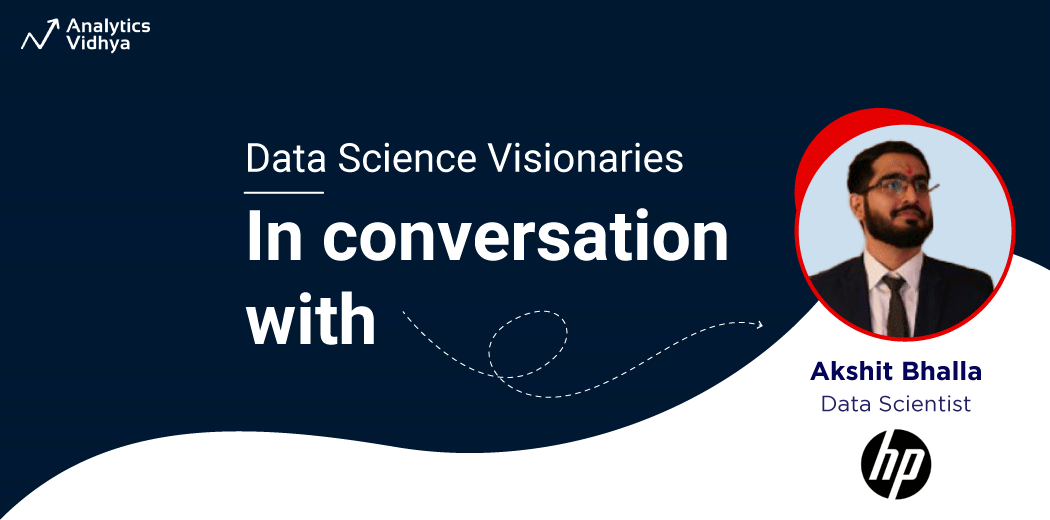
In this article, we‘ll dive deep into the world of data science at HP through the lens of one data scientist‘s remarkable journey. From her early days as an intern to her current role as a senior data scientist leading transformative projects, Priya Gupta‘s story showcases the exciting possibilities of a career in data science and the impact that one person can make within a supportive and innovative company culture.
The Educational Foundation
Priya‘s journey into data science began with a strong educational foundation. Growing up in India, she excelled in mathematics and computer science from a young age. Her talent and hard work earned her a spot at the prestigious Indian Institute of Technology (IIT) Delhi, where she pursued a Bachelor‘s degree in Computer Science and Engineering.
During her time at IIT Delhi, Priya was exposed to a wide range of topics in computer science, from algorithms and data structures to database systems and artificial intelligence. She also had the opportunity to work on several research projects with faculty members, which sparked her interest in data science and machine learning.
One project in particular stood out to Priya. Working with a professor who specialized in natural language processing, she helped develop a sentiment analysis model that could automatically detect the emotion expressed in social media posts. By training the model on a large dataset of tweets and using advanced techniques like word embeddings and recurrent neural networks, they were able to achieve state-of-the-art accuracy in identifying positive, negative, and neutral sentiment.
This experience showed Priya the incredible power of machine learning to extract insights from vast amounts of unstructured data. She was hooked, and knew that she wanted to pursue a career in data science.
The Internship Experience
After completing her Bachelor‘s degree, Priya was accepted into a Master‘s program in Computer Science at Stanford University. It was here that she had her first opportunity to apply her data science skills in a professional setting, through an internship at HP Labs.
HP Labs is the company‘s central research organization, responsible for driving innovation across HP‘s businesses. As an intern, Priya was assigned to a project focused on optimizing HP‘s supply chain using machine learning.
The supply chain is a complex system involving multiple stages, from raw material procurement to manufacturing to distribution. Each stage generates vast amounts of data, from supplier contracts and inventory levels to production schedules and shipping manifests. The challenge was to integrate and analyze this disparate data to identify inefficiencies and opportunities for optimization.
Priya and her team tackled this challenge by building a predictive model that could forecast demand for HP products based on historical sales data, market trends, and other external factors. By accurately predicting demand, they could help HP make more informed decisions about inventory management, production planning, and resource allocation.
To build the model, they used a technique called gradient boosting, which combines multiple weak prediction models into a strong ensemble model. They also employed feature engineering to extract relevant signals from the raw data, such as seasonality patterns and product lifecycles.
The results were impressive. By implementing the demand forecasting model, HP was able to reduce inventory costs by 20% while improving on-time delivery rates by 15%. For Priya, it was a powerful demonstration of the tangible impact that data science could have on a company‘s bottom line.
The Full-Time Role
After completing her Master‘s degree, Priya accepted a full-time position as a data scientist at HP. She was excited to take on more responsibility and ownership over projects, and to continue learning from the talented team around her.
One of her first projects was to develop a predictive maintenance model for HP printers. The goal was to use sensor data from the printers to predict when certain components were likely to fail, so that preventative maintenance could be scheduled before any downtime occurred.
To build the model, Priya and her team first had to tackle the challenge of working with large-scale, high-dimensional sensor data. They used techniques like principal component analysis and t-SNE to reduce the dimensionality of the data and identify the most informative features.
They then experimented with various machine learning algorithms, including random forests, support vector machines, and deep neural networks. Ultimately, they found that a convolutional neural network (CNN) architecture worked best for this task, as it was able to learn hierarchical patterns in the sensor data that were predictive of impending failures.
The impact of the predictive maintenance model was significant. By proactively servicing printers before failures occurred, HP was able to reduce unplanned downtime by 30% and lower maintenance costs by 25%. For customers, this meant less disruption and higher overall satisfaction with HP products.
Scaling Up with Big Data
As Priya took on more complex projects at HP, she increasingly had to grapple with the challenges of working with big data. Many of the datasets she was dealing with were too large to fit into memory on a single machine, and required distributed computing techniques to process efficiently.
To tackle these challenges, Priya leveraged HP‘s investment in big data infrastructure and tools. She became proficient in using technologies like Apache Hadoop and Spark to store and process data across clusters of machines. She also adopted best practices around data partitioning, parallel processing, and fault tolerance to ensure that her pipelines were scalable and robust.
One project that exemplified these challenges was an effort to build a recommendation system for HP‘s online store. The goal was to analyze customer browsing and purchase histories to provide personalized product recommendations that would drive incremental revenue.
The dataset for this project was massive, containing millions of customers and billions of web page views. To process this data efficiently, Priya and her team used Spark‘s distributed computing framework to parallelize the feature extraction and model training pipelines.
They also had to be thoughtful about how to architect the recommendation system for real-time performance. They used techniques like pre-computing item similarity scores and building inverted indices to enable fast lookups of relevant products at query time.
The recommendation system was a big success, driving a 10% increase in average order value and a 5% increase in conversion rate. It also laid the foundation for more sophisticated personalization capabilities in the future, such as using computer vision to recommend compatible ink cartridges based on photos of customer printers.
Driving Business Impact
As Priya grew in her role at HP, she became increasingly focused on driving measurable business impact through her work. She sought out projects that aligned with HP‘s strategic priorities and collaborated closely with cross-functional teams to ensure that her insights were translated into action.
One area where she made a significant impact was in customer support. HP‘s customer support organization handles millions of inquiries each year across various channels, from phone and email to chat and social media. Priya saw an opportunity to use data science to improve the efficiency and effectiveness of these interactions.
She started by building a natural language processing model to automatically classify customer inquiries into categories like product issues, billing questions, and service requests. By routing inquiries to the right support agents based on their expertise, HP was able to reduce average handle time by 20% and improve first-contact resolution rates by 15%.
Priya also developed a sentiment analysis model to detect the emotional tone of customer interactions and flag potential issues for proactive outreach. By identifying and addressing customer frustrations early, HP was able to improve overall customer satisfaction scores by 10%.
These projects demonstrated the power of data science to not only optimize internal operations, but also to directly impact the customer experience. They also showcased Priya‘s ability to collaborate effectively with business stakeholders and communicate complex insights in a way that drove action and results.
The Future of Data Science
Looking ahead, Priya is excited about the future of data science and the potential for emerging techniques like meta-learning to transform industries. Meta-learning, also known as "learning to learn," is a subfield of machine learning that focuses on developing algorithms that can automatically adapt to new tasks and domains.
One promising application of meta-learning is in the field of healthcare. By training models on diverse sets of patient data across different hospitals and clinical settings, meta-learning algorithms could potentially learn to quickly adapt to new patient populations and disease states. This could enable more personalized and effective treatments, as well as faster development of new drugs and therapies.
Another area where meta-learning could have a big impact is in autonomous systems, such as self-driving cars and drones. By learning to adapt to new environments and situations on the fly, these systems could become safer and more reliable, paving the way for widespread adoption.
As a data scientist at HP, Priya is well-positioned to explore these exciting frontiers. HP invests heavily in research and development, with a focus on leveraging AI and machine learning to drive innovation across its businesses. The company also places a strong emphasis on continuous learning and skill development for its employees, with programs like tuition reimbursement and online course offerings.
For Priya, this supportive and forward-thinking culture has been critical to her growth and success as a data scientist. She has had the opportunity to work on cutting-edge projects, collaborate with talented colleagues, and see the tangible impact of her work on HP‘s business and customers.
Advice for Aspiring Data Scientists
For those looking to follow in Priya‘s footsteps and build a career in data science, she offers a few key pieces of advice.
First, focus on building a strong foundation in mathematics, statistics, and computer science. These are the core disciplines that underpin data science, and a solid grasp of concepts like linear algebra, probability theory, and algorithms will serve you well throughout your career.
Second, seek out opportunities to work with real-world data and tackle meaningful problems. Whether through internships, academic research projects, or online competitions, hands-on experience is essential for developing practical skills and showcasing your ability to deliver results.
Third, don‘t neglect the importance of communication and collaboration skills. As a data scientist, you will need to be able to explain complex technical concepts to non-technical stakeholders and work effectively with cross-functional teams. Practice presenting your findings in clear and compelling ways, and seek out feedback and mentorship from experienced colleagues.
Finally, embrace a mindset of continuous learning and growth. The field of data science is evolving rapidly, with new techniques and tools emerging all the time. To stay competitive and effective, you will need to be proactive about acquiring new skills and knowledge throughout your career.
Conclusion
Priya Gupta‘s journey from intern to innovator at HP is a testament to the transformative power of data science in today‘s business world. Through a combination of technical expertise, business acumen, and creative problem-solving, she has been able to drive measurable impact and help shape the future of one of the world‘s leading technology companies.
Her story also highlights the importance of education, practical experience, and continuous learning in building a successful career in data science. With the right combination of skills, mindset, and opportunity, anyone can follow in Priya‘s footsteps and make their mark in this exciting and dynamic field.
As the volume and complexity of data continues to grow, the role of the data scientist will only become more critical. Those who can harness the power of data to drive insights, innovation, and impact will be the leaders and change-makers of tomorrow. For aspiring data scientists, there has never been a more exciting time to enter the field and start making a difference.


