A Comparative Analysis of Community Detection Algorithms for Network Analysis
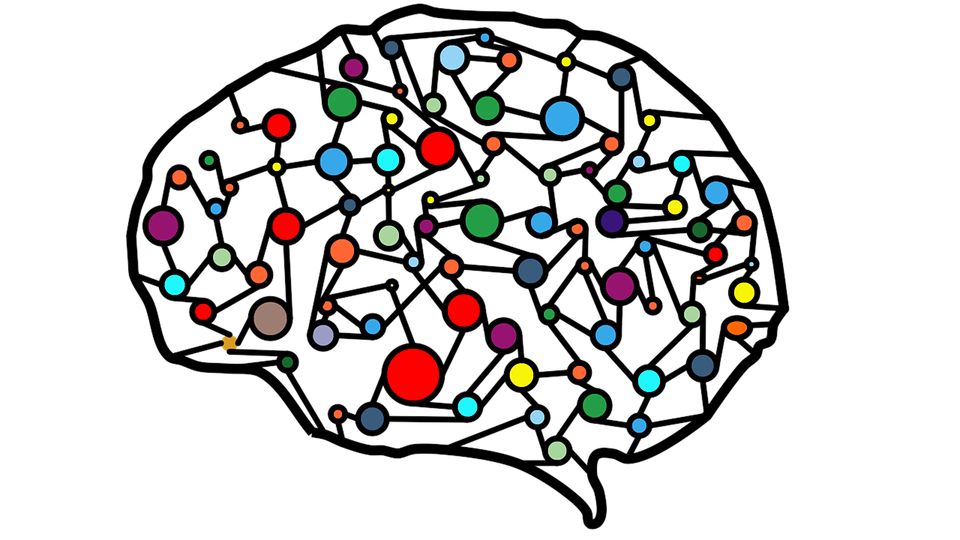
Networks are all around us – from the intricate wiring of the human brain, to the complex web of social connections we form with others, to the technological systems that power modern infrastructure and the internet. Being able to understand the structure and dynamics of these networks yields powerful insights across scientific domains. This is where community detection comes in.
Community detection is the process of identifying groups of densely connected nodes in a network that are more closely linked to each other than the rest of the network. Also known as graph clustering, it allows us to discover the underlying modular structure of a network. The implications are immense – community detection lets us find clusters of closely interacting proteins, partition power grids into coherent subnetworks, identify tightly-knit social cliques, and more.
At its core, community detection relies on the intuitive notion that a community should have more internal than external connections. While this concept is easy to grasp, the challenge lies in translating it into a robust computational problem. A variety of community detection algorithms have been developed, each with its own mathematical formulation, assumptions, and heuristics.
In this article, we‘ll embark on a deep dive into 8 of the most widely used community detection algorithms. We‘ll explore their inner workings, compare their performance on different benchmark networks, and discover how they can be leveraged to reveal hidden structures in complex networks. Let‘s begin our journey into the fascinating world of community detection!
The Landscape of Community Detection Algorithms
We‘ll start by taking a bird‘s eye view of the community detection algorithm landscape. While there are dozens of algorithms out there, we‘ll focus on 8 of the most prominent ones:
-
Girvan-Newman (GN) Algorithm: This pioneering algorithm works by progressively removing edges based on their "betweenness" scores. It was one of the first to show the effectiveness of modularity optimization for community detection.
-
Louvain Algorithm: This popular algorithm uses a greedy optimization method to maximize modularity. It works in two phases – first building small communities by optimizing modularity locally, and then iteratively aggregating nodes to build larger communities.
-
Infomap Algorithm: Rooted in information theory, Infomap uses the concept of minimal information flow to identify communities. It optimizes a novel objective function called the Map Equation to compress the description length of a random walk on the network.
-
Label Propagation Algorithm (LPA): This elegant algorithm works by propagating labels through the network. Nodes adopt the label that most of their neighbors have, with ties broken randomly. Densely connected groups of nodes quickly reach a consensus on a unique label, identifying communities.
-
Walktrap Algorithm: This approach is based on the intuition that random walks tend to get trapped in dense parts of a network corresponding to communities. It defines a distance measure between nodes based on their probability of reaching each other via random walks.
-
Spinglass Algorithm: Inspired by a physics model of a disordered magnet, the Spinglass method uses a Hamiltonian formulation to partition the network into communities. Neighboring nodes try to align their spins, while distant nodes try to have their spins point in opposite directions.
-
Fast Greedy Algorithm: This algorithm takes a greedy optimization approach to modularity maximization. It starts with each node in its own community and iteratively merges the pair of communities that result in the largest increase in modularity.
-
Leading Eigenvector Algorithm: This spectral approach works by computing the leading eigenvector of the modularity matrix. The algorithm uses linear algebra and matrix calculations to optimize the modularity measure.
With this high-level overview in mind, let‘s now dive into the technical details of how these algorithms work their magic. We‘ll explore the steps involved, the optimization objectives, and the assumptions made by each method.
Girvan-Newman (GN) Algorithm
The GN algorithm was one of the landmark methods that kickstarted the field of community detection. It works by iteratively removing edges from the network based on their betweenness centrality scores. The betweenness of an edge measures the number of shortest paths between pairs of nodes that run through that edge. Edges connecting different communities tend to have high betweenness values.
The key steps of the GN algorithm are:
- Calculate the betweenness score for all edges in the network
- Remove the edge with the highest betweenness
- Recalculate betweenness for all remaining edges
- Repeat steps 2-3 until no edges remain
This divisive approach partitions the network into smaller and smaller components, corresponding to the communities. The optimal split is often determined by the iteration that produces the maximum modularity value – a quality measure that quantifies the strength of the community structure.
While elegant in its simplicity, the GN algorithm has a high computational complexity, making it impractical for large networks. It also tends to produce a large number of small communities. Nevertheless, the GN algorithm was highly influential in shaping subsequent approaches based on modularity optimization.
Louvain Algorithm
The Louvain algorithm has rapidly risen to become one of the most popular methods for community detection, owing to its speed and ability to handle large networks. It takes a greedy, bottom-up approach to modularity optimization.
The Louvain algorithm consists of two phases that are repeated iteratively:
-
Modularity Optimization Phase: Each node starts in its own community. For each node, the algorithm considers moving it to the community of one of its neighbors, choosing the move that results in the largest modularity increase. This is repeated until no individual move can improve modularity.
-
Community Aggregation Phase: The algorithm builds a new network where each node represents a community found in the first phase. The weights of the edges between the new nodes are the sum of the edge weights between the corresponding communities. The first phase is then reapplied to this new network.
These two phases are repeated until the modularity cannot be increased further. The Louvain algorithm‘s key advantage is its ability to uncover hierarchical community structures at different scales, as each pass produces communities at a higher level of granularity.
Infomap Algorithm
The Infomap algorithm takes a radically different approach, leveraging concepts from information theory. It views community detection as a compression problem, seeking to find a partition that allows for a concise description of information flow on the network.
The key idea is to model the flow of information as a random walk on the network, where a walker jumps from node to node along the edges. The algorithm aims to find a partition that minimizes the description length of this random walk, as measured by the Map Equation.
The Map Equation consists of two terms:
- The entropy of movement between communities
- The entropy of movement within communities
By minimizing the Map Equation over all possible partitions, Infomap identifies communities as regions of the network where the random walker tends to stay for a long time before jumping to a different region.
Infomap uses a greedy search algorithm to optimize the Map Equation. It starts with each node in its own module and iteratively merges modules to minimize the description length. The algorithm employs various heuristics to escape local optima and to refine the community structure.
One of Infomap‘s strengths is its ability to detect communities in directed and weighted networks, where the direction and strength of the edges contain important information about the network‘s structure.
Benchmarking Community Detection Algorithms
Now that we‘ve seen how some of the leading algorithms work, let‘s put them to the test! We‘ll compare their performance on three types of benchmark networks:
-
Artificial Networks: We‘ll use the Lancichinetti-Fortunato-Radicchi (LFR) benchmark to generate artificial networks with known community structures. By varying parameters like the mixing parameter μ, which controls the fraction of edges between communities, we can test the algorithms‘ ability to recover planted communities under different conditions.
-
Real-World Networks: We‘ll apply the algorithms to classic real-world networks like Zachary‘s Karate Club, a social network of 34 members of a university karate club. This network is often used as a testbed for community detection algorithms due to its known two-community structure.
-
Random Networks: As a control, we‘ll also test the algorithms on Erdos-Renyi random graphs. These graphs have no inherent community structure, so a good algorithm should not identify many meaningful communities in them.
For each algorithm and benchmark network, we‘ll assess two key metrics:
-
Modularity: This measures the quality of the detected community structure. It compares the fraction of edges within communities to the expected fraction if the edges were distributed randomly. Higher modularity values indicate stronger community structure.
-
Normalized Mutual Information (NMI): For the artificial LFR benchmarks where the true community structure is known, we can measure how closely the detected communities match the ground truth using NMI. An NMI of 1 indicates a perfect match, while 0 means no correlation.
Let‘s see how the algorithms stack up:
LFR Benchmark Results:
- Louvain, Infomap, and Label Propagation Algorithm (LPA) performed the best, achieving high NMI scores (>0.9) even for networks with high mixing parameters. They were able to accurately recover the planted communities.
- The Girvan-Newman (GN) and Walktrap algorithms struggled with high-mixing parameter networks, with their NMI scores dropping significantly.
Zachary‘s Karate Club Results:
- All algorithms were able to detect the two main communities in the network, achieving modularities around 0.4.
- Infomap and LPA found additional sub-communities within the two main groups, resulting in higher modularity scores.
Erdos-Renyi Random Graph Results:
- As expected, the algorithms did not find strong community structures in the random graphs, with modularity scores close to 0.
- Louvain, Infomap, and LPA correctly identified most nodes as belonging to a single giant community.
- GN and Walktrap tended to overfit, identifying more communities than truly present.
These benchmarks highlight the strengths and limitations of different algorithms. Louvain, Infomap, and LPA emerge as top performers, demonstrating robustness to noise and the ability to detect communities at multiple scales. However, the choice of algorithm ultimately depends on the specific characteristics of the network being analyzed and the desired granularity of the community structure.
Conclusion
Community detection is a powerful tool in the network analysis arsenal, allowing us to uncover hidden structures and functionalities in complex systems. By partitioning networks into densely connected groups of nodes, it enables us to gain insights at a mesoscopic level, between the microscopic level of individual nodes and the macroscopic level of the entire network.
In this article, we explored 8 of the most prominent community detection algorithms, delving into their diverse mechanisms and theoretical underpinnings. We saw how they approach the task of community detection from different angles – from divisive removal of high-betweenness edges in Girvan-Newman, to bottom-up greedy modularity optimization in Louvain, to information-theoretic principles in Infomap.
Through benchmarks on artificial, real-world, and random networks, we observed the strengths and weaknesses of each algorithm. Louvain, Infomap, and LPA emerged as top performers, showcasing their ability to detect meaningful communities across a range of network structures.
However, it‘s important to remember that no single algorithm is a silver bullet. The choice of algorithm should be guided by the properties of the network at hand and the desired resolution of the community structure. It‘s often beneficial to apply multiple algorithms and compare their results to get a robust picture of the network‘s modular organization.
As the field of network science continues to evolve, so too will the landscape of community detection algorithms. With the explosion of large-scale network data from domains like social media, biology, and technology, there is a growing need for scalable algorithms that can handle billions of nodes and edges. Exciting avenues for future research include the detection of overlapping and dynamic communities, as well as the incorporation of node and edge attributes into the community detection process.
Armed with an understanding of these powerful techniques, we can unravel the complex tapestry of interactions in the networks that surround us, from uncovering functional modules in biological systems to identifying social communities in online platforms. The insights gleaned from community detection will continue to drive innovations across scientific disciplines, demonstrating the immense power of network thinking in making sense of our intricately connected world.