A Comprehensive Beginner‘s Guide to Data Sharding: Horizontal Scaling for Massive Data
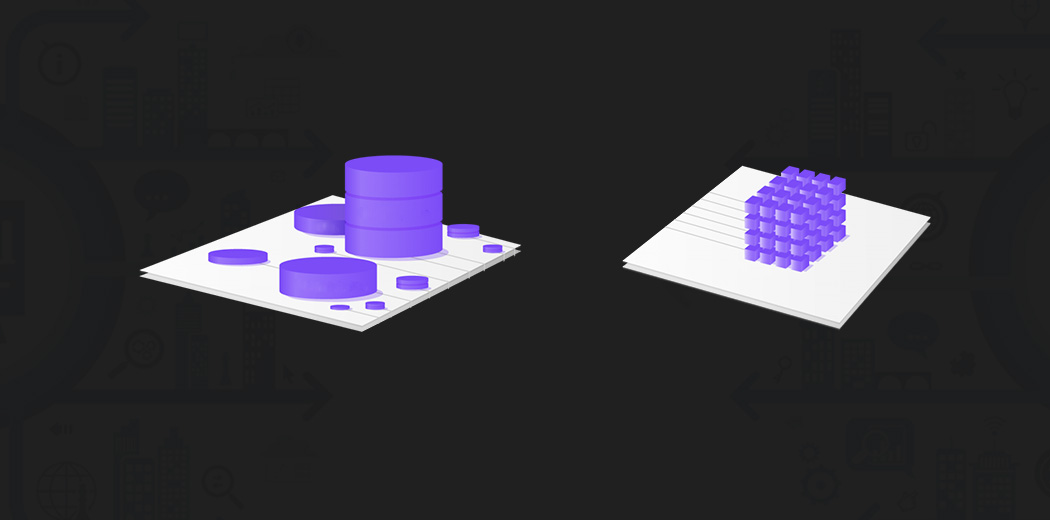
In the era of big data, the volume of information being generated and stored is growing at an unprecedented rate. According to a report by IDC, the amount of data created globally is expected to grow to 175 zettabytes by 2025, more than tripling from 2020 levels. For many applications, this presents a challenge: how do you store and query such massive datasets efficiently?
The answer lies in data sharding, a technique for horizontally partitioning data across multiple databases. In this comprehensive guide, we‘ll dive deep into the world of sharding, exploring its benefits, challenges, and best practices. Whether you‘re a data engineer, software developer, or just curious about scaling databases, this guide will provide you with a solid foundation. Let‘s jump in!
Understanding Data Sharding
At its core, data sharding is a divide-and-conquer strategy for dealing with data that‘s too large to be efficiently handled by a single database server. The idea is to split the data into smaller, more manageable pieces called shards, each of which lives on a separate server.
To illustrate, imagine you run a social media application with hundreds of millions of users. Storing all user data on a single database server would quickly become a bottleneck as the user base grows. Instead, you could shard the data by user ID, assigning each shard a range of IDs (e.g., shard 1 contains users 1-1,000,000, shard 2 contains users 1,000,001-2,000,000, etc.).
When a user logs in, the application looks at their user ID, determines which shard contains their data, and directs the query to that specific server. This way, each shard is responsible for a fraction of the total data and can respond to queries much faster than a monolithic database.
Sharding Terminology
Before diving deeper, let‘s define some key sharding terms:
- Shard: A horizontal partition of data in a database, with each shard stored on a separate server
- Sharding key: The column(s) used to determine how data is distributed across shards, e.g., user ID, order ID, etc.
- Horizontal sharding: Splitting data by rows into different tables with the same schema, e.g., users 1-100 in one table, users 101-200 in another
- Vertical sharding: Splitting data by columns into tables with different schemas but the same rows, e.g., user profile data in one table, user activity in another

Image Source: Scalegrid
With these basics in mind, let‘s explore why you might want to shard your database.
The Need for Sharding
The primary reason to shard a database is to achieve horizontal scalability – the ability to grow your database by adding more servers rather than upgrading to a larger, more expensive machine. This is especially important in the big data age, where datasets can quickly outgrow the capacity of a single server.
Consider these statistics:
- Facebook stores over 300 PB of Hive data, distributed across thousands of servers
- Netflix streams approximately 250 million hours of video per day, requiring around 10 PB of storage
- Twitter processes over 500 million tweets per day, each of which must be stored and indexed for search
At this scale, sharding is not just an optimization but a necessity. Without the ability to horizontally scale databases, many of the services we rely on today would grind to a halt under their own weight.
But scalability isn‘t the only reason to shard. Sharding can also improve:
- Query performance: With fewer rows per table, queries can execute faster
- Write throughput: Writes can be parallelized across shards
- Availability: If one shard goes down, others remain operational
- Geographic distribution: Shards can be located closer to end-users for lower latency
Of course, these benefits come with tradeoffs, which we‘ll explore later. First, let‘s look at some common sharding architectures.
Sharding Architectures
There are several ways to distribute data across shards, each with its own pros and cons. The three most common architectures are key-based, range-based, and directory-based sharding.
Key-Based Sharding
Key-based (or hash-based) sharding distributes data based on a hash of the shard key. For example, suppose we‘re sharding a user database by user ID. We apply a hash function to each ID and mod by the number of shards to determine which shard the data belongs to.
shard_id = hash(user_id) % num_shardsThis approach aims to evenly distribute data across shards, as the hash function should randomize the distribution. However, it can make range queries less efficient, as adjacent keys may not be on the same shard.
Key-based sharding is used by many distributed databases, such as Cassandra and Riak. For example, Cassandra‘s partitioner hashes the partition key to determine the node responsible for that data.
Range-Based Sharding
Range-based sharding divides data based on ranges of the shard key. Each shard is assigned a range, like shard 1 contains IDs 1-10000, shard 2 has IDs 10001-20000, etc.
This approach makes range queries very efficient – if you want data for a specific range of keys, you know exactly which shards to query. However, it can lead to hot spots if certain ranges receive significantly more traffic than others.
Range-based sharding is commonly used in MongoDB, which allows you to specify shard key ranges. This makes it well-suited for applications that frequently query data by date or time range.
Directory-Based Sharding
Directory-based sharding maintains a lookup table that maps shard keys to their corresponding shard. When data needs to be written or read, the application first consults the directory to determine which shard to access.
This approach offers the most flexibility in terms of data placement and rebalancing. The directory can be updated dynamically to move data between shards without downtime. The tradeoff is higher latency, as each operation requires a directory lookup.
Directory-based sharding is used by Google‘s Spanner database, which automatically moves data between Paxos groups to balance load and storage.
Benefits of Sharding
When implemented properly, sharding can bring significant benefits to your database architecture:
-
Horizontal scalability: Sharding allows you to scale your database to massive sizes by adding more commodity servers, rather than relying on a single expensive machine.
-
Improved performance: By distributing data and queries across multiple machines, sharding can greatly improve query response times and overall throughput. Netflix reports being able to scale to over 1 million writes per second with their sharded Cassandra clusters.
-
Better availability: With sharding, the failure of a single machine does not bring down the entire database. Other shards can continue serving requests while the failed shard is recovered.
-
Reduced costs: Sharding allows you to use smaller, less expensive machines rather than scaling up to a single powerful server. Foursquare was able to reduce their hosting costs by 80% by moving from a sharded MongoDB cluster to Postgres on AWS.
-
Geographic distribution: Shards can be located closer to the users accessing that data, reducing latency and improving the user experience. Google‘s Spanner automatically moves data between datacenters based on usage patterns and regulatory requirements.
However, realizing these benefits requires careful planning and execution. Sharding is a complex undertaking with many potential pitfalls.
Challenges of Sharding
While sharding offers compelling advantages, it‘s not a silver bullet. Sharding introduces significant complexity to your database architecture, and there are several challenges to be aware of:
-
Increased complexity: Sharding requires changes to your application to be aware of how data is distributed. Queries and writes need to be routed to the correct shard, and cross-shard operations like joins become more difficult.
-
Data distribution skew: If the shard key is not chosen carefully, some shards may receive a disproportionate amount of data or traffic, leading to hot spots and defeating the purpose of sharding.
-
Harder to ensure consistency: With data spread across multiple machines, ensuring strong consistency becomes more challenging. Many sharded databases opt for eventual consistency to maintain availability and partition tolerance (per the CAP theorem).
-
Difficulty scaling down: Once a database has been sharded, it can be very difficult to revert back to a unsharded architecture. Careful capacity planning is needed to avoid over-provisioning.
-
Operational complexity: Managing a sharded database requires a higher level of operational expertise. Tasks like schema changes, data migrations, and backups need to be carefully coordinated across all shards.
Given these challenges, it‘s important to exhaust other scaling options before resorting to sharding. Techniques like caching, read replicas, and vertical scaling can often alleviate growing pains without the complexity of sharding.
When to Shard
So how do you know when it‘s the right time to shard your database? Here are some signs that sharding may be necessary:
-
Nearing storage limits: If you‘re consistently running out of disk space even after upgrading to larger machines, sharding can provide a path to virtually unlimited storage capacity.
-
Declining performance: If query response times are increasing and throughput is declining despite optimizations, spreading the load across shards can help.
-
High availability requirements: If your application requires very high uptime and can‘t tolerate the downtime of a single database server, sharding can improve availability by distributing risk.
-
Geo-distributed access patterns: If you have users accessing your application from different geographic regions, locating shards closer to them can improve latency.
Before taking the plunge into sharding, it‘s essential to have a deep understanding of your data model, access patterns, and growth projections. Sharding is not a decision to be made lightly.
Monitoring a Sharded Database
Once you‘ve made the decision to shard, it‘s crucial to have proper monitoring in place to ensure the health and performance of your database. Some key metrics to watch:
- Shard distribution: Monitor the distribution of data and queries across shards to identify hot spots or imbalances.
- Query performance: Track average query response times and latency to ensure they remain within acceptable levels.
- Disk usage: Monitor the disk space used by each shard and the rate of growth to plan for capacity.
- CPU and memory usage: Keep an eye on the resource utilization of each shard to avoid bottlenecks.
- Replication lag: If using asynchronous replication between shards, monitor the replication lag to ensure data consistency.
Tools like Prometheus, Grafana, and Datadog can help you collect, visualize, and alert on these metrics.
Sharding and AI/ML Workloads
As AI and machine learning become increasingly integral to modern applications, it‘s worth considering the implications of sharding for these workloads.
Sharding can be both a blessing and a curse for AI/ML. On one hand, the ability to horizontally scale storage and processing power is crucial for training large models on massive datasets. Sharding allows you to distribute the training data and parallelize the computation across multiple machines.
However, sharding can also introduce challenges for AI/ML workloads:
- Data locality: ML models often need to access large swaths of data at once for training, which can be inefficient if the data is spread across many shards.
- Inference latency: For real-time inference, the latency introduced by querying multiple shards can be problematic.
- Consistency: ML models often assume that the data they‘re trained on is consistent and representative. If data is inconsistently distributed across shards, it can lead to skewed models.
To address these challenges, many organizations are turning to specialized systems for distributed ML training and inference. Tools like Horovod, Ray, and Dask are designed to efficiently parallelize ML workloads across clusters of machines.
The Future of Sharding
As data continues to grow at an accelerating pace, the need for effective sharding solutions will only become more pressing. We can expect to see continued innovation in this space, both from databases vendors and the open-source community.
One trend I see is the move towards automated sharding solutions. As the complexity of managing sharded databases grows, there will be increasing demand for databases that can handle the sharding process transparently, without the need for manual intervention.
We‘re already seeing this with managed database services like MongoDB Atlas, Amazon Aurora, and Google Cloud Spanner. These services offer the benefits of sharding without the operational overhead, automatically distributing data and queries across nodes.
Another trend is the convergence of transactional and analytical workloads in a single database. Traditionally, these workloads have been siloed into separate systems (OLTP and OLAP), but newer databases like Rockset and SingleStore are blurring these lines. By combining row-based and columnar storage in a single, sharded database, they enable real-time analytics on operational data.
As an AI/ML expert, I‘m particularly excited about the potential for ML-driven database automation. I can envision a future where databases use machine learning to automatically optimize their sharding strategy based on real-time workload patterns. By continuously learning and adapting, these databases could provide optimal performance and resource utilization without human intervention.
Conclusion
Sharding is a powerful technique for scaling databases to handle massive amounts of data, but it‘s also a complex undertaking with significant challenges. As a data engineer, it‘s crucial to weigh the tradeoffs carefully and exhaust other options before diving into sharding.
If you do decide to shard, choose your sharding key and architecture carefully based on your data model and access patterns. Implement robust monitoring to track the health and performance of your sharded database, and be prepared to adjust your strategy as your needs evolve.
Looking ahead, I believe the future of sharding lies in increased automation and intelligent optimization driven by machine learning. As the volume and velocity of data continue to explode, databases that can adapt automatically to changing workloads will be best positioned to meet the needs of modern applications.
Sharding is a complex topic, but I hope this guide has provided you with a solid foundation to begin your journey. For further reading, I recommend the following resources:
- Designing Data-Intensive Applications by Martin Kleppmann
- MongoDB Sharding Guide
- Sharding Pinterest: How we scaled our MySQL fleet
Remember, sharding is just one tool in the database scaling toolbox. The most successful data architectures are those that combine multiple techniques in a way that best fits the specific needs of the application. With a solid understanding of the underlying principles, you‘ll be well-equipped to design and scale databases that can handle the data demands of today and tomorrow.