A Comprehensive MLOps Learning Path: Your 2024 Roadmap
Introduction
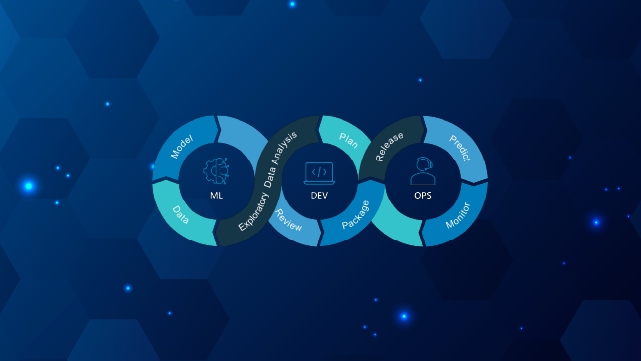
MLOps, or Machine Learning Operations, is a rapidly growing field that combines the principles of DevOps with the unique challenges of deploying and maintaining machine learning models in production environments. As more organizations adopt AI and ML to drive business value, the demand for skilled MLOps practitioners is skyrocketing. In fact, the global MLOps market is projected to reach $6.3 billion by 2024, growing at a CAGR of 43.7% from 2019 to 2024 according to MarketsandMarkets.
If you‘re looking to break into this exciting field or level up your existing MLOps skills, you‘ve come to the right place. In this article, we‘ll outline a comprehensive MLOps learning path for 2024 and beyond. Whether you‘re a data scientist, software engineer, or IT professional, this step-by-step roadmap will guide you from foundational skills to advanced specialization. Let‘s dive in!
Foundational Skills (3-6 months)
Before embarking on your MLOps journey, it‘s crucial to build a strong foundation in several key areas:
Programming Fundamentals
Python is the de facto language for machine learning, so it‘s essential to develop proficiency in Python programming. You should also familiarize yourself with version control using Git, as it‘s a critical tool for collaborating on ML projects and tracking code changes.
Machine Learning Basics
To effectively deploy and manage ML models, you need a solid understanding of core ML concepts and algorithms. This includes supervised and unsupervised learning, evaluation metrics, feature engineering, and experiment tracking using tools like MLflow or Weights & Biases.
Data Engineering Essentials
MLOps often involves working with large, complex datasets, so data engineering skills are a must. You should be comfortable with SQL for querying relational databases, as well as building data pipelines and ETL (extract, transform, load) workflows using tools like Apache Airflow or AWS Glue.
DevOps Concepts
MLOps builds upon the principles of DevOps, so it‘s important to grasp key DevOps practices such as continuous integration and continuous deployment (CI/CD), infrastructure as code (IaC), and monitoring. Familiarize yourself with tools like Jenkins, Terraform, and Prometheus.
Cloud Computing Basics
Most MLOps workloads run in the cloud, so you‘ll need a basic understanding of at least one major cloud platform such as Amazon Web Services (AWS), Microsoft Azure, or Google Cloud Platform (GCP). Focus on core services like virtual machines, storage, and identity and access management (IAM).
Intermediate MLOps (6-12 months)
With a strong foundation in place, you can move on to more advanced MLOps concepts and tools:
Advanced Programming
Dive deeper into Python programming, with a focus on testing (pytest), logging, and building APIs using frameworks like FastAPI or Flask. You should also explore containerization using Docker, as it‘s a key technology for packaging and deploying ML models.
ML Frameworks and Tools
Gain hands-on experience with popular ML frameworks such as scikit-learn, TensorFlow, and PyTorch. You should also familiarize yourself with MLOps-specific tools like Kubeflow for building end-to-end ML pipelines on Kubernetes.
Model Management
Learn how to effectively manage the entire lifecycle of ML models, from training to deployment to monitoring. This includes working with model registries to track model versions, capturing metadata and lineage, and leveraging feature stores for consistent feature engineering.
Deployment Patterns
Understand the various patterns for deploying ML models, such as batch inference, streaming/real-time inference, serverless deployments, and Kubernetes-based deployments. Practice implementing these patterns using tools like Apache Spark, AWS Lambda, and Kubeflow.
ML Monitoring
Once models are deployed, it‘s critical to monitor their performance and detect issues like data drift or model decay. Familiarize yourself with ML-specific monitoring tools and techniques, such as tracking statistical distances, setting performance thresholds, and implementing model explainability.
AutoML and HPO
Explore techniques for automating the ML workflow, such as automated machine learning (AutoML) for model selection and hyperparameter optimization (HPO) for tuning model performance. Experiment with tools like Google Cloud AutoML or libraries like Optuna.
Advanced and Specialized Skills (12+ months)
As you gain experience with MLOps, you may want to dive into more advanced and specialized topics:
Scalable ML Architectures
Learn how to design and implement ML architectures that can scale to handle massive datasets and complex models. This includes techniques like distributed training, federated learning, and GPU acceleration using tools like Horovod or NVIDIA Triton.
Advanced Deployment
Explore advanced deployment scenarios such as multi-cloud and hybrid deployments, as well as deploying models to resource-constrained edge devices. Gain experience with tools like Kubeflow Pipelines for portable ML workflows and NVIDIA DeepStream for optimized edge inference.
ML Security
As ML models are increasingly used in high-stakes applications, security becomes paramount. Dive into topics like defending against adversarial attacks, preserving data privacy, and encrypting models and data in transit and at rest. Tools like IBM Adversarial Robustness Toolbox can help.
Domain-Specific Applications
Specialize in MLOps for specific domains such as natural language processing (NLP), computer vision (CV), time series forecasting, or graph machine learning. Each domain has its own unique challenges and tooling, so it‘s valuable to develop deep expertise.
Emerging Techniques
Stay on the cutting edge of MLOps by exploring emerging techniques and use cases. For example, you might dive into MLOps for deep learning, reinforcement learning, or AI safety and ethics. Keep an eye out for new tools and best practices from both academia and industry.
Tips for Success
As you progress through your MLOps learning journey, here are some tips to maximize your success:
-
Build a strong portfolio of hands-on projects that demonstrate your MLOps skills and experience. Open-source your work on GitHub to show potential employers.
-
Pursue certifications from major cloud providers (e.g. AWS Certified Machine Learning) and popular tool vendors to validate your skills and stand out from the competition.
-
Engage with the global MLOps community by attending virtual events, participating in online forums like Reddit‘s r/MLOps, and contributing to open source projects. Networking is key!
-
Develop cross-functional skills to collaborate effectively with data scientists, software engineers, product managers, and other stakeholders. Seek out opportunities to work on diverse teams.
-
Continuously update your skills to keep pace with the rapid evolution of MLOps tools and best practices. Set aside dedicated time for learning and experimentation.
Conclusion
We‘ve covered a lot of ground in this comprehensive MLOps learning path for 2024 and beyond. To recap, the key components are:
- Building a strong foundation in programming, machine learning, data engineering, DevOps, and cloud computing
- Mastering intermediate MLOps concepts and tools around model management, deployment, monitoring, and automation
- Exploring advanced and specialized skills in scalable architectures, security, domain-specific applications, and emerging techniques
- Focusing on hands-on projects, certifications, community engagement, cross-functional collaboration, and continuous skill updates
Remember, the most effective way to learn MLOps is through hands-on practice and real-world experience. As you progress along this learning path, seek out opportunities to apply your skills to concrete business problems and production scenarios.
The MLOps field is evolving rapidly and the demand for skilled practitioners will only continue to grow. By following this roadmap and dedicating yourself to continuous learning, you‘ll be well-positioned to thrive in this exciting and impactful field.
You might start out as an individual contributor, but over time you can progress into leadership roles like Machine Learning Architect or Head of ML Engineering. According to Glassdoor, the average base salary for a Machine Learning Engineer is $140,191 in the US, with higher salaries for more advanced roles.
So what are you waiting for? Begin your MLOps learning journey today and chart your path to a successful and rewarding career in this dynamic field. The future belongs to those who can harness the power of AI and ML – and with the right skills, that could be you!