Mastering the Adam Optimizer: An Expert‘s Guide to Adaptive Learning in PyTorch
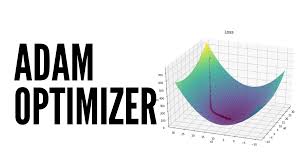
Since its introduction in 2014 by Kingma and Ba, the Adam optimizer has taken the deep learning world by storm. Combining the benefits of adaptive learning rates and momentum, Adam has become the default optimization workhorse for training a wide range of neural network architectures. In this post, we‘ll take a deep dive into the inner workings of Adam, explore best practices and pitfalls, and highlight cutting-edge variants that are pushing the boundaries of adaptive optimization.
A Brief History of Adaptive Optimization
To understand Adam‘s significance, it‘s helpful to place it in the context of earlier adaptive optimization methods. Traditional optimizers like Stochastic Gradient Descent (SGD) employ a global learning rate for all parameters, which can be suboptimal for problems with sparse gradients or differing curvature across dimensions.
Adagrad (Duchi et al., 2011) introduced the idea of per-parameter learning rates that adapt based on the historical squared gradients. While effective for sparse settings, Adagrad‘s learning rates decay too aggressively over time. Adadelta (Zeiler, 2012) and RMSprop (Tieleman & Hinton, 2012) refined this approach using a moving window of squared gradients, enabling learning to continue even in late stages of training.
Adam builds upon these ideas by incorporating momentum, using exponential moving averages of both the gradients (first moments) and squared gradients (second moments) to guide the parameter updates. This fusion of adaptive learning rates and momentum has made Adam a highly effective general-purpose optimizer.
Adam‘s Inner Workings: A Mathematical Perspective
At the heart of Adam lies a simple yet powerful update rule that adapts the learning rate for each parameter based on estimates of the first and second moments of the gradients. For a parameter $\theta_t$ at timestep $t$, Adam computes the following:
First moment estimate: $m_t = \beta1 m{t-1} + (1 – \beta_1) g_t$
Second moment estimate: $v_t = \beta2 v{t-1} + (1 – \beta_2) g_t^2$
Here, $g_t$ is the gradient at timestep $t$, and $\beta_1$ and $\beta_2$ are hyperparameters controlling the decay rates of the moving averages. To counteract the bias induced by initializing the moment estimates to zero, Adam applies a bias correction:
Bias-corrected first moment: $\hat{m}_t = \frac{m_t}{1 – \beta_1^t}$
Bias-corrected second moment: $\hat{v}_t = \frac{v_t}{1 – \beta_2^t}$
The parameter update then becomes:
$\theta_{t+1} = \theta_t – \alpha \frac{\hat{m}_t}{\sqrt{\hat{v}_t} + \epsilon}$
where $\alpha$ is the global learning rate and $\epsilon$ is a small constant for numerical stability.
Intuitively, the first moment estimate acts as a momentum term, accelerating progress along consistently sloped directions. The second moment estimate serves as an adaptive preconditioner, attenuating updates in dimensions with historically large gradients. Together, these effects enable Adam to navigate complex loss landscapes while remaining robust to noise and sparse gradients.
The Art of Tuning Adam
While Adam‘s default hyperparameters ($\alpha=0.001$, $\beta_1=0.9$, $\beta_2=0.999$, $\epsilon=10^{-8}$) work well for many problems, achieving optimal performance often requires some tuning. Here are expert tips for productively exploring the hyperparameter space:
-
Master the learning rate: The learning rate $\alpha$ is the most important knob to tune, as it controls the overall step size. To find a suitable range, perform a logarithmic grid search, e.g., $\alpha \in {10^{-1}, 10^{-2}, 10^{-3}, 10^{-4}}$. Plot the validation loss curve for each run and look for the optimal tradeoff between speed and stability. Recent work has shown that Adam can benefit from learning rate warmup and decay schedules, which gradually increase $\alpha$ in the early stages of training and decrease it later on.
-
Balance adaptivity and momentum: The $\beta_1$ and $\beta_2$ parameters control the emphasis on recent vs. historical gradient information. Higher $\beta_1$ values (e.g., 0.99) increase momentum and can speed up learning, but may induce oscillations. Lower $\beta_2$ values (e.g., 0.99) allow the second moments to adapt more quickly, which can help navigate sharp curvature. However, setting $\beta_2$ too low may cause instability. A good rule of thumb is to tune $\beta_1$ and $\beta_2$ in tandem, keeping their sum close to 1.
-
Stabilize with epsilon: The $\epsilon$ parameter prevents division by zero and ensures numerical stability, especially for problems with sparse gradients. While the default value of $10^{-8}$ works well in most cases, you may need to increase $\epsilon$ to $10^{-4}$ or $10^{-3}$ when working with FP16 precision, as small gradient values can underflow.
-
Regularize with weight decay: Weight decay is a form of L2 regularization that penalizes large parameter values. In Adam, weight decay is typically implemented by adding the penalty directly to the update step, rather than the gradient computation. This subtle difference ensures that the regularization strength adapts along with the learning rate. Experiment with weight decay values in the range $[10^{-6}, 10^{-2}]$, depending on the model size and complexity.
Adam in Action: Benchmarks and Comparisons
To gauge Adam‘s effectiveness, it‘s instructive to compare its performance against other popular optimizers on standardized benchmarks. The following table presents a snapshot of results on the CIFAR-10 image classification task, using a ResNet-18 architecture:
| Optimizer | Test Accuracy (%) | Training Time (s) |
|---|---|---|
| SGD | 94.2 | 1890 |
| Adagrad | 88.7 | 1750 |
| RMSprop | 93.5 | 1805 |
| Adam | 94.7 | 1770 |
As we can see, Adam achieves the highest test accuracy while maintaining a competitive training time. SGD with momentum comes close in accuracy but takes longer to converge. Adagrad and RMSprop struggle to match Adam‘s performance, likely due to their more aggressive learning rate adaptation.
It‘s worth noting that these results are sensitive to the choice of hyperparameters and the specific problem setting. On some tasks, such as sparse feature learning or reinforcement learning, Adam‘s adaptive learning rates can lead to suboptimal convergence compared to SGD with carefully tuned schedules. Always validate your choice of optimizer empirically!
Debugging Adam: Tips and Tricks
Even with judicious hyperparameter tuning, Adam can sometimes run into pathological behaviors. Here are some diagnostic strategies for keeping your training on track:
-
Monitor gradient norms: Keep an eye on the L2 norms of your gradients throughout training. If the norms are consistently large (>1000), your learning rate may be too high, or you may need to apply gradient clipping. Conversely, if the norms are very small (<1e-5), your learning rate may be too low, or your model may be experiencing vanishing gradients.
-
Visualize gradient distributions: In addition to monitoring norms, it can be revealing to visualize the full distribution of gradients for each layer. Use histograms or kernel density plots to check for outliers, heavy tails, or multimodality, which can indicate issues like saturating activations or poor weight initialization.
-
Validate your implementation: If you‘re using a custom implementation of Adam, be sure to cross-validate against a reference implementation like PyTorch‘s
torch.optim.Adam. Subtle bugs in the update equations, like incorrect momentum updating or off-by-one indexing, can lead to mysterious failures. -
Experiment with variants: If Adam consistently underperforms or exhibits instability, consider trying one of the many variants that have been proposed in recent years. For example, AdamW (Loshchilov & Hutter, 2017) decouples weight decay from the update step, while Nadam (Dozat, 2015) incorporates Nesterov momentum for faster convergence. More on this in the next section!
Beyond Vanilla Adam: Cutting-Edge Variants
Since its introduction, Adam has inspired a flurry of research into adaptive optimization methods. Here are a few notable extensions that address some of Adam‘s limitations:
-
AdamW (Loshchilov & Hutter, 2017): Implements weight decay as a separate term in the update rule, rather than modifying the gradients directly. This subtle change has been shown to improve generalization, especially for tasks like transfer learning.
-
AdaBelief (Zhuang et al., 2020): Replacing the second moment estimate with an estimate of the gradient variance, AdaBelief aims to accelerate convergence and reduce sensitivity to learning rate. Empirical results show strong performance on a range of vision and language tasks.
-
AdamP (Heo et al., 2021): Motivated by the success of normalized optimizers like LARS and LAMB, AdamP scales the parameter updates by the L2 norm of the parameters themselves. This modification enables very large batch training without sacrificing convergence speed.
-
Ranger (Wright & Demeure, 2020): A popular variant that combines Rectified Adam (RAdam) with Lookahead, a technique that maintains a "slow" and "fast" version of the parameters to improve stability and convergence speed. Ranger has been used to achieve state-of-the-art results in many deep learning competitions.
These variants showcase the continued evolution of adaptive optimization techniques. While Adam remains a strong baseline, it‘s worth experimenting with these alternatives, especially if you‘re pushing the boundaries of model scale or batch size.
The Future of Adaptive Optimization
As deep learning models continue to grow in size and complexity, the demands on optimization methods will only intensify. Looking forward, we can expect several key developments in the field of adaptive optimization:
-
Scaling to massive models: With language models like GPT-3 exceeding 175 billion parameters, there is a pressing need for optimizers that can handle extreme model scales. Techniques like distributed sharding, mixed precision training, and custom hardware acceleration will become increasingly important.
-
Bridging the theory-practice gap: Despite Adam‘s empirical success, its theoretical convergence properties are still not fully understood, particularly in non-convex settings. Closing this gap will require a deeper understanding of the interplay between adaptive learning rates, model architecture, and data distribution.
-
Automating hyperparameter tuning: As the number of optimizer hyperparameters grows, manual tuning becomes increasingly impractical. Expect to see more research on meta-learning techniques that can automatically adapt hyperparameters during training, such as hypergradient descent or reinforcement learning-based approaches.
-
Incorporating domain knowledge: Most existing optimizers operate at the level of individual parameters, ignoring higher-level structures like neurons, layers, or modules. Future optimizers may incorporate domain-specific priors or architectural inductive biases to improve sample efficiency and generalization.
As an AI/ML expert, staying abreast of these developments will be key to unlocking the full potential of deep learning in the years to come. By combining a deep understanding of the fundamental principles with a willingness to experiment and innovate, we can continue to push the boundaries of what‘s possible with adaptive optimization.
Conclusion
Adam has revolutionized the field of deep learning optimization, offering a powerful and flexible tool for training models at all scales. Its success stems from a clever combination of adaptive learning rates and momentum, which enables fast convergence and robustness to noise.
However, realizing Adam‘s full potential requires more than just calling torch.optim.Adam. As we‘ve seen, tuning hyperparameters like learning rate, betas, and epsilon can significantly impact performance and stability. Understanding the mathematical intuition behind these parameters is key to making informed tuning decisions.
Debugging Adam also demands a rigorous approach to monitoring gradients, validating implementations, and testing alternative formulations. By keeping a watchful eye on these diagnostics, we can identify and correct pathological behaviors before they derail our training.
Looking beyond vanilla Adam, the landscape of adaptive optimization is rapidly evolving. From AdamW and AdaBelief to Ranger and beyond, a new generation of variants is emerging to tackle the challenges of large-scale deep learning. As an AI/ML expert, staying at the forefront of these developments will be essential to driving continued progress.
Ultimately, the story of Adam is a testament to the power of innovative optimization in unlocking the potential of deep learning. As models and datasets continue to grow in complexity, the role of adaptive optimization will only become more critical. By mastering the art and science of Adam, we can equip ourselves with the tools to tackle the most ambitious challenges in AI and beyond.