
AI Unlocks the Power of Rare DNA: Discovering Extreme Genetic Sequences
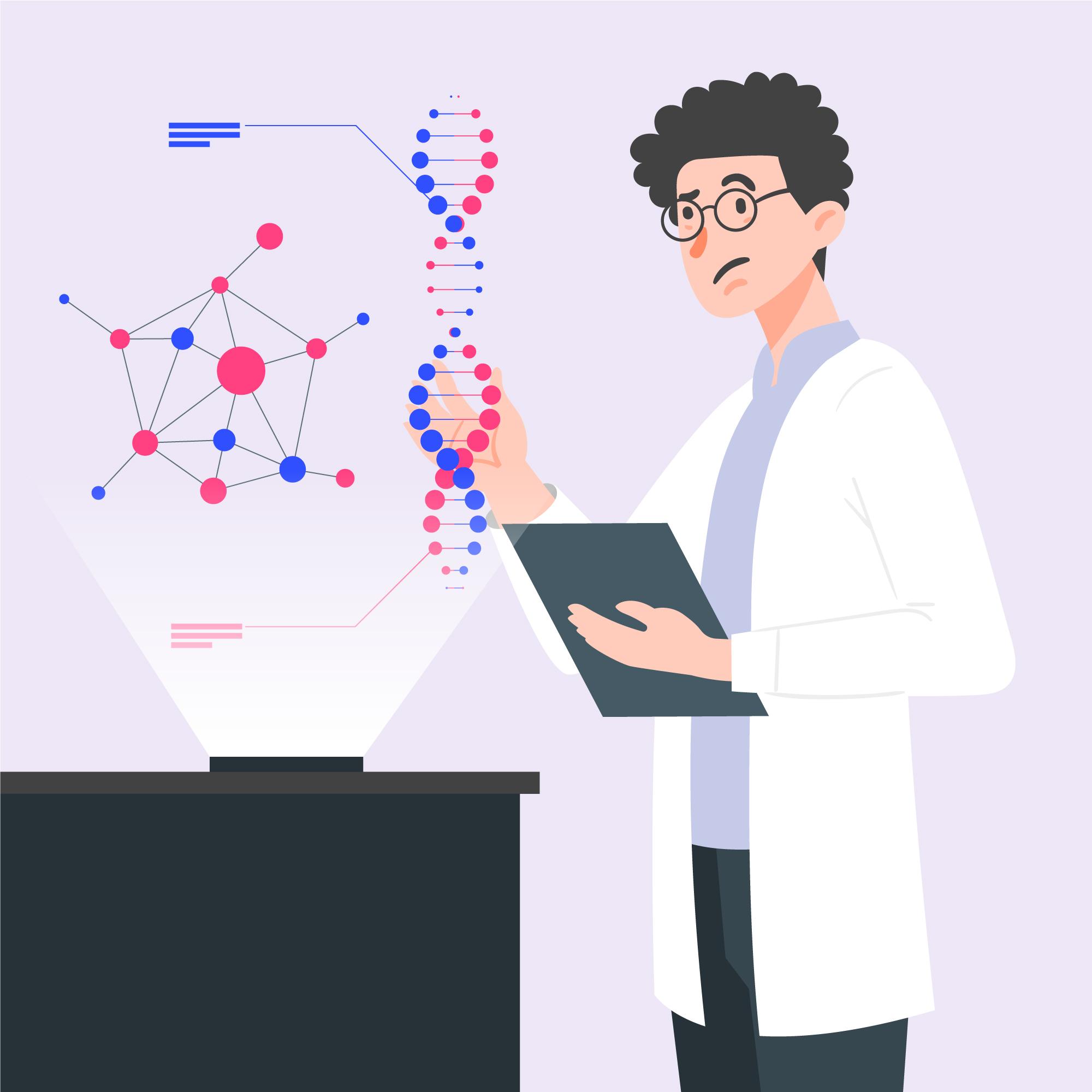
The human genome is a vast and complex landscape, consisting of over 3 billion base pairs of DNA that encode the instructions for life. Within this genetic code lies immense potential for understanding human biology, health, and disease. However, deciphering the secrets of the genome is a monumental challenge, one that has pushed the boundaries of scientific knowledge and technological innovation for decades.
In recent years, the advent of artificial intelligence (AI) and machine learning (ML) has revolutionized the field of genetics, enabling researchers to analyze massive datasets and uncover insights that were once thought impossible. One area where AI is making a particularly significant impact is in the discovery of rare and extreme DNA sequences that have the potential to dramatically alter gene expression and cellular function.
The Complexity of the Genetic Code
To appreciate the significance of AI-driven genetic discoveries, it is important to first understand the basic building blocks of the genome. DNA is composed of four chemical bases—adenine (A), thymine (T), cytosine (C), and guanine (G)—which are arranged in a specific sequence along the famous double helix structure. This sequence of bases encodes the genetic instructions for all living organisms, determining everything from physical traits to disease susceptibility.
However, the relationship between DNA sequence and biological function is not always straightforward. While some regions of the genome, known as coding sequences, directly encode proteins that carry out essential cellular functions, a large portion of the genome is made up of non-coding sequences that do not directly produce proteins. These non-coding regions, which include regulatory elements like promoters and enhancers, play a critical role in controlling gene expression and determining when and where specific genes are turned on or off.
Identifying the specific DNA sequences that drive gene regulation is a major challenge in genetics, as these elements can be short, diverse, and difficult to distinguish from the vast background of non-functional DNA. Traditional approaches to studying gene regulation have relied on painstaking experimental work, such as systematically mutating DNA sequences and measuring their effects on gene expression. However, the sheer size and complexity of the genome make this approach impractical for studying more than a handful of genes at a time.
The Power of AI in Genetic Analysis
The emergence of AI and ML has provided a powerful new toolkit for tackling the challenges of genetic analysis. By training algorithms on vast datasets of genetic information, researchers can teach computers to recognize patterns and make predictions about the function of specific DNA sequences.
One common approach in ML-driven genetic analysis is supervised learning, where algorithms are trained on labeled datasets where the functional effects of specific DNA sequences are already known. For example, researchers might train an algorithm on a dataset of known promoter sequences that are labeled as either active or inactive in driving gene expression. The algorithm learns to recognize the features that distinguish active promoters from inactive ones and can then be used to predict the function of new, uncharacterized sequences.
Another powerful technique is deep learning, which uses artificial neural networks to learn hierarchical representations of data. Deep learning algorithms have proven particularly effective at analyzing complex, high-dimensional datasets like those generated by modern genetic sequencing technologies. By training deep neural networks on massive amounts of genetic data, researchers can uncover subtle patterns and correlations that would be impossible to detect through manual analysis alone.
The scale of modern genetic datasets is truly staggering. The human genome contains approximately 3 billion base pairs, and a typical whole-genome sequencing experiment can generate hundreds of gigabytes of raw data per individual. When studying genetic variation across populations, researchers may analyze data from thousands or even millions of individuals, resulting in datasets that can reach into the petabytes (1 petabyte = 1 million gigabytes).
Processing and analyzing these enormous datasets requires immense computational power, which is where AI and ML come in. By leveraging advanced algorithms and high-performance computing resources, researchers can sift through vast troves of genetic data to identify rare and functionally important sequences that would be virtually impossible to find through traditional experimental approaches.
Discovering Rare and Extreme DNA Sequences
One of the most exciting applications of AI in genetics is the discovery of rare and extreme DNA sequences that have the potential to dramatically alter gene expression and cellular function. These sequences, which may occur only once in millions or billions of base pairs, can act as powerful regulators of gene activity, turning genes on or off with high specificity and efficiency.
A groundbreaking example of this approach comes from a 2021 study led by researchers at the University of California San Diego. The team used ML algorithms to analyze a massive dataset of 50 million DNA sequences, with the goal of identifying rare "synthetic extreme" sequences that could have useful applications in biotechnology and medicine.
Synthetic extreme sequences are artificially designed pieces of DNA that have been optimized to strongly activate or repress gene expression. While there has been significant interest in these sequences for gene therapy and other applications, actually finding them in the vast expanse of sequence space is a daunting challenge.
The UC San Diego team tackled this problem using an ML approach called a convolutional neural network (CNN), which is particularly well-suited for analyzing sequential data like DNA. They trained their CNN on a dataset of known activator and repressor sequences, allowing the algorithm to learn the features that distinguish these extreme sequences from background DNA.
They then used the trained CNN to screen the 50 million sequence dataset, looking for rare sequences that scored highly as potential activators or repressors. Remarkably, the algorithm was able to identify a number of synthetic extreme sequences with specific, high-potency effects on gene expression.
As study leader Prof. James Kadonaga explained, "Instead of comparing humans (condition X) versus fruit flies (condition Y), we could test the ability of drug A (condition X) but not drug B (condition Y) to activate a gene. This method could also be used to find custom-tailored DNA sequences that activate a gene in tissue 1 (condition X) but not in tissue 2 (condition Y)."
The implications of this discovery are immense. By identifying synthetic extreme sequences that can precisely control gene expression in specific cell types or tissues, researchers may be able to develop highly targeted gene therapies for a wide range of genetic disorders. For example, a synthetic activator sequence could be used to boost the expression of a healthy gene in cells where the natural gene is defective or missing, while a synthetic repressor could be used to silence a disease-causing gene with minimal off-target effects.
Advancing AI-Driven Genetic Discoveries
The UC San Diego study is just one example of how AI is transforming the landscape of genetic research. In the years since this groundbreaking work, numerous other studies have used ML and deep learning approaches to uncover new insights into the structure and function of the genome.
For instance, a 2022 study from the Broad Institute used ML to analyze the 3D structure of chromosomes, revealing how the physical arrangement of DNA in the nucleus can influence gene expression and regulation. By training their algorithms on high-resolution imaging data of chromosomes, the researchers were able to identify specific DNA sequences that play a role in shaping chromosome structure and function.
Another recent study, published in Nature Biotechnology, used AI to design synthetic promoters with enhanced specificity and activity. The researchers trained a deep learning model on a large dataset of natural promoter sequences, allowing the algorithm to learn the features that determine promoter function. They then used the trained model to generate novel synthetic promoters that were optimized for specific cell types and applications.
These studies highlight the incredible potential of AI to not only discover new functional elements in the genome but also to engineer novel sequences with desired properties. As AI algorithms continue to advance and datasets continue to grow, we can expect to see even more exciting discoveries in the years to come.
Challenges and Future Directions
While the promise of AI-driven genetic analysis is immense, there are also significant challenges and ethical considerations that must be addressed as this technology continues to evolve.
One major challenge is the need for large, high-quality datasets to train ML algorithms. Generating these datasets requires significant time, resources, and expertise, and ensuring data quality and reproducibility can be difficult. There are also important questions around data privacy and security, as genetic information is highly sensitive and personal.
Another challenge is the potential for bias and errors in AI predictions. Like any computational model, ML algorithms are only as good as the data they are trained on, and if training datasets are biased or incomplete, the resulting predictions may be inaccurate or misleading. Researchers must be vigilant in validating AI predictions through experimental testing and cross-validation with independent datasets.
There are also important ethical considerations around the use of AI in genetics, particularly when it comes to clinical applications. The idea of using AI to predict disease risk or guide treatment decisions raises concerns about privacy, informed consent, and equitable access to healthcare. There is also the potential for misuse or abuse of this technology, such as using it to discriminate based on genetic information.
To address these challenges and ensure the responsible development of AI-driven genetic analysis, it will be essential for researchers, policymakers, and the public to engage in ongoing dialogue and collaboration. This may involve developing guidelines and best practices for data sharing and privacy protection, establishing oversight and regulatory frameworks for clinical applications, and promoting education and public engagement around the ethical and societal implications of this technology.
Despite these challenges, the future of AI in genetics is incredibly bright. As our understanding of the genome continues to deepen and our computational tools continue to advance, we can expect to see even more remarkable discoveries in the years to come. From uncovering the genetic basis of rare diseases to designing personalized therapies and diagnostics, AI has the potential to transform our understanding of biology and usher in a new era of precision medicine.
As we continue on this exciting journey of discovery, it will be essential to approach AI-driven genetic analysis with a balance of enthusiasm and caution, always keeping in mind the incredible power and responsibility that comes with this technology. By working together as a scientific community and as a society, we can harness the full potential of AI to unlock the secrets of the genome and improve human health for generations to come.


![How To Use Claude AI On Windows? [2026 Guide]](https://33rdsquare.com/wp-content/uploads/2024/03/20240312073640-65f006082aa7b.png.webp)

