
Beyond Plastic: The AI Barbie Controversy and the Future of Inclusive Representation
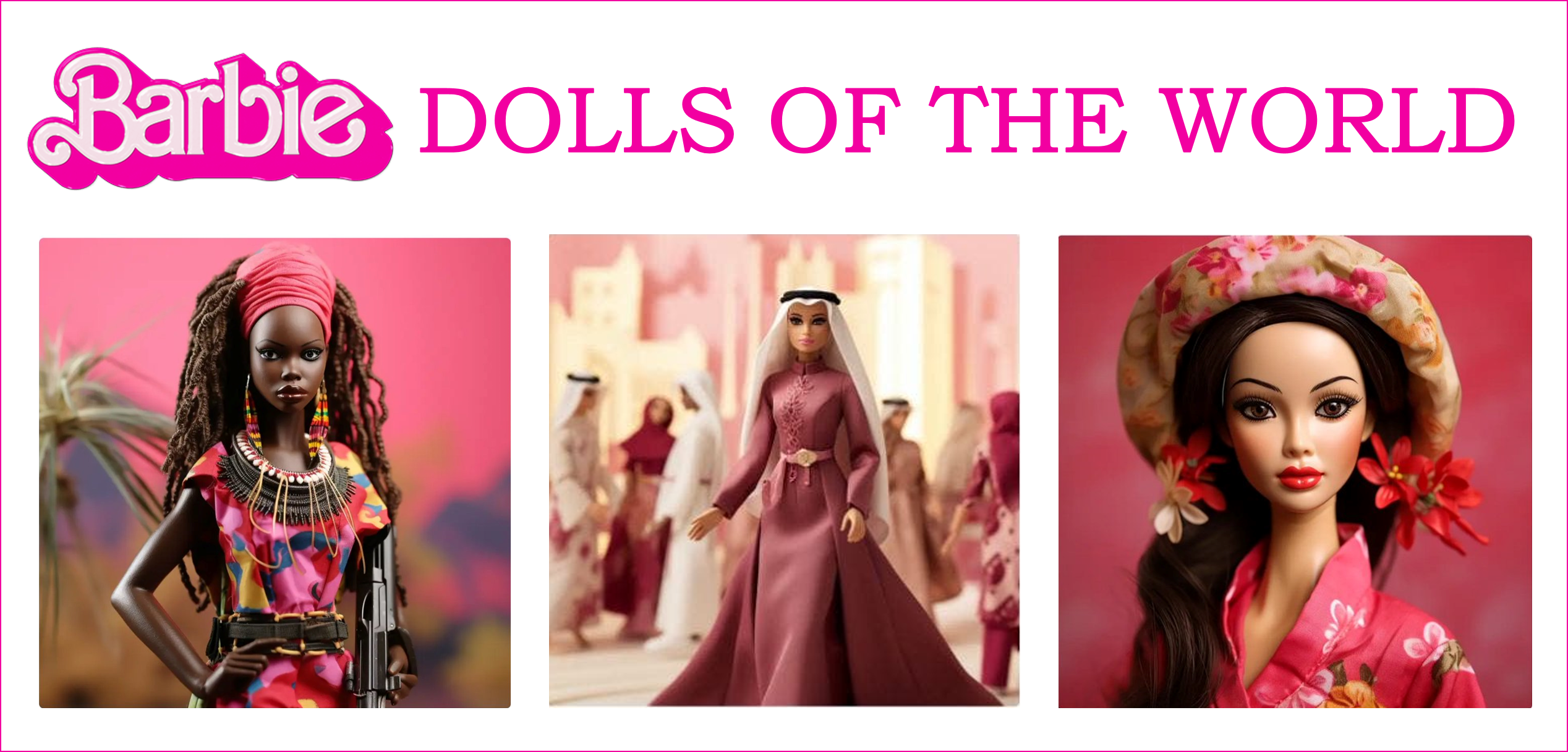
Barbie, the iconic fashion doll, has been a cultural touchstone and lightning rod for over 60 years. But Barbie‘s latest brush with controversy didn‘t come from Mattel‘s design studio – it came from an AI. Recently, a series of AI-generated images imagining Barbies from different countries went viral for all the wrong reasons, provoking online backlash over racist and culturally insensitive depictions.
The images, created using the AI art model Midjourney, included a German Barbie in a Nazi-like uniform, a gun-toting South Sudanese Barbie, and many dolls with inaccurate cultural attire and white-washed features. It was a case study in AI bias and the challenges of algorithmically representing diverse identities.
How Biased Data Leads to Biased AI
To understand how the offensive Barbie images came to be, let‘s look under the hood of AI content generators like Midjourney. These tools use a technique called latent diffusion, where a neural network is trained on millions of existing images and learns to "imagine" new images based on text prompts.
The problem arises when the training data reflects societal biases and lack of diversity. An analysis by researchers Kate Crawford and Trevor Paglen found that mainstream computer vision datasets are overwhelmingly white and Western-centric:

Computer vision datasets like ImageNet lack diversity. (Source: Crawford & Paglen, 2019)
When AI models learn from such skewed data, they tend to amplify those biases in their outputs. A famous example is Beauty.AI, a 2016 machine learning contest to judge attractiveness. The algorithm picked nearly all white winners, having been trained mostly on white faces.
The Tricky Ethics of AI Representation
The Midjourney Barbie backlash exposes the thorny ethical challenges around using AI for cultural representation. On one hand, AI content tools have the potential to democratize creativity and allow underrepresented voices to tell their own authentic stories. Marginalized creators worldwide are already harnessing AI to make art, music, and designs that center their experiences and aesthetics.
"AI lowers the barriers to creating media, allowing more people to represent their cultures and challenge dominant narratives," says Dr. Anastasia Kuzminykh, an AI fairness researcher at the University of Toronto. "But it‘s a double-edged sword. The same accessibility means it‘s easy to create stereotypical or insensitive representations at scale."
There‘s also an accountability issue with AI-generated content. When a human artist creates a racist image, the responsibility is clear. But when an AI model spits out offensive stereotypes, who is to blame – the AI company, the dataset curators, the prompt engineer, society at large?
AI ethicists argue that AI systems should be proactively audited for biases before public release. "We need to treat AI content generators as sociotechnical systems, not neutral tools," says Dr. Timnit Gebru, founder of the Distributed AI Research Institute. "That means rigorously testing for fairness and harms, documenting training data sources, and having diverse stakeholder oversight."
Mattel‘s Diversity Journey with Barbie
The Midjourney affair is just the latest in a long line of representation controversies for Barbie. Mattel‘s official "Dolls of the World" collection, launched in 1980 to celebrate multiculturalism, has often missed the mark. Missteps have included:
- 1990s "Tribal Barbie" mixing imagery from different Native tribes
- 2013 "Mexico Barbie" with passport and Chihuahua, accused of stereotyping
- 2014 "Barbie Learns to Code" book portraying Barbie as incompetent at computer science
In recent years, Mattel has made a concerted effort to make Barbie more inclusive, introducing over 175 diverse dolls varying in race, body type, disability, and more. The "Fashionistas" line now offers the widest diversity of skin tones, hair textures, and body sizes in Barbie history.
"Our purpose at Mattel is to empower the next generation to explore the wonder of childhood and reach their full potential," said Richard Dickson, President and COO of Mattel, in response to the AI Barbie incident. "Barbie is a platform to reflect the world girls see around them and an invitation for them to imagine everything they can become. Diversity and inclusion are integral to that purpose, in both our products and our practices."
Still, truly inclusive representation is easier said than done, as the Midjourney experiment shows. Even as Mattel works to diversify Barbie‘s image, the brand faces a delicate balancing act between celebrating culture and commodifying it.
AI as a Mirror and Opportunity
Despite its issues, some experts see the Midjourney Barbie incident as a chance for reflection and progress. "In a way, AI is like a mirror that shows us the biases present in our society and the data we produce," says Dr. Londa Schiebinger, director of Stanford‘s Gendered Innovations in Science, Health & Medicine program. "It‘s uncomfortable but necessary to confront those biases head-on."
Others believe AI, if developed thoughtfully, could actually help create more authentic and diverse representations in media and fashion. Projects like the COLORS AI Fashion Show demonstrate how AI models can be intentionally trained on imagery from different cultures to generate stunning designs that celebrate heritage and identity.

The COLORS AI Fashion Show generated designs drawing from African, Asian, and Indigenous fashion data. (Source: https://colors.digital/)
As AI becomes central to the creative industries, experts say it‘s crucial that the people shaping these influential systems represent our society. Currently, only 18% of AI researchers are women. "We need diversity in the teams designing AI, producing training data, and imagining future applications," says journalist Meredith Broussard, author of "Artificial Unintelligence: How Computers Misunderstand the World."
Though flawed, the Midjourney Barbie incident could be a turning point for how we develop AI content tools – not just as efficient content machines, but as systems embedded with cultural values. It underscores AI‘s profound impacts on representation, and our responsibility to build a more inclusive technological future.
If a simple Barbie prompt can surface so many societal scars and stereotypes, it shows how much healing, growth, and proactive reimagining we have left to do. Only by embedding diversity, dignity, and intercultural understanding into our datasets and development processes can we create artificial intelligences that reflect and respect all of humanity. The alternative is more misguided Midjourney moments that perpetuate the prejudices of the past.
The choice between stereotypes and a richer spectrum of identity shouldn‘t be left to a black-box algorithm. Diverse human voices must shape the datasets, metrics, and values of our AI systems. Cultural representation is simply too important to outsource to machines – even if those machines sometimes come dressed in a pink Barbie box.


