US Court Rules AI-Generated Art Ineligible for Copyright, Raises Questions for Creative AI
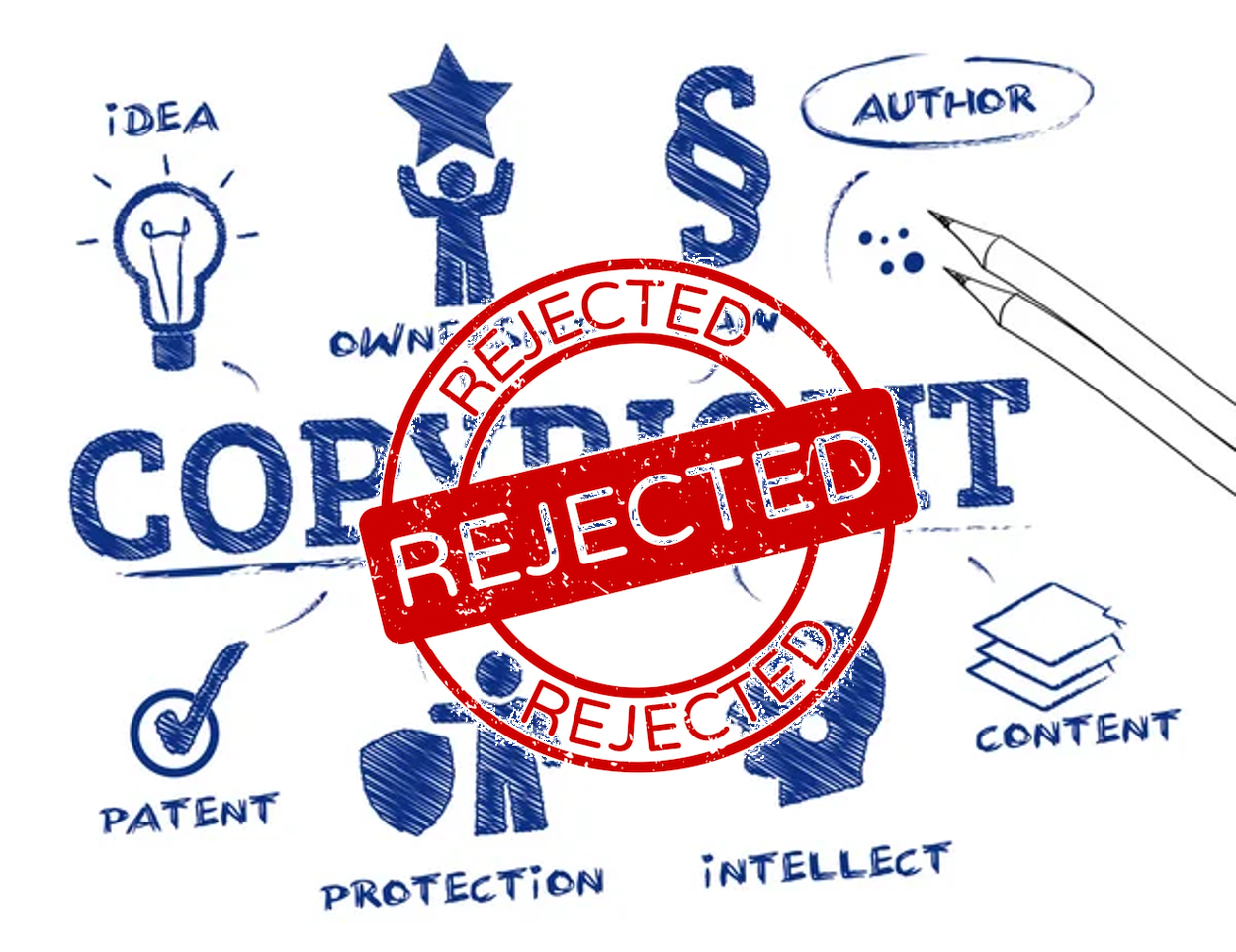
A recent landmark court case has determined that artwork created by an artificial intelligence (AI) system cannot be granted a copyright under current US law. The ruling in Thaler v. Hirshfeld, handed down by the US District Court for the District of Columbia, affirms that only works with human authors are eligible for copyright protection.
The case was brought by Stephen Thaler, a computer scientist and founder of Imagination Engines, Inc. Thaler had attempted to register a copyright for an image titled "A Recent Entrance to Paradise," which was generated by an AI algorithm he dubbed the Creativity Machine. Thaler listed the AI as the artwork‘s author, but the US Copyright Office rejected the registration on the grounds that "human authorship" is a requirement for copyright.
In the lawsuit, Thaler argued that the human authorship requirement is unconstitutional and that his AI should be recognized as the legitimate author and copyright holder for the AI-generated image. However, Judge Beryl Howell upheld the Copyright Office‘s decision, writing in her opinion:
"The Court finds that the Copyright Office‘s interpretation of the Copyright Act as only protecting works with human authors is reasonable . . . Human authorship is a bedrock requirement of copyright."
The Law of Creativity
Judge Howell‘s ruling aligns with a long-standing principle in US copyright law that copyright only applies to "the fruits of intellectual labor" that "are founded in the creative powers of the [human] mind." This language comes from the landmark 1884 Supreme Court case Burrow-Giles Lithographic Co. v. Sarony which established that photographs could be copyrighted because they represent the photographer‘s creative choices and "mental conception."
More recently, a famous copyright case involving a monkey‘s "selfie" photo further cemented the human authorship requirement. In Naruto v. Slater, a crested macaque monkey named Naruto picked up a photographer‘s camera and took a selfie. The photographer published the photo, leading to a lawsuit arguing the monkey owned the copyright. But the court ruled that the copyright law does not extend to animals, with the US Copyright Office later clarifying that works produced by a machine or mere mechanical process without any creative input or intervention from a human author are also not copyrightable.
The Thaler case directly tested this human authorship standard in the context of the rapidly advancing field of AI-generated art. Recent years have seen an explosion of sophisticated generative AI systems capable of creating novel images from text descriptions, such as OpenAI‘s DALL-E, Midjourney, and Stable Diffusion. These tools have sparked an intense debate over the future of art and creativity.
A Global Legal Puzzle
The US is not the only jurisdiction grappling with the question of intellectual property rights for AI-generated content. Thaler has filed similar test cases in patent offices around the world, seeking to list his AI system as the inventor.
In a historic first last year, South Africa granted a patent that listed Thaler‘s AI as the inventor. But legal experts noted it may have simply been an oversight by the patent office. Most other countries, including the US, UK, Europe, and Australia have rejected AI-inventor applications. A test case is currently pending before the UK Supreme Court.
Australia has been a particular hotspot for legal disputes over AI copyright. In 2012, the Australian federal court ruled in Acohs Pty Ltd v Ucorp Pty Ltd that a work must be authored by a human to qualify for copyright protection. But a report by the Australian Human Rights Commission has called for reforms to intellectual property law to address AI-generated works.
The Artistry of AI
As court cases like Thaler‘s wind through the legal system, the art world is already being transformed by AI image generation tools. In 2018, a portrait created by an AI system sold at Christie‘s auction house for $432,500, and the next year, a short novel written by the OpenAI GPT-3 language model nearly won a Japanese literary prize.
Just last month, an image generated by Midjourney won the digital art category at the Colorado State Fair, sparking controversy and accusations that the artist had cheated by submitting an AI creation. The artist defended his work, arguing that he had put substantial time and effort into curating and fine-tuning the AI‘s output.
These examples illustrate the blurry line between human and machine creativity. While the most advanced generative AI systems can produce strikingly realistic and aesthetically pleasing images, they are ultimately building upon human-made training data sets, often consisting of copyrighted art and photography. The role of human creativity in developing the AI systems and curating their outputs adds another wrinkle.
From a technical perspective, generative AI art tools are based on deep learning neural networks that have been trained on vast datasets of images. Through exposure to millions of examples, the networks learn to recognize patterns and stylistic elements which they can recombine in novel ways to generate new images based on a text prompt.
This has led some to argue that AI art generators are not truly creative, but are simply "remixing" elements from their training data in a complex way. But this critique could also apply to human artists who are inevitably influenced by the art and culture they have been exposed to. Famed Cubist artist Pablo Picasso once said "Good artists copy, great artists steal."
Impacts on Human Artists
The rise of AI-generated art has sparked concern among some human artists who fear the technology could devalue their work or put them out of a job. If AI systems can generate an endless supply of bespoke images on demand for far cheaper than commissioning a human artist, will it still make sense to pay for human creativity?
A survey conducted by the Artists Rights Society found that 65% of artists believe AI-generated art threatens the art industry and creative workers. One respondent commented "I am extremely concerned that AI will replace the need for human-created artworks entirely."
However, many artists are embracing AI tools as just another medium for creative expression and exploration. Several major stock art sites like Shutterstock and Getty Images now offer AI-generated images, and Adobe has announced it is integrating generative AI capabilities into Photoshop. For these companies and creators, AI is a tool to augment and amplify human creativity rather than replace it entirely.
In this view, working with AI generators is a new kind of artistic skill and process. Learning the quirks and capabilities of the AI systems, carefully engineering prompts to achieve a desired style, and sifting through many outputs to curate the best requires its own kind of creative human judgment and input.
Copyright in an AI World
As artistic AI tools grow more powerful and accessible, distinguishing AI-generated art and content from human-made will become an increasingly thorny challenge. While some telltale signs like odd distortions in faces and text can sometimes give away an AI creation, the technology is progressing rapidly. Platforms may need to develop robust provenance and disclosure systems.
Looking ahead, intellectual property law will likely need to adapt and evolve in response. Historically, copyright law has gradually expanded to accommodate new technologies like photography, film, and software. But the human authorship requirement may be difficult to square with a future in which AI plays a larger collaborative role in creativity.
Some legal scholars have proposed a new model of "AI-authorship" that would grant limited copyrights to AI-generated works, with shorter terms and more exemptions for fair use than human-authored works. Others argue that AI-generated art should automatically enter the public domain, free for all to use and remix.
Another approach would be to focus intellectual property protections on the process of developing AI systems, datasets, and prompts rather than the output itself. This could allow companies to commercialize proprietary AI tools while still promoting wider access to AI-generated art and content.
Human Creativity Augmented
Despite the thorny legal and philosophical questions raised by AI-generated art, one thing is clear: artificial intelligence is not replacing human creativity any time soon. Today‘s artistic AI tools are ultimately sophisticated remixers and imitators of human artistry, not originators in a strong sense.
Even as AI plays a greater collaborative role in creative processes, it will still require human curation, direction, and judgment to yield meaningful results. The "prompt engineering" and output sifting involved in using a system like DALL-E or Midjourney is its own kind of creative, human-driven process.
At their best, AI systems can augment and inspire human creativity by suggesting novel combinations of concepts and stylistic approaches that spur the artist in unexpected directions. By automating some of the rote execution, they can also make the artistic process more accessible to a wider range of people who might lack technical skills like realistic drawing or painting.
Rather than replacing human artists, AI tools may ultimately democratize artistic expression and allow more people to realize their visions through AI collaboration. But it will still take a discerning human eye to refine that raw output into great art worth copyrighting. Our AI-powered creative future is still profoundly human.