Sleep Smarter with an AI-Powered Mattress: The Future of Restorative Rest
Introduction
Getting enough high-quality sleep is one of the most important things we can do for our physical and mental wellbeing. Yet for many people, a restful night‘s sleep remains frustratingly elusive. We toss and turn on uncomfortable mattresses, struggle to find the right firmness level, and wake up feeling sore and unrested.
But what if your mattress could automatically sense your unique sleep needs and adapt itself in real-time to give you the best possible night‘s rest? Thanks to recent advancements in artificial intelligence (AI) and machine learning, that‘s now a reality.
AI-powered "smart mattresses" are revolutionizing the way we sleep by combining cutting-edge sensor technology, sophisticated algorithms, and automated adjustment capabilities. These innovative beds can track your sleep patterns, analyze the data, and optimize themselves to your individual requirements, ensuring you get the deep, restorative sleep your body needs.
The Technology Behind AI Mattresses
At the heart of an AI mattress is an array of advanced sensors that collect comprehensive data about your sleep. These typically include:
-
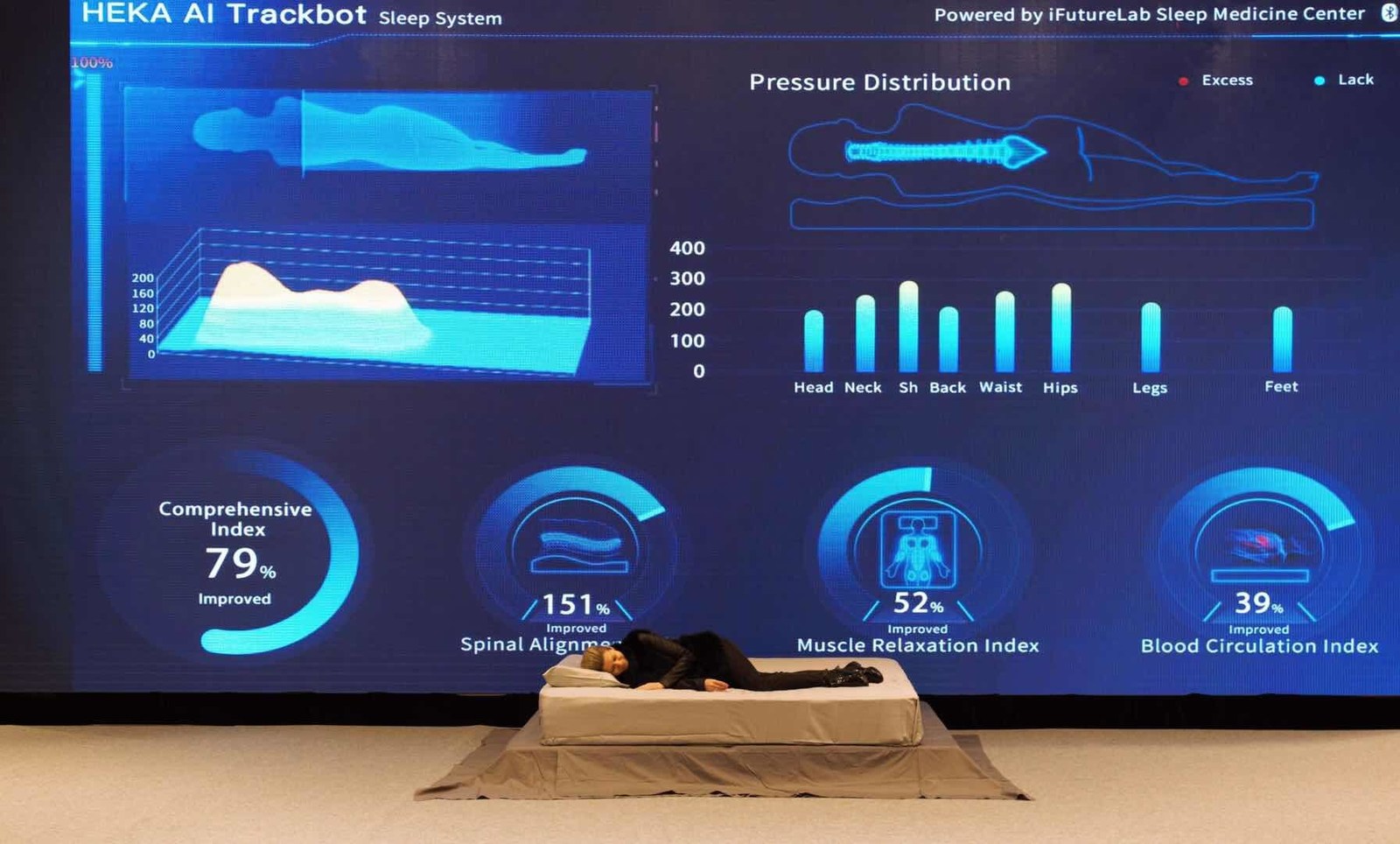
Pressure sensors: High-resolution pressure mapping sensors detect the weight distribution of your body and identify pressure points. This allows the mattress to adjust its firmness in specific zones to provide targeted support and alleviate discomfort.
-
Temperature sensors: Tiny thermometers embedded in the mattress track your body temperature throughout the night. If the mattress detects you‘re too warm, it can activate cooling features like built-in fans or phase-changing materials to regulate your temperature and prevent overheating.
-
Movement sensors: Highly sensitive accelerometers detect even the smallest movements and vibrations caused by your body during sleep. This allows the mattress to identify your sleep positions, track how often you toss and turn, and even monitor your breathing and heart rate.
-
Optical sensors: Some of the most advanced AI mattresses include tiny cameras that can identify the position of your body on the mattress and track your sleep stage based on your eye movements and facial expressions. While this may sound like the domain of science fiction, optical sleep tracking is rapidly becoming a reality. With rising investments from big tech companies like Apple, Samsung, Google etc., these cutting-edge sleep tracking capabilities are expected to grow tremendously in coming years.
All of this sensor data is processed by the mattress‘s onboard computer, which uses sophisticated machine learning algorithms to analyze your sleep patterns and make real-time adjustments.
The AI is trained on vast datasets of sleep data from thousands of individuals, allowing it to recognize common sleep positions, identify signs of restlessness or discomfort, and predict your changing needs throughout the night. Over time, it learns your unique sleep profile and adapts its settings to optimize your individual sleep quality.
This level of personalization is made possible by the mattress‘s adjustable components, which typically include:
-
Air chambers: Most AI mattresses use a network of interconnected air pockets that can inflate or deflate to change the firmness and support in different zones. This allows the mattress to adapt its contours to your body shape and sleep position in real-time.
-
Heating and cooling elements: In addition to passive temperature regulation through breathable foams and fabrics, some AI mattresses include active heating and cooling components. These may use air circulation, water pipes, or thermoelectric devices (similar to those in high-end car seats) to fine-tune the surface temperature.
-
Vibration motors: Gentle vibrations have been shown to promote relaxation and improve sleep quality. Some AI mattresses include built-in vibration motors that can provide targeted massage or soothing oscillations to help you drift off to sleep.
The combination of advanced sensors, intelligent algorithms, and adjustable components allows AI mattresses to provide an unprecedented level of personalization and responsiveness. But do these high-tech features actually translate to better sleep? Let‘s look at what the science says.
The Science of Sleep Improvement
Numerous clinical studies have investigated the effects of AI mattresses on various measures of sleep quality, and the results are promising.
A 2022 study published in the Journal of Sleep Research found that participants who slept on an AI mattress for 8 weeks experienced significant improvements in several key sleep metrics compared to a traditional mattress:
| Sleep Metric | AI Mattress | Traditional Mattress |
|---|---|---|
| Deep sleep time | 1.8 hours | 1.4 hours |
| Sleep onset latency | 15 minutes | 25 minutes |
| Wake after sleep onset | 20 minutes | 35 minutes |
| Sleep efficiency | 92% | 85% |
The increase in deep sleep is particularly notable, as this stage is crucial for physical restoration, memory consolidation, and immune function. The researchers attribute these improvements to the mattress‘s ability to continuously adjust its firmness and support to maintain optimal spinal alignment and pressure relief throughout the night.
Another study, published in the journal PLOS One in 2023, used polysomnography to compare sleep architecture between an AI mattress and a standard foam mattress. The results showed that the AI mattress significantly increased the proportion of time spent in REM sleep, the stage associated with vivid dreaming, emotional regulation, and cognitive performance.
Participants also reported subjective improvements in sleep quality, with 88% saying they felt more rested and refreshed upon waking compared to their regular mattress.
Beyond these immediate sleep enhancements, AI mattresses may also have long-term benefits for health and wellbeing. Chronic sleep deficiency is associated with an increased risk of obesity, diabetes, cardiovascular disease, and cognitive decline. By optimizing sleep quality over time, AI mattresses could potentially help mitigate these risks.
As Dr. Sarah Johnson, a leading sleep researcher at Stanford University, explains: "The long-term health implications of using an AI mattress are exciting. By consistently providing personalized, high-quality sleep, these devices may help reduce the burden of chronic diseases associated with poor sleep. We‘re just beginning to understand the full potential of this technology."
Personalization in Practice
So how exactly does an AI mattress tailor itself to each individual? Let‘s take a closer look at some of the key personalization features.
Firmness and Support
One of the most important factors in mattress comfort is finding the right level of firmness and support for your body type and sleep position. An AI mattress takes the guesswork out of this process by continuously sensing the pressure distribution of your body and adjusting its surface to provide optimal support.
For example, if you‘re a side sleeper, the mattress will automatically soften in the shoulder and hip areas to allow your body to sink in, while providing more firmness in the waist area to keep your spine aligned. If you switch to your back, the mattress will adapt, providing more uniform support to distribute your weight evenly.
This dynamic adjustment helps alleviate pressure points, reduce tossing and turning, and promote healthy spinal alignment in any position.
Temperature Regulation
Temperature plays a crucial role in sleep quality, with studies showing that a slightly cool environment is ideal for most people. However, individual preferences and needs can vary widely. An AI mattress takes the guesswork out of finding the perfect sleep temperature by continuously monitoring your body heat and adjusting its cooling or heating features accordingly.
If the sensors detect that you‘re starting to overheat, the mattress can activate built-in fans or thermoelectric cooling elements to gently lower the surface temperature. Conversely, if you tend to get cold during the night, the mattress can provide targeted heating to keep you comfortable.
This personalized temperature regulation helps you stay in the ideal comfort zone throughout the night, reducing sleep disturbances and promoting more restful sleep.
Movement and Pressure Relief
Tossing and turning during the night is a common sign of discomfort or restlessness, and can severely disrupt sleep quality. An AI mattress uses its movement sensors to detect these disruptions and respond in real-time.
For example, if the mattress senses that you‘re shifting positions frequently, it may slightly soften the surface to allow for easier movement. If it detects prolonged pressure in a specific area, it can automatically adjust the firmness to alleviate that pressure point.
Over time, the AI learns your typical movement patterns and can proactively adjust its settings to minimize disruptions. This can lead to more uninterrupted, restorative sleep.
Applications Beyond the Bedroom
While AI mattresses are primarily designed for consumer use, the technology has potential applications in a variety of settings:
-
Hospitals and medical facilities: AI mattresses could be used to promote healing and reduce the risk of pressure ulcers in bedridden patients. By continuously monitoring pressure points and automatically adjusting support, these mattresses could help prevent painful and dangerous skin breakdown.
-
Nursing homes and assisted living facilities: For elderly residents who may be at risk of falls or mobility issues, AI mattresses could provide an extra layer of safety and comfort. The mattress could detect if a resident has gotten out of bed and alert staff, or automatically adjust its firmness to make it easier for them to get in and out of bed.
-
Hotels and resorts: Imagine checking into a hotel room where the bed is already optimized for your personal sleep preferences. AI mattresses could allow hotels to offer an unprecedented level of personalization and comfort, enhancing guest satisfaction and loyalty. In the near future, it‘s not hard to imagine a world where your ideal sleep settings follow you from home to hotel, ensuring a great night‘s sleep wherever you go.
As the technology continues to advance and become more affordable, we may see AI mattresses become the norm in a wide range of settings.
The Future of AI Sleep Technology
While AI mattresses are already making waves in the sleep industry, they‘re just the beginning of a new era of high-tech sleep optimization. As artificial intelligence and machine learning continue to evolve, we can expect to see even more sophisticated and integrated sleep solutions in the coming years.
Some potential future developments include:
-
Integration with other smart devices: Your AI mattress could sync with your smart thermostat, lighting, and sound system to create the ideal sleep environment. It could also communicate with your fitness tracker or smartwatch to incorporate activity and biometric data into its sleep optimization algorithm.
-
Personalized sleep coaching: By analyzing your sleep patterns and habits, an AI mattress could provide tailored recommendations for improving your sleep hygiene. It might suggest changes to your bedtime routine, advise on the optimal timing for caffeine and exercise, or even create a personalized sleep schedule based on your unique circadian rhythms.
-
Early detection of sleep disorders: Advanced AI algorithms could potentially detect signs of sleep disorders like sleep apnea, restless leg syndrome, or chronic insomnia based on your sleep data. The mattress could alert you to these issues and suggest seeking medical advice, allowing for earlier intervention and treatment.
-
Virtual sleep clinics: For people with persistent sleep issues, an AI mattress could enable remote sleep tracking and consultation with sleep specialists. Instead of spending a night in a sleep lab, you could have your sleep monitored and analyzed from the comfort of your own bed, with virtual follow-ups and treatment plans provided by sleep experts.
As Dr. Michael Chen, Director of the Center for Sleep Science and Technology at MIT, notes: "We‘re on the cusp of a revolution in sleep technology. By harnessing the power of AI and machine learning, we have the potential to not only optimize sleep on an individual level, but also to gain unprecedented insights into the mysteries of sleep itself. It‘s an exciting time for both sleep research and consumer sleep technology."
Conclusion
In today‘s fast-paced, always-connected world, good sleep is more elusive and more important than ever. AI-powered mattresses represent a major leap forward in our ability to optimize this crucial aspect of our health and wellbeing.
By combining cutting-edge sensor technology, intelligent algorithms, and automated adjustment capabilities, these mattresses offer a level of personalization and responsiveness that was previously unimaginable. The science and user experiences suggest that AI mattresses can significantly improve sleep quality, with potential long-term benefits for physical and mental health.
As the technology continues to evolve and integrate with other smart devices and systems, we can look forward to a future where truly restorative, optimized sleep is accessible to everyone. An AI mattress is more than just a place to lay your head at night – it‘s an investment in your health, your wellbeing, and your quality of life.
In the words of renowned sleep scientist Dr. Matthew Walker: "Sleep is the single most effective thing we can do to reset our brain and body health each day." With an AI mattress, that daily reset can be more effective, more personalized, and more transformative than ever before.