Exploring the Real-World Applications of Convolutional Neural Networks
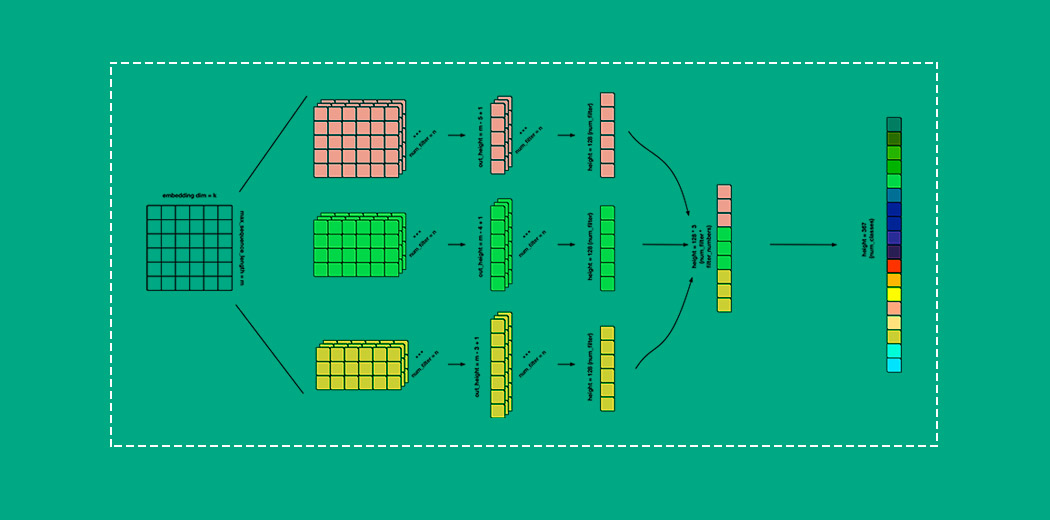
In recent years, convolutional neural networks (CNNs) have emerged as one of the most powerful tools in the field of deep learning. Originally inspired by the structure of the visual cortex in animals, CNNs are a type of artificial neural network that are particularly well-suited for processing grid-like data, such as images and videos.
At a high level, CNNs work by applying a series of learnable filters to an input image. These filters are able to automatically extract relevant features like edges, shapes, and textures. Multiple layers of filters are stacked to create a hierarchy of increasingly complex and abstract features. The output of the CNN can then be used for tasks like image classification, object detection, and segmentation.
The ability of CNNs to directly learn feature representations from raw image data, without the need for manual feature engineering, has led to dramatic performance improvements on many computer vision benchmarks. This, in turn, has unlocked a wide range of practical applications across domains like web search, social media, healthcare, transportation, and more. In this post, we‘ll take a closer look at some of the key areas where CNNs are making an impact.
Image Classification and Object Detection
One of the most straightforward applications of CNNs is image classification – automatically categorizing an input image into one of several predefined classes. For example, a CNN-based system could be trained on a large dataset of animal photos and then be used to recognize different species in new images. Popular benchmark datasets like ImageNet have driven significant advances in CNN architectures for classification tasks.
Beyond simple classification, CNNs can also be used for object detection – identifying and localizing multiple objects within an image. This is typically done by having the CNN output bounding box coordinates in addition to class labels. Object detection has many practical applications, from organizing personal photo collections, to monitoring security camera feeds, to enabling self-driving cars to recognize other vehicles, pedestrians, road signs, and obstacles.
Leading tech companies have deployed CNN-based image classification and object detection in products that many of us use every day. When you search for images on Google or Bing, CNNs are used behind the scenes to index and categorize billions of photos and illustrations. Facebook and Apple use CNN technology to automatically identify faces and suggest tags in the photos you upload. E-commerce sites like Amazon and Wayfair use CNNs to categorize product images and enable visual search. The list goes on.
Pushing the boundaries further, researchers are exploring CNNs that can not only recognize objects, but also describe their attributes and relationships in natural language. Image captioning systems aim to automatically generate human-readable descriptions for images – like "a person riding a bike on a dirt trail in the woods." These systems typically combine a CNN for visual processing with a recurrent neural network for language modeling. Such technology could make online image content more accessible for the visually impaired.
Facial Recognition
Facial recognition is a specialized application of object detection where the goal is to identify and/or verify individuals based on their facial features. The basic process involves using a CNN to detect faces within an image, extract a set of distinguishing features for each face (sometimes called a "faceprint"), and then compare those features against a database of known individuals.
Facial recognition technology is already being used in a variety of contexts. Many consumer devices, from smartphones to smart home cameras, allow users to authenticate using their face as an alternative to a password or PIN. Social media platforms use facial recognition to suggest tags for friends in the photos you share. Some retailers are even experimenting with facial recognition as a form of payment and as a way to deliver targeted promotions to customers in-store.
However, the increasing use of facial recognition has also raised significant privacy concerns and fears about potential misuse. Critics argue that the technology enables invasive surveillance and could exacerbate existing biases in our criminal justice and financial systems. There are also issues with accuracy and reliability, particularly for certain demographics. Some jurisdictions have started to pass laws restricting the use of facial recognition in public spaces and by law enforcement. As CNN-powered facial recognition becomes more widespread, it will be important to weigh the benefits against the risks and put appropriate regulations in place.
Medical Image Analysis
Medical imaging techniques like X-rays, CT scans, MRIs, and ultrasounds provide a non-invasive way for doctors to see inside the human body. However, the interpretation of these images typically requires careful analysis by trained radiologists. AI researchers are exploring the use of CNN-based systems to assist in this analysis by automatically detecting clinically relevant features.
For example, CNNs can be trained to localize and classify tumors, lesions, and other abnormalities in medical scans. Several studies have shown promising results where CNN models are able to achieve accuracies comparable to human radiologists on specific diagnostic tasks. In some cases, the AI is even able to catch subtle issues that were initially missed by doctors.
Another exciting area of research is the use of CNNs for computational pathology. Traditionally, pathologists have diagnosed diseases like cancer by manually examining tissue samples under a microscope. Now, CNN-based systems are being developed to automatically detect and classify cancerous cells in digitized pathology slides. This technology has the potential to dramatically improve the speed and accuracy of diagnosis.
There are still challenges to overcome before CNN-aided medical image analysis can become widely adopted in clinical practice. Acquiring large, high-quality, and properly labeled training datasets is an ongoing challenge. There are also issues around liability and regulatory approval that need to be worked out. However, the potential benefits – in terms of improving patient outcomes, catching diseases earlier, and reducing costs – are significant. In the coming years, it‘s likely that CNNs will play an increasingly important role in augmenting the work of human medical professionals.
Self-Driving Cars
Self-driving cars are one of the most ambitious and potentially transformative applications of CNN technology. These vehicles rely on a suite of sensors – including cameras, radar, and lidar – to perceive their surroundings. The sensor data is then fed into a series of CNN-based perception modules that are responsible for tasks like detecting lane markings, traffic signs, pedestrians, and other vehicles.
Compared to more constrained object detection tasks, autonomous driving presents additional challenges. The CNN models need to be able to operate in real-time with very low latency in order to make split-second navigational decisions. They also need to be extremely accurate and reliable, as the consequences of a mistake could be catastrophic. Environmental factors like varying lighting conditions, inclement weather, and road debris add further complexity.
Despite these challenges, significant progress has been made in recent years. Many major automakers and technology companies are investing heavily in self-driving R&D, with some already operating test fleets on public roads. As CNN architectures and training techniques continue to improve, it‘s becoming increasingly feasible to build self-driving systems that can match or exceed the capabilities of human drivers. Some experts believe we will see broad deployment of autonomous vehicles within the next decade.
In addition to making transportation safer and more efficient, self-driving cars could have far-reaching societal impacts. They could dramatically improve mobility for groups like the elderly and disabled. They could also reshape our cities and infrastructure as parking needs decrease and vehicle utilization increases with the adoption of autonomous ride-sharing fleets. Of course, there are also risks and challenges that will need to be managed, from job displacement to liability and insurance issues to new security threats.
Other Emerging Applications
Beyond the application areas discussed above, CNNs are also being used in a variety of other domains. In video analysis, CNN-based object tracking can be used to follow specific people or objects through a sequence of frames. This has applications in areas like sports analytics and surveillance. CNN-powered video captioning systems can automatically generate descriptive text summaries for video clips.
In the field of generative modeling, Generative Adversarial Networks (GANs) pit a generator CNN against a discriminator CNN to synthesize realistic images and videos. This technology is being used for everything from creating virtual avatars to generating training data for self-driving cars.
Researchers are also exploring the use of CNNs for tasks like image and video compression, upscaling low-resolution images, and transferring artistic styles from one image to another. As CNN architectures continue to evolve and training datasets grow larger and more diverse, it‘s likely that even more novel applications will emerge in the years ahead.
Conclusion
Convolutional neural networks have proven to be a powerful and versatile tool for a wide range of image and video processing tasks. From categorizing objects in photos to detecting cancerous cells in medical scans to enabling cars to navigate city streets, CNNs are driving significant advances in fields like web search, social media, healthcare, transportation, and more.
As impressive as the current state-of-the-art is, we‘ve likely only scratched the surface of what CNNs will eventually be capable of. Researchers continue to develop new architectures, training techniques, and applications at a rapid pace. At the same time, the increasing availability of large, high-quality datasets and powerful computing resources is enabling CNN models to scale up in size and complexity.
Of course, as with any powerful technology, it will be important to thoughtfully manage the risks and downsides of CNN-based systems as they become more prevalent. We will need robust testing and auditing to mitigate potential biases and failure modes. We will need policies and regulations to govern the use of CNNs in sensitive domains and protect individual privacy and security. And we will need to work to ensure that the benefits of this technology are broadly distributed across society.
Despite these challenges, the future of CNNs looks incredibly bright. As they continue to grow in sophistication and enter new application areas, CNNs have the potential to unlock incredible efficiencies, discoveries, and experiences that we can scarcely imagine today. They will be a core building block of the intelligent systems that will reshape our world in the decades ahead.