Artificial Neural Networks: A Comprehensive Guide to Implementation from Scratch
1. Introduction to Artificial Neural Networks (ANNs)
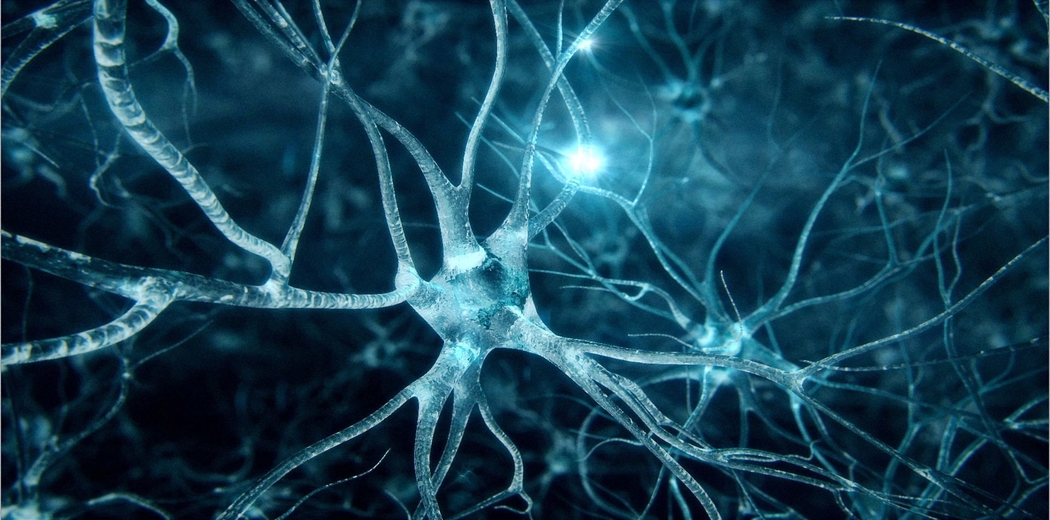
Artificial Neural Networks (ANNs) are a powerful class of machine learning models inspired by the structure and function of biological neural networks found in the human brain. The origins of ANNs can be traced back to the 1940s, with the introduction of the McCulloch-Pitts neuron model. Since then, ANNs have evolved significantly and have become a fundamental tool in the field of artificial intelligence.
At the core of an ANN is the artificial neuron, which is designed to mimic the behavior of a biological neuron. Each artificial neuron receives inputs, processes them using weights and biases, and produces an output based on an activation function. These neurons are organized into layers, forming the structure of an ANN. A typical ANN consists of an input layer, one or more hidden layers, and an output layer.
2. Mathematical Foundation of ANNs
To understand the inner workings of an ANN, it is essential to grasp the mathematical concepts that underlie its operation. Each neuron in an ANN has associated weights and biases that determine the strength and importance of the connections between neurons. The output of a neuron is calculated by taking the weighted sum of its inputs and applying an activation function to introduce non-linearity.
Mathematically, the output of a neuron can be expressed as:
z = w1*x1 + w2*x2 + ... + wn*xn + b
a = f(z)
where x1, x2, …, xn are the inputs, w1, w2, …, wn are the corresponding weights, b is the bias term, and f is the activation function.
Commonly used activation functions include the sigmoid function, hyperbolic tangent (tanh) function, and Rectified Linear Unit (ReLU) function. These functions introduce non-linearity into the network, allowing it to learn complex patterns and relationships in the data.
3. Training an ANN
Training an ANN involves adjusting the weights and biases to minimize the difference between the predicted outputs and the actual outputs. This process is typically accomplished using the backpropagation algorithm, which calculates the gradients of the loss function with respect to the weights and biases.
The backpropagation algorithm consists of two main steps: forward propagation and backward propagation. During forward propagation, the input data is passed through the network, and the outputs are computed. The predicted outputs are then compared with the actual outputs, and the loss is calculated using a loss function such as mean squared error or cross-entropy.
In the backward propagation step, the gradients of the loss function with respect to the weights and biases are calculated using the chain rule of derivatives. These gradients are then used to update the weights and biases using an optimization algorithm such as gradient descent or its variants (e.g., stochastic gradient descent, Adam optimizer).
4. Implementing an ANN from Scratch
To gain a deeper understanding of ANNs, it is beneficial to implement one from scratch using a programming language like Python. Here‘s a step-by-step guide to building a basic ANN:
-
Set up the programming environment by installing the necessary libraries such as NumPy for numerical computations.
-
Define the structure of the neural network by specifying the number of layers, neurons in each layer, and activation functions.
-
Implement the forward propagation step, which involves calculating the weighted sum of inputs and applying the activation function for each neuron.
-
Implement the backpropagation step, which involves calculating the gradients of the loss function with respect to the weights and biases and updating them using an optimization algorithm.
-
Train the network on a sample dataset by iteratively performing forward propagation, calculating the loss, and updating the weights and biases using backpropagation.
Here‘s a code snippet that demonstrates the basic structure of an ANN implemented in Python using NumPy:
import numpy as np

class NeuralNetwork:
    def __init__(self, input_size, hidden_size, output_size):
        self.input_size = input_size
        self.hidden_size = hidden_size
        self.output_size = output_size

        self.weights1 = np.random.randn(input_size, hidden_size)
        self.bias1 = np.zeros((1, hidden_size))
        self.weights2 = np.random.randn(hidden_size, output_size)
        self.bias2 = np.zeros((1, output_size))

    def sigmoid(self, x):
        return 1 / (1 + np.exp(-x))

    def forward(self, X):
        self.hidden_layer = self.sigmoid(np.dot(X, self.weights1) + self.bias1)
        self.output_layer = self.sigmoid(np.dot(self.hidden_layer, self.weights2) + self.bias2)
        return self.output_layer

    def backward(self, X, y, learning_rate):
        # Backpropagation implementation
        # ...

    def train(self, X, y, epochs, learning_rate):
        for _ in range(epochs):
            output = self.forward(X)
            self.backward(X, y, learning_rate)
5. Hyperparameter Tuning and Regularization
Hyperparameter tuning plays a crucial role in optimizing the performance of an ANN. Hyperparameters are the settings that define the architecture and learning process of the network, such as the number of hidden layers, number of neurons in each layer, learning rate, and activation functions.
To find the optimal hyperparameters, techniques like grid search or random search can be employed. Grid search involves exhaustively searching through a specified subset of the hyperparameter space, while random search samples hyperparameter values from a defined distribution.
Regularization techniques are used to prevent overfitting, which occurs when the model learns to fit the noise in the training data rather than the underlying patterns. L1 and L2 regularization add a penalty term to the loss function, discouraging large weight values. Dropout is another regularization technique that randomly drops out neurons during training, forcing the network to learn more robust features.
6. Advanced ANN Architectures
While the basic ANN architecture is powerful, several advanced architectures have been developed to tackle specific tasks and data types:
-
Convolutional Neural Networks (CNNs) are designed for processing grid-like data, such as images. They utilize convolutional layers to learn local patterns and pooling layers to reduce spatial dimensions.
-
Recurrent Neural Networks (RNNs) are well-suited for processing sequential data, such as time series or natural language. They have connections that loop back, allowing them to maintain a hidden state and capture dependencies over time.
-
Autoencoders are unsupervised learning models that aim to learn a compressed representation of the input data. They consist of an encoder network that maps the input to a lower-dimensional latent space and a decoder network that reconstructs the original input from the latent representation.
7. Applications of ANNs
ANNs have found applications across various domains, showcasing their versatility and power:
-
Image Classification and Object Detection: ANNs, particularly CNNs, have revolutionized the field of computer vision. They are used for tasks such as classifying images into predefined categories and detecting and localizing objects within images.
-
Natural Language Processing (NLP): ANNs have made significant strides in understanding and generating human language. They are used for tasks like sentiment analysis, machine translation, text generation, and named entity recognition.
-
Recommender Systems: ANNs can learn user preferences and item features to provide personalized recommendations. They are employed in recommender systems for e-commerce, music streaming, and video platforms.
-
Time Series Forecasting: ANNs, particularly RNNs and their variants (e.g., LSTM, GRU), are effective in modeling and predicting time series data. They are used in various domains, including finance, weather forecasting, and demand prediction.
8. Challenges and Future Directions
Despite the remarkable achievements of ANNs, there are still challenges and limitations to be addressed:
-
Interpretability: ANNs are often considered "black boxes" due to the difficulty in understanding how they arrive at their predictions. Improving the interpretability of ANNs is an active area of research, aiming to make them more transparent and explainable.
-
Computational Complexity: Training deep ANNs can be computationally expensive, requiring significant computational resources and time. Efforts are being made to develop more efficient training algorithms and hardware accelerators.
-
Ethical Considerations: As ANNs become more prevalent in decision-making systems, it is crucial to consider the ethical implications. Ensuring fairness, accountability, and transparency in the development and deployment of ANNs is an ongoing challenge.
Looking towards the future, several emerging trends and research areas are shaping the field of ANNs:
-
Explainable AI: Developing methods to interpret and explain the decisions made by ANNs is gaining significant attention. Techniques like attention mechanisms and model-agnostic explanations are being explored to enhance the transparency of ANNs.
-
Neuromorphic Computing: Inspired by the brain‘s energy efficiency, neuromorphic computing aims to develop hardware architectures that emulate the principles of biological neural networks. This approach has the potential to enable low-power, real-time processing for AI applications.
-
Continual Learning: Enabling ANNs to learn continuously and adapt to new tasks without forgetting previously learned knowledge is an active research area. Techniques like transfer learning and lifelong learning are being investigated to achieve this goal.
Conclusion
Artificial Neural Networks have proven to be a powerful tool in the field of machine learning and artificial intelligence. By drawing inspiration from biological neural networks, ANNs have the ability to learn complex patterns and relationships from data.
In this comprehensive guide, we have explored the fundamental concepts of ANNs, including their mathematical foundation, training process, and implementation from scratch. We have also discussed advanced ANN architectures, hyperparameter tuning, regularization techniques, and various applications of ANNs.
As the field of AI continues to evolve, ANNs will undoubtedly play a crucial role in shaping the future. While challenges remain, ongoing research efforts are focused on improving the interpretability, efficiency, and ethical considerations of ANNs.
By understanding the principles and techniques behind ANNs, practitioners and researchers can harness their potential to solve complex problems and push the boundaries of what is possible with artificial intelligence.