Artificial Neural Networks: Biological Inspiration, Mechanisms, and Applications

Artificial neural networks (ANNs) are a cornerstone of modern artificial intelligence and machine learning, powering state-of-the-art systems for everything from image recognition to language translation. But what exactly are these computational models, and how do they work? In this deep dive, we‘ll explore the biological roots of ANNs, the mechanisms underlying their function, and their applications across domains.
As an AI and machine learning expert, I‘ll aim to provide an in-depth technical perspective while highlighting the most exciting developments in this rapidly evolving field. We‘ll see how ANNs are advancing the state of the art in AI while also shedding light on the workings of the brain.
Neural Networks in Biology
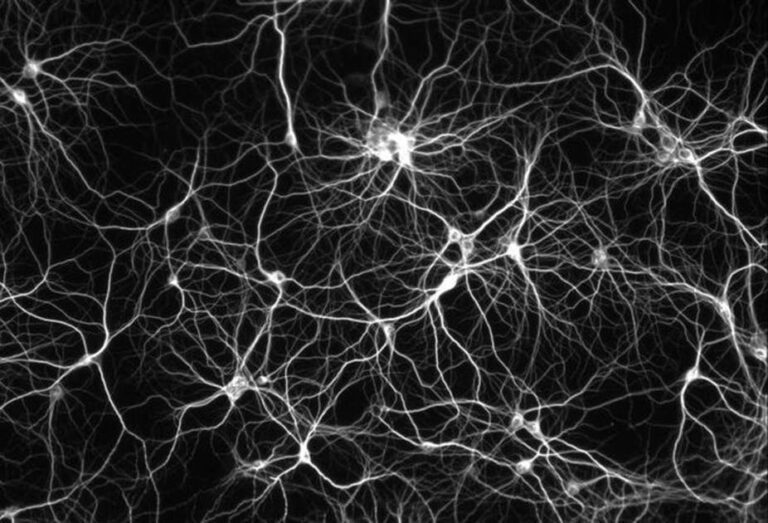
The original inspiration for artificial neural networks comes from their biological counterparts in the brains of animals and humans. The human brain contains an estimated 86 billion neurons1, interconnected in a dense network via approximately 150 trillion synapses2. That equates to an average of around 1,000 synaptic connections per neuron, although some neurons can have up to 10,000 or more.

Each biological neuron consists of three main components:
- Dendrites – branched extensions that receive input signals from upstream neurons
- Cell body (soma) – contains the nucleus and integrates input signals
- Axon – a long, thin fiber that carries the output signal to downstream neurons
Neurons communicate using a combination of electrical and chemical signaling. When a neuron receives sufficient stimulatory input through its dendrites, it generates an action potential – a rapid electrical impulse that travels down the axon. This signal is then converted into a chemical one at synaptic terminals, as neurotransmitter molecules are released and diffuse across the synapse to receptors on postsynaptic neurons.

The human brain is not fully "hardwired" at birth – while the coarse architecture is largely genetically determined, the details of connectivity are shaped through learning and experience. This is possible due to synaptic plasticity: the ability for synapses to strengthen or weaken over time based on patterns of activity. The two major forms of plasticity are:
- Long-term potentiation (LTP) – a persistent increase in synaptic strength following high-frequency stimulation
- Long-term depression (LTD) – a persistent decrease in synaptic strength following low-frequency stimulation
It is believed that LTP and LTD, along with other forms of synaptic and cellular plasticity, form the basis for learning and memory in the brain3. As we‘ll see, this capacity for experience-dependent modification is a key feature that artificial neural networks aim to capture.
Artificial Neurons and Network Architectures
At a high level, artificial neural networks are composed of interconnected processing units called artificial neurons, inspired by biological neurons. However, the details differ in important ways.

A typical artificial neuron computes a weighted sum of its inputs, applies an activation function, and passes the result as output to downstream neurons. Mathematically, for a neuron with n inputs, the output y is:
$$y = f(\sum_{i=1}^{n} w_i x_i + b)$$
where:
- $x_i$ is the ith input
- $w_i$ is the weight for the ith input
- $b$ is a bias term
- $f$ is the activation function
Here‘s what this might look like in Python code:
def artificial_neuron(inputs, weights, bias, activation):
    """A simple artificial neuron"""
    z = sum(x * w for x, w in zip(inputs, weights)) + bias
    return activation(z)
Some commonly used activation functions include:
def sigmoid(z):
    """Sigmoid activation"""
    return 1 / (1 + math.exp(-z))

def relu(z):
    """Rectified linear unit activation"""
    return max(0, z)

def tanh(z):
    """Hyperbolic tangent activation"""
    return math.tanh(z)
In an artificial neural network, neurons are typically arranged in layers, with each neuron receiving input from neurons in the previous layer and sending output to neurons in the next layer. The most basic type of ANN is the feedforward network, where signals flow in one direction from input to output.

However, many other ANN architectures have been developed over the years:

Some key milestones include:
- 1960s – Perceptrons, Adaline/Madaline
- 1980s – Hopfield networks, Kohonen networks
- 1990s – Recurrent neural networks (RNNs), Long short-term memory (LSTM)
- 2000s – Deep belief networks, Convolutional neural networks (CNNs)
- 2010s – Deep Boltzmann machines, Generative adversarial networks (GANs)
- 2020s – Transformer networks, Graph neural networks, Spiking neural networks
As we‘ll explore, these various architectures have enabled groundbreaking results across a wide range of problem domains.
Biological and Artificial Neural Networks
While artificial neural networks take clear inspiration from biology, it‘s important to recognize that they are vastly simplified models compared to their biological counterparts. Some key differences include:
- Scale – the human brain has ~86 billion neurons and ~150 trillion synapses; the largest ANNs have at most billions of artificial neurons and parameters
- Connectivity – biological neurons have thousands of connections each; artificial neurons are typically connected to tens or hundreds of others
- Signaling – biological neurons use a complex interplay of electrical and chemical signaling; artificial neurons typically use static, scalar values
- Learning – the brain uses a variety of plasticity mechanisms at the cellular and network levels; ANNs typically use simplified learning rules like backpropagation of error gradients

Despite these differences, ANNs have proven to be powerful tools for machine learning and AI. By using simplified abstractions of biological neurons and learning rules, they can learn to recognize complex patterns and make sophisticated decisions.
Interestingly, ANNs are also shedding new light on the workings of the brain. There is a growing field of research at the intersection of neuroscience and AI exploring how biological and artificial neural networks compare and what they can learn from each other:
"The fields of neuroscience and artificial intelligence have been converging in recent years, with neuroscience inspiring new AI algorithms and AI providing new tools for understanding the brain. This convergence is likely to accelerate in the coming years, as we seek to build more capable and biologically-plausible AI systems." – Blake Richards, Assistant Professor, McGill University
For example, researchers have used ANNs trained on object recognition tasks to predict neural responses in the primate visual system4. Conversely, insights from neuroscience about the wiring of the visual cortex have inspired new ANN architectures like capsule networks5.
Applications of Artificial Neural Networks
Thanks to their ability to learn complex functions from data, ANNs have found applications across a huge range of problem domains. In many cases, neural networks now match or exceed human-level capabilities on specific tasks. Some key application areas include:
-
Computer vision – ANNs, particularly convolutional neural networks, power state-of-the-art systems for image classification, object detection, facial recognition, and more. For example, as of 2020, the best ANNs achieved over 99% accuracy on the famous ImageNet dataset, surpassing human performance6.
-
Natural language processing – ANNs are the core technology behind language models like GPT-3 that can engage in human-like conversation, answer questions, and even write coherent articles. They‘re also widely used for language translation, sentiment analysis, named entity recognition, and other language tasks.
-
Robotics and control – ANNs enable robots to learn complex sensorimotor skills for navigation, manipulation, and interaction. For instance, researchers have used ANNs to train robotic hands to manipulate objects with human-like dexterity7.
-
Healthcare and bioinformatics – Neural networks are increasingly used for analyzing medical images, predicting disease progression, aiding drug discovery, and understanding genomic data. In 2020, DeepMind‘s AlphaFold 2 achieved unprecedented accuracy in predicting 3D protein structures from amino acid sequences using ANNs8.
-
Finance and business – Banks and financial institutions use ANNs for fraud detection, credit risk assessment, and algorithmic trading. AI-powered systems can spot patterns indicative of fraud in real-time across millions of transactions. ANNs also underpin recommendation systems like those used by Amazon and Netflix.
The following chart shows the meteoric growth of AI investment in recent years, much of which is driven by advances in neural networks:

As ANNs become larger, trained on more data, and integrated into more systems, their impact is only set to increase. A 2019 report by PwC estimated that AI could contribute up to $15.7 trillion to the global economy by 20309.
Limitations and Future Directions
Despite their successes, today‘s neural networks still have significant limitations compared to human intelligence. Some key challenges include:
- Requiring large amounts of labeled training data
- Struggling to generalize beyond their training data
- Being sensitive to small input perturbations (adversarial examples)
- Lacking common sense knowledge and reasoning abilities
- Being difficult to interpret and prone to bias
Addressing these limitations is a major focus of current AI research. Some of the most exciting developments in recent years include:
- Few-shot and zero-shot learning, enabling ANNs to learn from limited examples
- Transfer learning, allowing knowledge gained from one task to be applied to another
- Neural network interpretability techniques like feature visualization and attribution
- Hybrid AI systems combining neural networks with symbolic reasoning and knowledge graphs
- More biologically-realistic network architectures like spiking neural networks
Looking further ahead, many researchers believe that achieving true artificial general intelligence (AGI) – AI with human-like flexibility and breadth – will require fundamental advances in our understanding of both biological and artificial neural networks. We‘ll need to build systems that can learn continually, reason abstractly, and integrate multiple modes of intelligence.
"The development of artificial general intelligence is still a long way off and might not be achievable using only the deep learning techniques that have driven recent progress in AI. I believe that new approaches taking inspiration from cognitive science, neuroscience, and developmental psychology will be crucial." – Yoshua Bengio, Professor, University of Montreal and Turing Award winner
In the meantime, narrower neural network applications will continue to advance and transform every sector of society. As AI researcher Andrew Ng puts it:
"AI is the new electricity. Just as electricity transformed almost everything 100 years ago, today I actually have a hard time thinking of an industry that I don‘t think AI will transform in the next several years."
The coming decades will be a time of tremendous progress – and disruption – as artificial neural networks reshape our world. Despite the challenges ahead, one thing is clear: these brain-inspired models will be central to the future of AI and technology more broadly. We are only just beginning to tap their potential.


![Your Comprehensive Guide to Data Science Salaries & Job Trends in India [2025 Edition]](https://33rdsquare.com/wp-content/uploads/2024/12/20241224131655-676ab44790888-768x554.jpg)