Brilliant Brown: An In-Depth Look at the Brown Border Collie
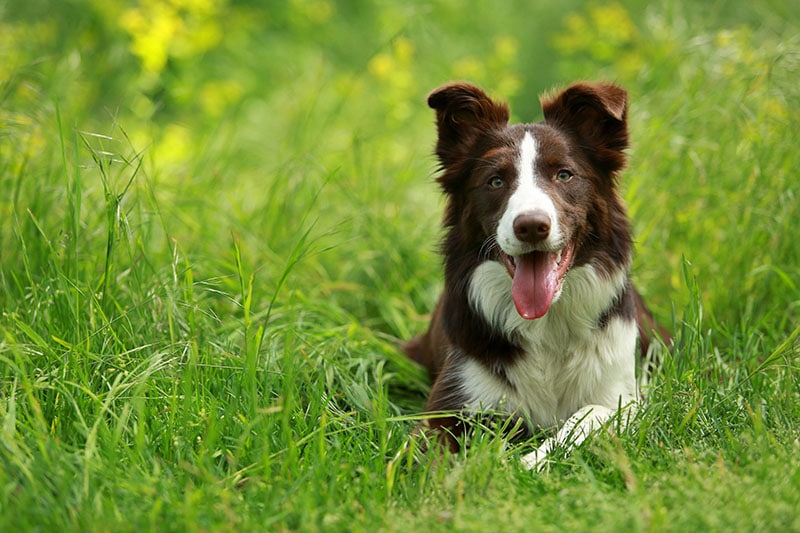
As a long-time dog lover and border collie enthusiast, I‘ve always been fascinated by the many coat colors and patterns these incredible herding dogs come in. While the classic black and white will always be iconic, there‘s something undeniably striking about a rich, chocolate-colored border collie.
If you‘ve been captivated by these brown beauties too, you‘re not alone! Let‘s take a deep dive into the history, key characteristics, and special needs of the brilliant brown border collie. By the end, you‘ll have a new appreciation for these intelligent, driven, and yes, sometimes quirky dogs.
The Origins of the Border Collie
The story of the border collie begins in the rugged border country between England and Scotland. For centuries, shepherds in this region relied on highly skilled dogs to help them manage their flocks. These herding dogs needed to be fast, agile, and supremely responsive to their handler‘s commands, often working at great distances.
Over time, the shepherds selectively bred the best working dogs together, carefully refining the traits that made them such invaluable partners. The result was the border collie, a dog with an almost supernatural ability to control and move livestock.
Historians believe the border collie‘s ancestors included the old Roman herding dogs brought to Britain during the Roman conquest, as well as the spitz-type dogs introduced by the Vikings. In fact, some suspect the Viking influence may account for the unusual color patterns like merle and brindle sometimes seen in the breed.
Old Hemp: Father of the Modern Border Collie
No discussion of border collie history is complete without mentioning Old Hemp. Born in 1893 in Northumberland, England, Old Hemp was a tri-colored dog with the classic border collie intelligence and herding style. He was so impressive, shepherds from all over lined up to breed their female dogs to him.
Old Hemp sired over 200 puppies in his lifetime, and his genetics have influenced the breed ever since. In fact, many modern border collie lines can still be traced back to this one remarkable dog. Some speculate that Old Hemp‘s tri-colored coat helped solidify the popularity of color variations in border collies beyond the standard black and white.
The Genetics of Coat Color
So how does a brown border collie get that beautiful chocolate coat? It all comes down to genetics. Border collies have several different coat color genes that interact in complex ways.
At the most basic level, the default coat color for a border collie is black. This is determined by the K locus gene. However, other genes can modify this black into various shades and patterns:
- The A locus (agouti) gene produces patterns like sable and tan points
- The B locus (brown) gene dilutes black to shades of brown, from light chocolate to deep liver
- The D locus (dilution) gene washes out black to shades of grey-blue
- The E locus (extension) gene modifies the effect and expression of other color genes
- The merle gene causes random patches of diluted pigment, creating a mottled effect
- The white spotting gene produces areas of white in the coat
For a brown border collie, the key gene at play is the B locus. A dog needs to inherit a recessive "b" allele from each parent to display a brown coat. If a dog has even one dominant "B" allele, their coat will be black (though it may be modified by other genes like the agouti or white spotting genes).
Because the brown color is recessive, breeding two brown border collies together will always produce brown puppies. But breeding a brown to a black can produce black puppies that carry the brown gene. These dogs can then potentially pass the brown gene to their puppies if bred to another brown carrier or brown dog.
It‘s important to note that no matter what color a border collie‘s coat is, their nose, lips, and eye rims should always be solid black. Brown or liver-colored nose leather is considered a disqualification in the breed standard, as it can be associated with other health issues.
Border Collie Characteristics and Temperament
Now that we‘ve explored some of the history and genetics behind the brown border collie, let‘s take a closer look at what makes these dogs tick. From their off-the-charts intelligence to their intense work drive, there‘s a lot to unpack when it comes to the border collie temperament.
Intelligence
Border collies aren‘t just smart – they‘re often considered the most intelligent of all domestic dog breeds. In his book "The Intelligence of Dogs," neuropsychologist Stanley Coren ranked border collies as the #1 brightest breed, based on their ability to learn new commands with fewer than five repetitions and obey them 95% of the time.
But border collie intelligence goes beyond just learning commands quickly. These dogs have an uncanny ability to read subtle human cues and almost seem to anticipate what their handlers want. They‘re also excellent problem solvers, able to figure out how to open gates, escape crates, and even herd objects (or other animals) on their own.
While having such a smart dog can be a joy, it also presents challenges. Border collies need a lot of mental stimulation to keep their agile minds engaged. They can quickly become bored (and destructive) without plenty of interaction, training, and puzzles to solve. Owners need to be prepared to provide a lifetime of ongoing enrichment.
Work Drive and Stamina
As herding dogs, border collies were bred to work long days over rugged terrain, keeping flocks of sheep under control. That work ethic and endurance remains hard-wired into the breed today, even in lines bred for companionship.
Most border collies are not content to be couch potatoes – they thrive on having a job to do, whether that‘s herding livestock, participating in dog sports like agility or flyball, or simply accompanying their owner on long hikes or runs. Without an outlet for their immense stamina and drive, they can quickly develop behavioral issues.
How much exercise does a border collie need? While individual needs vary, most require at least 60-90 minutes of vigorous physical activity every single day. And no, letting them out in the backyard doesn‘t count – these dogs were bred to work closely with humans and crave that interaction.
In addition to physical exercise, border collies need plenty of mental stimulation as well. Training sessions, puzzle toys, scent work, and games like hide-and-seek can help keep their minds sharp and satisfied.
Herding Instinct
One of the most important things to understand about border collies is their strong instinct to herd. For many border collies, this drive to gather and control moving objects is hardwired into their DNA, even if they‘ve never seen a sheep in their life.
This herding instinct can manifest in a variety of ways. Some border collies will try to round up children, other pets, or even strangers on the street. They may give chase to joggers, bicyclists, and cars. Many exhibit "eye," an intense stare used to intimidate and control livestock.
While the herding drive can be channeled into fun sports like Treibball (herding exercise balls into a goal), it needs to be properly managed to prevent problem behaviors. Teaching a solid recall and "leave it" command is crucial, as is providing appropriate outlets for the drive like herding sessions or stock dog trials.
It‘s also important to socialize border collies thoroughly from a young age so that their herding instinct doesn‘t translate into fear or aggression towards strange people, dogs, or objects. Positive experiences with a variety of sights, sounds, and textures can help them grow into confident, well-adjusted adult dogs.
Sensitivity and Personality
Despite their intense work drive and energy, border collies often have a sensitive side as well. These dogs live to please and work closely with their humans, and can become anxious if left alone too much or not given clear direction.
Border collies also tend to be highly attuned to their environment and human cues. They can pick up on subtle changes in body language or tone of voice, and may become fearful or shut down if handled harshly. Positive reinforcement training using praise, play, and high-value treats is usually the most effective approach with these intelligent but sometimes delicate dogs.
While border collies are often stereotyped as serious workaholics, they can have a playful, almost goofy side as well. Many love to play fetch, tug, or engage in silly antics to get their owners to laugh. They tend to bond closely with their families and can be charmingly affectionate with those they trust.
That said, border collies often have strong preferences when it comes to being touched or handled. They may not appreciate being hugged, having their paws touched, or being approached by strangers without warning. Respecting their personal space and body language is key to building a strong, trusting bond.
Health and Grooming
As a breed, border collies are generally healthy and long-lived, with an average lifespan of 12-15 years. However, like all purebred dogs, they can be prone to certain genetic health issues. These include:
- Hip dysplasia: a malformation of the hip joint that can lead to arthritis and lameness
- Collie eye anomaly (CEA): a group of inherited eye disorders that can cause vision impairment or blindness
- Epilepsy: a neurological condition that causes seizures
- Deafness: can be linked to the merle gene and is more common in predominantly white dogs
- Progressive retinal atrophy (PRA): a degenerative eye disorder that can lead to night blindness and vision loss
Responsible border collie breeders will health test their breeding stock for these and other known issues in the breed. Prospective owners should ask to see proof of health clearances for both parents before purchasing a puppy.
In terms of grooming, border collies have a dense double coat that sheds seasonally. They require regular brushing to remove loose hair and keep their coat healthy, especially during heavy shedding periods. A slicker brush, undercoat rake, and metal comb can all be useful tools in a border collie grooming kit.
Border collies should only be bathed as needed, as over-bathing can strip their coat of natural oils. Their nails should be trimmed regularly to prevent overgrowth and splitting. And don‘t forget dental care – daily tooth brushing and professional cleanings can help prevent periodontal disease.
Training and Socialization
As we‘ve already explored, border collies are extremely intelligent and thrive on mental stimulation and human interaction. This makes them highly trainable, but also means they require a lot of time and effort to reach their full potential.
Positive reinforcement training using praise, play, and high-value treats is often the most effective approach with border collies. These dogs are quick to pick up on patterns and will repeat behaviors that are rewarded.
However, border collies can also be sensitive to harsh corrections or punishment. Yelling, physical force, or other aversive methods can cause them to shut down or become fearful. Instead, focus on redirecting unwanted behaviors and rewarding good choices.
Early and ongoing socialization is also crucial for border collies. These dogs need positive exposure to a wide variety of people, animals, and environments from a young age to develop into confident, well-adjusted adults.
Some ideas for socializing a border collie puppy include:
- Puppy kindergarten classes
- Visits to dog-friendly stores, parks, and events
- Play dates with well-behaved adult dogs and puppies
- Exposure to different surfaces, noises, and objects
- Positive reinforcement for calm behavior around new people and situations
As border collies mature, it‘s important to continue providing them with plenty of mental stimulation and human interaction. Training sessions, puzzle toys, scent work, and participation in dog sports can all help keep their minds sharp and engaged.
Finding a Brown Border Collie
If you‘ve decided that a brown border collie is the right dog for you, it‘s important to take your time and find a responsible breeder. Avoid pet stores, online ads, or anyone offering to ship you a puppy sight unseen – these are often fronts for puppy mills or backyard breeders.
Instead, look for a breeder who:
- Health tests their breeding stock and can provide proof of clearances
- Allows you to visit their home or kennel and meet the parents and puppies
- Asks you questions about your lifestyle and experience to ensure a good match
- Provides a written contract outlining their health guarantee and spay/neuter requirements
- Offers lifetime support and is willing to take the dog back at any point if needed
You can start your search by contacting the Border Collie Society of America or the American Border Collie Association for breeder referrals. Attending local dog shows, herding trials, or performance events can also be a great way to meet breeders and their dogs in person.
While brown border collies are less common than the classic black and white, there are breeders who specialize in this color variety. Just remember that coat color should always be secondary to health, temperament, and working ability when selecting a border collie puppy.
Famous Brown Border Collies
Throughout history, there have been many notable brown border collies who have made their mark in various fields. Here are just a few examples:
-
Honey: This brown and white border collie is a highly skilled search and rescue dog who has worked with the Maine Search and Rescue Dogs team. In 2017, she was awarded the American Humane Hero Dog Award for her lifesaving work.
-
Chaser: Known as "the smartest dog in the world," Chaser was a brown and white border collie who was taught the names of over 1,000 objects by her owner, psychology professor John Pilley. Her remarkable memory and language skills were studied by scientists and featured in numerous publications before her passing in 2019.
-
Maui: This brown and white border collie is best known for his role as Murray on the 1990s sitcom Mad About You. Maui‘s charming performance earned him legions of fans and even spawned his own fan club.
-
Tex: A brown and white border collie from Canada, Tex holds multiple world records in dog sports. He has earned the top spots in both the 60-weave pole challenge and the 10-hoop serpentine challenge, showcasing the speed and agility that border collies are known for.
Conclusion
As we‘ve seen, the brown border collie is a unique and captivating variation of an already remarkable breed. With their striking chocolate coat, keen intelligence, and intense drive to work and please, these dogs can make incredibly rewarding companions for active, experienced owners.
However, it‘s important to remember that owning a border collie is not for the faint of heart. These dogs require extensive socialization, training, and exercise to thrive, and can quickly become destructive or develop behavioral issues if their needs are not met.
If you‘re considering bringing a brown border collie into your life, it‘s crucial to do your research and ensure that you can provide the time, energy, and resources they need to succeed. With the right combination of love, structure, and stimulation, a brown border collie can be a loyal, loving, and endlessly fascinating partner for life.