Building State-of-the-Art Language Models in NLP
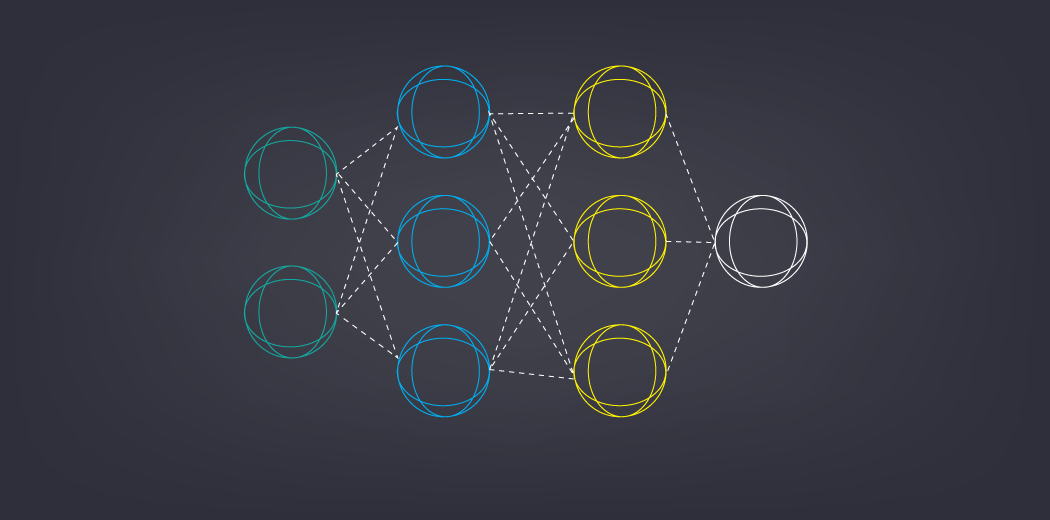
Language models are a fundamental component of natural language processing (NLP) systems. At their core, language models use probability distributions to model the likelihood of sequences of words in a language. By learning these probability distributions from large text corpora, language models gain an understanding of the structure, grammar, and meaning of natural language. This allows them to generate fluent text, predict the next word in a sequence, and enable a wide range of NLP applications.
In recent years, language models have made tremendous strides, transforming the field of NLP. The advent of deep learning and transformer architectures has led to the development of massive, state-of-the-art language models like GPT-4, PaLM, and Chinchilla. These models, trained on enormous datasets using self-supervised learning, have achieved impressive results on a variety of NLP tasks, often surpassing human-level performance.
Types of Language Models
There are several types of language models used in NLP, each with its own strengths and weaknesses:
-
N-gram Models: These are the simplest type of language model, which predict the probability of a word based on the previous N-1 words. N-gram models are fast and easy to train, but they struggle with long-range dependencies and can generate nonsensical text.
-
Feedforward Neural Networks: These are basic neural networks that can be used for language modeling tasks like text classification and sentiment analysis. While more powerful than n-gram models, feedforward networks still have limited context awareness.
-
Recurrent Neural Networks (RNNs): RNNs are designed to handle sequential data, making them well-suited for language modeling. They maintain an internal state that allows them to capture long-range dependencies in text. However, RNNs can be difficult to train and suffer from the vanishing gradient problem.
-
Long Short-Term Memory (LSTM) Networks: LSTMs are a type of RNN that uses special gating mechanisms to better capture long-term dependencies. They have been widely used for language modeling tasks and have achieved strong results.
-
Transformers: Transformer models, introduced in the groundbreaking paper "Attention Is All You Need," have revolutionized NLP in recent years. Transformers use self-attention mechanisms to process input sequences in parallel, allowing them to capture long-range dependencies more effectively than RNNs. Models like BERT, GPT, and T5 are all based on the transformer architecture.
State-of-the-Art Language Models in 2024
As of 2024, the field of language modeling has continued to advance at a rapid pace. Some of the most impressive language models currently available include:
-
GPT-4: The latest iteration of OpenAI‘s Generative Pre-trained Transformer series, GPT-4 is a massive language model with 1.5 trillion parameters. It has achieved state-of-the-art results on a wide range of NLP tasks and can generate remarkably coherent and contextually relevant text.
-
PaLM: Google‘s Pathways Language Model (PaLM) is another trillion-parameter model that has pushed the boundaries of language modeling. PaLM has demonstrated strong few-shot learning capabilities, allowing it to perform well on tasks with limited training data.
-
Chinchilla: Developed by DeepMind, Chinchilla is a 200-billion-parameter model that has achieved impressive results despite being significantly smaller than models like GPT-4 and PaLM. Chinchilla‘s performance highlights the importance of model architecture and training data quality in language modeling.
How Language Models Work
At a high level, language models use probability distributions to model the likelihood of sequences of words in a language. Given a sequence of words (w1, w2, …, wn), a language model estimates the probability of the sequence:
P(w1, w2, …, wn) = P(w1) P(w2|w1) P(w3|w1, w2) … P(wn|w1, w2, …, wn-1)
In other words, the probability of the sequence is the product of the conditional probabilities of each word given the previous words.
To learn these probability distributions, language models are trained on large text corpora using self-supervised learning. This involves feeding the model sequences of text and training it to predict the next word in the sequence. By iterating over millions or billions of training examples, the model learns to capture the statistical patterns and relationships between words in the language.
During inference, language models can be used to generate text by sampling from the learned probability distributions. Given a prompt or context, the model can predict the most likely next word, and then use that word as context to predict the next word, and so on, generating a coherent sequence of text.
Use Cases and Applications
Language models have a wide range of applications in NLP, including:
-
Machine Translation: Language models can be used to translate text from one language to another by learning to model the probability distributions of both languages.
-
Text Generation: Language models can generate human-like text for tasks like creative writing, content creation, and dialogue systems.
-
Sentiment Analysis: By learning to model the sentiment expressed in text, language models can be used to classify the sentiment of reviews, social media posts, and other user-generated content.
-
Question Answering: Language models can be used to build systems that can answer questions based on a given context or knowledge base.
-
Text Summarization: Language models can generate concise summaries of longer texts by identifying the most important information and generating a condensed version.
-
Named Entity Recognition: Language models can identify and classify named entities (e.g., people, places, organizations) in text.
-
Part-of-Speech Tagging: Language models can assign grammatical tags (e.g., noun, verb, adjective) to words in a sentence.
Challenges of Language Modeling
Despite the impressive progress made in recent years, language modeling still faces several challenges:
-
Long-Term Dependencies: Capturing long-range dependencies in text remains a challenge for language models, particularly for models based on RNNs. While transformer models have made significant progress in this area, there is still room for improvement.
-
Bias: Language models can pick up and amplify biases present in their training data, leading to biased outputs. Addressing bias in language models is an active area of research.
-
Interpretability: Due to their complexity, language models can be difficult to interpret and understand. Improving model interpretability is important for building trust and ensuring fairness in NLP systems.
-
Computational Resources: Training state-of-the-art language models requires enormous computational resources, putting them out of reach for many researchers and organizations. Finding ways to train large models more efficiently is an ongoing challenge.
Building Language Models
Building a language model involves several key steps:
-
Data Collection and Preprocessing: The first step is to gather a large corpus of text data to train the model on. This data must be preprocessed to remove noise, normalize formatting, and tokenize the text into individual words or subwords.
-
Model Architecture Selection: Next, the appropriate model architecture must be chosen based on the specific task and available resources. Transformers have become the architecture of choice for most state-of-the-art language models.
-
Model Training: The model is then trained on the preprocessed data using self-supervised learning. This involves feeding the model sequences of text and training it to predict the next word in the sequence. The model‘s parameters are updated through backpropagation to minimize the prediction error.
-
Hyperparameter Tuning: To achieve optimal performance, the model‘s hyperparameters (e.g., learning rate, batch size, number of layers) must be carefully tuned. This is typically done through a combination of manual experimentation and automated hyperparameter search.
-
Model Evaluation and Deployment: Once trained, the model is evaluated on a held-out test set to assess its performance. If the model meets the desired performance criteria, it can be deployed for use in downstream NLP applications.
Future Directions
Looking ahead, there are several exciting directions for future research and development in language modeling:
-
Larger Models: The trend toward ever-larger language models is likely to continue, with models surpassing trillions or even quadrillions of parameters. However, training these massive models efficiently remains a challenge.
-
Multimodal Models: Integrating information from multiple modalities (e.g., text, images, speech) into language models is an active area of research. Multimodal models have the potential to enable more natural and expressive interactions between humans and AI systems.
-
Few-Shot Learning: Improving the few-shot learning capabilities of language models is another important direction. Models that can perform well on new tasks with limited training data will be more flexible and adaptable to real-world scenarios.
-
Reasoning and Knowledge Integration: Endowing language models with reasoning capabilities and the ability to integrate knowledge from external sources is a major challenge. Progress in this area could enable language models to perform more complex tasks that require logical reasoning and real-world knowledge.
Conclusion
Language models have come a long way in recent years, transforming the field of NLP and enabling a wide range of applications. From n-gram models to state-of-the-art transformers like GPT-4 and PaLM, language models continue to push the boundaries of what is possible with AI-based language understanding and generation.
As research into language modeling progresses, we can expect to see even more impressive and capable models in the coming years. However, significant challenges remain, including improving model efficiency, reducing bias, and integrating reasoning and knowledge. Overcoming these challenges will be critical to realizing the full potential of language models and building more intelligent and helpful NLP systems.