
Sentiment Analysis of Twitter Communications During the 2015 Chennai Floods
Introduction
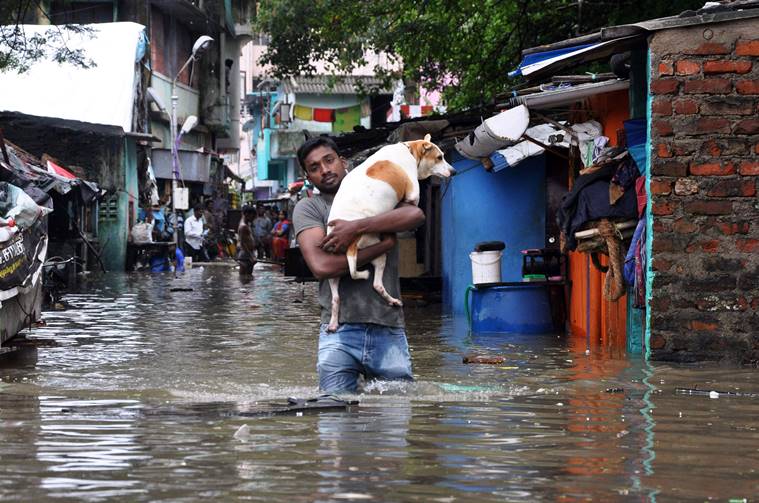
In November-December 2015, the Indian city of Chennai was hit by devastating floods triggered by heavy rainfall from the annual northeast monsoon. The deluge submerged entire neighborhoods, claimed over 500 lives, displaced nearly 2 million people, and caused economic damages to the tune of $3 billion, making it one of the costliest natural disasters of the year.
As the crisis unfolded, social media platforms, especially Twitter, emerged as a vital channel for disseminating information, connecting affected people with rescuers, and coordinating relief efforts. Stranded residents tweeted out their location details and rescue requests, while government agencies, NGOs, and volunteers used Twitter to share updates, helpline numbers, and resource availability.
Given the critical role played by Twitter during the Chennai floods, analyzing the sentiment and content of tweets can provide valuable insights into the public opinions, experiences, and needs during the disaster. The objective of this case study is to understand the different topics and themes of Twitter communications, explore the patterns of information sharing, and discover how the platform shaped the crisis response.
Methodology
Data Extraction and Preparation
Tweets related to the Chennai floods were extracted using relevant hashtags such as #ChennaiFloods, #ChennaiRains, #ChennaiRainsHelp, etc. A total of 100,000 tweets posted between 1-5 December 2015, the peak days of the flooding, were collected for analysis.
The raw tweets underwent a series of data cleaning and preparation steps:
- Removal of numbers, punctuation, URLs, and non-English words
- Converting to lowercase and removing stopwords
- Stemming and lemmatization to reduce words to their base forms
- Separation of hashtags and user mentions using regular expressions
Exploratory Data Analysis
Preliminary exploration of the tweet corpus revealed some interesting patterns:
-
Popular hashtags provided an indication of key themes, such as requests for help (#ChennaiRainsHelp), information on weather/rain forecasts (#ChennaiWeather), mentions of specific areas (#Velachery, #Tambaram), and expressions of sympathy (#PrayForChennai).
-
Influential users included media houses, journalists, politicians, relief organizations, and some celebrities. Their tweets tended to get more retweets and favorites.
-
Frequently occurring words included "water", "rescue", "road", "food", "people", "area", "safe", and place names. Bigram analysis showed strong associations between words like "need help", "send rescue", "stuck water", "no power" etc.
Clustering Analysis
Clustering was performed to automatically group together tweets with similar content and identify the broad categories or themes of discussion.
Hierarchical clustering revealed 4-5 high-level clusters:
- General info/updates about affected areas, people, news
- Requests for rescue, food, supplies
- Info on weather forecasts, rains, rising water levels
- Precautions, warnings, relief efforts
K-means clustering (with k=3) produced clusters centering around:
- News and warnings
- Help requests and coordination
- Location-specific updates
Topic Modeling
Latent Dirichlet Allocation (LDA), a generative probabilistic model, was applied to discover the hidden topics in the tweets. The model was run to find 6 topics, and the top keywords for each topic were examined.
The emergent topics could be interpreted as:
- Rescue requests and victim locations
- Weather updates and forecasts
- General info on flooded areas and affected people
- Fundraising, donations and relief efforts
- Volunteer coordination and help offers
- Sympathy, prayers and emotional support
Results and Discussion
The Twitter sentiment analysis during Chennai floods provides a window into the pulse of public conversations and yields several insights for disaster response:
-
Identifying areas/localities in distress: Place names mentioned frequently in tweets and hashtags can highlight the worst-hit areas in need of urgent attention. During Chennai floods, Velachery, Tambaram, Mudichur, Chromepet were some of the most tweeted locations.
-
Detecting victim needs and matching them to aid: Clustering tweets can quickly reveal the different types of needs (rescue, food, medicine, etc.) and help in matching them to the appropriate resources and volunteer efforts.
-
Tracking on-ground developments: Tweets from affected people act as real-time updates on the flood situation, water levels, power outages, and other critical parameters. Relief agencies can tap into this citizen-sensor network for planning and adapting their response.
-
Dispelling rumors and misinformation: Topic modeling can help isolate tweets that propagate false news or rumors and counter them with verified information from official channels. Flooding events often lead to a flurry of fake news that can misguide response efforts.
-
Understanding public sentiment and psyche: Tweet sentiments can gauge the overall public moods, fears, and grievances during a crisis. This can guide the communication strategy and aid outreach for mental health support.
Applications and Future Scope
This case study demonstrates the immense potential of social media analytics in the disaster management domain. A real-time tweet analysis dashboard with location mapping, clustering, and topic modeling features can be an invaluable tool for relief agencies, first responders, and other stakeholders.
Government bodies like the National Disaster Response Force (NDRF) and city municipals would greatly benefit from an integrated social media monitoring cell to mine, filter, and convert the deluge of citizen tweets into actionable intelligence. Civic authorities can also proactively use social media for sending out emergency alerts, route maps, dos and don‘ts that amplify their reach.
Further research scope includes using deep learning techniques for more contextual understanding of tweet content, images and videos. Multi-label classification models can automatically tag tweets into different categories of needs. Network analysis can identify influential nodes for effective information dissemination. Cross-platform analysis covering Facebook, Instagram, YouTube can provide a more comprehensive picture.
Challenges and Limitations
Social media analysis in disaster scenarios comes with its own set of challenges. The sheer velocity and volume of tweets posted during a crisis can overwhelm traditional data processing systems. The informal and unstructured nature of tweet content makes it harder to extract meaningful information. Geo-tagged tweets are only a small fraction, making it difficult to accurately map the locations. Determining the veracity and credibility of tweets is another concern, as crisis events invariably get clouded by rumors, speculations, and misinformation.
This particular study is limited by the fact that it is focused on English language tweets, while a considerable chunk of tweets during Chennai floods were in the native Tamil language. Sentiment analysis has not been performed. The dataset of 100,000 tweets is only a sample and not exhaustive. Nevertheless, it provides a framework and direction for future studies at the intersection of social media and disaster response.
Conclusion
Twitter emerged as a crucial channel of communication and collaboration during the Chennai floods, and this case study barely scratches the surface of its potential. As social media usage gets more pervasive, it is imperative that disaster response agencies leverage this growing repository of real-time citizen data.
Tools and technologies for mining social media content are getting more sophisticated by the day. With careful filtering, cross-validation and expert interpretation, raw social media streams can yield rich situational awareness and actionable intelligence to aid data-driven disaster management.
What has traditionally been a one-way communication from response agencies to public is evolving into a two-way dialogue facilitated by social media platforms. When physical infrastructure gets disrupted, the online space emerges as a lifeline. As one user tweeted during the peak of Chennai floods – "They say that when real life fails, virtual life rescues you." Analysis of Twitter feeds stands testimony to that.


