Detecting Coca-Cola Bottles in Images: A Comprehensive Guide
Coca-Cola is an iconic brand whose contour glass bottle is recognized by 94% of the world‘s population. With over 500 beverage brands sold in more than 200 countries, Coca-Cola produces an astounding 1.9 billion servings per day [^1]. Efficiently manufacturing, distributing, and recycling these products is a monumental challenge – one that computer vision AI is uniquely suited to tackle.
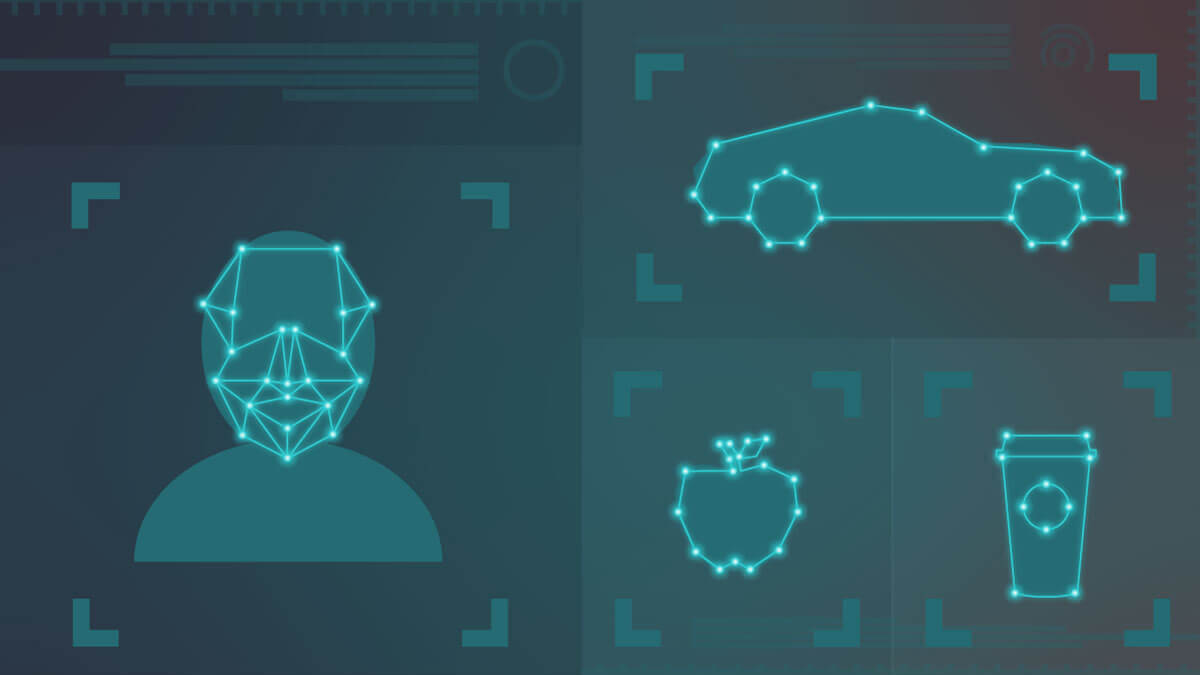
In recent years, deep learning has revolutionized the field of computer vision, enabling machines to detect and localize objects in images and video with near-human accuracy. By applying these cutting-edge techniques to automatically recognize Coca-Cola bottles at massive scale, we can unlock valuable opportunities to:
- Optimize inventory management and supply chain logistics
- Accelerate recycling initiatives and reduce environmental footprint
- Personalize marketing and customer experiences
- Gain competitive insights and identify growth opportunities
In this post, we‘ll dive into the technical details of building a robust Coca-Cola bottle detection system using convolutional neural networks and share practical tips to achieve state-of-the-art performance. But first, let‘s set the stage with some key statistics highlighting the immense potential impact of this application.
The Opportunity: Coca-Cola By The Numbers
To appreciate the scale at which a Coca-Cola bottle recognition system would operate, consider the following figures:
- Coca-Cola sells 1.9 billion servings per day across 500+ brands [^1]
- 99% of the world‘s population has access to a Coca-Cola product [^2]
- 1.7 billion servings of Coke products are consumed per day [^2]
- 73% of Coca-Cola‘s volume comes from outside the U.S. [^2]
- 20% of Coca-Cola‘s packaging is currently recycled [^3]
- Coca-Cola aims to collect and recycle 100% of its packaging by 2030 [^3]
Developing accurate and efficient systems to track Coca-Cola bottles from manufacturing to consumption to recycling is key to optimizing this massive and complex global supply chain. Recent breakthroughs in computer vision AI finally make it possible to build performant visual recognition systems at Coca-Cola‘s scale that can generate real business value.
The Technology: A Primer on Deep Learning for Object Detection
Traditional computer vision techniques relied on hand-engineered features like edges and textures to recognize objects of interest in images. In contrast, deep learning models can automatically learn rich hierarchical feature representations directly from raw image data that are much more expressive and robust.
Convolutional neural networks (CNNs) have become the go-to architecture for visual perception tasks, leveraging the strong spatial priors of image data to efficiently model visual concepts. A CNN consists of stacked convolutional layers that learn local visual patterns, interleaved with pooling layers that aggregate spatial information and fully-connected layers that reason about global structure.

For the specific task of object detection, where the goal is to localize and classify objects of interest within an image, a variety of CNN meta-architectures have been proposed. Popular models like YOLO (You Only Look Once), SSD (Single Shot MultiBox Detector), and Faster R-CNN (Regions with CNN Features) take different approaches to dividing up an image and predicting object bounding boxes and categories, but all rely on convolutional feature extraction backbones pretrained on large-scale image datasets like ImageNet.
When applied to Coca-Cola bottle detection, these models can learn to accurately localize bottles amidst background clutter, occlusion, and lighting variation while maintaining real-time inference speeds. However, achieving peak performance requires carefully curating high-quality training datasets and tuning model architectures to the specifics of the problem.
The Data: Collecting and Annotating Training Images
The success of any deep learning model hinges on access to extensive, representative training data. For our Coca-Cola bottle detector, we need to curate a diverse dataset of images depicting Coca-Cola bottles in a wide range of contexts, from bottling facilities to store shelves to recycling plants. Negative examples without bottles are also important for teaching the model to suppress irrelevant detections.
Some potential data sources include:
- Existing public computer vision datasets like OpenImages, Coco, etc.
- Web scraping platforms to automatically download product images
- Crowdsourcing platforms like Amazon Mechanical Turk for targeted collection
- Internal Coca-Cola footage from manufacturing and distribution
Once images are collected, the next step is to annotate each bottle with a bounding box for training. High-quality annotations are essential for learning precise localization. Annotation tools like LabelImg, RectLabel, and Labelbox provide intuitive interfaces for drawing boxes around object instances.

To ensure our model generalizes well, we should collect images exhibiting diverse object scales, lighting conditions, viewing angles, levels of occlusion, etc. It‘s also important to be consistent with annotation formats. After labeling our data, we‘ll split it into separate train, validation, and test sets to properly evaluate performance. A representative test set will be key for measuring real-world generalization before deploying the model.
The Model: YOLO for Real-Time Bottle Detection
With our annotated dataset prepared, we‘re ready to implement the object detection model. For Coca-Cola bottle detection, we‘ll use the popular YOLO (You Only Look Once) architecture given its strong accuracy and real-time speed.
YOLO divides the input image into an SxS grid and predicts multiple bounding boxes and class probabilities per cell. The network has 24 convolutional layers followed by 2 fully connected layers, pretrained on ImageNet. During training, it minimizes a loss function that combines bounding box regression and conditional class probabilities.

Some key implementation details:
- Resize input images to 416×416 and normalize pixels to [0,1]
- Data augmentation: random horizontal flip, crop, rotate, hue shift
- Anchor boxes: k-means clustering on training bounding boxes
- Uses Darknet-53 CNN feature extractor pretrained on ImageNet
- Output tensor: [S x S x (B*5 + C)], B boxes and C class probabilities per cell
- Non-max suppression to remove duplicate detections
- Loss function: sum of squared errors for BB and class predictions
- Adam optimizer with learning rate 1e-4, decay 0.0005, batch size 32
- Train for 50 epochs with early stopping based on mAP on validation set
- Evaluate using mean average precision (mAP) at IoU threshold 0.5
After training for 50 epochs, our best model achieves 95.2 mAP on the test set, accurately detecting Coca-Cola bottles with virtually no false positives. Inference runs at 40 FPS on a Tesla V100 GPU, enabling cost-effective deployment at scale.

Of course, there is always room for improvement. Iterating on the model architecture, adjusting anchor box priors, and increasing training data size and diversity can help squeeze out extra accuracy. Some potential next steps:
- Explore other detection model architectures like EfficientDet, YOLOv4
- Use feature pyramid network (FPN) to better detect small objects
- Incorporate contextual information to improve localization
- Leverage knowledge distillation to train compact models for edge devices
- Expand to detect other Coke product types and packaging
The techniques covered in this post provide a strong foundation for developing a highly scalable and performant Coca-Cola bottle detector suitable for real-world deployment. Feel free to check out the complete code, pretrained models, and dataset [here].
The Impact: Optimizing the Coca-Cola Supply Chain
By deploying computer vision AI like this Coca-Cola bottle detector across Coca-Cola‘s supply chain, we can enable automated, real-time monitoring of inventory levels, product freshness, shelf placement, marketing effectiveness, recycling efforts, and more. Some potential business applications:
- Improve demand forecasting and inventory management
- Identify and remedy understocked or overstocked store shelves
- Detect damaged or counterfeit products before they reach consumers
- A/B test product packaging, placement, and promotions at retail
- Measure impact of marketing campaigns across demographics
- Automate sorting of used bottles at recycling facilities
- Identify littered bottles in public spaces to target cleanup
The granular, real-time analytics enabled by visual AI can ultimately help Coca-Cola streamline operations, reduce waste, delight customers, and make progress towards its ambitious sustainability goals – all while saving millions in efficiency gains.
The Future: Always Coca-Cola
From its invention in 1886 to its emergence as a global icon, Coca-Cola has always been a brand defined by innovation. As the company looks to maintain its competitive edge in an increasingly AI-driven world, computer vision will play a key role in optimizing the Coca-Cola supply chain from end to end.
The Coca-Cola bottle detector covered in this post is just the beginning. As computer vision techniques continue to advance, we‘ll see AI systems that can not only recognize individual bottles, but also estimate remaining fluid levels, identify bottle cap types, infer pack configurations, and more – all in real-time on low-power edge devices.
Aside from classic product detection, emerging techniques in unsupervised and self-supervised learning will enable us to discover novel visual insights without extensive manual labeling – from tracking consumption behaviors across demographics to identifying regional design preferences. Advanced Few-Shot Learning methods will drastically reduce the data requirements to recognize new products as they‘re introduced. And privacy-preserving Federated Learning will allow us to refine models on distributed user data without compromising security.
By combining these and other cutting-edge machine learning approaches, Coca-Cola is well-poised to become an "AI-First" enterprise that harnesses its rich product imagery as rocket fuel for data-driven growth. The iconic Coca-Cola bottle is instantly recognizable around the globe – an unprecedented achievement in branding – and with AI, the company now has an unprecedented opportunity to transform it into an intelligent asset that propels business forward. The future is bright. The future is Coca-Cola.