Encoder
Introduction
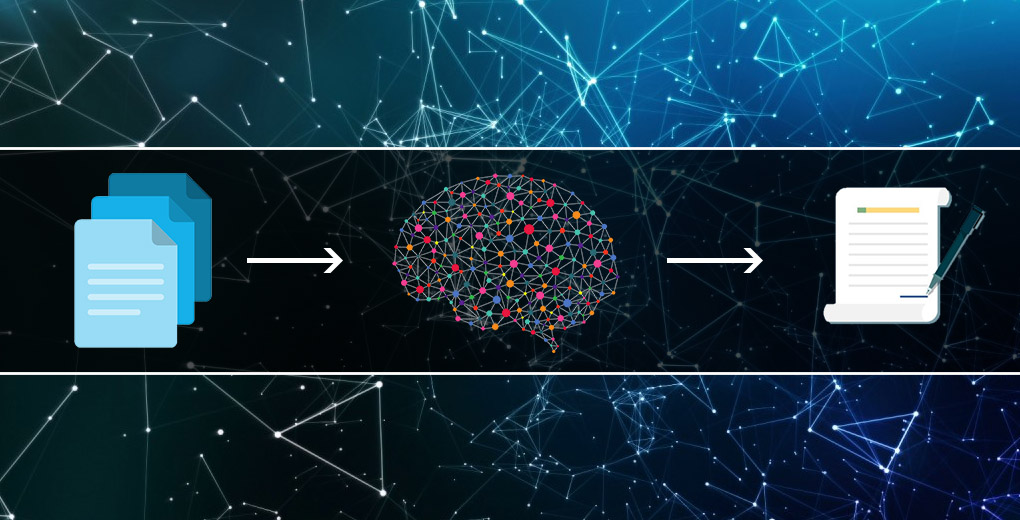
In today‘s digital age, we are generating and consuming vast amounts of textual data every day, from news articles and social media posts to product reviews and research papers. With this information overload, it has become increasingly challenging for humans to keep up with and make sense of all this text data. This is where automatic text summarization comes in – the task of generating a concise and fluent summary that captures the key information and overall meaning of the source text.
Text summarization has numerous applications, such as creating news digests, generating article abstracts, and summarizing product reviews. It can help individuals quickly grasp the main points without having to read through lengthy documents and enable efficient indexing and retrieval of information. In this blog post, we will take a deep dive into text summarization using deep learning in Python. We‘ll cover the different approaches, implement a seq2seq model with attention, and discuss the current state-of-the-art and future directions.
Types of Text Summarization
There are two main approaches to automatic text summarization:
1. Extractive Summarization: This approach selects the most important sentences or phrases from the source text and concatenates them to form a summary. The sentences are typically chosen based on statistical features like word frequency, position in the document, and similarity to the document‘s main topics.
Pros:
- Ensures that the sentences in the summary are grammatically correct
- Computationally efficient since it does not involve generating new text
Cons: - Cannot paraphrase or condense information to create more concise summaries
- Lacks the flexibility to include background information not explicitly stated in the text
2. Abstractive Summarization: This approach aims to generate a summary that captures the main ideas of the source text in new words and phrases, similar to how a human would summarize a document. It requires an understanding of the text‘s semantics and the ability to generate coherent natural language.
Pros:
- Can generate more concise and fluent summaries by paraphrasing and combining information
- Not restricted to reusing the exact sentences from the source text
Cons: - Requires more advanced natural language generation capabilities
- Risk of generating summaries with factual inconsistencies
In this post, we will focus on abstractive summarization using deep learning, as it represents the future direction of this field.
Deep Learning Architectures for Text Summarization
Deep learning has revolutionized natural language processing in recent years, achieving state-of-the-art results on various tasks like machine translation, sentiment analysis, and text summarization. The two main architectures used for abstractive text summarization are:
1. Sequence-to-Sequence (Seq2Seq) Models with Attention: Seq2seq models consist of an encoder that reads the input sequence and a decoder that generates the output sequence. The encoder maps the input to a fixed-size context vector, which the decoder uses to generate the summary one word at a time. The attention mechanism allows the decoder to focus on different parts of the input at each decoding step, enabling it to capture long-range dependencies.
2. Transformers and Pre-trained Language Models: Transformer models like BERT (Bidirectional Encoder Representations from Transformers) have achieved state-of-the-art results on various NLP tasks. They use self-attention mechanisms to capture long-range dependencies and can be pre-trained on large amounts of unlabeled text data. For text summarization, pre-trained models can be fine-tuned on a dataset of document-summary pairs to generate high-quality summaries.
Implementing Text Summarization in Python
Now let‘s dive into implementing an abstractive text summarization model in Python using deep learning. We‘ll use the popular Keras library with a TensorFlow backend, but the same concepts apply to other deep learning frameworks like PyTorch.
Dataset
For this tutorial, we‘ll use the Amazon Fine Food Reviews dataset, which contains 500,000 reviews of fine foods from Amazon. Each review includes the full review text, a brief summary, and additional metadata like the product ID and user ID. We‘ll use a subset of 100,000 reviews to reduce training time.
Preprocessing
Before training our model, we need to preprocess the text data:
-
Tokenization: Split the reviews and summaries into individual words or subwords. We‘ll use the spaCy library for efficient tokenization.
-
Lowercasing: Convert all text to lowercase to reduce the vocabulary size.
-
Removing special characters and stopwords: Remove punctuation marks, digits, and common stopwords like "the" and "and" that don‘t contribute much to the meaning.
-
Limiting sequence length: Truncate or pad the reviews and summaries to a fixed length (e.g., 100 words for reviews and 20 words for summaries).
Model Architecture
We‘ll implement a seq2seq model with attention for abstractive summarization:
- Encoder: A bidirectional LSTM that reads the input sequence and outputs a sequence of hidden states.
- Attention Layer: Computes attention weights over the encoder hidden states at each decoding step.
- Decoder: An LSTM that generates the summary one word at a time, using the attention-weighted encoder hidden states.
encoder_inputs = Input(shape=(max_text_len,))
encoder_emb = Embedding(vocab_size, embedding_dim)(encoder_inputs)
encoder_lstm = Bidirectional(LSTM(lstm_units, return_sequences=True, return_state=True))
encoder_outputs, state_fwd, state_back = encoder_lstm(encoder_emb)
attention = Attention()
attention_output, attention_weights = attention([decoder_outputs, encoder_outputs])
decoder_inputs = Input(shape=(max_summary_len,))
decoder_emb = Embedding(vocab_size, embedding_dim)(decoder_inputs)
decoder_lstm = LSTM(lstm_units, return_sequences=True, return_state=True)
decoderoutputs, , _ = decoder_lstm(decoder_emb, initial_state=[state_fwd, state_back])
concat = concatenate([attention_output, decoder_outputs])
dense = Dense(dense_units, activation=‘relu‘)(concat)
outputs = Dense(vocab_size, activation=‘softmax‘)(dense)
model = Model(inputs=[encoder_inputs, decoder_inputs], outputs=outputs)
model.compile(optimizer=‘adam‘, loss=‘categorical_crossentropy‘, metrics=[‘accuracy‘])
Training
To train the model, we‘ll use teacher forcing, where the actual summary words are fed as inputs to the decoder at each time step. We‘ll also use early stopping to prevent overfitting and save the best model weights.
es = EarlyStopping(monitor=‘val_loss‘, mode=‘min‘, verbose=1, patience=2)

history = model.fit([x_tr,y_tr[:,:-1]], y_tr.reshape(y_tr.shape[0],y_tr.shape[1], 1)[:,1:], epochs=50, callbacks=[es], batch_size=512, validation_data=([x_val,y_val[:,:-1]], y_val.reshape(y_val.shape[0],y_val.shape[1], 1)[:,1:]))
Inference
To generate summaries for new reviews, we‘ll use a variant of beam search decoding:
- Encode the input review and obtain the encoder hidden states.
- Initialize the decoder input with the START token and the decoder states with the encoder‘s final hidden states.
- For each timestep:
- Obtain the decoder output and calculate the top k words with the highest probabilities
- For each of the k words, recursively call the decoder with the word as input and update the probabilities
- After reaching the maximum summary length or generating the END token, select the sequence with the highest overall probability as the final summary
- Repeat steps 1-3 for a batch of input reviews.
This allows the model to explore multiple candidate summaries and find the one with the highest probability.
Evaluation
To evaluate the quality of the generated summaries, we can use metrics like ROUGE (Recall-Oriented Understudy for Gisting Evaluation), which measures the overlap between the generated summary and reference summaries.
ROUGE-N measures the percentage of n-grams (contiguous sequence of n words) that overlap between the generated and reference summaries, while ROUGE-L measures the longest common subsequence.
Here‘s how we can compute ROUGE scores in Python using the pyrouge library:
from pyrouge import Rouge155
r = Rouge155()
r.system_dir = ‘path/to/generated_summaries/‘
r.model_dir = ‘path/to/reference_summaries/‘
r.system_filenamepattern = ‘summary(\d+).txt‘
r.model_filename_pattern = ‘goldsummary#ID#.txt‘
output = r.convert_and_evaluate()
print(output)
Current State-of-the-Art and Future Directions
In recent years, pre-trained transformers like BART (Bidirectional and Auto-Regressive Transformers) and T5 (Text-to-Text Transfer Transformer) have achieved state-of-the-art results on abstractive summarization benchmarks like CNN/DailyMail and XSum.
These models are pre-trained on large amounts of text data using self-supervised objectives like masked language modeling and can be fine-tuned for summarization with a small amount of labeled data. They generate fluent and coherent summaries by capturing long-range dependencies and learning rich linguistic knowledge.
Future research directions in text summarization include:
- Improving the factual accuracy and consistency of generated summaries
- Generating summaries for long documents like books and research papers
- Developing models that can generate personalized summaries based on user preferences
- Incorporating external knowledge and commonsense reasoning to enhance summary quality
- Exploring few-shot and unsupervised summarization approaches to reduce the need for labeled data
Conclusion
In this post, we explored the task of automatic text summarization using deep learning in Python. We discussed the different approaches, implemented a seq2seq model with attention, and walked through the process of preprocessing data, training the model, generating summaries, and evaluating their quality.
Deep learning has made significant progress in abstractive text summarization, with pre-trained transformers achieving impressive results. However, there are still challenges in generating factually consistent and coherent summaries, especially for long and complex documents.
As the amount of textual data continues to grow, text summarization will play an increasingly important role in helping us efficiently consume and make sense of information. Further research in this area has the potential to unlock new applications and revolutionize how we interact with text data.
I encourage you to experiment with different architectures, try out the latest pre-trained models, and explore ways to improve the summarization quality. With the power of deep learning and the rich ecosystem of Python libraries, you can build state-of-the-art text summarization systems and contribute to this exciting field!