
Harnessing the Power of Ultrasound and AI: The Halo Headband‘s Quest to Unlock Lucid Dreaming
Introduction
Lucid dreaming, the phenomenon of achieving awareness within a dream, has captivated human imagination for centuries. From ancient Tibetan dream yoga practices to the blockbuster film Inception, the notion of consciously shaping our dream experiences has long been a source of fascination.
But what if lucid dreaming was more than just a rare and elusive skill? What if it could be reliably induced and sustained using advanced neurotechnology? This is the audacious goal of the Halo headband, a new device from PropheticAI that promises to revolutionize our relationship with the dream world.
The Halo: A Breakthrough in Dream Engineering
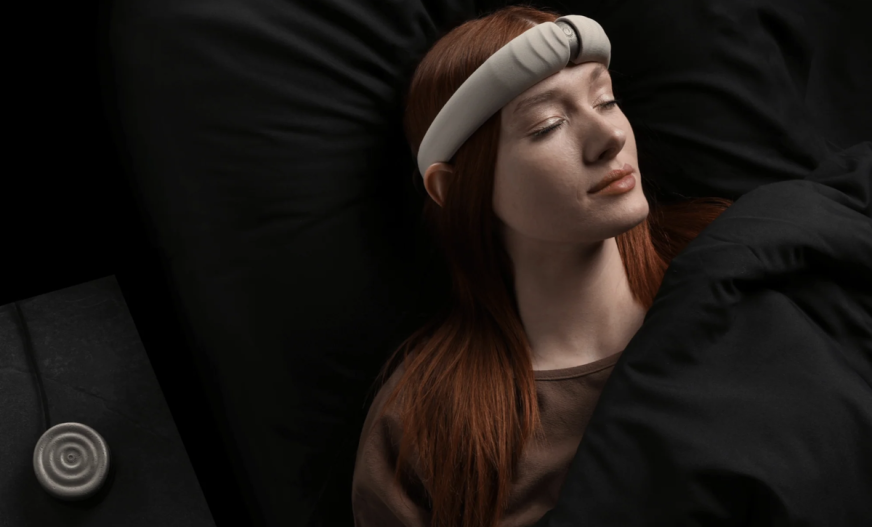
The Halo is no ordinary sleep tracker. Harnessing cutting-edge transcranial focused ultrasound (tfus) technology, this sleek headband is designed to noninvasively stimulate targeted regions of the sleeping brain. By precisely modulating neural activity in real-time, the Halo aims to gently guide the user into a lucid dream state and maintain that awareness throughout the dream.
At the heart of the Halo is a powerful AI system trained on a massive dataset of simultaneous EEG and fmri recordings. This multimodal approach allows the device to build a high-resolution model of each user‘s unique brain activity during sleep. As the user dreams, the Halo‘s AI continuously analyzes their EEG patterns, looking for specific frequency bands associated with REM sleep and lucidity.
When the opportune moment arises, the Halo deploys its secret weapon: acoustic holography. Using an array of ultrasonic transducers, the device sculpts the ultrasound waves to create intricate patterns of neural activation and inhibition. These tfus parameters are carefully calibrated to mimic the brain states that typically precede and sustain lucid dreams.
The result is a kind of "lucidity induction by stealth" – rather than jarring the dreamer awake, the Halo subtly shifts their brain activity towards greater self-awareness and dream control. In pilot studies, the device achieved an impressive 80% success rate in inducing lucid dreams, compared to the 20-50% rates typically reported for traditional techniques like mnemonic induction and reality checks.
The Science of Dream Control
The Halo‘s dream engineering capabilities are grounded in a growing body of research on the neuroscience of sleep and consciousness. Studies have shown that lucid dreams are characterized by distinct patterns of brain activity, including increased activation in the prefrontal cortex and gamma frequency oscillations.
By targeting these neural signatures with tfus, the Halo is essentially "speaking the language of the dreaming brain." The device‘s AI-driven acoustic holography can replicate the complex spatiotemporal patterns of activation that give rise to lucid awareness.
But the Halo‘s potential goes beyond just triggering lucidity. By continuously monitoring the user‘s EEG throughout the dream, the device can adapt its stimulation in real-time to stabilize and prolong the lucid state. If the dreamer starts to lose awareness, the AI can adjust the tfus parameters to "boost" the relevant neural activity and keep them anchored in the dream.
This responsive, closed-loop stimulation is a key innovation of the Halo. Previous attempts at lucid dream induction, such as the DreamLight mask, relied on pre-programmed light cues that could easily be missed or incorporated into the dream content. The Halo‘s adaptive approach allows for a more seamless and reliable initiation of lucidity.
Implications and Applications
The scientific and personal implications of reliable lucid dream induction are profound. For researchers, the Halo provides an unprecedented tool for studying the neural basis of self-awareness, metacognition, and the interplay between conscious and unconscious processes. Lucid dreams offer a unique window into the mind – a kind of "virtual reality lab" where theories of consciousness can be tested and refined.
On an individual level, lucid dreaming has been associated with a wide range of benefits, from enhancing creativity and problem-solving to providing a therapeutic space for confronting fears and traumas. With the Halo, these potential applications become more accessible and reliable.
Imagine an artist using the device to intentionally incubate vivid, imaginative dreams as a source of inspiration. Or a person with recurring nightmares using the Halo to gain control over the dream narrative and rewrite the ending. The device could also be used for practicing new skills and honing real-world abilities – a kind of "sleep learning" that has long been a staple of science fiction.
But perhaps the most exciting potential of the Halo lies in its ability to expand the boundaries of conscious experience itself. By enabling users to explore the vast landscape of their own minds, the device could open up new frontiers of self-discovery and transformation. As PropheticAI founder Eric Walberg puts it, "The Halo is not just a lucid dreaming device – it‘s a tool for hacking consciousness."
Risks and Ethical Considerations
Of course, with any powerful new technology comes risks and ethical considerations. The use of tfus for neuromodulation is still a relatively new field, and the long-term safety and side effects of repeated stimulation are not yet fully understood. PropheticAI has stated that the Halo operates within established safety limits for ultrasound exposure, but ongoing research and monitoring will be important as the device becomes more widely used.
There are also potential psychological risks to consider. While lucid dreaming is generally considered safe and beneficial, some users may find the experience overwhelming or unsettling. Losing control within a lucid dream or encountering disturbing content could be traumatic, especially for individuals with pre-existing mental health issues. As with any powerful tool for altering consciousness, responsible use and proper guidance will be crucial.
On a societal level, the widespread availability of lucid dreaming technology raises important questions about privacy, autonomy, and the commodification of inner experience. Will dream reports become a new form of social media, with users sharing their nightly adventures for all to see? Could employers or advertisers exploit the suggestible state of dreaming for manipulation or subliminal influence?
As the Halo and similar devices become more sophisticated, these issues will need to be addressed through a combination of technical safeguards, ethical guidelines, and public policy. Transparency and informed consent will be key to ensuring that users remain in control of their own dream experiences.
Conclusion
The Halo headband represents a major leap forward in our ability to shape and explore the mysterious realm of dreams. By seamlessly integrating cutting-edge neurotechnology with AI-driven personalization, the device offers a glimpse into a future where the boundaries between waking and dreaming, reality and imagination, are increasingly blurred.
As the technology continues to evolve, it‘s likely that we‘ll see an explosion of new applications and experiences. Lucid dreaming could become a powerful tool for education, therapy, and personal growth, as well as a new frontier for entertainment and social interaction. The Halo is just the first step towards a world where our dreams are no longer a passive experience, but an active space for learning, healing, and transformation.
Of course, with this power comes great responsibility. As we develop the ability to manipulate our own consciousness, we must also grapple with the ethical and societal implications of these technologies. We will need ongoing research, dialogue, and regulation to ensure that devices like the Halo are used safely and beneficially.
But one thing is clear: the age-old quest to unlock the power of our dreams is entering a new era. With the help of AI and ultrasound, we are standing at the threshold of a new kind of conscious experience – one where the possibilities are limited only by our own imagination. As the pioneering users of the Halo headband, we have the opportunity and the obligation to shape this future wisely and well. So let us dream boldly, but also thoughtfully, as we explore the uncharted territories of the sleeping mind.


