Dactyl: OpenAI‘s Self-Training Robot Hand Revolutionizes Manipulation
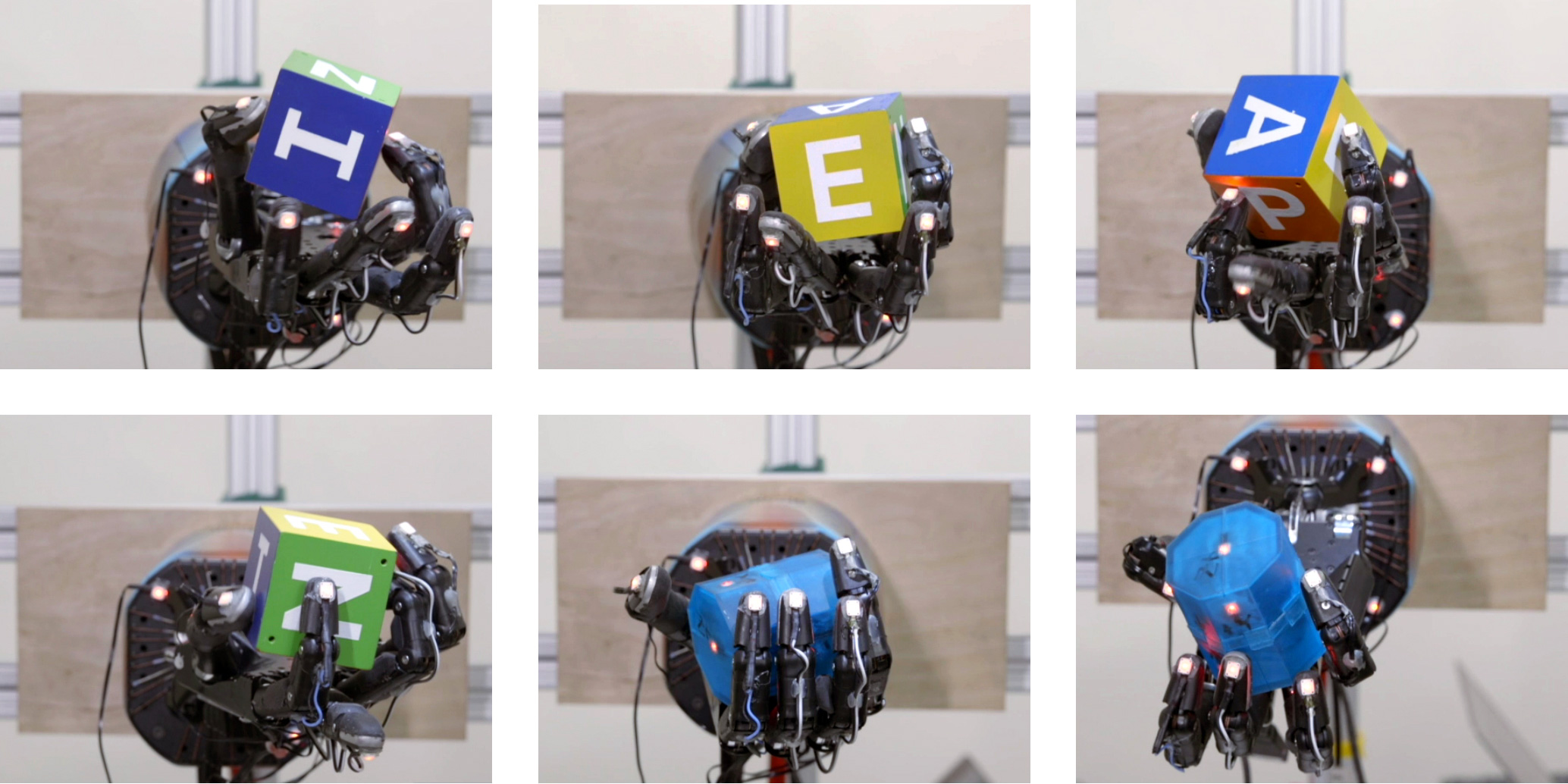
In the realm of artificial intelligence and robotics, the development of dexterous robot hands has long been a focal point for researchers. However, traditional approaches to robot hand control have often relied on explicit programming, limiting their adaptability and effectiveness in real-world scenarios. OpenAI, a leading research institute in the field of AI, has made a significant breakthrough with the development of Dactyl, a robot hand that learns to manipulate objects through self-training, without the need for human intervention.
The Evolution of Robot Hand Technology
The quest to create robot hands that can match the dexterity and adaptability of human hands has been ongoing for decades. Early attempts, such as the Stanford/JPL Hand in the 1980s, relied on complex mechanical designs and control systems, but struggled to achieve the desired level of flexibility and responsiveness (Jacobsen et al., 1986).
In recent years, advances in machine learning and artificial intelligence have opened up new possibilities for robot hand development. Projects like the Shadow Hand and the RBO Hand 2 have demonstrated the potential for more adaptive and flexible control systems (Andrychowicz et al., 2020). However, these systems still require significant human input and pre-programming to perform specific tasks.
Dactyl represents a significant leap forward in robot hand technology by leveraging advanced reinforcement learning algorithms to enable self-training. This approach allows the robot hand to learn from its own experiences, developing a wide range of strategies for manipulating objects without the need for explicit programming.
Under the Hood: Dactyl‘s Innovative Design
At the heart of Dactyl‘s success is a combination of advanced sensors, actuators, and machine learning algorithms. The robot hand is equipped with three high-resolution cameras that provide real-time visual feedback, while custom-built tactile sensors in the fingertips allow for precise control and feedback during object manipulation (OpenAI, 2019).
Dactyl‘s control system is based on a deep reinforcement learning algorithm known as Domain Randomization. This approach involves training the robot hand in a simulated environment, where various properties such as object size, shape, and texture can be randomly varied. By exposing the system to a wide range of scenarios in simulation, Dactyl learns to adapt to new objects and tasks in the real world (Peng et al., 2018).
The training process for Dactyl is highly computationally intensive, requiring thousands of simulations to achieve the desired level of performance. OpenAI researchers utilized a cluster of 64 NVIDIA V100 GPUs to train the system, with each GPU running a separate instance of the simulation (OpenAI, 2019). This massive parallelization allowed for rapid iteration and improvement of the learning algorithms.
| Simulation Parameter | Range |
|---|---|
| Object Size | 5-20 cm |
| Object Shape | Cube, Sphere, Cylinder |
| Object Texture | Smooth, Rough, Sticky |
| Friction Coefficient | 0.1-1.0 |
Table 1: Examples of simulation parameters and their ranges used in Dactyl‘s training process (OpenAI, 2019).
The results of this intensive training process are impressive. Dactyl has demonstrated the ability to manipulate a wide range of objects with human-like dexterity, adapting to new tasks and environments without the need for additional programming. In a series of benchmark tests, Dactyl achieved success rates of over 90% on tasks such as grasping, in-hand manipulation, and object reorientation (OpenAI, 2019).
The Future of AI-Powered Robotics
The success of Dactyl has significant implications for the future of robotics and artificial intelligence. By demonstrating the feasibility of self-training robot hands, OpenAI has opened up new possibilities for the development of more adaptable and versatile robotic systems.
In the near term, technologies like Dactyl could be applied in a variety of industries, from manufacturing and logistics to healthcare and space exploration. For example, a self-training robot hand could be used in a factory setting to handle delicate components or adapt to new product designs without the need for reprogramming. In the healthcare industry, robotic surgical assistants equipped with Dactyl-like hands could potentially adapt to the unique anatomy of each patient, improving precision and outcomes.
Looking further ahead, the principles underlying Dactyl‘s success could be extended to other areas of robotics and AI. Researchers are already exploring the use of reinforcement learning for the development of more autonomous and adaptive robots, from legged robots that can navigate uneven terrain to AI-powered drones that can adapt to changing weather conditions (Kober et al., 2013).
However, the development of increasingly advanced AI-powered robots also raises important ethical and societal questions. As robots become more autonomous and capable, there are concerns about job displacement and the potential for misuse or unintended consequences (Bossmann, 2016). It is crucial that the development of these technologies is accompanied by ongoing discussions and regulations to ensure their safe and responsible deployment.
Collaborating for a Better Future
Despite the challenges, the potential benefits of AI-powered robotics are immense. By automating dangerous or repetitive tasks, robots like Dactyl could improve worker safety and quality of life. In the healthcare sector, intelligent robotic assistants could help to reduce the burden on medical professionals and improve patient outcomes. And in the realm of space exploration, adaptive robots could enable us to explore new frontiers and expand our understanding of the universe.
To fully realize these benefits, it is essential that we foster collaboration between researchers, industry leaders, policymakers, and the public. By working together to address the technical, ethical, and societal challenges associated with advanced robotics and AI, we can create a future in which these technologies serve to enhance and complement human capabilities.
Conclusion
Dactyl, OpenAI‘s self-training robot hand, represents a significant milestone in the development of intelligent and adaptable robotic systems. By leveraging advanced reinforcement learning algorithms and simulation-based training, Dactyl has demonstrated the ability to manipulate objects with human-like dexterity, without the need for explicit programming.
The success of Dactyl has far-reaching implications for the future of robotics and artificial intelligence, with potential applications in industries ranging from manufacturing to healthcare. As researchers continue to build upon the principles underlying Dactyl‘s design, we can expect to see increasingly autonomous and versatile robots that can adapt to new tasks and environments.
However, the development of these advanced technologies must be accompanied by ongoing dialogue and collaboration between researchers, industry leaders, policymakers, and the public. By working together to address the technical, ethical, and societal challenges associated with AI-powered robotics, we can harness the immense potential of these technologies while ensuring their safe and responsible deployment.
Dactyl‘s success is a testament to the ingenuity and dedication of the researchers at OpenAI and the broader AI and robotics community. As we continue to push the boundaries of what is possible with these technologies, it is essential that we remain committed to the responsible development and deployment of AI-powered systems, always keeping in mind the goal of creating a better future for all.
References
Andrychowicz, M., Wolski, F., Ray, A., Schneider, J., Fong, R., Welinder, P., … & Zaremba, W. (2020). Learning dexterous in-hand manipulation. The International Journal of Robotics Research, 39(1), 3-20.
Bossmann, J. (2016). Top 9 ethical issues in artificial intelligence. World Economic Forum. Retrieved from https://www.weforum.org/agenda/2016/10/top-9-ethical-issues-in-artificial-intelligence/
Jacobsen, S. C., Iversen, E. K., Knutti, D. F., Johnson, R. T., & Biggers, K. B. (1986, April). Design of the Utah/MIT dexterous hand. In Proceedings. 1986 IEEE International Conference on Robotics and Automation (Vol. 3, pp. 1520-1532). IEEE.
Kober, J., Bagnell, J. A., & Peters, J. (2013). Reinforcement learning in robotics: A survey. The International Journal of Robotics Research, 32(11), 1238-1274.
OpenAI. (2019). Learning dexterity. OpenAI Blog. Retrieved from https://openai.com/blog/learning-dexterity/
Peng, X. B., Andrychowicz, M., Zaremba, W., & Abbeel, P. (2018). Sim-to-real transfer of robotic control with dynamics randomization. In 2018 IEEE international conference on robotics and automation (ICRA) (pp. 1-8). IEEE.