
Data Analysis and Price Prediction for Electric Vehicles in 2025
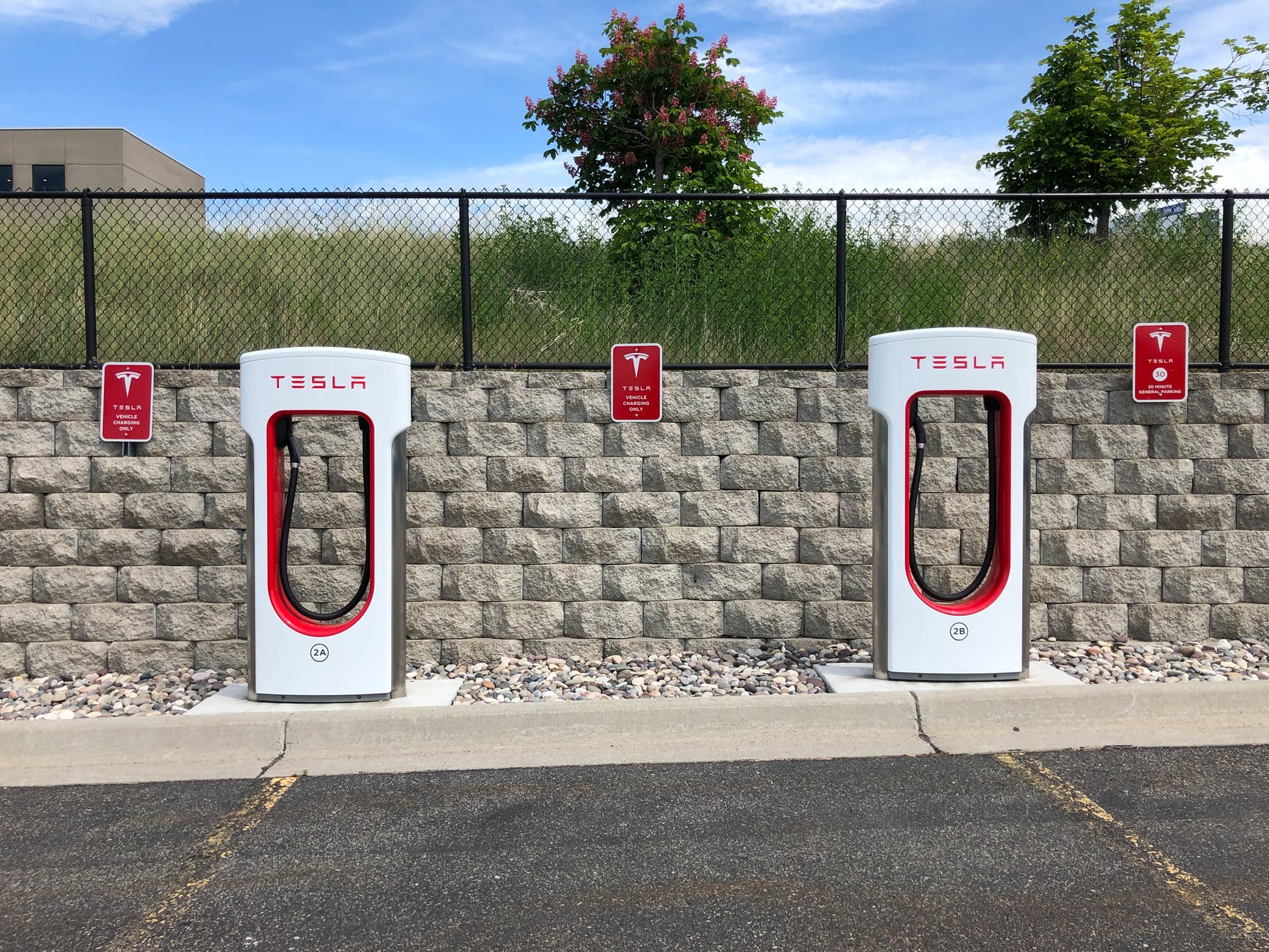
The electric vehicle (EV) revolution is well underway, with millions of new EVs taking to the roads each year. Driven by falling battery costs, expanding charging networks, generous government subsidies, and growing environmental awareness, the EV market is poised for explosive growth in the coming decade. Bloomberg NEF projects that EVs will account for over half of all new light-duty vehicle sales globally by 2040, up from just 2.7% in 2020.
As the EV market matures and enters the mainstream, the ability to effectively analyze market data and predict vehicle prices will be crucial for automakers, consumers, and policymakers alike. In this article, we‘ll take a deep dive into the data behind the EV boom, exploring the key drivers, trends, and challenges in the market. We‘ll also discuss how cutting-edge artificial intelligence (AI) and machine learning (ML) techniques can help stakeholders make sense of this data and make more informed decisions.
Electric Vehicle Market Landscape
The global electric vehicle market has grown at a blistering pace in recent years, even in the face of economic headwinds and supply chain disruptions. EV sales topped 3.2 million units in 2020, up 43% from 2019, and the market shows no signs of slowing down. Some key statistics and trends:
- Europe overtook China as the world‘s largest EV market in 2020, with nearly 1.4 million sales and 10% market share (vs. 5% in China)
- EV sales in the US rose 4% in 2020 to 328,000 units, just under 2% market share
- Global EV sales grew another 160% in 2021 to over 8.5 million units
- The Tesla Model 3 was the world‘s best-selling EV in 2021, followed by the Wuling HongGuang Mini EV and the Tesla Model Y
- EVs accounted for 70% of new car sales in Norway in 2021, the highest share of any country
A combination of policy support, improving economics, and shifting consumer preferences is driving the surge in EV adoption. Many countries and regions, including the UK, Japan, and California, have announced plans to phase out sales of new internal combustion engine (ICE) vehicles entirely by 2035 or 2040. Generous purchase incentives, tax breaks, and other perks for EV buyers remain in place across Europe and in China.
At the same time, battery pack prices have fallen over 90% from $1,200 per kilowatt-hour (kWh) in 2010 to $132/kWh in 2021 according to BNEF. This has made EVs much more price-competitive with traditional gas-powered cars – many analysts expect price parity by the mid-2020s. The average range of new EVs has also more than tripled over the past decade, helping to address consumer concerns over range anxiety.
Analyzing the EV Market with Data
Making sense of the rapidly evolving EV market requires a data-driven approach. Key metrics and data points to track include:
- Total EV sales volumes globally, by region, and by country
- EV sales by vehicle type (passenger cars, light trucks, buses, etc.)
- EV sales by market segment (entry-level, mid-range, luxury, etc.)
- EV sales by manufacturer and specific model
- Technical specifications of top-selling EV models (battery capacity, range, efficiency, charging rate, etc.)
- Pricing data and total cost of ownership comparisons between EVs and ICE vehicles
- Public and private charging station installations by country, state/province, and city
- Consumer survey data on EV awareness, consideration, and purchase intent
Granular sales data can reveal which EV models and brands are resonating most with buyers and how preferences vary across different markets. The chart below shows the top 10 EV models by global sales volume in 2021:
| Rank | Model | 2021 Sales |
|---|---|---|
| 1 | Tesla Model 3 | 500,713 |
| 2 | Wuling HongGuang Mini EV | 424,138 |
| 3 | Tesla Model Y | 411,812 |
| 4 | BYD Han EV | 187,688 |
| 5 | VW ID.4 | 119,088 |
| 6 | Li Xiang One | 90,491 |
| 7 | BYD Qin Plus EV | 89,180 |
| 8 | Changan Benni EV | 88,857 |
| 9 | VW ID.3 | 75,096 |
| 10 | GAC Aion S | 74,915 |
Source: EVVolumes.com
Comparing the technical specifications and prices of top models can shed light on the factors driving sales leadership. We can also gauge the pace of technological improvement by tracking changes in metrics like battery energy density and charging speed over time.
Data on charging infrastructure is crucial for understanding the consumer charging experience and identifying bottlenecks to EV adoption. The number of public EV charging stations worldwide grew to over 1.3 million in 2020, including over 30,000 DC fast chargers. However, the geographic distribution remains highly uneven, with some countries like the Netherlands and Norway boasting extensive networks while others lag behind.
Predicting EV Prices with Machine Learning
With a wealth of historical sales and pricing data available, it‘s possible to use machine learning techniques to predict the prices of current and future EV models with reasonable accuracy. This can be invaluable for consumers looking to budget for an EV purchase, automakers deciding how to price their vehicles, and policymakers forecasting EV adoption scenarios.
The basic process for building an EV price prediction model with ML is:
- Gather a dataset of historical EV sales including transaction prices and key vehicle specifications (battery size, range, power, brand, segment, etc.)
- Clean and preprocess the data, handling missing values, outliers, and categorical variables
- Explore the relationships between price and the input features using visualization and statistical analysis
- Split the data into training and test sets and train an ML model to predict price from the selected features
- Evaluate the trained model‘s performance on the test set using metrics like root mean squared error (RMSE) and R-squared
- Interpret the model‘s results to understand which features are most predictive of price
- Use the model to forecast prices for future vehicles based on their planned specifications
There are several ML algorithms well-suited to this type of regression problem, including linear models, decision trees, random forests, gradient boosting machines, and neural networks. Ensemble methods that combine multiple models may achieve the best predictive performance.
It‘s important to note that EV prices can be influenced by a variety of exogenous factors that may be difficult to capture in a model, such as changes in government incentives, battery raw material costs, or broader economic conditions. As such, price predictions should generally be interpreted as a range rather than a precise value.
The Future of Electric Vehicles
As EVs move from the early adopter phase to mass market adoption, the importance of data and analytics will only grow. Automakers will need to leverage data from connected vehicles, charging stations, and customer touchpoints to optimize designs, inform marketing strategies, and personalize offerings. Some potential applications of AI and ML in the EV space include:
- Predictive maintenance: Using sensor data and ML algorithms to predict when EV components will fail before issues occur, reducing downtime and repair costs
- Battery optimization: Applying ML to fine-tune battery management systems and charging algorithms, extending range and battery life
- Autonomous driving: Training self-driving systems with massive datasets of real-world driving scenarios and simulations
- Charging optimization: Using ML to predict charging demand, optimize charger utilization, and integrate EVs with the power grid
- Personalized marketing: Analyzing customer data to recommend the best EV models, financing options, and charging plans for each individual
Of course, realizing the full potential of data in the EV industry will require addressing challenges around data privacy, security, standardization, and sharing. Initiatives like the International Alliance for Mobility Testing and Standardization (IAMTS) and the National Renewable Energy Laboratory‘s EVerest project aim to promote open data standards and collaboration across the EV ecosystem.
Key Takeaways
The electric vehicle market is at an inflection point, with sales growing exponentially and the technology rapidly improving. Data analysis and machine learning will be essential tools for making sense of this dynamic landscape and optimizing decision-making for all stakeholders.
Some key insights from our analysis:
- EV sales are on track to surpass ICE vehicle sales in many major markets by the 2030s, driven by policy support, falling costs, and growing consumer interest
- Europe and China are currently leading the way in EV adoption, but other regions like the US and Japan are poised for rapid growth
- A wide range of EV models across vehicle segments and price points are finding success, from entry-level mini-cars to luxury SUVs
- Battery and charging technology continue to advance quickly, which will further improve the economics and practicality of EVs in the coming years
- Machine learning can help predict EV prices, optimize battery performance, enable autonomous driving, and much more
While there are certainly challenges ahead, the future of transportation is undoubtedly electric. By harnessing the power of data and AI, we can accelerate the transition to a cleaner, smarter, more efficient mobility system for all.


![How to Make a Blog and Earn Money Using Claude AI [2026 Guide]](https://33rdsquare.com/wp-content/uploads/2024/03/20240312070218-65effdfa66ea0.png.webp)


