Andriy Burkov and "The Hundred-Page Machine Learning Book": Making ML Accessible
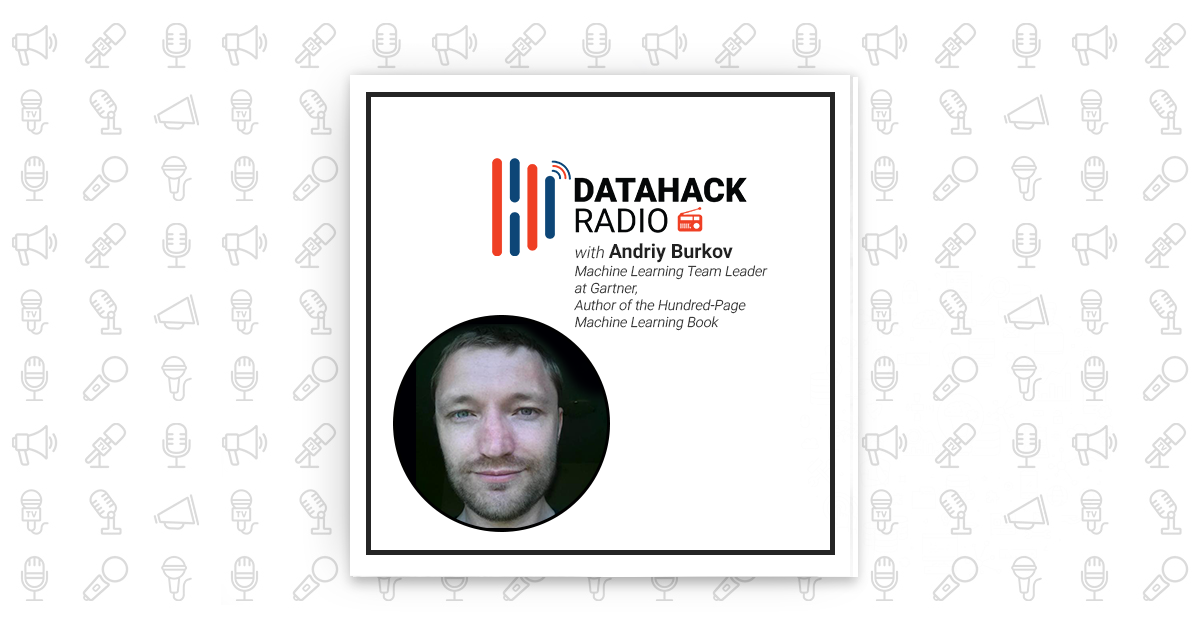

In the rapidly evolving field of artificial intelligence (AI) and machine learning (ML), quality educational resources are in high demand. Aspiring practitioners and even experienced professionals often struggle with the overwhelming amount of books, courses, and papers available. Many popular ML books are comprehensive but long, requiring significant time investment to read and digest.
Enter Andriy Burkov and his highly acclaimed "Hundred-Page Machine Learning Book." At just 136 pages, Burkov‘s guide has become a go-to resource known for its succinct yet substantial coverage of key ML concepts and techniques. It has been praised by leading figures across industry and academia, achieved global bestseller status, and emerged as a popular text in university courses.
So what makes this book so notable? And who is the AI expert behind it? Let‘s take a closer look.
Burkov‘s Journey: From Academia to Industry
Andriy Burkov‘s path to becoming a leading voice in the ML community began with his computer engineering studies in Ukraine. After running an online startup that shut down when the dotcom bubble burst, Burkov moved with his family to Quebec, Canada to pursue new opportunities.
There, he earned a Master‘s and PhD in Computer Science, specializing in AI topics like multi-agent systems, game theory, and complex decision-making. His doctoral thesis focused on leveraging repeated games for multi-agent decision problems.
After completing his PhD, Burkov transitioned into industry roles where he applied his skills to real-world problems. Over the past 15+ years, he has worked as an ML researcher and engineer at companies like Fujitsu, WANTED Technologies, and Gartner. Some of his noteworthy projects include:
- Extracting structured data from large-scale job postings for labor market analysis
- Developing ML pipelines for resume parsing, name entity recognition, and skills extraction
- Leading R&D for AI-powered talent intelligence products used by major enterprises
- Applying NLP techniques to problems like text normalization, language detection, and sequence labeling
Through this extensive industry experience, Burkov gained deeper insight into the practical challenges of applying ML and the needs of ML practitioners. This would shape his approach to education and knowledge-sharing.
The Book: Efficient Education for All
While working at Gartner, Burkov noticed a common frustration among colleagues engaging with ML. "Many of my co-workers wanted to learn machine learning and AI techniques, but struggled to find the time to read the existing books, which were often very long," he explained in an interview.
Burkov empathized, having faced the same challenge himself. Despite owning many popular ML books, he had never managed to finish any cover-to-cover. "I thought if I ever wrote a book on machine learning, it would be short," he said.
He casually shared this sentiment in a LinkedIn post in 2019, not expecting much response. To his surprise, the post went viral, with hundreds of reactions and comments. "Many people seemed to have the same problem and encouraged me to actually write this book," Burkov recalled.
Inspired by the positive feedback, he decided to give it a shot. Burkov wrote a few chapters over a weekend and shared them with his network. The response was overwhelmingly positive. "After that, I committed to finishing the book," he said. "I worked on it early mornings, late nights, and weekends around my day job."

The result was "The Hundred-Page Machine Learning Book," published later that year. The title is a slight misnomer – the book actually spans 136 pages. "I was aiming for 100 pages, but it ended up being a bit longer as I added some extra topics that I felt were important to cover," explained Burkov. Still, at well under 200 pages, it remains one of the most concise ML overviews available.
Despite its compact size, the book manages to cover all the key concepts and techniques of ML, including:
- Fundamentals:
- What is machine learning? Terminology and key concepts
- Types of ML: supervised vs unsupervised learning, classification vs regression
- Training, validation, testing, and evaluation metrics
- Regression and Bayesian Methods:
- Linear and polynomial regression
- Logistic regression and maximum likelihood estimation
- Bayesian methods and naive Bayes
- Machine Learning Algorithms:
- Decision trees and ensemble methods (bagging, boosting, random forest)
- Support vector machines (SVMs) and kernels
- K-means clustering and hierarchical clustering
- Neural networks and backpropagation
- Practical Advice:
- Feature engineering and selection
- Hyperparameter tuning
- Debugging ML models
- Challenges of real-world ML deployments
Burkov takes an accessible approach, focusing on intuitive explanations over dense mathematics. "I tried to avoid formulas as much as possible and explain things in plain language," he noted. Helpful diagrams, code snippets, and examples are included throughout.
Another notable aspect is the book‘s extensive bibliography, with references for each chapter. "The book is not meant to cover everything in detail," said Burkov. "It‘s an efficient introduction and overview. The references allow interested readers to easily dive deeper into specific topics."
Reception and Reach
Since its release, "The Hundred-Page Machine Learning Book" has been extremely well-received by the global data science and ML communities. Some key statistics and achievements:
- Bestseller status: #1 in Amazon‘s Machine Learning category, with a 4.5/5 star rating from 500+ reviews
- Global reach: Translated into 8+ languages, including Chinese, Japanese, Korean, Russian, and Polish
- Used as core text in courses at universities like Stanford, Oxford, Columbia, and NYU
- 500,000+ visits to the book‘s companion wiki, which expands on topics from the book
- 45,000+ registered for the associated educational newsletter
The book has garnered praise from experienced practitioners across top companies and institutions:
"Andriy‘s book does a fantastic job of cutting the noise and hitting the tracks and full speed from the first page. I wish this book existed when I was beginning my ML journey." -Kaggle Grandmaster Sanyam Bhutani
"The Hundred-Page Machine Learning Book is an excellent read to get started with Machine Learning." -Nvidia Deep Learning Institute
"A great introduction to machine learning from an engineer‘s perspective." -Karolis Urbonas, Head of Machine Learning, Amazon
"One of the best books on machine learning I‘ve read…avoids the fluff and obscure theory that are common in a lot of ML books. Highly recommended." -Daniel Bourke, ML Engineer and Educator
For many practitioners, the book‘s efficient format is a key advantage. One reader calculated that Burkov‘s book contained over 50% of the information of popular comprehensive guides like Murphy‘s "Machine Learning: A Probabilistic Perspective" and Goodfellow et al‘s "Deep Learning," in just 5-15% of the pages.
The availability of a free online version has also contributed to the book‘s wide readership. Burkov chose to put the full text on his website "to eliminate any barriers and make the content as accessible as possible." Readers can peruse the book for free and choose to purchase a print copy to support the author if they find it useful.
Contributions and What‘s Next

Burkov‘s contributions to the ML community extend beyond his famously succinct book. He is a prolific content creator, regularly sharing news, resources and advice with his 170,000+ LinkedIn followers and 20,000+ Twitter followers. With his engaging style and knack for simplifying complex topics, Burkov has become a leading influencer in the data science space.
As an educator, Burkov has taught university and online courses on AI/ML and led workshops at major conferences like O‘Reilly AI. Recognizing the need for more efficient educational content, he founded Andriy Burkov Publishing to produce high-quality technical books in the spirit of "The Hundred-Page Machine Learning Book."
Burkov has since released:
- "Machine Learning Engineering": A guide to bringing ML to production
- "The Hundred-Page Causal Inference Book": An accessible introduction to causal inference methods and applications
He plans to continue the series with upcoming titles on natural language processing, reinforcement learning, and other key ML topics and techniques.
Looking ahead, Burkov is optimistic about the future of AI and ML. "We have seen tremendous progress in the field over the past decade, with techniques like deep learning achieving remarkable results on previously difficult tasks," he said. "But there is still a lot of work to be done to make these systems more robust, interpretable, and aligned with human values."
Burkov believes that democratizing ML education is crucial for driving responsible progress. "Machine learning and AI have immense potential to benefit society, but also come with risks and challenges," he explained. "We need to make this knowledge widely accessible, so that more people can meaningfully engage with these technologies and help shape their development."
With his commitment to efficient, effective education, Andriy Burkov is doing just that. "The Hundred-Page Machine Learning Book" and his other works are making it easier than ever for aspiring practitioners to learn ML and contribute to the field. As both a technical expert and a dedicated educator, Burkov is sure to remain an important voice in the AI/ML community for years to come.