
Quantum Machine Learning: Unlocking the Power of AI with Quantum Computers
The field of artificial intelligence and machine learning has seen tremendous progress over the past decade, with applications spanning computer vision, natural language processing, robotics, and more. However, as the size and complexity of our datasets continue to grow, we are starting to push up against the limits of what classical computers can handle.
Enter quantum computing – a paradigm-shifting technology that harnesses the principles of quantum mechanics to perform computations that are intractable for even the most advanced supercomputers today. And at the intersection of quantum computing and machine learning lies the burgeoning field of quantum machine learning (QML).
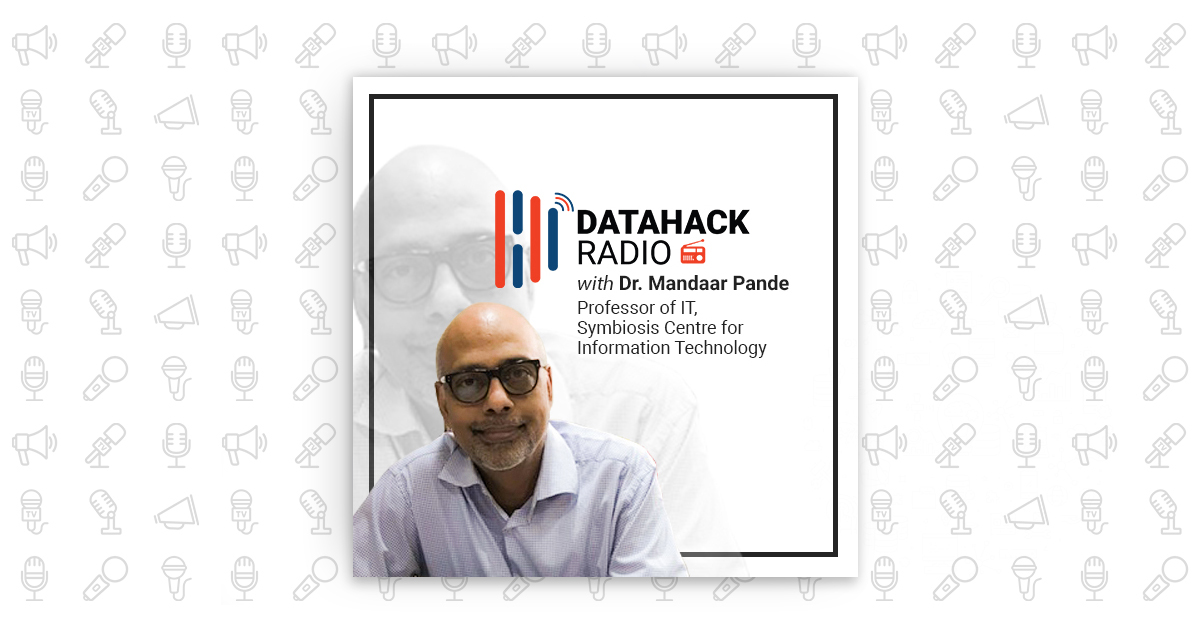
To dive deeper into this exciting area, I had the pleasure of listening to the DataHack Radio podcast episode featuring Dr. Mandaar Pande, a leading expert in quantum computing and quantum machine learning. Dr. Pande holds a Ph.D in theoretical physics with a specialization in quantum optics, and has extensive experience working at tech giants like Tech Mahindra and Wipro.
Why Quantum Machine Learning Matters
Before we explore the details of quantum machine learning, let‘s take a step back and consider why this field is generating so much buzz and interest. In a nutshell, QML offers the potential for:
-
Exponential speedup: Certain quantum algorithms have been shown to provide exponential speedup over their classical counterparts for specific problems. For example, the HHL algorithm for solving linear systems of equations runs in time logarithmic in the size of the matrix, compared to the polynomial time required by classical algorithms.
-
Better generalization: Quantum computers can efficiently explore vast, high-dimensional feature spaces that are inaccessible to classical computers. This could lead to ML models that can learn from less data and generalize better to unseen examples.
-
Reduced computational complexity: QML could enable us to efficiently train and run machine learning models that are computationally intractable on classical hardware due to the curse of dimensionality.
As Dr. Pande puts it: "The number of bits in a 300 qubit quantum computer will be more than the known atoms in the universe." That‘s the kind of game-changing scale that quantum computing brings to the table.
The Landscape of Quantum Machine Learning Algorithms
So what does the current landscape of quantum machine learning algorithms look like? While the field is still in its early stages, there are several promising areas of research and development:
-
Quantum Support Vector Machines (QSVM): SVMs are a popular classical ML algorithm used for classification and regression tasks. The quantum version, QSVM, can provide exponential speedup over classical SVMs for certain datasets.
-
Quantum Principal Component Analysis (QPCA): PCA is a widely used dimensionality reduction and data compression technique. QPCA can perform PCA exponentially faster than classical algorithms, which could enable analysis of much larger datasets.
-
Variational Quantum Eigensolvers (VQE): VQE is a hybrid quantum-classical algorithm used to find the lowest energy state of a quantum system, with applications in chemistry, material science, and optimization. VQE has been used to simulate molecules on quantum hardware that are infeasible to simulate classically.
-
Quantum Neural Networks (QNN): QNNs are the quantum analogue of classical artificial neural networks, capable of learning complex functions from data. There are various architectures being explored, such as the quantum perceptron, quantum convolutional neural networks, and quantum autoencoders.
Other promising areas of quantum ML research include quantum reinforcement learning, quantum generative models, and quantum transfer learning.
The State of the Quantum Computing Industry
Of course, realizing the potential of quantum machine learning requires advances not just in algorithms but also in quantum hardware and software. So where does the quantum computing industry stand today?
According to a report by McKinsey, the global quantum computing market is expected to reach $2-5 billion by 2025 and $15-30 billion by 2035. The industry is seeing significant investment and activity from tech giants, startups, government agencies, and academia.
- Tech giants: IBM, Google, Microsoft, Amazon, Intel, Honeywell
- Startups: IonQ, Rigetti Computing, D-Wave Systems, QC Ware, Zapata Computing
- Government: US (National Quantum Initiative Act), EU (Quantum Technologies Flagship), China, Australia, Canada
- Academia: MIT, Caltech, Berkeley, TU Delft, University of Waterloo, National University of Singapore
As of 2024, IBM and Google have quantum computers with over 100 qubits, and are racing to achieve quantum advantage – the point at which a quantum computer can solve a practical problem faster than the best classical computer. IBM has also made its quantum computers available via the cloud to select partners and customers.
However, significant challenges remain in scaling up the number of qubits, improving qubit fidelity and coherence times, implementing error correction, and integrating classical and quantum hardware. Most experts believe we are still 5-10 years away from having fault-tolerant quantum computers that can run large-scale quantum ML algorithms.
Technical Challenges and Open Problems
Implementing practical quantum machine learning systems requires overcoming several technical hurdles:
-
Qubit scaling: Current quantum computers have at most a few hundred qubits, while many QML algorithms require thousands or even millions of qubits. Scaling up quantum hardware while maintaining qubit quality is an active area of research.
-
Error correction: Qubits are highly sensitive to noise and errors, which can quickly corrupt computations. Quantum error correction codes are needed to detect and fix errors, but they require additional qubits and overhead.
-
Data I/O: Getting large classical datasets into a quantum computer is a challenge due to the limited connectivity between classical and quantum hardware. Techniques like quantum RAM (qRAM) are being developed to address this bottleneck.
-
Algorithmic complexity: While quantum algorithms can provide speedups, they often have much higher constant factors and overhead compared to classical algorithms. Reducing this complexity and making quantum algorithms more practical is an open problem.
As Dr. Maria Schuld, a researcher at Xanadu Quantum Technologies, notes in her book "Supervised Learning with Quantum Computers":
"At the moment, we do not have enough evidence to claim that quantum machine learning will be useful in practice. The field is still in an exploratory stage, and we need to find the right problem where quantum methods can make a difference."
Preparing for a Quantum Future
Despite the challenges, the potential impact of quantum machine learning is too great to ignore. As a machine learning practitioner or researcher, there are several steps you can take to prepare for the quantum future:
-
Build your quantum literacy: Familiarize yourself with the basics of quantum computing and quantum information theory. Resources like Nielsen and Chuang‘s book "Quantum Computation and Quantum Information" and the edX course "The Quantum Internet and Quantum Computers" are great starting points.
-
Explore quantum software: Get hands-on experience with quantum computing simulators and SDKs like IBM Qiskit, Google Cirq, Amazon Braket, and Microsoft QDK. Many of these tools now include quantum ML libraries and tutorials.
-
Follow the latest research: Keep up with the latest developments in quantum ML by following conferences like QML, NeurIPS, ICML, and ICLR, and reading papers on arXiv. Join online communities like the Quantum Computing Stack Exchange and the Quantum Machine Learning Subreddit.
-
Collaborate across disciplines: Quantum ML is a highly interdisciplinary field, combining ideas from computer science, physics, mathematics, and engineering. Seek out opportunities to collaborate and learn from experts in different domains.
As Dr. Pande advises: "Having a strong grasp of linear algebra, calculus, statistics, as well as quantum physics is crucial. Beyond the technical chops, curiosity, creativity and perseverance are key to succeeding in this field."
Conclusion
Quantum machine learning represents a new frontier in AI, with the potential to unlock unprecedented computational power and enable breakthroughs in areas like drug discovery, materials science, finance, and optimization.
While the field is still in its early stages, the rapid progress being made in quantum hardware, software, and algorithms is bringing us closer to the era of practical quantum advantage. Tech giants, startups, governments, and academia are all racing to build and harness the power of quantum computers.
As machine learning practitioners and enthusiasts, it‘s important to start building our quantum literacy and exploring the potential of QML. By staying informed, collaborating across disciplines, and actively engaging with the technology, we can help shape the future of this exciting field.
The road to practical quantum machine learning may be long and challenging, but the rewards could be truly transformational. As Dr. Pande puts it: "We are at the cusp of a technological revolution that could change the world as we know it. It‘s an exciting time to be working in quantum computing and quantum machine learning."
Are you ready to take the quantum leap?


![Is Claude Free to Use? An AI Expert‘s Deep Dive into Capabilities [2026]](https://33rdsquare.com/wp-content/uploads/2024/03/20240312071544-65f0012076ae6.png.webp)
