
Bringing Emojis to Life with Deep Learning
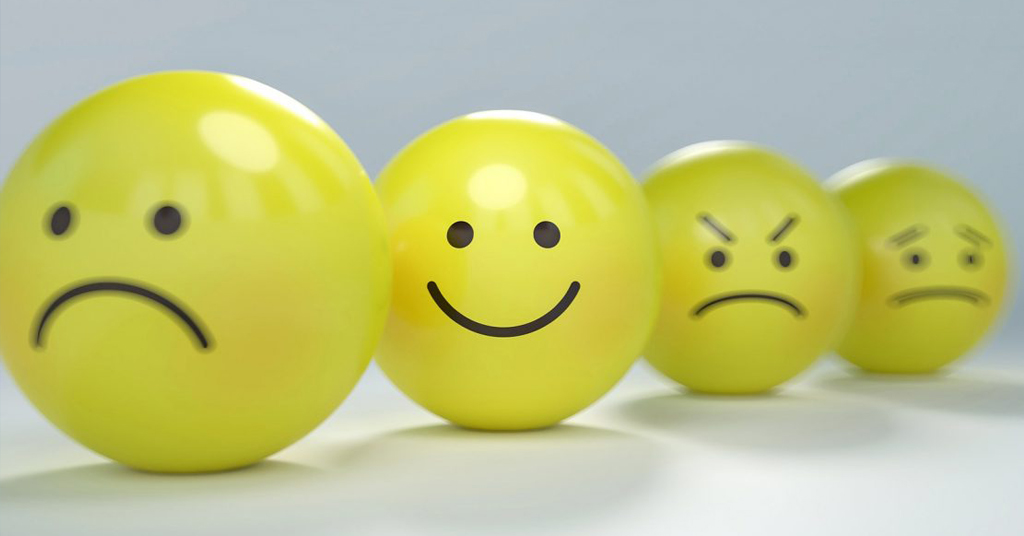
Emojis have become an integral part of how we communicate digitally, allowing us to express nuanced emotions and add personality to our messages. But what if you could generate emojis automatically based on your facial expressions? Recent advances in deep learning are making this possible. In this article, we‘ll dive into how you can use deep learning models to recognize facial expressions in real-time and translate them into relevant emojis.
The Power of Deep Learning
Deep learning is a subset of machine learning that has revolutionized fields like computer vision, natural language processing, and speech recognition in recent years. Deep neural networks, composed of many interconnected layers, are able to automatically learn hierarchical representations from raw data. When trained on massive datasets using specialized hardware, deep learning models can solve highly complex problems and even exceed human-level performance on certain tasks.
One area where deep learning shines is facial expression recognition. Convolutional neural networks (CNNs) are particularly well-suited for this, as they can effectively capture spatial patterns and learn discriminative features from images. By training on datasets containing thousands of annotated examples, CNNs can learn to accurately classify facial expressions into categories like happy, sad, angry, surprised, etc.
Emojis: The Modern-Day Hieroglyphs
Emojis have become a ubiquitous part of online communication, with over 10 billion emojis sent daily on messaging platforms. These colorful icons allow us to convey tone and emotion in a concise and playful way, transcending language barriers. Studies have shown that emojis can help to establish intimacy and connection in digital interactions.
With the rapid proliferation of emojis, there is growing interest in generating them automatically based on the user‘s facial expressions. This would enable more seamless and intuitive communication, as well as open up new possibilities for personalized emoji creation. Deep learning is making this vision a reality.
Facial Expression Datasets
To train deep learning models for facial expression recognition, we need large, high-quality datasets. One of the most widely used is the FER2013 dataset, which contains 35,887 grayscale images of faces labeled with one of 7 emotion categories: angry, disgust, fear, happy, sad, surprise, and neutral. The images are centered and occupy a consistent amount of space.
Other notable facial expression datasets include:
- The Extended Cohn-Kanade (CK+) dataset: 593 video sequences from 123 subjects, labeled with 7 expression labels
- The MMI Facial Expression Database: Over 2900 videos and high-resolution still images of 75 subjects
- The Japanese Female Facial Expression (JAFFE) Database: 213 images of 7 facial expressions posed by 10 Japanese female models
- The Real-world Affective Faces Database (RAF-DB): Nearly 30,000 diverse facial images downloaded from the Internet
Having a variety of high-quality datasets is crucial for training robust, generalizable models that can recognize facial expressions across different individuals and contexts.
Designing CNN Architectures
Choosing an appropriate CNN architecture is key to achieving strong results on facial expression recognition. While it‘s possible to design a CNN from scratch, it‘s often more efficient to start with a proven architecture and fine-tune it for the specific task.
Some popular CNN architectures that have been successfully applied to facial expression recognition include:
- VGGNet: A deep CNN with 16-19 weight layers, known for its simplicity and strong performance.
- ResNet: Introduces residual connections to enable training of very deep networks (up to 152 layers).
- Inception: Uses multi-scale convolutional filters to capture features at different scales.
- Xception: An "extreme" version of Inception that replaces standard Inception modules with depthwise separable convolutions.
When designing the CNN, it‘s important to consider factors like the input image size, number of convolutional layers, filter sizes, and number of fully-connected layers. Regularization techniques like dropout and data augmentation can help improve generalization and reduce overfitting. The output layer should have the same number of units as emotion categories, with a softmax activation function to produce a probability distribution over the classes.

Training and Evaluation
With the dataset and model architecture in place, the next step is to train the CNN. This involves iteratively updating the model‘s weights to minimize a loss function that quantifies the difference between predicted and ground-truth labels. Popular optimizers for training CNNs include SGD with momentum, Adam, and RMSprop.
It‘s important to monitor the model‘s performance during training using metrics like accuracy, precision, recall, and F1 score. Visualizing the training and validation loss can help diagnose issues like overfitting or underfitting. Cross-validation and hold-out test sets should be used to get a fair estimate of the model‘s generalization performance.
Some tips for training facial expression recognition models:
- Preprocess the images by scaling pixel values to [0, 1], subtracting the mean, or applying contrast normalization
- Use data augmentation (e.g. random flips, rotations, crops) to improve robustness and reduce overfitting
- Experiment with different learning rate schedules and regularization strengths
- Ensemble multiple models to boost performance
- Fine-tune a pretrained model on a larger dataset before training on facial expression data
With careful tuning, it‘s possible to achieve over 70% accuracy on challenging facial expression datasets like FER2013. But keep in mind that lab-controlled datasets often don‘t fully capture the complexity of expressions in the wild.
Real-time Emoji Creation
The trained facial expression recognition model can be deployed in a real-time application to generate emojis based on the user‘s live facial expressions. This involves the following components:
- Webcam input: Capture live video stream from the user‘s camera
- Face detection: Locate faces in the video frames using a face detection model (e.g. Haar cascades, HOG + SVM, MTCNN)
- Facial expression classification: Apply the trained CNN to predict the emotion label for each detected face
- Emoji mapping: Convert the predicted emotion label to a corresponding emoji image
- Overlay: Superimpose the emoji image onto the video frame near the detected face
Here‘s a visualization of the real-time emoji generation pipeline:

The system can be implemented efficiently using libraries like OpenCV for video capture and image processing, Keras or PyTorch for CNN inference, and Dlib or OpenCV for face detection. Careful engineering is necessary to ensure smooth performance and avoid lag.
To make the experience more engaging, elements like a Graphical User Interface (GUI), emoji customization options, and sharing capabilities can be added. The emojis can be personalized to match the user‘s appearance or style.
Applications and Future Directions
Automatically generating emojis based on facial expressions has a wide range of potential applications:
- Enhancing emotional expressiveness in online communication and social media
- Personalizing emoji recommendations in messaging apps
- Generating avatar animations in games and virtual worlds
- Analyzing emotional responses to advertisements and media content
- Assisting individuals with social or emotional disorders
As deep learning continues to advance, we can expect to see more sophisticated methods for facial expression recognition and emoji generation. Some promising future directions include:
- Multimodal emotion recognition that fuses facial expressions with cues like speech, text, and gestures
- Few-shot or one-shot learning to generate custom emojis based on a small number of user-provided examples
- Unsupervised learning of facial expression representations and emoji attributes
- Generating emojis with richer animations and more fine-grained expressions
- Cross-domain adaptation to handle the gap between lab-controlled and unconstrained settings
Conclusion
Deep learning has opened up exciting possibilities for automatically recognizing facial expressions and generating corresponding emojis in real-time. By leveraging large annotated datasets and carefully designed CNN architectures, we can create systems that enhance emotional expressiveness and personalisation in digital communication.
As you‘ve seen in this article, building an emoji generation system involves many components, from data collection and model design to real-time inference and user interface development. While there are still challenges to overcome, the rapid progress in deep learning and computer vision is bringing us closer to seamless, intuitive integration of emojis into our daily interactions.
We encourage you to experiment with the techniques and ideas presented here, and to stay curious as new developments emerge in this fascinating area at the intersection of AI and human expression. The future of emojis is bright, and deep learning is lighting the way! 😎


