
F1 vs F1B Goldendoodle: An In-Depth Comparison
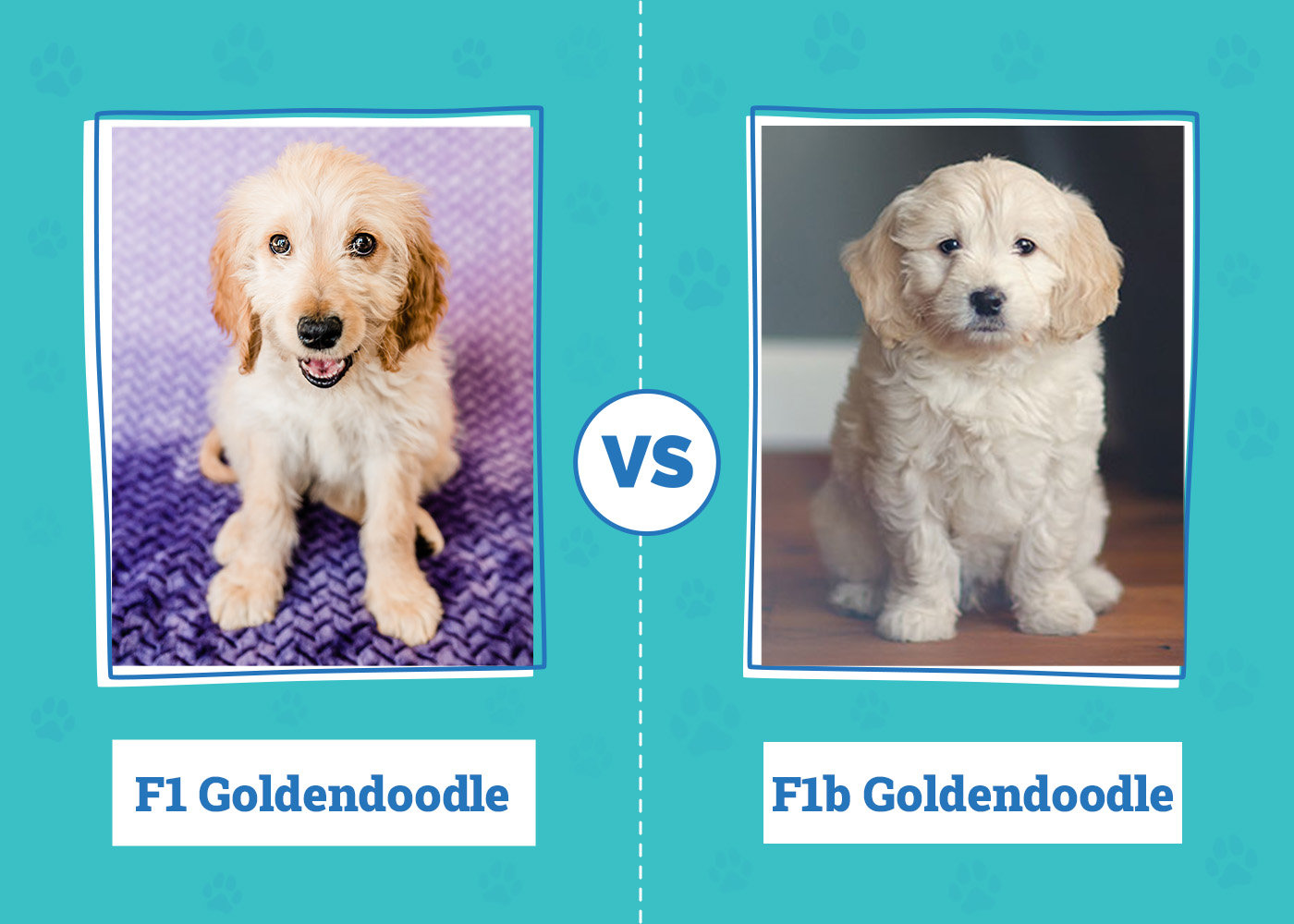
When searching for the perfect Goldendoodle puppy, one of the first decisions you‘ll need to make is which generation to choose – an F1 or F1B. While both generations make wonderful companions, there are some key differences to be aware of in terms of appearance, temperament, shedding, and more.
In this article, we‘ll take a detailed look at F1 vs F1B Goldendoodles, exploring the unique characteristics of each so you can determine which is the best fit for your lifestyle and family. Let‘s dive in!
Understanding F1 and F1B Genetics
First, it‘s important to understand what "F1" and "F1B" actually mean. These labels refer to the specific genetic mix and generation of the Goldendoodle.
An F1 Goldendoodle has one purebred Poodle parent and one purebred Golden Retriever parent, making them a first-generation cross with a 50/50 mix of Poodle and Golden Retriever genes. This genetic diversity often results in robust health and hybrid vigor.
An F1B Goldendoodle, on the other hand, has one F1 Goldendoodle parent and one purebred Poodle parent. So genetically, they are approximately 75% Poodle and only 25% Golden Retriever. The "B" stands for backcross – breeding a hybrid back to one of the original purebred parents.
The higher percentage of Poodle genetics in an F1B often results in a curlier, more consistently non-shedding coat compared to an F1. However, the Golden Retriever influence is still present, contributing to their friendly, outgoing temperament.
Physical Characteristics and Appearance
One of the main differences between F1 and F1B Goldendoodles is their physical appearance, particularly in terms of size and coat type. Let‘s explore the typical characteristics of each:
F1 Goldendoodle Appearance
Size: Can vary quite a bit depending on the size of the Poodle parent (toy, miniature, or standard). Typically range from 15-22 inches tall and 15-60 pounds.
Coat type: Varies from wavy to shaggy to slightly curly. Not guaranteed to be non-shedding, as they inherit one shedding gene from the Golden Retriever parent and one non-shedding gene from the Poodle. Grooming needs are moderate.
Coat colors: Wider variety of colors and patterns possible due to influence of Golden Retriever genes. Common colors include shades of cream, apricot, red, gold, and black.
F1B Goldendoodle Appearance
Size: More consistently falls in the medium size range of 15-22 inches tall and 25-45 pounds, as the Poodle parent is often a miniature or standard.
Coat type: Tends to be curlier and more consistently non-shedding/low-shedding compared to an F1, as they inherit more Poodle genes. May still have some looser waves or straighter hair, especially as puppies. Grooming needs are moderate to high.
Coat colors: Still a variety of colors possible, but tends towards more solid shades. Common colors include shades of cream, apricot, brown, black, and parti (patches of white with another color).
In general, F1B Goldendoodles have a more Poodle-like appearance with a curlier coat and more refined features compared to the shaggier, Golden Retriever-influenced look of an F1. However, there can still be plenty of variation in appearance within each generation.
Temperament and Personality
Both F1 and F1B Goldendoodles are known for their friendly, outgoing, loving personalities. They are typically great with children and other dogs, and make devoted family companions. However, there are some general differences in temperament between the generations:
F1 Goldendoodle Temperament
May be slightly more energetic and exuberant due to the higher percentage of Golden Retriever genes. Very friendly and eager to please, but can be a bit distractible or "goofy" at times. Highly trainable but may take a bit longer to mature mentally.
F1B Goldendoodle Temperament
Inherits more of the calmer, reserved Poodle temperament. Still very friendly and outgoing, but tends to be a bit more focused and serious compared to an F1. Highly intelligent and biddable, making them very trainable and well-suited for therapy work, service jobs, and advanced obedience.
Of course, temperament is influenced by many factors beyond just generation, including individual breeding lines, socialization, and training. Proper socialization from an early age is important for all Goldendoodles to develop into confident, well-adjusted adult dogs.
Shedding and Allergies
For many Goldendoodle owners, shedding and allergies are a top concern. While no dog is truly 100% hypoallergenic, Goldendoodles are often a good choice for allergy sufferers due to their Poodle heritage. But which generation sheds less – F1 or F1B?
F1 Goldendoodle Shedding
Tends to shed lightly to moderately, as they inherit one shedding gene from the Golden Retriever parent. Shedding amount varies widely depending on which parent they favor. Regular brushing is needed to prevent matting and control loose hair. Not recommended for moderate to severe allergy sufferers.
F1B Goldendoodle Shedding
Many F1Bs (around 50%) are low- to non-shedding, inheriting the Poodle‘s tighter, denser curls that tend to trap loose hair and dander. While no Goldendoodle is completely non-shedding or hypoallergenic, F1Bs are often a good choice for those with mild allergies. Frequent brushing is still needed to prevent matting.
Even low-shedding Goldendoodles can trigger allergies in some people, as the allergens are present in dander, saliva, and urine. Spending time with the specific dog before committing is recommended for allergy sufferers.
Health and Lifespan
Goldendoodles of all generations are generally a healthy, long-lived breed with a lifespan of 10-15 years on average. As a hybrid, they benefit from genetic diversity which often results in robust health and hybrid vigor, especially in the first generation (F1).
Some of the health issues that can occasionally crop up in Goldendoodles include hip dysplasia, eye disorders like progressive retinal atrophy, and certain cancers. Choosing a responsible breeder who conducts health screenings on the parent dogs can help reduce the risk of inheriting genetic disorders.
In general, F1 Goldendoodles tend to be the healthiest generation due to their higher genetic diversity. F1Bs are also quite healthy, but may have a slightly higher risk of inheriting certain issues from the Poodle line. Choosing a reputable breeder and scheduling regular vet check-ups can help ensure your Goldendoodle stays healthy throughout their life.
Which Generation is Right For You?
So which Goldendoodle generation is the best choice – an F1 or F1B? The answer depends on your individual preferences, lifestyle, and needs. Here are some factors to consider:
Choose an F1 Goldendoodle if:
- You don‘t mind some light to moderate shedding and are not highly allergic
- You love the shaggy, teddy bear look and want the most Golden Retriever influence in appearance and temperament
- You are very active and want a energetic, adventurous companion to keep up with you
- Genetic diversity and hybrid vigor are a top priority for health reasons
Choose an F1B Goldendoodle if:
- You have mild allergies and strongly prefer a low- to non-shedding coat
- You like the curlier Poodle look and want a slightly calmer, more focused temperament
- You are interested in therapy work, service dog training, or advanced obedience
- Ease of trainability and a more mature mindset are important to you
Ultimately, the right choice comes down to your personal preferences and situation. Both F1 and F1B Goldendoodles make incredible companions with their loving, friendly personalities and devotion to family.
Meeting the parent dogs and spending time with puppies of each generation can give you the best sense of which one clicks with you. With proper socialization, training, and care, your Goldendoodle will be a cherished member of the family for many years to come, no matter the generation you choose.


