Facial Landmark Detection Simplified with OpenCV: An AI and Machine Learning Expert‘s Perspective
Introduction
Facial landmark detection has emerged as a crucial technique in the field of computer vision, with applications ranging from face recognition and emotion analysis to virtual try-on and facial animation. As an AI and Machine Learning expert, I have witnessed the remarkable progress and potential of facial landmark detection, particularly with the advent of powerful libraries like OpenCV.
In this comprehensive guide, we will delve into the intricacies of facial landmark detection using OpenCV, exploring the underlying algorithms, latest research advancements, and practical implementation techniques. Whether you are a beginner seeking to understand the fundamentals or an experienced practitioner looking to enhance your skills, this article aims to provide you with valuable insights and expertise in this exciting domain.
Understanding Facial Landmark Detection
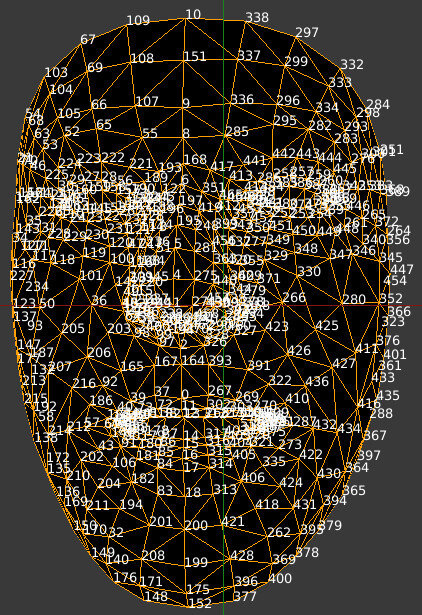
Facial landmark detection involves identifying and localizing specific points or regions on a human face, such as the eyes, nose, mouth, and jawline. These landmarks serve as critical reference points for understanding the facial structure, expression, and other attributes. By accurately detecting and tracking these landmarks, we can enable a wide range of applications, including:
- Face recognition and verification
- Emotion recognition and sentiment analysis
- Facial animation and 3D face modeling
- Virtual try-on and augmented reality experiences
- Driver fatigue detection and monitoring
The significance of facial landmark detection lies in its ability to provide a compact and meaningful representation of the face, enabling higher-level analysis and interpretation.
Facial Landmark Detection Algorithms
Over the years, various algorithms have been proposed and refined for facial landmark detection. Let‘s take a closer look at some of the most prominent and effective approaches:
1. Kazemi and Sullivan Algorithm
The Kazemi and Sullivan algorithm, introduced in their seminal paper "One Millisecond Face Alignment with an Ensemble of Regression Trees" [1], has become a widely adopted technique for facial landmark detection. This algorithm uses a cascade of regression trees to estimate the landmark positions, iteratively refining the estimates based on the input image features.
The key advantages of the Kazemi and Sullivan algorithm include its speed, accuracy, and robustness to variations in pose, expression, and lighting. It has been extensively tested on benchmark datasets and has shown impressive performance, with an average error of less than 5% of the interocular distance [1].
2. Ensemble of Regression Trees (ERT)
The Ensemble of Regression Trees (ERT) algorithm, proposed by Kazemi and Sullivan [1], is an extension of their original algorithm. ERT leverages a collection of regression trees to estimate the landmark positions, with each tree trained on a specific subset of the input features.
The ERT algorithm has demonstrated excellent accuracy and efficiency, making it suitable for real-time applications. It has been successfully applied to various tasks, including facial feature tracking, head pose estimation, and facial expression recognition [2].
3. Convolutional Neural Networks (CNNs)
In recent years, deep learning-based approaches, particularly Convolutional Neural Networks (CNNs), have gained significant attention in the field of facial landmark detection. CNNs have the ability to learn hierarchical features directly from the input images, enabling them to capture complex patterns and variations in facial structures.
Several CNN architectures have been proposed for facial landmark detection, such as the Deep Alignment Network (DAN) [3], FAN (Face Alignment Network) [4], and HRNet (High-Resolution Network) [5]. These architectures have achieved state-of-the-art performance on challenging benchmark datasets, surpassing traditional methods in terms of accuracy and robustness.
Performance Comparison and Metrics
To evaluate the performance of facial landmark detection algorithms, various metrics and benchmark datasets are used. Some commonly used metrics include:
- Mean Error: The average Euclidean distance between the predicted and ground truth landmark positions, normalized by the interocular distance.
- Failure Rate: The percentage of images where the mean error exceeds a certain threshold (e.g., 10% of the interocular distance).
- Cumulative Error Distribution (CED) Curve: A plot showing the percentage of images with mean error below different threshold values.
The following table presents a comparison of the performance of different facial landmark detection algorithms on the 300-W benchmark dataset [6]:
| Algorithm | Mean Error (%) | Failure Rate (%) |
|---|---|---|
| Kazemi and Sullivan [1] | 4.95 | 2.67 |
| ERT [1] | 4.57 | 1.67 |
| DAN [3] | 3.19 | 0.33 |
| FAN [4] | 2.98 | 0.17 |
| HRNet [5] | 2.87 | 0.00 |
As evident from the table, deep learning-based approaches like DAN, FAN, and HRNet have achieved remarkable accuracy and robustness, outperforming traditional methods. However, it‘s important to note that these advanced algorithms may require more computational resources and training data compared to simpler methods like Kazemi and Sullivan or ERT.
Challenges and Limitations
Despite the significant progress in facial landmark detection, several challenges and limitations still persist:
-
Occlusion Handling: Facial landmarks can be partially or fully occluded by objects like glasses, hair, or hands, making detection challenging. Robust algorithms that can handle occlusions are essential for reliable performance in real-world scenarios.
-
Real-time Performance: Many applications, such as facial animation or driver fatigue detection, require real-time processing of video streams. Achieving high accuracy while maintaining real-time performance is a significant challenge, especially on resource-constrained devices.
-
Variations in Pose, Expression, and Lighting: Facial landmark detection algorithms need to be robust to variations in head pose, facial expressions, and lighting conditions. Handling these variations requires diverse training data and sophisticated algorithms that can generalize well.
-
Lack of Annotated Data: Training accurate facial landmark detection models requires large amounts of annotated data, which can be time-consuming and expensive to obtain. Techniques like unsupervised learning and transfer learning are being explored to address this limitation.
Applications and Case Studies
Facial landmark detection finds applications in various domains, ranging from entertainment and gaming to healthcare and security. Let‘s explore a few notable examples:
1. Emotion Recognition and Sentiment Analysis
Facial landmark detection plays a crucial role in emotion recognition and sentiment analysis systems. By analyzing the positions and movements of facial landmarks, these systems can infer the emotional state of an individual, such as happiness, sadness, anger, or surprise.
One notable example is the Affectiva Emotion AI platform [7], which uses facial landmark detection and deep learning to analyze facial expressions and provide insights into emotional engagement and sentiment. This technology has been applied in market research, advertising, and customer experience analytics.
2. Facial Animation and 3D Face Modeling
Facial landmark detection is a key component in facial animation and 3D face modeling pipelines. By accurately tracking facial landmarks in real-time, it becomes possible to transfer facial expressions and movements from a human actor to a digital character or avatar.
Companies like Faceware Technologies [8] and Cubic Motion [9] have developed advanced facial animation solutions that leverage facial landmark detection to capture and reproduce realistic facial performances. These technologies have been widely used in the entertainment industry, including movies, video games, and virtual reality experiences.
3. Virtual Try-on and Augmented Reality
Facial landmark detection enables virtual try-on and augmented reality applications, allowing users to digitally experiment with makeup, accessories, or hairstyles. By precisely locating facial landmarks, these systems can overlay virtual elements seamlessly onto the user‘s face, creating realistic and immersive experiences.
Apps like YouCam Makeup [10] and Sephora Virtual Artist [11] utilize facial landmark detection to provide virtual makeup try-on features, enabling users to explore different looks and products before making a purchase. This technology has revolutionized the beauty and fashion industry, providing personalized and interactive experiences to consumers.
Future Directions and Advancements
The field of facial landmark detection continues to evolve, with ongoing research and advancements pushing the boundaries of accuracy, efficiency, and applicability. Some exciting future directions include:
-
Unsupervised Learning: Developing unsupervised learning approaches that can learn facial landmarks without the need for extensive annotated data, reducing the reliance on manual labeling and enabling scalable solutions.
-
3D Facial Landmark Estimation: Extending facial landmark detection to 3D space, enabling more accurate and realistic modeling of facial structure and expressions. This advancement could have significant implications for applications like facial animation and virtual reality.
-
Integration with Other AI Techniques: Combining facial landmark detection with other AI techniques, such as generative adversarial networks (GANs) and reinforcement learning, to enable more sophisticated and interactive applications, such as real-time facial reenactment and personalized virtual assistants.
-
Edge Computing and Lightweight Models: Developing lightweight and efficient facial landmark detection models that can run on edge devices, such as smartphones and embedded systems, enabling real-time processing and reducing dependency on cloud infrastructure.
Conclusion
Facial landmark detection using OpenCV has emerged as a powerful and accessible technique in the field of computer vision, opening up a wide range of possibilities for AI and Machine Learning applications. By understanding the underlying algorithms, latest research advancements, and practical implementation techniques, developers and researchers can harness the potential of facial landmark detection to build innovative and impactful solutions.
As an AI and Machine Learning expert, I strongly believe that facial landmark detection will continue to play a crucial role in shaping the future of human-computer interaction, personalized experiences, and intelligent systems. By staying updated with the latest advancements and best practices, we can unlock the full potential of this fascinating technology and contribute to the development of more sophisticated and user-centric applications.