A Deep Dive into Chi-Square Feature Selection for Machine Learning
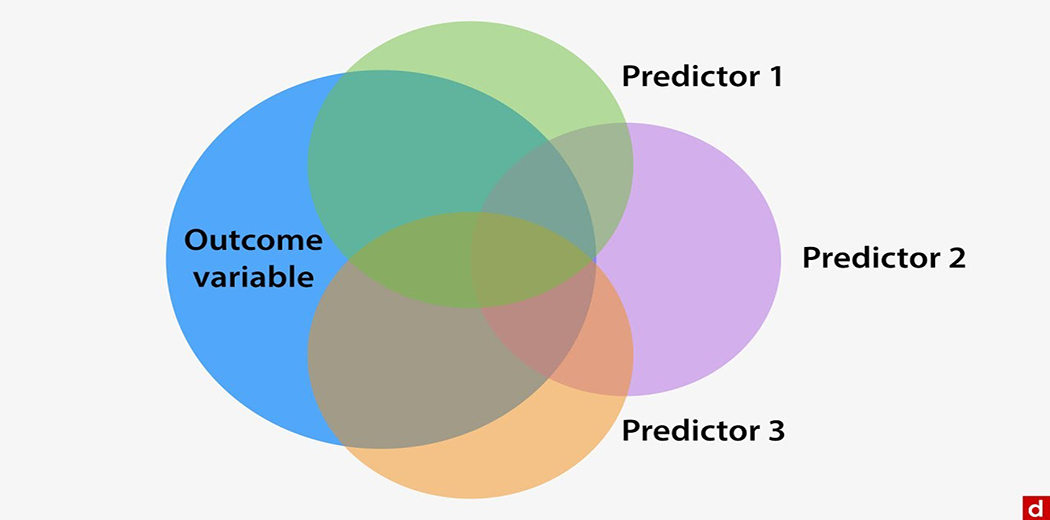
Feature selection is a crucial step in the machine learning workflow that involves identifying the most relevant features (input variables) for a predictive model. By removing irrelevant or redundant features, feature selection can improve model performance, reduce overfitting, enhance interpretability, and decrease computational complexity.
While there are many feature selection techniques available, such as recursive feature elimination, genetic algorithms, and decision trees, statistical tests provide a principled approach for evaluating the significance of features. In particular, the chi-square test is a popular statistical method for feature selection in classification problems with categorical features.
In this article, we will take a deep dive into chi-square feature selection, exploring its mathematical foundations, practical applications, and implementation in Python. We will also discuss best practices, considerations, and alternatives to help you make informed decisions when applying this technique to your own machine learning projects.
Overview of Feature Selection Techniques
Before delving into chi-square feature selection, let‘s briefly review some common feature selection techniques:
-
Filter methods: These methods evaluate the relevance of features independently of the learning algorithm. Examples include statistical tests (e.g., chi-square, ANOVA, correlation), information-theoretic measures (e.g., mutual information), and ranking methods (e.g., variance threshold).
-
Wrapper methods: These methods search for the optimal subset of features by evaluating different combinations using a specific machine learning algorithm. Examples include recursive feature elimination and genetic algorithms.
-
Embedded methods: These methods perform feature selection as part of the model training process. Examples include L1 regularization (Lasso) and decision tree-based methods (e.g., random forests, gradient boosting).
While each technique has its strengths and weaknesses, statistical tests offer a computationally efficient and model-agnostic approach to feature selection. Among statistical tests, the chi-square test is particularly well-suited for categorical features in classification problems.
Chi-Square Feature Selection
The chi-square test is a statistical hypothesis test that measures the dependence between two categorical variables. In the context of feature selection, the chi-square test evaluates the relationship between each feature and the target variable (class labels) to determine the significance of the feature.
Mathematical Formulation
Given a feature X and the target variable Y, the chi-square statistic is calculated as follows:
χ² = Σ [(Observed – Expected)² / Expected]
where:
- Observed is the actual count of instances in each category combination
- Expected is the expected count of instances assuming independence between X and Y
The expected count is calculated using the marginal frequencies of X and Y:
Expected = (Row Total * Column Total) / Grand Total
The chi-square statistic follows a chi-square distribution with degrees of freedom (df) equal to (num_categories_X – 1) * (num_categories_Y – 1).
Interpreting Chi-Square Results
To determine the significance of a feature, the chi-square statistic is compared to a critical value from the chi-square distribution at a chosen significance level (e.g., 0.05). If the chi-square statistic exceeds the critical value, the feature is considered significant and retained for further analysis.
The p-value associated with the chi-square statistic represents the probability of observing the calculated chi-square value or a more extreme value, assuming independence between the feature and the target variable. A small p-value (typically < 0.05) indicates strong evidence against the null hypothesis of independence, suggesting that the feature is significant.
Step-by-Step Example
Let‘s walk through a step-by-step example of chi-square feature selection using a hypothetical dataset:
Suppose we have a dataset with three categorical features (Color, Size, Shape) and a binary target variable (Defective). We want to select the most significant features for predicting defective products.
Step 1: Calculate the observed counts for each category combination.
Color Size Defective Count
Red Small Yes 10
Red Small No 20
Red Large Yes 5
Red Large No 15
Blue Small Yes 8
Blue Small No 22
Blue Large Yes 12
Blue Large No 8
Step 2: Calculate the expected counts assuming independence.
For the combination (Red, Small, Yes):
Expected = (30 * 28) / 100 = 8.4
Step 3: Calculate the chi-square statistic for each feature.
For the Color feature:
χ²_Color = (10 – 8.4)² / 8.4 + … + (8 – 11.2)² / 11.2 = 1.19
Step 4: Determine the critical value at a significance level of 0.05.
For Color (df = 1): Critical value = 3.84
Step 5: Compare the chi-square statistic with the critical value and calculate the p-value.
χ²_Color = 1.19 < 3.84, p-value = 0.275
Since the chi-square statistic is less than the critical value and the p-value is greater than 0.05, we fail to reject the null hypothesis of independence. Therefore, the Color feature is not significant.
Repeat steps 3-5 for the other features (Size and Shape) to determine their significance.
Advantages and Limitations
Chi-square feature selection offers several advantages:
-
Computationally efficient: The chi-square test can handle a large number of features and instances efficiently.
-
Model-agnostic: The results are independent of the specific machine learning algorithm, making it a versatile technique.
-
Handling categorical features: Chi-square is particularly suitable for categorical features, which are common in many real-world datasets.
However, it also has some limitations:
-
Assumes independence: The chi-square test assumes that the features are independent of each other. Violations of this assumption can lead to biased results.
-
Sensitive to sample size: The test may overestimate the significance of features when the sample size is small or when there are rare categories.
-
Limited to categorical features: Chi-square is not directly applicable to continuous features. Discretization techniques can be used to convert continuous features into categorical ones, but this may result in information loss.
Implementation in Python
Implementing chi-square feature selection in Python is straightforward using the scikit-learn library. Here‘s an example:
from sklearn.datasets import load_iris
from sklearn.feature_selection import chi2, SelectKBest

# Load the Iris dataset
X, y = load_iris(return_X_y=True)

# Convert continuous features to categorical
X_categorical = X.astype(int)

# Perform chi-square feature selection
k = 2  # Number of top features to select
selector = SelectKBest(chi2, k=k)
X_selected = selector.fit_transform(X_categorical, y)

# Get the selected feature indices
selected_indices = selector.get_support(indices=True)
print("Selected features:", selected_indices)
In this example, we load the Iris dataset, convert the continuous features to categorical using astype(int), and then apply chi-square feature selection using SelectKBest from scikit-learn. The k parameter specifies the number of top features to select. Finally, we print the indices of the selected features.
Best Practices and Considerations
When applying chi-square feature selection, consider the following best practices:
-
Preprocess the data: Handle missing values, outliers, and ensure that the categorical features are encoded appropriately.
-
Choose an appropriate significance level: The default significance level of 0.05 is commonly used, but adjust it based on your specific problem and domain knowledge.
-
Consider feature interactions: Chi-square evaluates each feature independently, so it may miss important interactions between features. Combining chi-square with other techniques or using interaction terms can help capture these relationships.
-
Validate the results: Assess the impact of feature selection on model performance using appropriate evaluation metrics and cross-validation techniques.
-
Iterate and refine: Feature selection is an iterative process. Analyze the selected features, incorporate domain expertise, and refine the selection based on the model‘s performance and interpretability.
Alternatives and Extensions
While chi-square is a powerful technique for categorical feature selection, there are alternative methods and extensions to consider:
-
ANOVA: Analysis of Variance (ANOVA) is a statistical test for comparing the means of multiple groups. It can be used for feature selection with continuous features and a categorical target variable.
-
Mutual Information: Mutual information measures the dependence between two variables. It can handle both categorical and continuous features and captures non-linear relationships.
-
Cramér‘s V: Cramér‘s V is a measure of association between two categorical variables based on the chi-square statistic. It provides a normalized value between 0 and 1, making it easier to compare the strength of association across features.
-
Recursive Feature Elimination: Recursive Feature Elimination (RFE) is a wrapper method that recursively removes the least important features based on a specific machine learning algorithm. It can be combined with chi-square for a more targeted feature selection approach.
Importance of Domain Expertise
While statistical tests like chi-square provide a data-driven approach to feature selection, it is essential to incorporate domain expertise into the process. Domain knowledge can help identify relevant features, validate the selected features, and provide insights into potential interactions or confounding factors.
Collaborating with subject matter experts and stakeholders can ensure that the selected features align with the problem domain and business objectives. It can also help identify any limitations or assumptions of the statistical tests and guide the interpretation of the results.
Combining Feature Selection Techniques
In practice, it is often beneficial to combine multiple feature selection techniques to obtain a more robust and comprehensive set of relevant features. For example, you can use chi-square as an initial filtering step to reduce the feature space and then apply wrapper or embedded methods to further refine the selection.
Combining feature selection techniques can help mitigate the limitations of individual methods and provide a more reliable and stable feature subset. However, it is important to consider the computational complexity and the potential for overfitting when combining multiple techniques.
Future Research Directions
Feature selection remains an active area of research in machine learning, with ongoing efforts to develop more advanced and efficient techniques. Some future research directions include:
-
Handling high-dimensional data: Developing scalable feature selection methods for datasets with a large number of features, such as genomic or text data.
-
Incorporating domain knowledge: Integrating prior knowledge and expert insights into feature selection algorithms to guide the selection process.
-
Dealing with imbalanced data: Addressing the challenges of feature selection in the presence of class imbalance, where some classes have significantly fewer instances than others.
-
Explainable feature selection: Developing methods that provide interpretable explanations for the selected features, enhancing the transparency and trustworthiness of machine learning models.
Conclusion
Chi-square feature selection is a powerful statistical technique for identifying significant categorical features in classification problems. By evaluating the relationship between each feature and the target variable, chi-square helps reduce the dimensionality of the dataset and improve model performance.
In this article, we explored the mathematical foundations of chi-square, provided a step-by-step example, and discussed best practices and considerations when applying this technique. We also covered alternatives, extensions, and the importance of incorporating domain expertise into the feature selection process.
As you embark on your own machine learning projects, remember that feature selection is an iterative and collaborative process. Experiment with different techniques, validate your results, and seek input from domain experts to ensure that your selected features align with the problem domain and business objectives.
By leveraging the power of chi-square feature selection and other statistical tests, you can build more accurate, interpretable, and efficient machine learning models that drive meaningful insights and decisions.