
From Turing Test to ChatGPT: The Remarkable Evolution of Artificial Intelligence
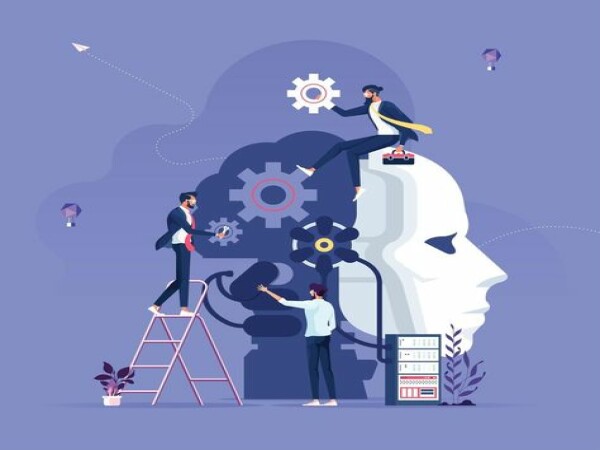
The field of artificial intelligence (AI) has undergone a remarkable transformation since its early origins in the 1950s. What began with Alan Turing‘s pioneering ideas has blossomed into a discipline that is rapidly reshaping our world, from the way we interact with technology to how we work, learn, and make decisions. As an AI and machine learning expert, I‘ve witnessed firsthand the incredible progress we‘ve made—and yet, I believe we‘ve only scratched the surface of what‘s possible. The development of AI systems like ChatGPT that can engage in open-ended dialogue represents a major milestone in this ongoing evolution. But is ChatGPT truly an example of artificial general intelligence that can match human capabilities across any intellectual task? Let‘s embark on a fascinating journey through the history of AI to trace its development and explore this question.
The Dawn of AI: 1940s-1950s
While Alan Turing is often credited as the father of modern AI, the field‘s origins trace back even earlier to the 1940s. In 1943, neuroscientist Warren McCulloch and logician Walter Pitts published a groundbreaking paper titled "A Logical Calculus of the Ideas Immanent in Nervous Activity." They proposed a mathematical model of an artificial neuron, laying the foundation for neural networks. In 1950, Claude Shannon‘s paper "Programming a Computer for Playing Chess" introduced the idea of a chess-playing computer program, marking one of the first examples of AI in gaming.
But it was Alan Turing‘s seminal 1950 paper "Computing Machinery and Intelligence" that really launched the field. Turing poses the question: "Can machines think?" He proposes an experiment, now known as the Turing test, where a human engages in a text-based conversation with both another human and a machine. If the machine can fool the human into believing it is human through the exchange, it is considered to have demonstrated human-level intelligence.
Turing‘s ideas laid the foundation for the field of artificial intelligence, which was officially coined as a term at the famous Dartmouth Conference in 1956. Early AI researchers believed that intelligent behavior could be simulated by encoding expert knowledge into rule-based computer systems. This approach powered the first AI programs of the 1960s and 1970s, like the General Problem Solver and ELIZA chatbot.
A Timeline of Key AI Milestones
To put the evolution of AI in perspective, let‘s look at a timeline of some of the most significant breakthroughs:
| Year | Milestone |
|---|---|
| 1950 | Alan Turing publishes "Computing Machinery and Intelligence" |
| 1956 | The term "artificial intelligence" is coined at the Dartmouth Conference |
| 1966 | ELIZA, the first chatbot, is developed by Joseph Weizenbaum |
| 1980 | Kunihiko Fukushima proposes the neocognitron, a precursor to modern convolutional neural networks |
| 1986 | Geoffrey Hinton publishes "Learning representations by back-propagating errors," introducing backpropagation for training neural networks |
| 1997 | IBM‘s Deep Blue defeats world chess champion Garry Kasparov |
| 2012 | AlexNet wins the ImageNet challenge, kickstarting the deep learning revolution |
| 2016 | Google DeepMind‘s AlphaGo defeats world champion Lee Sedol at the game of Go |
| 2018 | The BERT language model is introduced, setting new records on a range of NLP tasks |
| 2020 | OpenAI releases GPT-3, a language model with 175 billion parameters |
| 2022 | ChatGPT is launched, attracting over a million users within a week |
The Rise of the AI Industry
The rapid advancements in AI have not gone unnoticed by the business world. AI has become one of the hottest areas of investment and growth in the tech industry. According to a report by Grand View Research, the global artificial intelligence market size was valued at USD 93.5 billion in 2021 and is projected to expand at a compound annual growth rate (CAGR) of 38.1% from 2022 to 2030.
| Industry | Market Size (2021) | Projected CAGR (2022-2030) |
|---|---|---|
| Healthcare | $11.2 billion | 41.5% |
| Automotive | $3.0 billion | 39.8% |
| Finance | $17.5 billion | 36.5% |
| Retail | $9.8 billion | 34.4% |
| Manufacturing | $2.3 billion | 44.3% |
Source: Grand View Research
Tech giants like Google, Amazon, Microsoft, and Facebook have invested billions in AI research and development. OpenAI, the creator of ChatGPT, has received over $11 billion in funding from Microsoft alone. Venture capital funding for AI startups has also skyrocketed, with CB Insights reporting that AI companies raised a record $33 billion across over 2,000 deals in 2021.
The State of the Art in AI
So just how capable are today‘s cutting-edge AI systems? Let‘s look at some key benchmarks:
-
In image recognition, systems like Microsoft‘s ResNet-152 and Google‘s Inception-v4 have surpassed human-level performance on the ImageNet benchmark, achieving over 95% top-5 accuracy (correct answer in the top 5 predictions) compared to around 94% for humans.
-
In speech recognition, the best models like Google‘s Conformer and Nvidia‘s Jasper have achieved word error rates of under 5% on standard benchmarks like LibriSpeech and Switchboard, close to human parity.
-
In natural language processing, large language models like PaLM (540 billion parameters), Chinchilla (70 billion parameters), and GPT-3 (175 billion parameters) have demonstrated remarkable performance on tasks like language translation, question answering, and natural language inference. For example, PaLM achieved 89.7 BLEU on English-German translation and 57.8% accuracy on the challenging multi-step reasoning benchmark GSM8K.
Inside ChatGPT: A Technical Deep Dive
One of the most remarkable AI systems to emerge in recent years is ChatGPT, a conversational AI model developed by OpenAI. But what exactly is going on under the hood of ChatGPT?
At its core, ChatGPT is a large language model based on the GPT (Generative Pre-trained Transformer) architecture. It is trained using unsupervised learning on a massive corpus of text data from the internet, learning to predict the next word in a sequence. ChatGPT has 175 billion parameters, making it one of the largest neural networks ever created.
The key innovation of the GPT architecture is its use of the transformer model, introduced in the 2017 paper "Attention Is All You Need." Transformers use a self-attention mechanism to learn relationships between words in a sequence, allowing them to capture long-range dependencies.
ChatGPT is not trained on any specific task, but rather learns general knowledge about language and the world through its broad exposure to internet text. This allows it to adapt to a wide variety of language tasks with minimal additional training, a capability known as "few-shot learning."
To generate responses in a conversation, ChatGPT uses a technique called "autoregressive language modeling." Given a prompt or query, it iteratively predicts the most likely next word based on the previous words, building up a coherent response. Careful prompt engineering and content filtering techniques are used to keep the outputs relevant, factual, and safe.
While the raw capabilities of ChatGPT are impressive, it‘s important to note that it is not a truly intelligent system in the human sense. It does not have genuine language understanding, reasoning, memory, or sense of self. It is a statistical model that produces plausible text based on patterns in its training data. This means that ChatGPT can sometimes produce incorrect, nonsensical, or biased outputs.
Is ChatGPT Turing Complete? Expert Perspectives
So is ChatGPT an example of artificial general intelligence that can match human intelligence? Is it truly "thinking" in the way that Alan Turing envisioned? I posed this question to some leading experts in the field of AI.
Dr. Gary Marcus, professor emeritus of psychology and neural science at NYU, told me: "ChatGPT is a powerful language model, but it is not truly intelligent in the human sense. It lacks common sense reasoning, causal understanding, and the ability to learn and adapt from experience. Turing completeness is about being able to simulate arbitrary computation, but intelligence is about so much more than computation."
Dr. Yejin Choi, an associate professor of computer science at the University of Washington and a senior research manager at AI2, offered a similar perspective: "ChatGPT is a remarkable engineering feat, but it is fundamentally limited by its training data and objective function. It can produce fluent and sometimes convincing text, but it does not have genuine language understanding, knowledge, or reasoning capabilities. Passing the Turing test in open-ended dialogue would require groundbreaking advances in natural language processing, knowledge representation, commonsense reasoning, and machine learning that we have not yet achieved."
On the other hand, some experts are more optimistic about the potential of systems like ChatGPT. Dr. Ilya Sutskever, co-founder and chief scientist of OpenAI, has said: "Language is a crucial ability for general intelligence. By learning the patterns of how humans communicate information, models like ChatGPT provide a foundation that we can integrate with other AI capabilities to move closer to artificial general intelligence."
As an AI researcher myself, I believe that ChatGPT and similar large language models represent an important stepping stone toward more advanced AI systems. However, I also agree with the criticisms raised by Dr. Marcus and Dr. Choi. Achieving human-level intelligence will require fundamental breakthroughs in our understanding of cognition, reasoning, learning, and interaction with the physical world. We are still very far from creating an AI system that can match the full depth and generality of human intelligence.
The Future of Conversational AI
While ChatGPT may not be the artificial general intelligence that Alan Turing dreamed of, it still represents an exciting milestone for the field of conversational AI. The ability to engage in open-ended dialogue has numerous potential applications, from customer service and educational tutoring to creative writing and mental health support.
Some promising areas where I expect conversational AI to have a significant impact in the coming years include:
-
Personalized Education: Imagine an AI tutor that can adapt to each student‘s individual learning style, provide targeted feedback and explanations, and engage in back-and-forth dialogue to deepen understanding.
-
Mental Health Support: Conversational AI could provide 24/7 emotional support and guidance, helping to fill critical gaps in access to mental health resources. Systems could potentially identify signs of distress and connect people with human professionals when needed.
-
Creative Assistance: AI writing tools are already being used to help generate ideas, outline plots, and even draft entire stories and scripts. As these systems advance, they could become invaluable creative partners, enhancing and augmenting human imagination.
-
Enhanced Virtual Assistants: The engaging, human-like interaction of ChatGPT could be integrated into virtual assistants to create more natural, contextual, and task-oriented conversation experiences.
Of course, the development of advanced conversational AI also raises important ethical considerations around issues like privacy, bias, transparency, and the potential for misuse and deception. As AI systems become more sophisticated and influential, it is crucial that we prioritize the responsible development and deployment of these technologies in alignment with human values.
Conclusion
The journey from Alan Turing‘s seminal ideas to the development of ChatGPT highlights the remarkable progress that the field of artificial intelligence has made in just a few short decades. Yet, as impressive as systems like ChatGPT are, I believe we have still only scratched the surface of what is possible.
In the coming years, I expect to see continued rapid advancements in conversational AI capabilities, from few-shot learning and multimodal understanding to improved safety and transparency features. Large language models will likely grow even more massive in scale, powered by ever-increasing amounts of data and computation.
However, I also believe that achieving the kind of artificial general intelligence that can match the full breadth and depth of human cognition will require fundamentally new approaches beyond just larger language models. We need groundbreaking advances in areas like reasoning, learning, common sense, and grounded interaction with the physical world.
As an AI expert, I am excited to be part of this transformative journey and to help shape the future of this incredibly powerful technology. By pursuing AI research thoughtfully and responsibly, in collaboration with experts across disciplines, I believe we can create intelligent systems that enhance and empower humans in incredible ways.
So while Alan Turing‘s dream of true thinking machines may still be on the distant horizon, I have no doubt that the remarkable progress we have made so far is just the beginning of a thrilling new era of artificial intelligence. The future is wide open, and I for one can‘t wait to see what breakthroughs emerge next.


