Gemini’s Spatial Understanding: Advancing AI’s Visual Processing
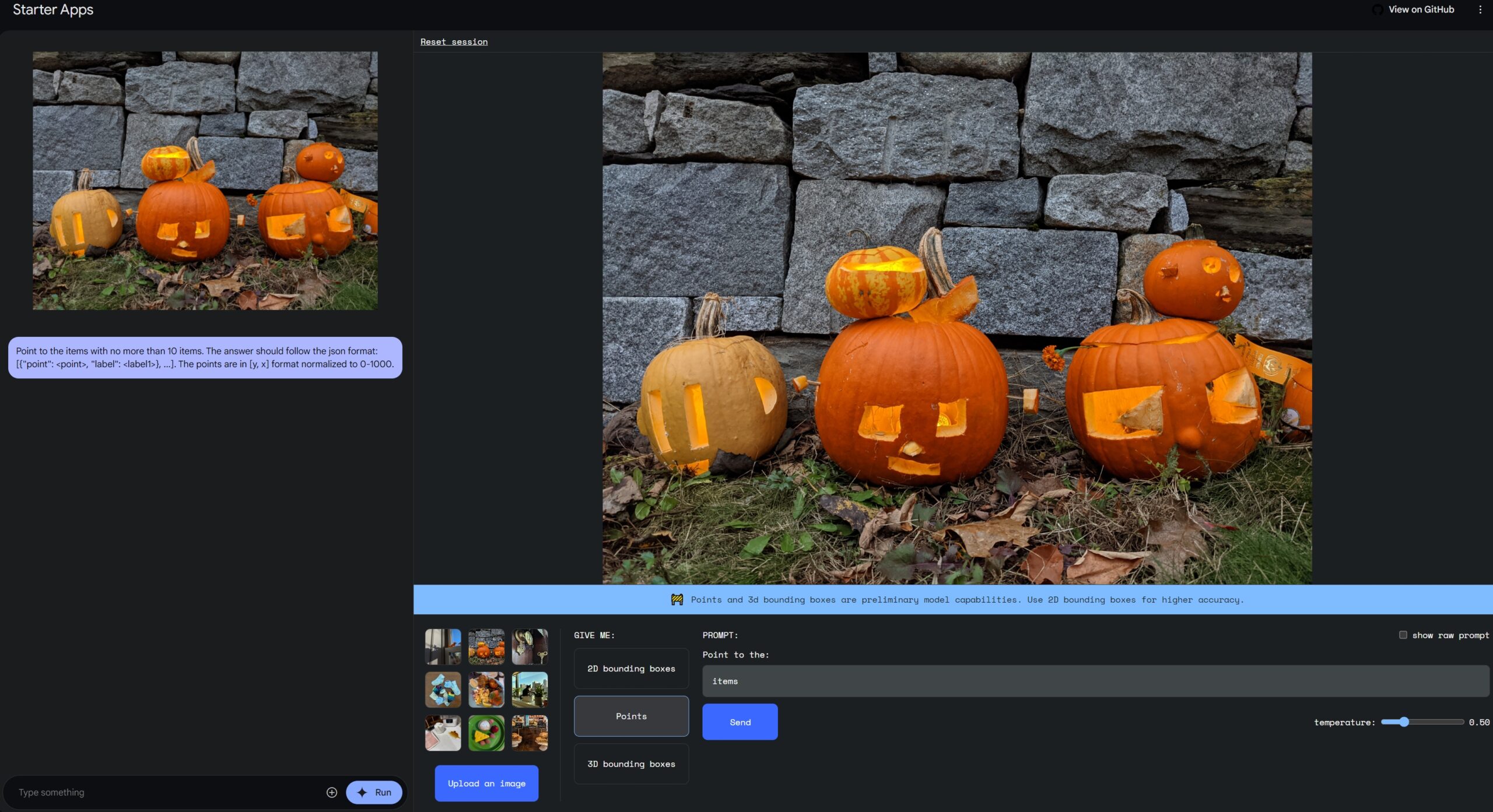
In the evolving landscape of artificial intelligence, Google's Gemini has introduced a groundbreaking demonstration of spatial analysis capabilities through its Spatial Understanding project. This innovative implementation showcases how AI can process and reason about 2D and 3D spatial relationships, marking a significant advancement in machine perception and analysis.
Essential Resources and Setup
Google provides comprehensive resources for developers interested in implementing Spatial Understanding. The official demonstration platform is hosted at Google AI Studio, where developers can interact with the technology and understand its capabilities firsthand.
The complete source code is available on GitHub, allowing developers to examine the implementation details and adapt them for their own projects.
The project follows a clear and organized structure. Within the source directory (/src), you'll find the critical Prompt.tsx file, which contains the implementation of bounding box parsing – a fundamental component for spatial analysis. The directory also includes additional React components that support various functionalities.
For static assets and resources, the project maintains a dedicated public directory (/public). The configuration setup is comprehensive, utilizing several key files:
- app.yaml handles application configuration
- tsconfig.json manages TypeScript settings
- package.json lists project dependencies
- vite.config.ts controls build configuration
Core Technology Overview
Visual Processing Fundamentals
Spatial Understanding builds upon advanced computer vision principles, processing visual information through multiple stages. The system analyzes input data to identify objects, their positions, and spatial relationships. This multi-layered approach enables accurate interpretation of complex spatial scenarios.
Processing Pipeline
The technology implements a sophisticated processing pipeline that converts visual input into spatial understanding. Starting with raw image data, the system performs object detection, depth estimation, and spatial relationship mapping. This creates a comprehensive understanding of the scene's spatial composition.
Technical Implementation
React-Based Architecture
Built using React, the implementation provides a modular and scalable approach to spatial analysis. The architecture allows for easy integration with existing applications while maintaining high performance and reliability. Developers can leverage familiar React patterns when implementing the system.
Bounding Box Analysis
A key feature of Spatial Understanding is its sophisticated bounding box parsing system. Implemented in Prompt.tsx, this component handles the complex task of determining object boundaries and spatial relationships. The system processes these boundaries to establish accurate spatial measurements and relationships.
Applications and Use Cases
Manufacturing Applications
In manufacturing environments, Spatial Understanding provides valuable capabilities for:
- Quality control processes
- Assembly line verification
- Component positioning systems
- Workspace organization optimization
- Production flow analysis
Architectural Design
Architecture and design professionals utilize the technology for:
- Space planning and optimization
- Virtual design validation
- Layout assessment
- Interior space analysis
- Construction planning
Robotics Integration
The robotics sector benefits from Spatial Understanding through:
- Navigation system enhancement
- Object manipulation precision
- Environmental mapping
- Collision avoidance systems
- Path planning optimization
Implementation Guide
Getting Started
Developers can begin implementing Spatial Understanding by accessing the Google AI Studio platform. The process involves:
- Examining the demo implementation
- Understanding the core components
- Reviewing the documentation
- Testing with sample data
- Integrating with existing systems
Development Considerations
When implementing Spatial Understanding, developers should focus on:
- Input data quality and format
- Processing optimization
- Integration requirements
- Performance monitoring
- Error handling strategies
Advanced Features
Spatial Analysis Capabilities
The system demonstrates advanced capabilities in:
- Distance calculation
- Volume estimation
- Spatial relationship mapping
- Object orientation analysis
- Dimensional understanding
Real-time Processing
Real-time processing capabilities enable:
- Immediate spatial analysis
- Dynamic object tracking
- Continuous relationship updating
- Live measurement calculations
- Interactive spatial mapping
Future Developments
Technology Evolution
The future of Spatial Understanding points toward:
- Improved accuracy in complex scenarios
- Enhanced processing efficiency
- Broader application support
- Advanced feature integration
- Extended platform compatibility
Integration Possibilities
Future integration possibilities include:
- Additional development frameworks
- New platform support
- Extended API capabilities
- Enhanced tool integration
- Broader ecosystem compatibility
Performance Optimization
Processing Efficiency
The system maintains high performance through:
- Optimized processing algorithms
- Efficient resource utilization
- Smart caching mechanisms
- Parallel processing capabilities
- Load balancing strategies
Resource Management
Effective resource management includes:
- Memory optimization
- Processing prioritization
- Cache management
- Resource allocation
- System monitoring
Implementation Best Practices
Code Organization
Maintaining clean code structure through:
- Modular component design
- Clear separation of concerns
- Consistent coding standards
- Comprehensive documentation
- Efficient error handling
Testing Strategies
Implementing robust testing through:
- Unit test coverage
- Integration testing
- Performance testing
- Error scenario validation
- User acceptance testing
Practical Applications
Industry Solutions
Spatial Understanding finds applications in:
- Manufacturing automation
- Construction planning
- Retail space optimization
- Warehouse management
- Healthcare facility planning
Consumer Applications
Consumer-facing applications include:
- Home design tools
- Virtual room planning
- Furniture placement
- Space optimization
- Interior decoration
Development Community
Resource Access
Developers can access:
- Documentation
- Code examples
- Implementation guides
- Community forums
- Support resources
Collaboration Opportunities
The development community offers:
- Knowledge sharing
- Code contributions
- Feature requests
- Bug reporting
- Implementation discussions
Conclusion
Spatial Understanding represents a significant advancement in AI's ability to process and understand spatial relationships. Through its implementation in Google AI Studio and availability on GitHub, developers can leverage these capabilities to create sophisticated applications that understand and interact with physical space in new ways.
The technology continues to evolve, offering increasingly sophisticated capabilities for spatial analysis and understanding. As development continues, we can expect to see new features and capabilities that further extend the system's ability to process and understand spatial relationships.
For developers interested in implementing spatial analysis capabilities, the combination of comprehensive documentation, practical examples, and community support provides a solid foundation for success. As the technology continues to mature, it will likely play an increasingly important role in shaping how AI systems interact with and understand the physical world around them.
The future of Spatial Understanding looks promising, with ongoing developments and improvements constantly expanding its capabilities and applications. As more developers and organizations adopt this technology, we can expect to see innovative new applications that push the boundaries of what's possible in spatial analysis and understanding.