Gesture Controlled Gaming: The Past, Present, and Future
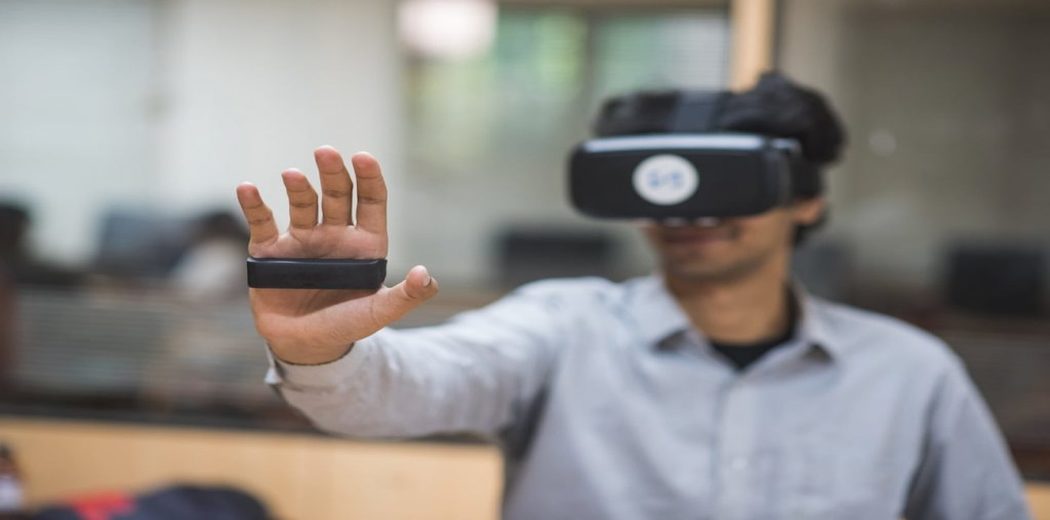
Gesture controlled video games have come a long way since the early days of the Nintendo Power Glove. By leveraging advanced sensor hardware and AI-powered computer vision, today‘s gesture gaming systems allow players to intuitively interact with virtual worlds using natural body motions and hand gestures. In this article, we‘ll take a deep dive into the technology behind gesture controlled gaming, its evolution and current state, and the exciting possibilities it holds for the future of interactive entertainment and beyond.
How Gesture Recognition Works: An AI Perspective
At the heart of any gesture controlled gaming system are powerful artificial intelligence algorithms capable of analyzing sensor data in real-time to detect and classify player movements. Most modern implementations rely on some combination of the following approaches:
-
Skeletal tracking: Using depth-sensing cameras like the Microsoft Kinect, systems can create a 3D model of the player‘s body and track the positions and orientations of key joints like the head, torso, arms, and legs. This skeletal data serves as the foundation for identifying body poses and gestures.
-
Hand pose estimation: More advanced sensors and algorithms allow for detailed tracking of hand and finger positions, enabling fine-grained gesture recognition. Convolutional neural networks (CNNs) are commonly used to analyze depth or infrared images of the hand and output a 3D hand pose estimate, which can then be fed into a gesture classifier.
-
Temporal modeling: Since gestures involve motion over time, it‘s important to consider the temporal dimension when designing recognition algorithms. Recurrent neural networks (RNNs) and hidden Markov models (HMMs) are popular choices for modeling the sequential structure of gestures. These models can learn to recognize patterns of motion that correspond to specific gestures.
-
Multi-modal fusion: Combining multiple sensing modalities can improve the accuracy and robustness of gesture recognition. For example, fusing skeletal tracking with hand pose estimation, or combining depth and RGB camera data using multi-modal CNNs, can help overcome the limitations of individual sensors.
Training machine learning models for gesture recognition requires large datasets of annotated sensor data. Researchers and developers often use motion capture systems and manual annotation tools to create datasets of common gestures and game-specific actions. Some notable examples include the 20BN-Jester dataset of hand gestures, the NTU RGB+D dataset of full-body actions, and the Microsoft Research Cambridge-12 Kinect gesture dataset.
Diversity and inclusion are critical considerations when gathering training data for gesture recognition models. Factors like age, gender, body size and shape, clothing, and cultural background can all impact how people perform gestures. Ensuring that datasets represent a wide range of users is essential for building inclusive and accessible gesture interfaces.
Advantages and Challenges of Gesture Gaming
Gesture controlled gaming offers several compelling advantages over traditional controller-based interaction:
-
Intuitive and immersive: Using natural body movements to control games can create a powerful sense of immersion and embodiment. Gestures often map more directly to in-game actions than arbitrary button presses, making the experience feel more intuitive and accessible to newcomers.
-
Improved accessibility: For players with mobility impairments or difficulty using traditional controllers, gesture input can provide a more comfortable and empowering way to enjoy games. Gesture gaming has also found therapeutic applications in fields like physical rehabilitation and cognitive training.
-
Enhanced social interaction: Motion controlled games tend to be designed for social multiplayer experiences, encouraging players to interact and collaborate in physical space. This can make gaming feel more engaging and inclusive for friends and family members who might not normally play together.
However, designing compelling gesture controlled games also presents unique challenges:
-
Technical limitations: Even with state-of-the-art sensors and algorithms, gesture recognition is not always reliable, especially in uncontrolled environments. Issues like occlusion, sensor noise, and user variability can lead to missed or misinterpreted inputs, breaking immersion and frustrating players.
-
Fatigue and comfort: Gesture gaming often requires more physical exertion than sedentary controller-based play. Designers must carefully balance the intensity and duration of motion-based interactions to avoid player fatigue and discomfort.
-
Reduced precision: Compared to the precise inputs of buttons and joysticks, gestures are inherently less exact. This can make complex or timing-sensitive actions difficult to execute consistently, limiting the genres and styles of games that work well with gesture controls.
Despite these challenges, many game developers have found creative ways to leverage the unique affordances of gesture input to craft engaging and memorable experiences.
Notable Gesture Controlled Games
Some of the most successful and influential gesture controlled video games include:
-
Wii Sports (2006): Nintendo‘s pack-in title for the Wii console became a global phenomenon, introducing millions of casual players to motion gaming. Using the Wii Remote‘s accelerometer and infrared sensor, players could mimic actions like swinging a tennis racket or throwing a bowling ball to control on-screen avatars. Wii Sports went on to sell over 82 million copies, making it one of the best-selling video games of all time.
-
Kinect Adventures (2010): Bundled with Microsoft‘s Kinect sensor for the Xbox 360, Kinect Adventures showcased the potential of full-body motion tracking in a collection of mini-games. Players could use their arms, legs, and head to steer rafts down rapids, pop bubbles, and strike poses to score points. The game helped drive Kinect sales and popularized the idea of controller-free gaming.
-
Just Dance (2009-present): Ubisoft‘s long-running dance game franchise has become synonymous with motion controlled party gaming. Players mirror the moves of on-screen dancers to popular songs, with the game tracking their accuracy using Kinect, PlayStation Eye, or Wii Remote cameras. The series has sold over 80 million copies across various platforms.
In recent years, virtual reality platforms like the Oculus Rift and HTC Vive have opened up new possibilities for gesture interaction in gaming. Titles like Job Simulator, Superhot VR, and Final Assault leverage hand and controller tracking to enable intuitive object manipulation and combat in room-scale experiences.

The indie gaming scene has also produced creative experiments in gesture-based gameplay, such as the hand-tracking art game Walden, the QWOP-inspired Octodad series, and the abstract motion sculpture app Forms.
Applications Beyond Gaming
While gesture controlled video games may have kickstarted mainstream interest in motion interfaces, the technology has far-reaching applications in other domains. Some exciting areas of development include:
-
Virtual and Augmented Reality: Immersive headsets like the Oculus Quest and Microsoft HoloLens use advanced hand tracking to enable intuitive manipulation of virtual objects and menu systems. This can enhance realism and efficiency across use cases like design, training, and telepresence.
-
Ambient Computing: As digital assistants like Alexa and Google Home become fixtures in smart homes and offices, gestural interfaces could provide a natural complement to voice control. Imagine adjusting your thermostat or queueing up a playlist with a simple hand wave or snap.
-
Accessible Computing: Gesture recognition can empower users with mobility or speech impairments to interact with computers in more flexible and tailored ways. Startups like Eyelinez and Pison are developing wearable devices that translate facial expressions, muscle movements, and neural signals into gesture commands.
-
Robotics and Telepresence: Intuitive gesture control can make it easier for humans to direct and collaborate with robots in industrial, scientific, and assistive contexts. Researchers are exploring the use of hand gestures to manipulate robot swarms, control humanoid servants, and even conduct remote surgeries.
-
Sign Language Recognition: Advanced computer vision and machine learning techniques could one day power real-time translation of sign languages, breaking down communication barriers for deaf and hard-of-hearing people. Projects like Microsoft‘s Kinect Sign Language Translator hint at the potential of this technology.
Future Directions
As sensor hardware continues to evolve and AI algorithms grow more sophisticated, we can expect to see gesture recognition technologies become even more precise, responsive, and robust to real-world conditions. Some exciting areas of research and development include:
-
Micro-gesture recognition: Advanced sensors like millimeter-wave radar and EMG can detect subtle finger and face movements, enabling discreet and low-fatigue gesture input. This could unlock new use cases in mobile and wearable computing.
-
Sensor fusion and cross-modal learning: By combining data from cameras, depth sensors, wearables, and even brain-computer interfaces, AI models can learn richer and more personalized gesture representations.
-
Few-shot learning and synthetic data: Training machine learning models for niche gestures and bespoke control schemes is challenging due to limited real-world data. Techniques like few-shot learning and synthetic data generation could help scale up gesture recognition to handle the long tail of custom interactions.
-
Adaptive and contextual interfaces: Future gesture control systems may leverage AI to dynamically adapt to the user‘s environment, preferences, and abilities. Imagine an AR headset that can seamlessly switch between hand tracking and voice control based on context, or a game that adjusts its difficulty based on the player‘s body language.
Ethical Considerations
As with any AI technology, the development and deployment of gesture recognition systems raises important ethical questions around privacy, security, fairness, and transparency:
-
Biometric data collection: Gesture tracking often involves capturing sensitive biometric data like hand geometry and facial expressions. Developers must ensure that this data is collected with informed consent, stored securely, and not used for unauthorized purposes.
-
Algorithmic bias: If gesture recognition models are trained on datasets that lack diversity, they may perform poorly for underrepresented groups. Rigorous testing across demographics and contexts is essential to ensure equitable experiences.
-
Adversarial attacks: Like other computer vision systems, gesture recognition algorithms can be fooled by adversarial examples – carefully crafted inputs that cause models to misclassify or behave erratically. Researchers are exploring techniques like adversarial training and anomaly detection to make models more robust.
-
Transparency and user control: End-users should have clear information about what data is being collected, how it‘s being used, and what inferences are being made from their gestures. Granular privacy controls and the ability to opt-out of tracking are essential for building trust.
By proactively addressing these challenges through responsible development practices and multi-stakeholder collaboration, we can work towards a future where gesture recognition technologies are not only technically impressive but also ethically sound.
Conclusion
From the early days of the Nintendo Power Glove to the cutting-edge hand tracking of the Oculus Quest, gesture controlled gaming has come a long way in a relatively short time. By leveraging the power of computer vision, machine learning, and AI, developers have created experiences that let players step into virtual worlds with their entire bodies. While the Wii and Kinect may have brought motion gaming to the masses, the technology is far from a passing fad.
As sensors continue to evolve and AI algorithms grow more sophisticated, we can expect to see gesture recognition become an increasingly prevalent and versatile input modality across industries. In gaming and beyond, gesture controls hold the potential to make interactions more intuitive, accessible, and immersive than ever before. At the same time, realizing this potential will require ongoing research into machine learning techniques, collaborative efforts to build diverse and representative datasets, and proactive consideration of the ethical implications.
Despite the technical challenges and design constraints, the dream of fluid and natural gestural interaction remains a north star for many in the field of human-computer interaction. By continuing to innovate on both the hardware and software fronts, researchers and developers can push the boundaries of what‘s possible and bring us closer to a future where our devices seamlessly understand and respond to our every move.