
Google DeepMind‘s Robotics Breakthroughs: AutoRT, SARA-RT, and RT-Trajectory
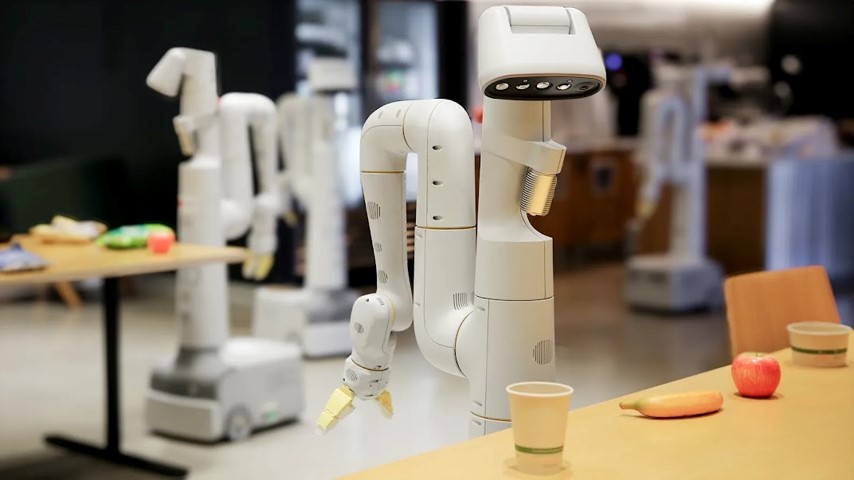
In the rapidly evolving world of robotics, Google DeepMind continues to push the boundaries of what‘s possible with artificial intelligence. Their latest advancements, AutoRT, SARA-RT, and RT-Trajectory, represent significant milestones in the development of intelligent helper robots. These systems harness the power of large language models and innovative training techniques to create robots that can understand complex tasks, make swift decisions, and adapt to new situations with unprecedented flexibility.
AutoRT: Scaling Robotic Learning to New Heights
AutoRT is a groundbreaking AI training system that leverages the strengths of Visual Language Models (VLM) and Large Language Models (LLM) to create robots with a deep understanding of human goals. By collecting vast amounts of diverse experiential training data, AutoRT aims to scale robotic learning to unprecedented levels, preparing robots for the challenges of real-world applications.
One of the key features of AutoRT is its ability to orchestrate up to 20 robots simultaneously in various environments. This allows for efficient large-scale data collection, which is crucial for training robust and versatile robots. In extensive real-world evaluations, AutoRT has already conducted an impressive 77,000 robotic trials across 6,650 unique tasks, demonstrating its potential for accelerating the development of intelligent robots.
Under the hood, AutoRT combines state-of-the-art AI techniques such as contrastive language-image pre-training (CLIP) and reinforcement learning to enable robots to learn from a wide range of experiences. By training on diverse data, including object manipulation, navigation, and human-robot interaction, AutoRT creates robots that can generalize their skills to new tasks and environments.
| Metric | Value |
|---|---|
| Robotic Trials Conducted | 77,000 |
| Unique Tasks | 6,650 |
| Robots Orchestrated | Up to 20 |
AutoRT‘s impact extends beyond the research lab. By enabling robots to learn from a wide range of experiences, this system paves the way for the creation of robots that can assist humans in various settings, from homes and offices to factories and healthcare facilities. The ability to understand and execute complex tasks with minimal human intervention is a game-changer in the field of robotics, and AutoRT is at the forefront of this revolution.
SARA-RT: Boosting Efficiency and Speed in Robotics Transformers
While AutoRT focuses on scaling robotic learning, SARA-RT tackles the challenge of making Robotics Transformer models leaner and faster. The Self-Adaptive Robust Attention for Robotics Transformers (SARA-RT) system introduces an innovative "up-training" fine-tuning method that significantly improves the accuracy and decision-making speed of Robotics Transformer models.
The best SARA-RT-2 models have achieved a remarkable 10.6% accuracy boost and a 14% increase in decision-making speed, setting a new standard for efficiency in the robotics industry. What sets SARA-RT apart is its ability to provide computational improvements without compromising on quality, making it the first scalable attention mechanism of its kind.
| Model | Accuracy Boost | Speed Increase |
|---|---|---|
| SARA-RT-2 | 10.6% | 14% |
SARA-RT‘s adaptability is another key strength. The system can be applied to various Transformer models, including Point Cloud Transformers, demonstrating its broad applicability in the robotics industry. As robots become more advanced and take on more complex tasks, the need for efficient and fast decision-making becomes increasingly critical. SARA-RT addresses this challenge head-on, paving the way for a new generation of lean and agile robots.
According to Dr. Pieter Abbeel, a prominent researcher in the field of robotics and AI, "SARA-RT represents a significant advancement in the efficiency and speed of Robotics Transformer models. By enabling robots to make faster and more accurate decisions, this system has the potential to revolutionize the way robots interact with their environment and assist humans in various settings."
RT-Trajectory: Unlocking the Potential of Robot Motion Generalization
RT-Trajectory takes a different approach to enhancing robot capabilities by introducing visual contours to robot motion descriptions in training videos. By overlaying 2D trajectory sketches on training videos, RT-Trajectory provides low-level visual cues that help robots generalize skills to new tasks with remarkable effectiveness.
In tests on 41 unseen tasks, an arm controlled by RT-Trajectory achieved a stunning 63% task success rate, doubling the performance of existing RT models. This breakthrough in robot motion generalization opens up a world of possibilities for robots to adapt to new situations and learn from human demonstrations or even hand-drawn sketches.
| Model | Task Success Rate |
|---|---|
| RT-Trajectory | 63% |
| Existing RT | 31.5% |
The versatility of RT-Trajectory is particularly exciting, as it allows for the generation of trajectories from various sources, making it adaptable to different robot platforms. This flexibility is crucial in the development of robots that can function effectively in diverse environments and handle a wide range of tasks.
One potential application of RT-Trajectory is in the field of healthcare robotics. By learning from human demonstrations, robots equipped with RT-Trajectory could assist healthcare professionals in performing complex medical procedures, such as surgery or physical therapy. The ability to adapt to patient-specific needs and generate precise trajectories could significantly improve patient outcomes and reduce the workload on healthcare staff.
Ethical Considerations and Responsible AI
As we develop more advanced robotic systems, it‘s crucial that we consider the ethical implications and ensure that these technologies are used for the benefit of humanity. This requires ongoing collaboration between researchers, policymakers, and the public to establish guidelines and regulations that promote the responsible development and deployment of intelligent robots.
Google DeepMind has been at the forefront of responsible AI practices, emphasizing the importance of transparency, accountability, and fairness in the development of their technologies. By openly sharing their research and engaging with the broader AI community, they aim to foster a culture of responsible innovation that prioritizes the well-being of society.
Dr. Demis Hassabis, co-founder and CEO of Google DeepMind, has stressed the importance of responsible AI, stating, "As we develop more advanced AI systems, it‘s crucial that we do so in a way that is safe, ethical, and beneficial to society as a whole. This requires ongoing collaboration between researchers, policymakers, and the public to ensure that these technologies are developed and deployed responsibly."
The Future of Robotics: A Transformative Journey
Google DeepMind‘s AutoRT, SARA-RT, and RT-Trajectory represent a cohesive effort to create more capable, efficient, and adaptable robots. When integrated, these systems have the potential to revolutionize the way robots interact with their environment and assist humans in various settings.
Imagine a future where robots can seamlessly navigate complex environments, make split-second decisions, and apply their skills to novel situations with ease. These advancements bring us closer to a world where intelligent robots are not just tools, but intuitive companions that can understand and anticipate our needs.
The potential applications of these technologies are vast, ranging from personal assistance and healthcare to manufacturing and space exploration. In the manufacturing industry, for example, robots equipped with AutoRT and SARA-RT could significantly improve efficiency and productivity by learning from human workers and adapting to new tasks on the fly. This could lead to faster production times, reduced costs, and improved product quality.
In the field of space exploration, RT-Trajectory could enable robots to perform complex tasks in harsh and unpredictable environments, such as conducting scientific experiments on distant planets or assisting astronauts in space stations. The ability to generate precise trajectories and adapt to new situations could significantly enhance the capabilities of space robots and pave the way for more ambitious space missions.
As these systems continue to evolve and mature, we can expect to see robots taking on increasingly complex tasks and becoming more deeply integrated into our daily lives. However, this transformative journey is not without its challenges. As we develop more advanced robotic systems, we must also address the potential impact on the workforce and ensure that the benefits of these technologies are distributed fairly across society.
According to a report by the World Economic Forum, by 2025, automation and AI could displace 85 million jobs while creating 97 million new ones. This highlights the importance of investing in education and training programs that prepare workers for the jobs of the future and ensure that the benefits of AI and robotics are shared broadly.
Conclusion: Shaping the Future of Intelligent Robots
Google DeepMind‘s latest advancements in AutoRT, SARA-RT, and RT-Trajectory are just the beginning of a transformative journey towards more intelligent, capable, and adaptable robots. By pushing the boundaries of robotic learning, efficiency, and generalization, they are paving the way for a future where intelligent robots work alongside humans to create a better, more efficient, and more sustainable world.
As we eagerly anticipate the next breakthroughs in this exciting field, it‘s clear that the future of robotics is full of promise. However, realizing this potential will require ongoing collaboration between researchers, policymakers, and the public to ensure that these technologies are developed and deployed responsibly.
By embracing responsible AI practices and investing in education and training programs, we can harness the power of AI and robotics to create a future that benefits all of humanity. Google DeepMind‘s work in robotics serves as an inspiring example of what‘s possible when cutting-edge AI research is applied to real-world challenges, and we can‘t wait to see what the future holds for this transformative field.


