Google‘s Secure AI Framework: Safeguarding the Future of Artificial Intelligence
As artificial intelligence (AI) continues its rapid advance, transforming industries and shaping our world in profound ways, ensuring the security and integrity of AI systems has become a critical imperative. With AI projected to contribute up to $15.7 trillion to the global economy by 2030[^1], the technology holds immense potential to drive innovation, enhance efficiency, and solve complex problems. However, this potential is accompanied by significant challenges and risks that must be proactively addressed to ensure AI remains safe, trustworthy, and beneficial to society.
Recognizing this need, Google, a leader in AI research and development, has introduced the Secure AI Framework (SAIF)—a comprehensive set of guidelines and best practices aimed at establishing industry standards for building and deploying AI systems responsibly and securely. Drawing from Google‘s deep expertise in both AI and cybersecurity, SAIF represents a major milestone in the ongoing effort to create a robust governance framework for AI that promotes innovation while mitigating risks.
The Criticality of AI Security Standards
In recent years, AI has made remarkable strides, from powering intelligent virtual assistants and autonomous vehicles to enabling groundbreaking discoveries in healthcare, scientific research, and beyond. The global AI market is expected to grow from $93.5 billion in 2021 to over $997 billion by 2028, at a CAGR of 40.2%[^2]. As AI becomes more sophisticated and ubiquitous, the potential for misuse, unintended consequences, and security vulnerabilities also grows.
AI systems are susceptible to a range of security threats, including data poisoning, model inversion, and adversarial attacks. In a recent survey of AI researchers, 36% believed that AI could cause significant harm in the near future, with concerns ranging from privacy violations and algorithmic bias to weaponized AI and existential risk[^3]. Without proper safeguards in place, AI can be exploited by malicious actors, perpetuate biases and discrimination, or make decisions with unintended negative consequences for individuals and society.
Establishing robust security standards for AI is crucial to mitigating these risks and ensuring that the technology is developed and deployed in a trustworthy, transparent, and accountable manner. As Andrew Moore, Google‘s head of Cloud AI, explains, "Security and trust are foundational to the successful deployment of AI systems. We need clear guidelines and best practices that enable developers to build AI responsibly while giving users confidence in its safety and reliability."[^4]
SAIF: A Comprehensive Framework for Secure AI
Google‘s Secure AI Framework builds on the company‘s extensive experience in both AI development and cybersecurity. With a track record of pioneering breakthroughs in machine learning, deep learning, and natural language processing, combined with a commitment to robust security practices, Google is well-positioned to lead the charge in defining standards for secure AI.
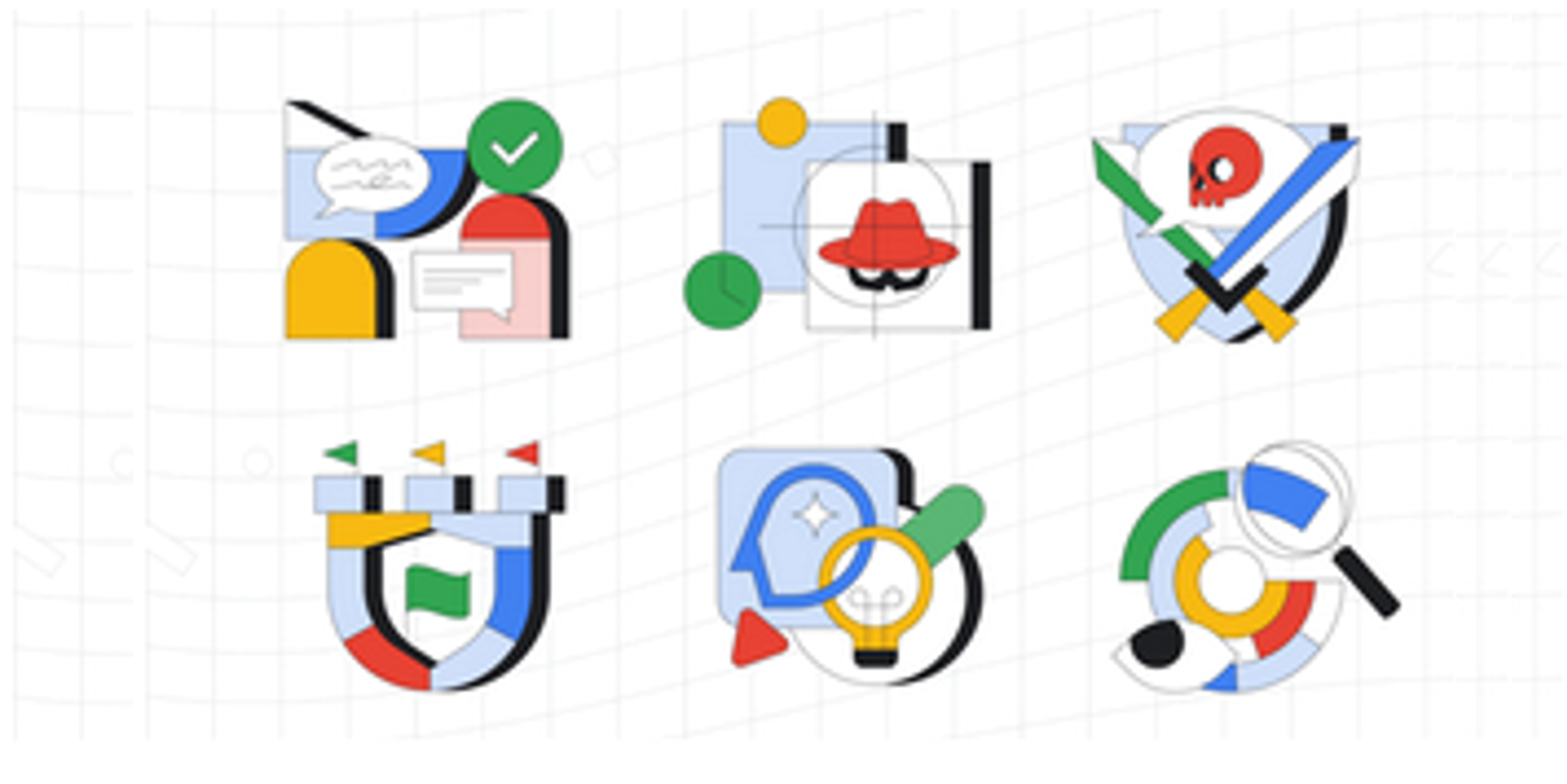
At its core, SAIF consists of six key pillars that work in harmony to reinforce the security posture of AI systems and mitigate potential risks:
-
Extending Google‘s Secure Infrastructure: SAIF extends Google‘s battle-tested security infrastructure, which is designed to be secure by default, to the AI ecosystem. This ensures that AI systems and applications are built on a robust and resilient platform with multiple layers of protection against cyber threats.
-
Advanced Threat Detection and Response: SAIF integrates cutting-edge threat intelligence capabilities into the AI security framework, enabling early detection of anomalies and proactive defense against AI-specific threats. By leveraging techniques like deep learning-based anomaly detection and behavioral analysis, SAIF can identify and respond to emerging threats in real-time.
-
Automated Defense with AI: SAIF harnesses the power of AI itself to automate defenses and counter evolving threats at scale and speed. By using AI to continuously monitor systems, detect vulnerabilities, and adapt security controls, SAIF enables organizations to stay ahead of adversaries who may attempt to exploit AI for malicious purposes.
-
Standardized Security Controls: SAIF promotes the harmonization of security controls across diverse AI platforms and tools, ensuring consistent protection irrespective of the deployment environment. This standardization simplifies the implementation of security best practices and allows organizations to scale their AI security efforts more efficiently.
-
Continuous Adaptation and Feedback Loops: In the rapidly evolving world of AI, continuous testing, learning, and adaptation are essential for maintaining robust security. SAIF emphasizes the importance of incorporating feedback loops that enable the constant refinement of AI systems based on real-world incidents, user feedback, and model performance metrics. By dynamically adapting security measures, SAIF ensures that defenses keep pace with evolving threats.
-
Contextual Risk Assessment: Effective AI security requires a deep understanding of the specific risks associated with each use case and deployment scenario. SAIF provides a framework for conducting comprehensive risk assessments that consider the entire AI lifecycle, from data provenance and model development to deployment and monitoring. By contextualizing risks within business processes and organizational objectives, SAIF enables informed decision-making and tailored security strategies.
Addressing Key AI Security Challenges
One of the key strengths of SAIF is its focus on addressing the unique security challenges posed by AI systems. Unlike traditional software, AI models can be vulnerable to subtle manipulations that are difficult to detect and can lead to unintended or harmful outcomes.
Data poisoning, for example, involves introducing maliciously crafted data into the training dataset of an AI model, causing it to learn incorrect or biased patterns. A recent study found that just a 3% poisoned data rate could manipulate a deep learning model‘s behavior[^5]. SAIF mitigates this risk by incorporating rigorous data validation, provenance tracking, and anomaly detection techniques to ensure the integrity of training data.
Model inversion attacks, on the other hand, attempt to reconstruct the training data used to build an AI model by analyzing its outputs. This can lead to serious privacy breaches and intellectual property theft. Google‘s SAIF addresses this challenge through advanced cryptographic techniques like secure multi-party computation and differential privacy, which allow models to be trained on sensitive data without revealing individual examples[^6].
Adversarial attacks involve crafting input data that is specifically designed to deceive AI models and cause them to make incorrect predictions. In a famous example, researchers showed that adding a small amount of carefully engineered noise to an image could cause a deep learning model to misclassify a stop sign as a speed limit sign[^7]. SAIF includes robust adversarial defense mechanisms, such as adversarial training and input validation, to make AI models more resilient to these types of attacks.
Driving Industry Collaboration and Adoption
To maximize the impact of SAIF and drive its adoption as an industry standard, Google is actively collaborating with a wide range of stakeholders, including customers, partners, policymakers, and the broader AI community.
Google recognizes that securing the future of AI is a shared responsibility that requires ongoing dialogue, knowledge sharing, and collective action. To this end, the company is working closely with leading organizations in the field of AI safety and ethics, such as the Partnership on AI and the Institute for Ethics in Artificial Intelligence, to align SAIF with emerging best practices and contribute to the development of global AI governance frameworks.
In addition, Google is committed to making SAIF accessible and actionable for developers and organizations of all sizes. The company plans to release open-source tools, reference implementations, and educational resources to support the adoption of SAIF and promote secure AI development practices across the industry.
The Path Forward: Realizing the Potential of Secure AI
As AI continues to advance at an unprecedented pace, it is imperative that we prioritize security and responsible development to ensure that the technology remains a force for good. Google‘s Secure AI Framework represents a significant step forward in this direction, providing a comprehensive and adaptive approach to managing the risks and challenges associated with AI systems.
However, SAIF is not a silver bullet, and there is still much work to be done to build a truly secure and trustworthy AI ecosystem. As AI capabilities continue to grow, so too will the potential for misuse and unintended consequences. Ongoing research and innovation will be essential to staying ahead of emerging threats and ensuring that AI systems remain robust, transparent, and accountable.
One of the most exciting prospects on the horizon is the potential for AI itself to play a central role in its own security. As SAIF evolves and matures, it has the potential to become a self-improving framework that leverages advanced AI techniques to continuously monitor, adapt, and strengthen its own defenses. By harnessing the power of AI to secure AI, we can create a virtuous cycle of innovation and trust that unlocks the full potential of this transformative technology.
Ultimately, the success of secure AI will depend on sustained collaboration, vigilance, and commitment from all stakeholders. By working together to establish and uphold robust security standards, we can create an environment where AI innovation thrives while mitigating risks and promoting the responsible development and deployment of AI systems.
Google‘s Secure AI Framework is a vital contribution to this collective effort, setting a high bar for AI security and providing a foundation upon which the industry can build. As we continue to push the boundaries of what is possible with AI, frameworks like SAIF will be essential to ensuring that the technology remains a positive force for humanity, driving progress, solving global challenges, and improving lives around the world.
[^1]: PwC. (2017). Sizing the prize: What‘s the real value of AI for your business and how can you capitalise? Retrieved from https://www.pwc.com/gx/en/issues/data-and-analytics/publications/artificial-intelligence-study.html[^2]: Grand View Research. (2021). Artificial Intelligence Market Size, Share & Trends Analysis Report, 2021-2028. Retrieved from https://www.grandviewresearch.com/industry-analysis/artificial-intelligence-ai-market
[^3]: Zhang, B., Dafoe, A. (2019). Artificial Intelligence: American Attitudes and Trends. Center for the Governance of AI, Future of Humanity Institute, University of Oxford. Retrieved from https://governanceai.github.io/US-Public-Opinion-Report-Jan-2019/
[^4]: Moore, A. (2021). Building trust in AI with the Secure AI Framework. Google Cloud Blog. Retrieved from https://cloud.google.com/blog/topics/ai-machine-learning/building-trust-ai-secure-ai-framework
[^5]: Jagielski, M., Oprea, A., Biggio, B., Liu, C., Nita-Rotaru, C., & Li, B. (2018). Manipulating machine learning: Poisoning attacks and countermeasures for regression learning. In 2018 IEEE Symposium on Security and Privacy (SP) (pp. 19-35). IEEE.
[^6]: Abadi, M., Chu, A., Goodfellow, I., McMahan, H. B., Mironov, I., Talwar, K., & Zhang, L. (2016). Deep learning with differential privacy. In Proceedings of the 2016 ACM SIGSAC conference on computer and communications security (pp. 308-318).
[^7]: Eykholt, K., Evtimov, I., Fernandes, E., Li, B., Rahmati, A., Xiao, C., … & Song, D. (2018). Robust physical-world attacks on deep learning visual classification. In Proceedings of the IEEE Conference on Computer Vision and Pattern Recognition (pp. 1625-1634).