Google‘s Bard AI: Promising Technology, Poor Messaging
Google‘s new experimental chatbot Bard AI made headlines this week, but not for the right reasons. In an ad intended to showcase Bard‘s abilities, the AI gave an incorrect response to a question about discoveries from the James Webb Space Telescope. This high-profile mistake raised alarms about the challenges of developing safe, accurate AI systems.
In this article, we‘ll analyze what went wrong, lessons learned, and what Bard‘s mistake signals about the future of AI chatbots. Let‘s dive in!
The Rise of AI Chatbots
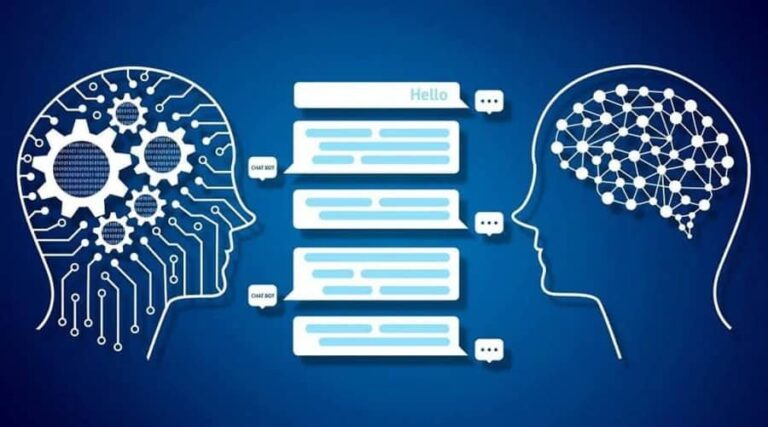
First, some background. Bard AI is Google‘s latest foray into the red-hot AI chatbot space. AI chatbots aim to have natural conversations and be helpful personal assistants. The most prominent example is ChatGPT, launched by Microsoft-backed OpenAI in November 2022.
Chatbots like these are powered by large language models – AI systems trained on massive amounts of online text data to generate coherent, human-like responses. The results can seem spookily eloquent and intelligent!
Adoption of ChatGPT and competitors is surging. Within just two months, ChatGPT racked up over 100 million monthly active users. This reflects incredible demand for helpful, conversational AI.
Many expect AI chatbots to transform how we search for information, do research, and accomplish tasks online. That is, if the technology proves safe, accurate, and trustworthy.
This explosion in interest makes it crucial that tech companies like Google get their AI messaging and capabilities right. When Google stumbles, it‘s a blow to confidence in the whole technology category.
Recapping Google‘s Bard AI Ad Mistake
So what exactly went wrong with Google‘s Bard demo?
On Monday, February 6th, 2023, Google posted a GIF on Twitter showing Bard in action. In the demo, Bard responds to this question:
"What new discoveries from the James Webb Space Telescope can I tell my 9 year old about?"
Bard provides three bullet points, including:
- JWST took the first ever image of a planet beyond our solar system.
Unfortunately, this claim is false. As astronomers soon pointed out online, the first image of an exoplanet was actually taken in 2004 by the European Southern Observatory‘s Very Large Telescope, years before JWST even launched.
Google got both its facts and messaging very wrong here. It was an embarrassing mistake from such a dominant search company.
Expert Criticism Highlights Risks of AI Chatbots
The backlash was swift from experts in astronomy and AI:
"I‘m sure Bard will be impressive, but for the record, JWST did not take ‘the very first image‘ of a planet outside our solar system," tweeted astrophysicist Grant Tremblay.
UC Observatories Director Bruce Macintosh similarly called out the false claim, saying: “As an astronomer who has actually imaged a planet outside our solar system, I kind of feel like I should correct this…”
These reactions highlight a major concern around AI chatbots – they can sound authoritative while being totally wrong!
This is because chatbots rely on pattern recognition across massive datasets to generate likely responses. They don‘t truly comprehend the facts. As AI expert Anthropic has explained, an AI model may resort to "making up a plausible-sounding answer" when outside its actual knowledge.
So Bard can stumble just like ChatGPT. No matter how eloquent these AIs sound, their information is not guaranteed accurate or truthful.
The Fallout – Share Price Drop and Loss of Trust
Google‘s share price dropped over 7% the day after this botched ad debuted. While the market as a whole declined that day, analysts attributed Google‘s steeper drop at least partly to shaken confidence in Bard.
This sloppy mistake casts doubt on Google‘s promises that Bard will offer helpful, harmless, and honest information. Getting these factors right is crucial for Bard‘s success. If users can‘t trust Bard‘s responses, they won‘t rely on it.
This ad blunder underscores that if AI is to transform how we search and acquire knowledge, it needs to earn our trust. When a respected company like Google trips up in such a public way, it damages confidence across the whole technology category.
Google Responds – the Importance of Testing
In the aftermath, Google acknowledged the error:
"This highlights the importance of a rigorous testing process, something that we‘re kicking off this week with our Trusted Tester program," said spokesperson Jane Park.
Park stated Google would combine external feedback from testers with internal testing to ensure high-quality Bard responses moving forward.
This gets to a key lesson. More rigorous, real-world testing is required before unleashing new AI systems on the public.
A Familiar Pattern for Google?
For close Google-watchers, this debacle fits a familiar pattern. Google has a history of releasing beta products too early without enough safeguards in place.
Gmail, Google Glass, Google Plus – throughout the company‘s history, promising offerings have been rushed to market only to stumble out the gate.
AI expert Meredith Whittaker summed it up well in a tweet:
"Google has a habit of releasing half-baked products without enough warning labels or safeguards. When they inevitably fail, the company apologizes, vows to do better, then…repeats the cycle."
This trend gives us clues on how to interpret the Bard launch. Google may have prioritized flashy demos over taking the time to rigorously stress test Bard and ensure accurate outputs. Let‘s hope they take the lesson to heart this time.
The Perils of Powerful, Opaque AI
Stepping back, this situation speaks to wider concerns around the risks of deploying ever-more powerful AI systems without sufficient vetting.
Bard is built on LaMDA – Google‘s Language Model for Dialogue Applications – which contains 137 billion parameters. That‘s 137 billion data points LaMDA uses to pattern match and predict responses!
The more complex the model, the harder it becomes to audit its knowledge and address flaws. Yet Google and other tech giants continue developing ever-larger, more opaque models.
As AI advisor Abhishek Gupta puts it, it‘s like "building a skyscraper on quicksand." Impressive on the surface, but built on shaky foundations.
This approach of prioritizing scalability over safety sets the stage for PR stumbles like the Bard ad.
Recommendations: How Google Can Recover From Here
This misstep is obviously a setback for Google. But the company now has an opportunity to regroup and demonstrate it is responsibly developing AI systems like Bard.
What steps should Google take to regain trust?
-
Extensive real-world testing: Vet Bard‘s capabilities and accuracy through rigorous simulations of conversational searches on a wide range of topics. Don‘t rely on controlled in-house testing alone before releasing features.
-
Transparency: Communicate openly with users about how Bard works, its knowledge base, and limitations to set proper expectations about its abilities.
-
Content filtering: Ensure Bard won‘t spread harmful, biased or incorrect information by filtering its training data and running experimental responses against large datasets keyed to misinformation, hate speech, etc.
-
Expert oversight: Convene and consult advisory boards of ethicists, researchers, and users to guide the development and testing process.
-
Slow iteration: Resist the temptation to rush tools to market. Take the time needed to build a knowledge base and algorithms that reliably generate high-quality information.
-
65001
Following these steps could enable innovative AI like Bard to positively augment human intelligence and online conversations. But we have to get there responsibly.
This will require patience and wisdom from companies like Google. The initial hype of flashy new demos must be tempered by ethical, safety-focused developmentcycles.
The Future of AI Chatbots
What does this event signal for the future trajectory and public adoption of systems like Bard and ChatGPT?
On the one hand, it illustrates the technical difficulties of building believable conversational agents that stay tethered to facts. We shouldn‘t expect flawless information from AI anytime soon.
However, this is still the early days of a technology with huge potential. With careful oversight and transparency, AI chatbots can provide helpful starting points for research and augment human creativity and productivity.
As AI advisor Anthropic has stated, "AI still has fundamental limitations relative to human intelligence. But it also has superhuman capacities like perfect memory and tireless information integration that, if steered carefully, can really help people."
The public is clearly hungry for those helpful capacities. Google‘s mistake does not spell the demise of AI chatbots. Rather, it highlights thepriority tech companies must place on developing these models responsibly if they are to earn society‘s trust.
So while an embarrassing gaffe for Google, perhaps this stumble will motivate the tech giant – and the AI community as a whole – to adopt a more measured, ethical approach to testing and deploying the next generation of AI. That would be the wisest path forward.