Leveraging Machine Learning for Heart Disease Prediction and Prevention

Cardiovascular disease (CVD) is the leading cause of death globally, accounting for an estimated 31.4% of all deaths in 2016 [1]. In the United States alone, someone dies from CVD every 36 seconds, with annual costs for heart disease and stroke exceeding $200 billion [2]. Early detection and intervention are critical for improving outcomes, but predicting who will develop CVD remains challenging. In recent years, machine learning (ML) has emerged as a powerful tool for identifying at-risk individuals and enabling more proactive, personalized cardiovascular care.
The Global Burden of Heart Disease
Heart disease is a broad term encompassing several conditions that affect the heart‘s structure and function. The most common type is coronary artery disease (CAD), which occurs when the blood vessels supplying the heart become narrowed or blocked. Other forms include heart failure, arrhythmias, and valve disorders.
Major risk factors for heart disease include [3]:
- High blood pressure
- High cholesterol
- Smoking
- Diabetes
- Obesity and physical inactivity
- Family history of heart disease
- Age (risk increases as you get older)
According to the World Health Organization, CVDs claim about 17.9 million lives each year [4]. Over three quarters of CVD deaths occur in low- and middle-income countries, where risk factors like smoking and unhealthy diets are on the rise [5]. Even in high-income nations with declining CVD mortality rates, the burden on healthcare systems remains immense. In the UK for example, CVD accounts for over 10% of all inpatient episodes and £9 billion in annual costs to the NHS [6].
The Promise of Predictive Analytics
Traditional heart disease risk assessment tools like the Framingham Risk Score consider factors such as age, sex, blood pressure, cholesterol levels, and smoking status [7]. While helpful for population-level risk stratification, these models often fail to capture individual variability and complex interactions between risk factors.
Machine learning offers a more nuanced approach, able to uncover hidden patterns in vast amounts of patient data and generate personalized risk scores. The core idea is to "train" algorithms to recognize the subtle signatures of developing heart disease by exposing them to large datasets of patient features (the "predictors") along with labels indicating the presence or absence of disease. With sufficient data and computing power, ML models can learn to identify at-risk individuals with remarkable accuracy.
A Typical ML Workflow for Heart Disease Prediction
While the specific steps may vary, a typical ML workflow for heart disease prediction includes:
-
Data collection and preprocessing: Relevant features are extracted from data sources like electronic health records, claims databases, and patient surveys. Data is cleaned of errors and inconsistencies, with missing values imputed or removed. Categorical features are encoded numerically (e.g. one-hot encoding), while continuous features are scaled to a consistent range. If the classes (disease vs. no disease) are imbalanced, resampling techniques like SMOTE may be applied [8].
-
Feature selection: Statistical tests and domain knowledge are used to identify the most informative features and filter out irrelevant or redundant ones. Dimensionality reduction techniques like PCA can further compress the feature space.
-
Model training and tuning: The preprocessed data is split into training, validation and test sets. Various ML algorithms are trained on the data, with hyperparameters tuned to optimize performance on the validation set. Common classifiers for heart disease prediction include logistic regression, decision trees, random forests, and neural networks [9].
-
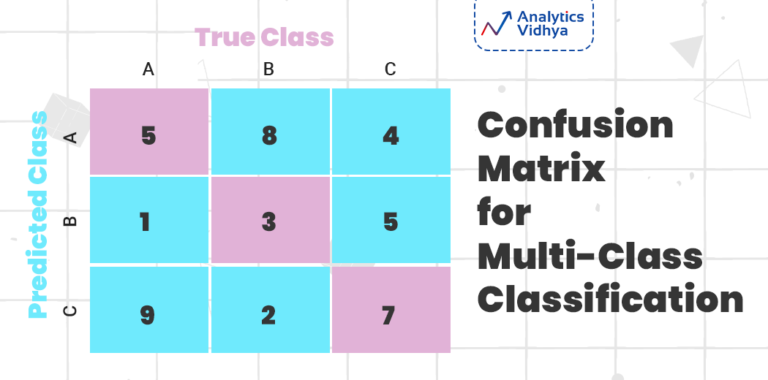
Model evaluation: Trained models are evaluated on the held-out test set using metrics like:
- Accuracy: % of correct predictions
- Precision (positive predictive value): % of positive predictions that are true positives
- Recall (sensitivity): % of actual positives correctly predicted
- F1 score: harmonic mean of precision and recall
- ROC AUC: area under the receiver operating characteristic curve, measuring sensitivity vs. specificity
For heart disease, models typically seek to maximize recall (to avoid missing cases) while maintaining decent precision. The choice of threshold for classifying a prediction as "positive" can be tuned to strike the right balance for a given clinical context.
-
Interpretation and deployment: Feature importance rankings and model-agnostic interpretation techniques like SHAP [10] provide insight into the key drivers of individual predictions. Well-validated models are integrated into clinical decision support systems, where they guide personalized screening and treatment decisions in conjunction with clinical judgment. Ongoing monitoring ensures models remain fair and relevant as populations and practices evolve.

Figure 1. Typical machine learning workflow for heart disease prediction. Adapted from [11].
Harnessing the Power of Algorithms
Many ML techniques have been successfully applied to heart disease prediction. In a seminal 2017 paper, Weng et al. [12] compared four ML algorithms to an established ACC/AHA risk calculator on a cohort of 378,256 UK patients aged 40-74. Neural networks achieved the highest accuracy (AUC 0.764), followed by random forests (0.757), gradient boosting machines (0.745), and logistic regression (0.739), all outperforming the traditional model (0.728).
More recent works have experimented with increasingly sophisticated architectures. Wen et al. [13] used a hybrid convolutional and long short-term memory (LSTM) neural network to predict CAD from clinical and wearable sensor data, achieving an accuracy of 79.4%. Zhou et al. [14] developed a novel time-coherent representation learning model to extract dynamic risk factors from longitudinal EHR data, outperforming baselines in predicting 1-year heart failure onset (precision 0.750, recall 0.742).
Kwon et al. [15] provide an overview of common ML algorithms used for CVD prediction:
| Algorithm | Description | Strengths | Limitations |
|---|---|---|---|
| Logistic regression | Estimates probability of binary outcome based on linear combinations of predictors | Simple, interpretable, fast | Limited to linear relationships |
| Decision trees | Recursively splits data on most informative features to build rule-based models | Can handle nonlinear relationships and mixed data types | Prone to overfitting, instability |
| Random forests | Ensemble of decision trees, with final predictions based on majority voting | Reduces overfitting, provides feature importances | Less interpretable, slower than single tree |
| Support vector machines | Finds hyperplane maximally separating classes in high-dimensional feature space | Handles nonlinear relationships via kernel trick, less prone to overfitting | Sensitive to data scaling, harder to interpret |
| Neural networks | Learns hierarchical representations from raw features through multiple hidden layers | Can learn highly complex patterns, flexible architectures | Black-box models, require large data and compute |
Table 1. Common machine learning algorithms used for cardiovascular disease prediction, adapted from Kwon et al. [15].
Hybrid CVD prediction systems integrating structured EHR data with medical imaging, wearable sensor data, and other modalities are an active area of research. In one study, Xu et al. [16] combined clinical features with 3D convolutional neural networks applied to coronary CT angiography images. Their model identified high-risk CAD patients with an impressive AUC of 0.988.
Real-world Impact and Challenges
Despite the demonstrated potential of ML for heart disease prediction, significant barriers remain to widespread clinical adoption. A 2019 systematic review by Krittanawong et al. [17] examined 49 ML studies for cardiac risk prediction and found that none had been prospectively validated with respect to patient outcomes. The authors highlight the need for rigorous testing of model generalizability across populations and data sources, as well as clear demonstration of clinical utility and integration into provider workflows.
Data quality, privacy, and access issues also pose major challenges. Developing robust ML models requires large, diverse, and well-curated patient datasets – but such data often remains siloed within individual institutions. Federated learning approaches enabling multi-site model training without raw data sharing are a promising solution [18]. Techniques for learning from limited labeled data, such as semi-supervised learning and data augmentation, can also help mitigate data scarcity [19].
Interpretability and trust are key for clinical adoption. While complex models may yield superior performance, simpler models like logistic regression and decision trees are often preferred for their ease of understanding. Techniques like feature importance ranking, partial dependence plots, and SHAP values can help open the "black box" of ML models and build provider confidence [20]. Engaging clinicians throughout the development process is also critical to ensure that models align with clinical reasoning and address real-world needs.
Conclusions and Future Directions
Machine learning has immense potential to transform heart disease care by enabling earlier detection, more targeted prevention, and individualized treatment optimization. Yet significant interdisciplinary work remains to realize this vision. Continued advances in ML techniques, computing power, and data infrastructure will be key to building prediction models that are not only accurate, but also reliable, generalizable, and actionable.
Realizing the full potential of ML in cardiovascular care will require close collaboration between data scientists, clinicians, patients, and healthcare systems. Careful attention must be paid to issues of bias, fairness, and transparency to ensure that these powerful tools work to advance health equity. As ML-based decision support systems become more pervasive, it will be increasingly important to study their effects on patient outcomes, costs, and clinician behavior.
Predictive analytics should ultimately be seen as a complement to, rather than a replacement for, clinical judgment and patient-centered care. By augmenting human expertise with data-driven insights, we can work towards a future where heart disease is not only more predictable, but more preventable. While significant challenges remain, the rapid progress in recent years offers reason for optimism. With concerted efforts across disciplines, we can harness the power of algorithms to lighten the global burden of heart disease, one beat at a time.