The Age of AI: How Artificial Intelligence is Revolutionizing Industries and Reshaping Society
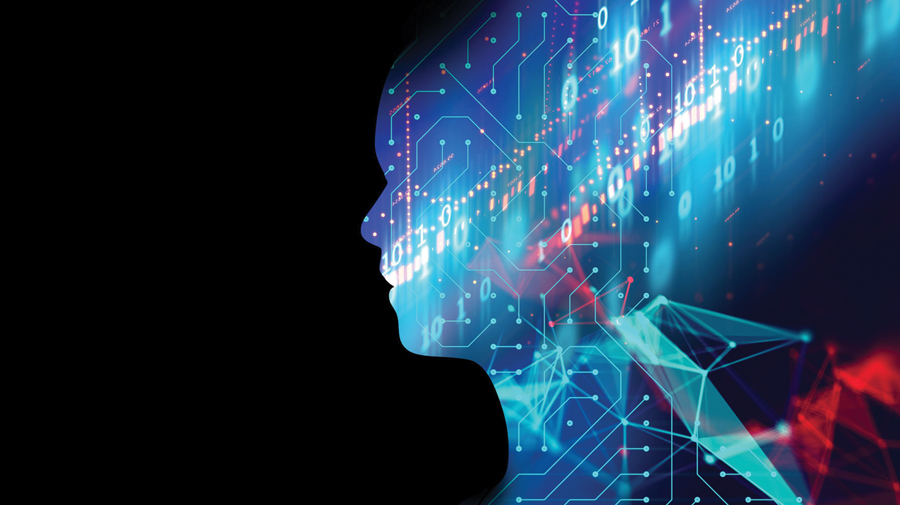
The rise of artificial intelligence (AI) represents one of the most transformative technological shifts of our time. Across sectors ranging from healthcare and education to finance and transportation, AI is driving unprecedented efficiency gains, powering groundbreaking innovations, and fundamentally reshaping how we live and work. As we stand at the dawn of the AI age, the implications for businesses, economies, and societies are profound – and we are only just beginning to understand the full scope of this unfolding revolution.
AI in Healthcare: Saving Lives and Democratizing Quality Care
Perhaps nowhere is AI‘s transformative potential more evident and urgent than in healthcare. From enhancing diagnostic accuracy to accelerating drug discovery and enabling personalized medicine, AI is already starting to reshape the medical landscape in powerful ways:
-
Medical Imaging: AI algorithms are achieving superhuman performance in analyzing X-rays, CT scans, MRIs, and other medical images, detecting early signs of conditions like cancer, Alzheimer‘s, and cardiovascular disease with remarkable speed and precision. One recent study found that an AI system was able to detect breast cancer from mammograms with 88% accuracy, compared to 73% for human radiologists.
-
Drug Discovery: Pharmaceutical companies are harnessing AI to dramatically accelerate the identification of promising new drug candidates. By analyzing vast molecular databases and predicting how compounds will behave in the body, AI platforms can screen billions of molecules in a matter of days – a process that would take human researchers decades. Pioneers like Atomwise and BenevolentAI have already identified potential treatments for diseases like Ebola, multiple sclerosis, and certain cancers.
-
Personalized Medicine: AI is enabling a new era of precision medicine tailored to each patient‘s unique genetic profile, health history, and lifestyle factors. By analyzing massive datasets and finding subtle patterns, AI systems can predict individual risk factors, recommend optimal treatments, and even design custom drugs targeted to a patient‘s specific biology. This approach promises better outcomes, fewer side effects, and more cost-effective care.
-
Hospital Operations: Beyond clinical applications, AI is also streamlining and optimizing the administrative side of healthcare. From triaging patients and scheduling appointments to managing medical records and processing insurance claims, intelligent automation is reducing costs, minimizing errors, and freeing up healthcare workers to focus on higher-value patient care.
According to a report by Accenture, AI applications could save the US healthcare system $150 billion annually by 2026. On a global scale, AI-powered healthcare could democratize access to quality care for billions of people, particularly in developing countries with limited medical resources. As AI continues to advance, we can expect to see even more transformative breakthroughs in the years ahead – faster and more accurate diagnoses, hyper-personalized treatments, and a world where good health is accessible to all.
AI in Education: Personalizing Learning and Preparing Students for the Future
Education is another domain where AI holds immense promise for transformative impact. By enabling personalized learning at scale, enhancing educational access and equity, and preparing students for an AI-driven future, intelligent technologies could reshape learning in profound ways:
-
Personalized Learning: AI-powered tutoring systems can adapt instructional content, pacing, and feedback to each student‘s unique needs, goals, and learning style. By analyzing student data and learning patterns, these systems can identify knowledge gaps, recommend targeted resources, and provide real-time guidance to keep students engaged and on track. Research suggests AI tutors can improve learning outcomes by up to 50% while reducing costs by 30-50%.
-
Universal Access: AI has the potential to dramatically expand access to quality education, particularly in underserved communities and developing regions. Intelligent educational platforms can provide high-quality, low-cost learning to students anywhere in the world, helping to close achievement gaps and enable lifelong learning opportunities for all. AI-powered translation and localization tools can also make educational content more linguistically and culturally relevant for diverse global learners.
-
Future-Ready Skills: As AI reshapes the nature of work, educational institutions have a critical role to play in preparing students for the jobs of tomorrow. In addition to teaching technical skills like coding and data analysis, schools are using AI to develop students‘ uniquely human capacities like creativity, emotional intelligence, and adaptability. AI-driven career guidance platforms can also help students navigate an increasingly dynamic job market and identify the skills and experiences needed to thrive.
Of course, realizing AI‘s full potential in education will require overcoming significant challenges and risks. Issues like data privacy, algorithmic bias, and digital equity loom large, and will demand robust governance frameworks and public-private partnerships to address. But if we can harness AI responsibly and inclusively, the potential benefits for learners, educators, and society as a whole are hard to overstate. According to a report by HolonIQ, AI in education is projected to grow by nearly 50% annually, reaching $25 billion globally by 2030.
| Sector | 2025 Market Size (USD Billions) |
|---|---|
| K-12 | 5.2 |
| Higher Ed | 3.7 |
| Corporate Learning | 2.1 |
| Lifelong Learning | 1.5 |
Projected AI in Education Market Size by Sector, 2025 (HolonIQ)
The Economic Impact of AI: Productivity Gains and Workforce Disruption
The implications of AI for the economy and job market are both massive and complex. On one hand, AI-driven automation holds immense potential to boost productivity, spur innovation, and drive economic growth:
-
Productivity: By automating routine tasks and optimizing complex processes, AI could dramatically boost output across sectors. A study by McKinsey estimates that AI could deliver additional economic output of around $13 trillion by 2030, boosting global GDP by about 1.2% annually. These productivity gains will be key to sustaining growth and improving living standards in the face of aging populations and slowing labor force expansion.
-
Innovation: AI is likely to accelerate the pace of innovation as businesses harness intelligent technologies to develop new products, services, and business models. From autonomous vehicles and personalized medicine to AI-designed materials and optimized supply chains, AI will enable breakthroughs that transform entire industries and create whole new markets. According to a survey by PwC, 72% of business leaders believe AI will be the business advantage of the future.
At the same time, AI will also bring significant disruption and challenges for workers and policymakers to navigate:
-
Job Displacement: While AI will also create many new jobs, particularly in areas like data science, software engineering, and AI ethics, the overall net effect on employment remains uncertain. A recent study by the World Economic Forum estimates that by 2025, automation may displace 85 million jobs while creating 97 million new ones – a net positive, but one that will require significant reskilling and support for impacted workers. Lower-wage jobs in areas like manufacturing, transportation, and retail are likely to be hardest hit.
-
Widening Inequality: There is a risk that the economic gains from AI may accrue disproportionately to highly-skilled workers and the owners of capital, leading to increased inequality within and between countries. Without proactive policies to promote inclusive growth and a just transition, AI could contribute to ever-widening disparities of income and opportunity. Policymakers will need to consider measures like progressive taxation, universal basic income, and massive investments in education and workforce development to ensure the benefits of AI are broadly shared.
Navigating this transition will be one of the great challenges and opportunities of the AI age. But if we can proactively shape the direction and impacts of these powerful technologies, the ultimate result could be an enormously positive one – a world of sustainable abundance in which all people can share in the gains of a rapidly-advancing AI economy.
Estimated impact of AI on jobs across industries by 2030, % change in labor demand (Source: McKinsey Global Institute)

AI Governance and Ethics: Ensuring Responsible and Inclusive Development
As AI systems become more powerful and pervasive, ensuring they remain safe, ethical, and beneficial is paramount. Without proper governance and safeguards, advanced AI could pose serious risks, from biased and opaque decision-making to catastrophic accidents and existential threats. Key challenges and focus areas include:
-
Transparency and Accountability: Many AI systems, particularly those based on deep learning, are essentially "black boxes" – even their creators cannot fully explain how they arrive at decisions. Developing tools and frameworks for AI interpretability, auditing, and oversight will be critical to foster trust and accountability.
-
Bias and Fairness: AI systems can often reflect and amplify societal biases around factors like race, gender, and socioeconomic status, leading to discriminatory outcomes. Detecting and mitigating these biases requires diverse and inclusive AI teams, rigorous testing across demographic groups, and ongoing monitoring and adjustment.
-
Privacy and Security: The massive datasets used to train AI systems can pose serious privacy risks if not properly secured and anonymized. At the same time, AI can introduce new vulnerabilities through techniques like adversarial attacks and data poisoning. Robust data governance and security frameworks will be essential.
-
Value Alignment: As AI systems become more autonomous and powerful, ensuring their objectives and behaviors remain aligned with human values is critical. Techniques like inverse reward design and debate (in which AI agents publicly argue for their respective objective functions) offer promising approaches, but much hard work remains to robustly imbue AI with human-compatible goals.
-
International Governance: Given the global nature of AI development and deployment, international cooperation and governance will be essential. Key priorities include preventing an unconstrained AI arms race, ensuring equitable access to AI benefits, and aligning on common principles and guidelines for responsible development. Forums like the OECD, G20, and Global Partnership on AI will have important roles to play.
While the challenges are significant, there are also many reasons for hope and optimism. Growing awareness of AI ethics has spurred the development of principles, guidelines, and governance frameworks from governments, industry consortia, academic institutions, and civil society groups around the world. Initiatives like the IEEE‘s Ethically Aligned Design standards, the EU‘s Trustworthy AI guidelines, and the Partnership on AI‘s tenets for responsible development are helping to translate ethical principles into concrete practices. And a new generation of AI researchers are making ethics and social impact core to their work from the start.
By proactively shaping the trajectory of AI – and imbuing these enormously powerful systems with human values of fairness, transparency, and inclusion – we can work to ensure advanced AI remains a positive force for humanity. The road ahead will be challenging, but with foresight, ingenuity, and collective effort, we can build an AI future aligned with the best of our human values and aspirations.
Conclusion: Towards an AI-Empowered Future
As we stand at the threshold of an AI-powered world, the potential for these technologies to positively transform every dimension of our lives is hard to overstate. From healthcare and education to commerce and sustainability, AI promises a future of unparalleled progress and possibility – one in which many of humanity‘s greatest challenges could finally find lasting solutions:
-
Healthcare: AI-enabled early diagnosis, precision medicine, and accelerated drug discovery could lead to a world where cancer and chronic illness are largely preventable, treatable, or curable – and where every person can access high-quality, affordable care.
-
Education: Adaptive and personalized learning systems powered by AI could unlock the full potential in every student, providing tailored support and universal access to world-class education. AI tutors and immersive learning environments could make education more effective, engaging, and equitable than ever before.
-
Climate and Sustainability: AI climate models could help us better understand and predict the impacts of a warming planet, while intelligent systems optimize our use of energy and resources. AI-designed renewable technologies and smart urban planning could pave the way for a sustainable, carbon-neutral future.
-
Exploration and Discovery: AI will be a powerful tool for pushing the boundaries of human knowledge and understanding. From modeling the origins of the universe to processing the data from telescopes and rovers, AI will help us unlock the deepest mysteries of the cosmos. AI-enhanced research will accelerate breakthroughs across domains from particle physics to neuroscience.
Of course, this inspiring vision is far from inevitable. To realize AI‘s transformative potential – while mitigating its risks and challenges – will require proactive effort, thoughtful governance, and unprecedented levels of cooperation between policymakers, industry leaders, academic researchers, and global civil society. We‘ll need to work hard to steer the development of AI towards our shared values and priorities, ensuring these powerful systems remain transparent, accountable, and broadly beneficial.
But if we can muster the wisdom and the will, the science and the solidarity to rise to this moment, the benefits for humanity as a whole could be incalculable. We are living through the most transformative technological revolution in human history – one that could finally allow us to transcend many of our age-old limitations and build a world of sustainable abundance for all. The journey ahead will be challenging, but it may also be the most consequential and inspiring humanity has yet undertaken.
As Microsoft founder and philanthropist Bill Gates put it, "AI is on the verge of making our lives more productive and creative. It will accelerate scientific discovery and unlock solutions to our toughest challenges. But realizing AI‘s potential will require thoughtful leadership from all of us – in business, in government, and in our communities. This is a critical moment, and I believe that working together, we can create an AI future that is bright for everyone."
The AI future is here – and it‘s ours to shape. With courage, ingenuity, and a shared commitment to the greater good, we can build an AI-powered world beyond our wildest imaginings – a world of opportunity, discovery, and endlessly expanding human potential. Let us begin.