Hugging Face Introduces Open Source Chat Assistants to Challenge OpenAI‘s GPT Store
Introduction
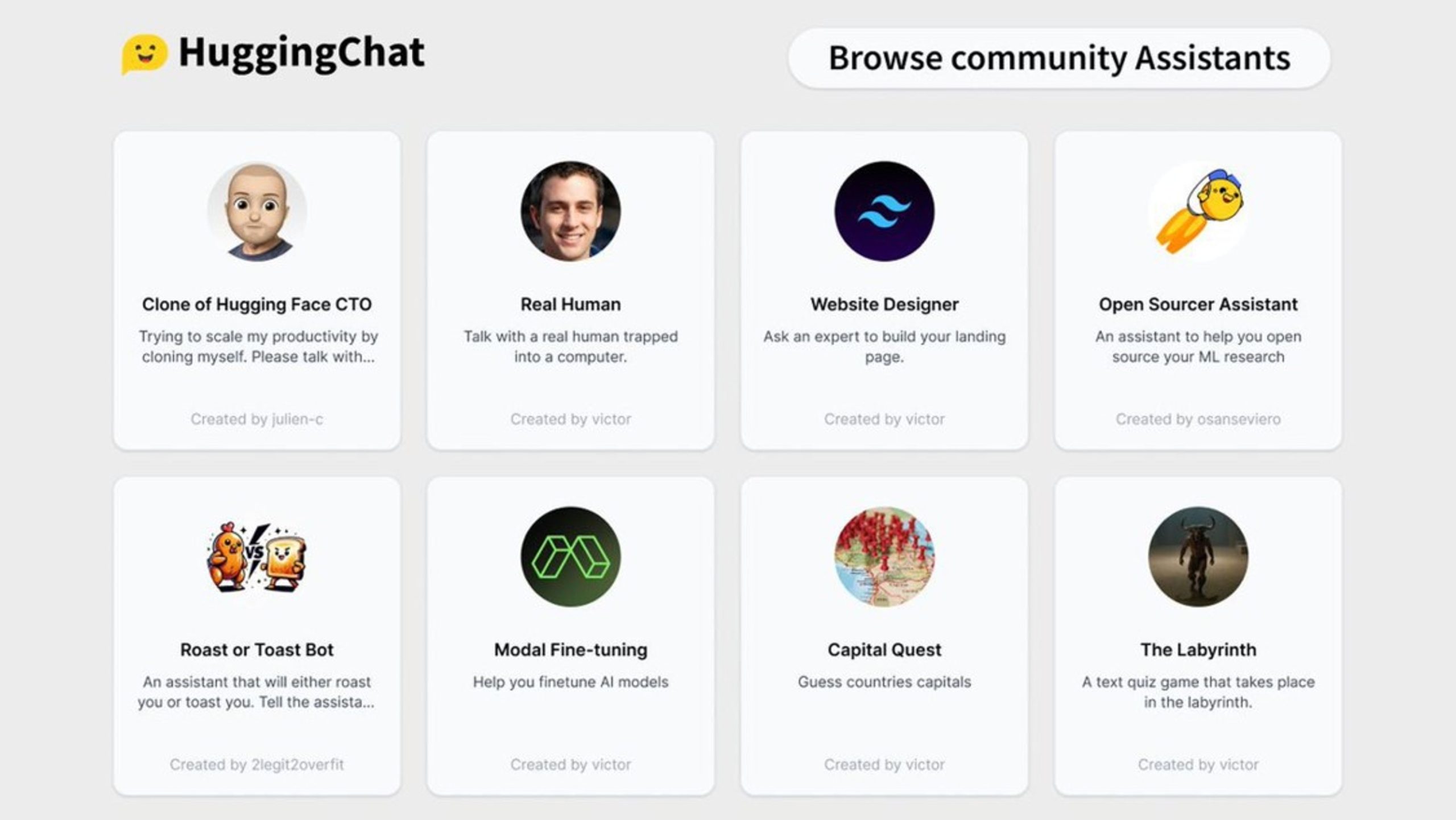
The field of artificial intelligence (AI) is undergoing a significant transformation, with the rise of open source platforms challenging the dominance of proprietary solutions. One such platform is Hugging Face, which recently launched its Hugging Chat Assistants, a free and open source alternative to OpenAI‘s GPT Store. This move has the potential to democratize access to advanced AI tools and foster innovation in the development of AI chatbots.
Overview of Hugging Face‘s Hugging Chat Assistants
Hugging Face‘s Hugging Chat Assistants is an open source platform that allows users to create custom AI chatbots without incurring the costs associated with proprietary solutions like OpenAI‘s GPT Store. The platform boasts a user-friendly interface, enabling users to tailor their chatbots in "just two clicks," according to Philipp Schmid, the company‘s technical lead.
Under the hood, Hugging Chat Assistants leverages state-of-the-art open source language models, such as BERT, RoBERTa, and GPT-2. These models have been pre-trained on vast amounts of data, enabling them to generate human-like responses and engage in natural conversations. Hugging Face‘s platform also offers a wide range of customization options, allowing users to fine-tune the models to suit their specific needs and domains.
In contrast, OpenAI‘s GPT Store relies on proprietary language models, such as GPT-3, which are not openly available to the public. While these models are highly advanced and capable of generating impressive results, their closed nature limits the ability of users to fully understand and customize them.
The Importance of Open Source in AI Development
The launch of Hugging Chat Assistants highlights the growing importance of open source in the field of AI development. Open source platforms offer several key benefits that are driving their adoption:
-
Democratization and accessibility: Open source AI tools like Hugging Chat Assistants make advanced AI capabilities accessible to a wider range of individuals and organizations, regardless of their technical expertise or financial resources. This democratization of AI can lead to more diverse and innovative applications across industries.
-
Fostering innovation and collaboration: Open source development encourages collaboration and knowledge sharing among developers worldwide. By building upon each other‘s work and contributing new ideas and improvements, the open source community can accelerate the pace of innovation in AI.
-
Addressing data privacy and security concerns: Open source AI platforms promote transparency by allowing users to examine the underlying code and models. This transparency helps build trust in AI systems and enables users to identify and address potential privacy and security risks.
According to a 2022 report by Gartner, by 2025, 80% of enterprises will have deployed open source AI and machine learning (ML) models, up from less than 20% in 2020. This rapid growth underscores the increasing recognition of the value of open source in the AI ecosystem.
Ethical Considerations in Democratizing AI
While the democratization of AI through open source platforms like Hugging Chat Assistants has the potential to drive innovation and expand access to advanced AI capabilities, it also raises important ethical considerations. As AI tools become more widely available, there is a risk of misuse and unintended consequences.
One potential challenge is the development of AI chatbots for malicious purposes, such as spreading misinformation or engaging in social engineering attacks. Open source platforms must prioritize responsible development and deployment practices, including robust security measures and clear guidelines for ethical use.
Another concern is the potential for AI chatbots to perpetuate biases present in the data they are trained on. Open source AI platforms have an opportunity to address this issue by promoting diversity and inclusivity in their development communities and ensuring that training data is representative and unbiased.
To mitigate these risks, the AI community must work together to establish best practices and guidelines for the responsible development and deployment of open source AI tools. This includes fostering a culture of transparency, accountability, and ethical consideration throughout the development process.
Impact on Businesses and Industries
The availability of open source AI chatbot platforms like Hugging Chat Assistants has significant implications for businesses across industries. By leveraging these tools, organizations can improve their operations, enhance customer experiences, and gain a competitive edge.
One industry that stands to benefit greatly from AI chatbots is customer service. According to a 2023 survey by Salesforce, 54% of service organizations are planning to deploy AI chatbots within the next 18 months. By implementing open source chatbots, businesses can provide 24/7 customer support, reduce response times, and handle a higher volume of inquiries, all while freeing up human agents to focus on more complex issues.
Another potential application of open source AI chatbots is in the healthcare industry. AI-powered chatbots can assist with tasks such as symptom checking, appointment scheduling, and providing basic health information to patients. By leveraging open source platforms, healthcare organizations can customize chatbots to suit their specific needs and integrate them with existing systems, improving patient access to care and reducing the burden on healthcare providers.
In the education sector, open source AI chatbots can be used to provide personalized learning experiences for students. By analyzing student data and engaging in natural conversations, chatbots can adapt to individual learning styles, provide targeted feedback, and offer additional resources to support learning outcomes.
These are just a few examples of the many ways in which businesses and industries can benefit from open source AI chatbot platforms. As adoption continues to grow, we can expect to see an increasing number of innovative applications emerge across sectors.
The Role of the Open Source Community
The success and impact of open source AI platforms like Hugging Face‘s Hugging Chat Assistants are largely dependent on the strength and vibrancy of the open source community. This community plays a crucial role in driving progress, fostering collaboration, and ensuring the long-term sustainability of open source projects.
One of the key strengths of the open source community is its ability to bring together diverse perspectives and expertise from around the world. By collaborating and sharing knowledge, developers can identify and address challenges more effectively, leading to faster innovation and improvement of open source AI tools.
The open source community also acts as a watchdog, promoting transparency and accountability in the development of AI systems. Through code reviews, bug reports, and feature requests, the community helps ensure that open source AI platforms are reliable, secure, and aligned with the needs of users.
To support the growth and success of open source AI projects, it is essential to foster a strong and inclusive community. This involves providing resources and support for developers, encouraging participation from underrepresented groups, and promoting a culture of collaboration and knowledge sharing.
Future Outlook and Potential Developments
As open source AI platforms like Hugging Chat Assistants continue to gain traction, we can expect to see significant advancements and innovations in the field. Some potential areas for future development include:
-
Integration of multimodal capabilities: Combining AI chatbots with other AI technologies, such as computer vision and speech recognition, could enable the creation of more sophisticated and interactive AI assistants capable of understanding and responding to multiple forms of input.
-
Expansion of multilingual support: As open source AI platforms aim to serve a global user base, there will be an increasing need for models and tools that can handle a wide range of languages and dialects. The open source community can play a key role in developing and fine-tuning language models for underrepresented languages.
-
Development of specialized AI chatbots: Open source platforms provide the flexibility for users to create chatbots tailored to specific industries, domains, or use cases. As adoption grows, we can expect to see the emergence of a diverse ecosystem of specialized AI chatbots, each optimized for particular tasks and contexts.
-
Advances in natural language understanding: As open source language models continue to evolve, AI chatbots will become increasingly adept at understanding and responding to complex queries, engaging in more natural and contextually relevant conversations.
-
Integration with blockchain technology: The intersection of open source AI and blockchain technology could enable the development of decentralized, secure, and transparent AI systems. This could have implications for applications such as identity verification, data privacy, and secure communication.
As the open source AI landscape evolves, platforms like Hugging Face‘s Hugging Chat Assistants will play a crucial role in shaping the future of AI development and adoption. By democratizing access to advanced AI tools and fostering a vibrant open source community, these platforms have the potential to unlock new possibilities and drive transformative impact across industries.
Conclusion
The introduction of Hugging Face‘s Hugging Chat Assistants represents a significant milestone in the democratization of AI technology. By providing a free and open source alternative to proprietary solutions like OpenAI‘s GPT Store, Hugging Face is empowering individuals and organizations to harness the power of advanced AI chatbots and drive innovation across industries.
The rise of open source AI platforms is transforming the AI landscape, promoting accessibility, transparency, and collaboration. As businesses and developers increasingly embrace these tools, we can expect to see a proliferation of innovative AI applications that improve operations, enhance customer experiences, and solve complex challenges.
However, the democratization of AI also raises important ethical considerations, including the need for responsible development and deployment practices. The AI community must work together to address these challenges and ensure that the benefits of open source AI are realized in a way that is inclusive, equitable, and aligned with societal values.
As the open source AI ecosystem continues to evolve and mature, platforms like Hugging Chat Assistants will play a crucial role in shaping the future of AI development and adoption. By leveraging the collective intelligence and creativity of the open source community, these platforms have the potential to accelerate progress, drive breakthroughs, and unlock new possibilities for the benefit of all.