
Image Augmentation Techniques for Training Deep Learning Models
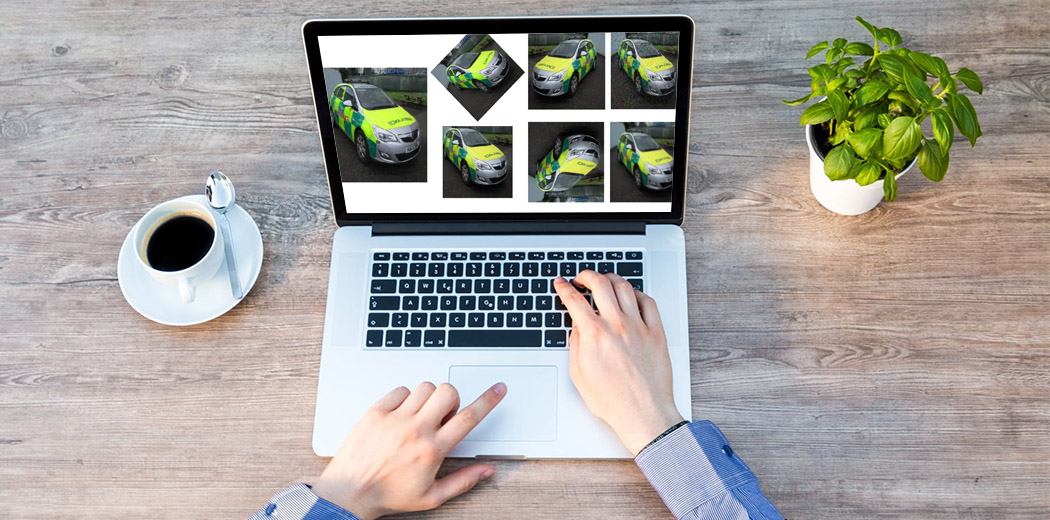
Deep learning has revolutionized the field of computer vision, enabling machines to match or even surpass human-level performance on tasks like image classification, object detection, and semantic segmentation. However, the success of deep learning models heavily depends on the quantity and quality of the training data. In many real-world scenarios, collecting a large, diverse dataset can be time-consuming, expensive, or simply infeasible.
This is where image augmentation comes to the rescue. Image augmentation is a set of techniques used to artificially expand the size and diversity of an image dataset by applying various transformations to the original images. By generating multiple altered versions of each training image, augmentation helps expose the model to a wider range of variations it may encounter in the real world, thereby improving its robustness and generalization ability.
In this article, we‘ll dive deep into the most effective image augmentation techniques used in deep learning, understand why augmentation is crucial, go over best practices and tools, and explore some exciting new augmentation approaches based on AI. Whether you‘re a beginner or an experienced practitioner, understanding image augmentation is key to building high-performance deep learning models for computer vision. Let‘s get started!
Common Image Augmentation Techniques
There are many ways to augment image data, ranging from basic transformations to more advanced and domain-specific techniques. Here are some of the most widely used augmentation methods:
1. Flips and Rotations
Flipping an image horizontally or vertically and rotating it by various angles are simple yet effective ways to augment data. These transformations help the model learn rotational and reflection invariance. For example, a dog is still a dog whether it‘s facing left or right. Flips and rotations are especially useful in scenarios where the objects of interest can appear in different orientations, such as in aerial imagery or medical scans.

from PIL import Image

image = Image.open(‘dog.jpg‘)

# Horizontal flip
flipped_image = image.transpose(Image.FLIP_LEFT_RIGHT)

# Vertical flip
flipped_image = image.transpose(Image.FLIP_TOP_BOTTOM)

# Rotate 90 degrees clockwise
rotated_image = image.rotate(90)
2. Scaling and Cropping
Scaling an image up or down changes its resolution, which can help the model handle objects at different scales. Cropping, on the other hand, involves extracting random patches from the original image, which can encourage the model to focus on the most discriminative parts of the object. Together, scaling and cropping can simulate the effect of the object being at different distances from the camera.

import torchvision.transforms as transforms

# Random resized crop
transform = transforms.RandomResizedCrop(size=224, scale=(0.5, 1.0))
cropped_image = transform(image)

# Random scaling
transform = transforms.Resize(size=(100, 200))
scaled_image = transform(image)
3. Color Adjustments
Altering properties like brightness, contrast, hue, and saturation can help the model become invariant to color variations that may occur due to differences in lighting conditions, camera settings, or color balance. Color augmentations are particularly relevant in outdoor scenarios where illumination can vary significantly.

from PIL import ImageEnhance

# Brightness adjustment
enhancer = ImageEnhance.Brightness(image)
brighter_image = enhancer.enhance(1.5)
darker_image = enhancer.enhance(0.5)

# Contrast adjustment
enhancer = ImageEnhance.Contrast(image)
higher_contrast = enhancer.enhance(1.5)
lower_contrast = enhancer.enhance(0.5)

# Color adjustment
enhancer = ImageEnhance.Color(image)
saturated_image = enhancer.enhance(2.0)
desaturated_image = enhancer.enhance(0.5)
4. Adding Noise
Injecting random noise into images, such as Gaussian noise, salt-and-pepper noise, or speckle noise, can improve the model‘s robustness to perturbations and make it less sensitive to pixel-level variations. Noise augmentation is commonly used in scenarios where the input images may be subject to interference, such as in medical imaging or satellite imagery.

import numpy as np

# Add Gaussian noise
noise = np.random.normal(0, 25, image.size)
noisy_image = np.clip(image + noise, 0, 255).astype(np.uint8)

# Add salt-and-pepper noise
noise = np.random.choice([0, 1, 2], size=image.shape[:2], p=[0.90, 0.05, 0.05])
noise = np.repeat(noise[..., np.newaxis], 3, axis=2)
noisy_image = np.where(noise == 1, 255, image)  # Salt
noisy_image = np.where(noise == 2, 0, noisy_image)  # Pepper
5. Elastic Deformations
Elastic deformations simulate the effect of an image being "stretched" or "warped" in random ways. This technique is particularly useful for biomedical images, such as histopathology slides or MRI scans, where the tissue structures can exhibit significant variability in shape and orientation. Elastic deformations help the model become invariant to these non-linear transformations.

from scipy.ndimage.interpolation import map_coordinates
from scipy.ndimage.filters import gaussian_filter

def elastic_transform(image, alpha, sigma):
    random_state = np.random.RandomState(None)

    h, w = image.shape[:2]
    dx = gaussian_filter((random_state.rand(h, w) * 2 - 1), sigma) * alpha
    dy = gaussian_filter((random_state.rand(h, w) * 2 - 1), sigma) * alpha

    x, y = np.meshgrid(np.arange(w), np.arange(h))
    indices = np.reshape(y+dy, (-1, 1)), np.reshape(x+dx, (-1, 1))

    return map_coordinates(image, indices, order=1).reshape(shape)

deformed_image = elastic_transform(image, alpha=1000, sigma=40)
Why is Image Augmentation Important?
Image augmentation offers several key benefits that can significantly boost the performance and reliability of deep learning models:
-
Increases training data size and diversity: The most obvious advantage of augmentation is that it allows us to generate a much larger and more diverse training set from a limited number of original images. This is especially valuable when collecting real-world data is expensive, time-consuming, or impractical. By exposing the model to a wider range of variations during training, augmentation helps improve its ability to generalize to new, unseen data.
-
Reduces overfitting: Overfitting occurs when a model learns to memorize the training data instead of learning the underlying patterns and concepts. This often happens when the training set is too small or lacks diversity. Image augmentation helps mitigate overfitting by introducing random variations that prevent the model from relying too heavily on specific pixel patterns. With augmentation, the model is forced to learn more robust and generalizable features.
-
Improves model robustness: In real-world scenarios, the images a model encounters can vary significantly in terms of lighting, viewing angle, scale, noise level, and other factors. By simulating these variations during training, augmentation helps the model become more resilient to such perturbations. A model trained with augmented data is more likely to perform well on images captured under different conditions than one trained only on pristine, lab-controlled data.
-
Reduces data collection costs: Collecting and annotating a large dataset for deep learning can be prohibitively expensive, especially in domains like medical imaging or satellite imagery where specialized expertise is required. Image augmentation allows us to make the most out of the available data by generating additional training examples at a fraction of the cost of collecting new data. This can lead to significant savings in time, money, and human effort.
Best Practices for Image Augmentation
While image augmentation is a powerful technique, it‘s essential to apply it judiciously to achieve the best results. Here are some best practices to keep in mind:
-
Choose relevant augmentations: The augmentations you apply should be relevant to the problem domain and the types of variations your model is likely to encounter in the real world. For example, if you‘re building a model to classify cars, horizontal flips and rotations may be appropriate, but elastic deformations probably aren‘t. Always consider the specific characteristics and constraints of your application when selecting augmentations.
-
Avoid excessive distortions: While introducing variations is the goal of augmentation, it‘s important not to go overboard. Applying overly aggressive transformations can destroy the semantic information in the image and confuse the model. For instance, excessive rotation or scaling can make objects unrecognizable, while extreme color changes can alter their appearance beyond recognition. Aim for a balance between diversity and realism.
-
Use realistic transformations: The augmentations should simulate variations that the model is likely to see in the real world. For example, if you‘re building a model for autonomous driving, it makes sense to augment with different lighting conditions, weather effects, and camera angles, but not with unrealistic color changes or elastic deformations. The more closely the augmented data resembles the real-world data, the better the model will perform in practice.
-
Combine multiple augmentations: Instead of relying on a single type of augmentation, it‘s often beneficial to apply a combination of different techniques. This allows the model to learn from a richer set of variations and become more robust. For example, you could randomly apply horizontal flips, rotations, crops, and color jittering to each training image. Just be careful not to combine too many aggressive augmentations that could destroy the informative content of the image.
-
Experiment and validate: The effectiveness of image augmentation can vary depending on the specific problem, dataset, and model architecture. It‘s important to experiment with different augmentation techniques and hyperparameters to find what works best for your task. Use validation sets to evaluate the impact of augmentation on model performance and generalization. Keep an eye out for signs of overfitting or underfitting, and adjust your augmentation strategy accordingly.
Tools and Libraries for Image Augmentation
Fortunately, there are many excellent tools and libraries available that make it easy to apply a wide range of image augmentations with just a few lines of code. Here are some of the most popular options:
-
Albumentations: Albumentations is a fast and flexible image augmentation library that provides a wide range of transforms for classification, segmentation, and detection tasks. It supports a variety of data formats and integrates seamlessly with deep learning frameworks like PyTorch and TensorFlow.
-
imgaug: imgaug is a powerful and widely-used Python library for image augmentation. It offers a large collection of augmentation techniques, including geometric transforms, color manipulations, and neural style transfer. imgaug is designed to be highly configurable and supports per-image augmentation parameters.
-
Augmentor: Augmentor is a simple and easy-to-use image augmentation library that allows you to build complex augmentation pipelines with just a few lines of code. It provides a wide range of basic and advanced transforms and supports both in-memory and on-disk augmentation.
-
NVIDIA DALI: NVIDIA Data Loading Library (DALI) is a high-performance library for accelerating data preprocessing and augmentation pipelines on NVIDIA GPUs. DALI provides a collection of highly optimized building blocks for common augmentation tasks and can significantly speed up the training process by overlapping data processing with model computation.
-
Keras ImageDataGenerator: If you‘re using the Keras deep learning framework, the ImageDataGenerator class provides a convenient way to apply basic augmentations like flips, rotations, and shifts to your training data on the fly. While not as flexible as some of the other libraries, it‘s a good choice for quick prototyping and experimentation.
The Future of Image Augmentation
While traditional image augmentation techniques have proven highly effective, researchers are continually exploring new and innovative ways to expand and enrich training datasets using AI. Here are some exciting areas of research that represent the future of image augmentation:
-
Generative Adversarial Networks (GANs): GANs are a class of deep learning models that can learn to generate realistic images from scratch. By training a generator network to create images that fool a discriminator network, GANs can learn to synthesize highly realistic and diverse images that capture the underlying distribution of the training data. This has opened up exciting possibilities for generating synthetic training data that can significantly improve the performance and generalization of computer vision models.
-
Neural Style Transfer: Neural style transfer is a technique that allows us to transfer the artistic style of one image onto the content of another. By separating and recombining the content and style representations learned by deep neural networks, we can generate new images that blend the semantic content of one image with the visual style of another. This has potential applications in data augmentation, where we could generate stylized versions of training images to improve the model‘s robustness to different artistic styles and textures.
-
Simulation Environments: Another promising approach to data augmentation is to use simulation environments to generate synthetic training data. By building realistic 3D models of objects and scenes, we can render them from different viewpoints, under different lighting conditions, and with different textures and materials. This allows us to generate vast amounts of highly diverse and photorealistic training data that would be impractical or impossible to collect in the real world. Simulation-based augmentation is particularly valuable in domains like autonomous driving, robotics, and virtual reality.
As these technologies continue to advance, we can expect image augmentation to become an increasingly powerful and sophisticated tool for training deep learning models. By leveraging the latest advances in AI and computer graphics, we‘ll be able to generate ever more realistic and diverse training data, enabling models to learn richer and more robust representations of the visual world.
Conclusion
Image augmentation is a crucial technique for training high-performance deep learning models for computer vision tasks. By applying random transformations to the training data, augmentation helps increase the size and diversity of the dataset, reduce overfitting, improve model robustness, and decrease data collection costs.
There are many different augmentation techniques available, ranging from basic geometric and color transforms to more advanced methods like elastic deformations and synthetic data generation using GANs. The key to successful augmentation is to choose relevant and realistic transformations that capture the types of variations the model is likely to encounter in the real world, while avoiding excessive distortions that could destroy semantic information.
Fortunately, there are many excellent tools and libraries available that make it easy to apply image augmentations with just a few lines of code. Whether you‘re using Albumentations, imgaug, or NVIDIA DALI, these tools provide a wide range of transforms and integrations with popular deep learning frameworks.
Looking ahead, the future of image augmentation is bright, with exciting new approaches based on GANs, style transfer, and simulation environments promising to generate ever more realistic and diverse training data. As these technologies advance, we can expect deep learning models to become even more powerful and robust, capable of tackling even the most challenging computer vision problems.
So the next time you‘re training a deep learning model for image classification, object detection, or semantic segmentation, remember the power of image augmentation. By leveraging these techniques effectively, you can unlock the full potential of your model and achieve state-of-the-art performance on a wide range of real-world tasks. Happy augmenting!





