Image Contrast Enhancement Using CLAHE: A Comprehensive Guide
Introduction
Contrast enhancement is a fundamental image processing technique that aims to improve the visual quality and interpretability of digital images. By adjusting the distribution of pixel intensities, contrast enhancement algorithms can reveal hidden details, correct lighting imbalances, and enhance the overall perception of an image. In this article, we will explore the Contrast Limited Adaptive Histogram Equalization (CLAHE) method, a powerful local contrast enhancement technique that has gained significant popularity in various domains.
Goals of Contrast Enhancement
Contrast enhancement algorithms are designed to achieve two primary objectives:
-
Improving visual appearance: Enhancing the contrast of an image can make it more visually appealing and easier to interpret by the human eye. This is particularly important in applications such as medical imaging, where subtle details can have significant diagnostic value.
-
Facilitating subsequent tasks: Contrast enhancement can also serve as a preprocessing step to improve the performance of subsequent image analysis tasks, such as object detection, segmentation, and recognition. By increasing the discriminative power of image features, contrast enhancement can lead to more accurate and reliable results.
Global vs Local Histogram Modification
Most contrast enhancement techniques rely on modifying the histogram of pixel intensities in an image. The histogram represents the distribution of pixel values, with the x-axis denoting the intensity levels and the y-axis indicating the number of pixels at each level. Histogram modification can be applied globally or locally:
-
Global approaches: Global histogram equalization methods adjust the contrast of an entire image based on its global histogram. While simple and computationally efficient, global approaches may not effectively handle images with varying illumination or local contrast variations.
-
Local approaches: Local histogram modification techniques, such as Adaptive Histogram Equalization (AHE), divide the image into smaller regions and apply histogram equalization independently to each region. This allows for better adaptation to local contrast variations but can be more computationally intensive.
Adaptive Histogram Equalization (AHE)
Adaptive Histogram Equalization (AHE) is a local contrast enhancement method that divides an image into smaller tiles and applies histogram equalization to each tile separately. The idea behind AHE is to adapt the contrast enhancement to the local characteristics of the image, resulting in improved visibility of details in both bright and dark regions.
The steps involved in AHE are as follows:
- Divide the image into non-overlapping tiles.
- Compute the histogram of each tile.
- Equalize the histogram of each tile independently.
- Interpolate the enhanced tiles to create the final output image.
AHE can significantly improve the contrast of an image compared to global histogram equalization. However, it has some limitations that need to be addressed.
Limitations of AHE
While AHE is effective in enhancing local contrast, it has some drawbacks:
-
Noise amplification: In regions with relatively uniform intensity, AHE can amplify noise, leading to grainy or speckled artifacts in the enhanced image.
-
Over-enhancement: AHE may over-enhance the contrast in certain regions, resulting in an unnatural or exaggerated appearance.
-
Computational complexity: Applying AHE to each tile independently can be computationally expensive, especially for large images or real-time applications.
To overcome these limitations, an improved version of AHE called Contrast Limited AHE (CLAHE) was introduced.
Contrast Limited AHE (CLAHE)
Contrast Limited Adaptive Histogram Equalization (CLAHE) is an extension of AHE that addresses its limitations by introducing a contrast limiting step. CLAHE operates on small regions called tiles, similar to AHE, but it limits the contrast amplification to prevent over-enhancement and noise amplification.
The key steps in the CLAHE algorithm are as follows:
- Divide the image into non-overlapping tiles.
- Compute the histogram of each tile.
- Clip the histogram at a predefined contrast limit to prevent over-amplification.
- Redistribute the clipped pixels evenly across the histogram.
- Equalize the modified histogram of each tile.
- Interpolate the enhanced tiles using bilinear interpolation to create the final output image.
By limiting the contrast amplification, CLAHE produces more visually pleasing results with reduced noise and artifacts compared to AHE.
CLAHE Algorithm Details
Let‘s dive deeper into the specifics of the CLAHE algorithm:
-
Tile size: The image is divided into non-overlapping tiles of a specified size, typically 8×8 or 16×16 pixels. Smaller tile sizes allow for more local adaptation but increase computational complexity.
-
Histogram computation: For each tile, the histogram of pixel intensities is computed. The histogram represents the distribution of pixel values within the tile.
-
Contrast limiting: To prevent over-amplification, the histogram is clipped at a predefined contrast limit. The excess pixels above the limit are redistributed evenly across the histogram, ensuring that the total number of pixels remains constant.
-
Histogram equalization: The clipped and redistributed histogram of each tile is then equalized independently. Histogram equalization stretches the intensity range of the tile to span the full range of possible values, enhancing the contrast.
-
Bilinear interpolation: To avoid abrupt transitions between adjacent tiles, bilinear interpolation is applied to blend the enhanced tiles smoothly. This creates a seamless output image with improved local contrast.
Key CLAHE Parameters
CLAHE has two main parameters that control its behavior:
-
Tile size: The size of the non-overlapping tiles used for local histogram equalization. Smaller tile sizes provide more local adaptation but increase computational complexity. Common choices are 8×8 or 16×16 pixels.
-
Contrast limit: The maximum allowed contrast amplification factor. It determines the extent to which the contrast can be enhanced in each tile. Higher values allow for more contrast enhancement but may introduce noise and artifacts. Typical values range from 2 to 5.
Adjusting these parameters allows fine-tuning the CLAHE algorithm to suit specific image characteristics and application requirements.
Python Code Example
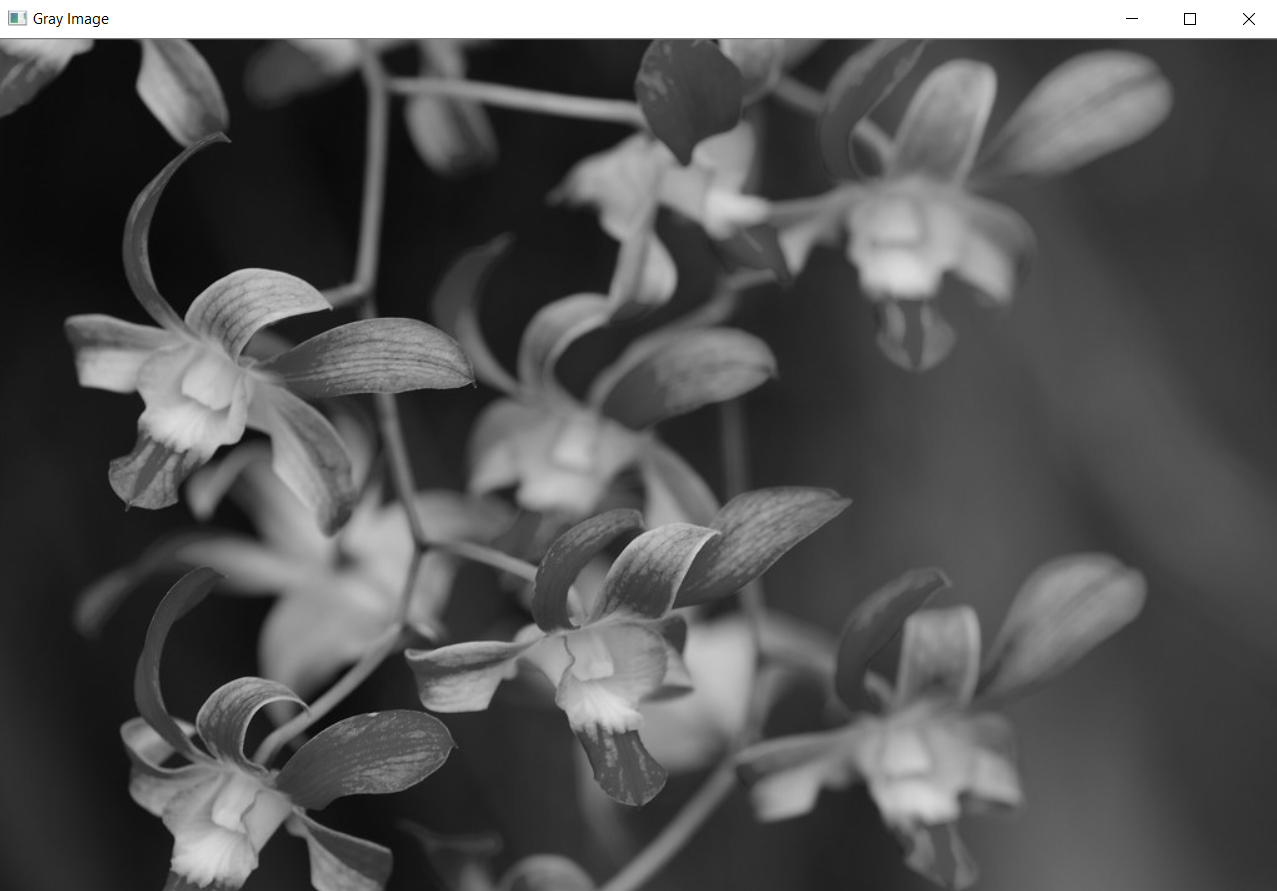
Here‘s a Python code example that demonstrates the application of CLAHE using the OpenCV library:
import cv2

# Read the input image
image = cv2.imread(‘input_image.jpg‘, 0)  # Read as grayscale

# Create a CLAHE object
clahe = cv2.createCLAHE(clipLimit=2.0, tileGridSize=(8, 8))

# Apply CLAHE to the image
enhanced_image = clahe.apply(image)

# Display the original and enhanced images
cv2.imshow(‘Original Image‘, image)
cv2.imshow(‘CLAHE Enhanced Image‘, enhanced_image)
cv2.waitKey(0)
cv2.destroyAllWindows()
In this example, we first read the input image in grayscale using cv2.imread(). Then, we create a CLAHE object using cv2.createCLAHE(), specifying the desired clip limit and tile size. Finally, we apply CLAHE to the image using the apply() method and display the original and enhanced images.
Histogram Analysis
To understand the effect of CLAHE on the image‘s intensity distribution, we can analyze the histograms before and after enhancement. Here‘s an example using Python and Matplotlib:
import cv2
import matplotlib.pyplot as plt

# Read the input image
image = cv2.imread(‘input_image.jpg‘, 0)  # Read as grayscale

# Create a CLAHE object
clahe = cv2.createCLAHE(clipLimit=2.0, tileGridSize=(8, 8))

# Apply CLAHE to the image
enhanced_image = clahe.apply(image)

# Plot the histograms
plt.figure(figsize=(10, 5))
plt.subplot(1, 2, 1)
plt.hist(image.flatten(), bins=256, range=[0, 256])
plt.title(‘Original Image Histogram‘)
plt.xlabel(‘Intensity‘)
plt.ylabel(‘Frequency‘)

plt.subplot(1, 2, 2)
plt.hist(enhanced_image.flatten(), bins=256, range=[0, 256])
plt.title(‘CLAHE Enhanced Image Histogram‘)
plt.xlabel(‘Intensity‘)
plt.ylabel(‘Frequency‘)

plt.tight_layout()
plt.show()
This code snippet plots the histograms of the original and CLAHE-enhanced images side by side. The histograms provide insights into how CLAHE redistributes the pixel intensities, resulting in improved contrast.
Thresholding
After applying CLAHE, thresholding techniques can be used to further segment the enhanced image based on intensity levels. One popular thresholding method is Otsu‘s thresholding, which automatically determines an optimal threshold value. Here‘s an example using OpenCV:
import cv2

# Read the input image
image = cv2.imread(‘input_image.jpg‘, 0)  # Read as grayscale

# Create a CLAHE object
clahe = cv2.createCLAHE(clipLimit=2.0, tileGridSize=(8, 8))

# Apply CLAHE to the image
enhanced_image = clahe.apply(image)

# Apply Otsu‘s thresholding
_, thresholded_image = cv2.threshold(enhanced_image, 0, 255, cv2.THRESH_BINARY + cv2.THRESH_OTSU)

# Display the original, enhanced, and thresholded images
cv2.imshow(‘Original Image‘, image)
cv2.imshow(‘CLAHE Enhanced Image‘, enhanced_image)
cv2.imshow(‘Thresholded Image‘, thresholded_image)
cv2.waitKey(0)
cv2.destroyAllWindows()
In this example, after applying CLAHE, we use cv2.threshold() with the cv2.THRESH_OTSU flag to automatically determine the threshold value and obtain a binary thresholded image.
Comparison of Results
Let‘s compare the results of global histogram equalization, AHE, and CLAHE on a sample image:
-
Original Image: The original image may have low contrast or uneven illumination, making certain details difficult to perceive.
-
Global Histogram Equalization: Applying global histogram equalization can improve the overall contrast but may introduce artifacts and over-enhance certain regions.
-
Adaptive Histogram Equalization (AHE): AHE adapts the contrast enhancement to local regions, resulting in better visibility of details. However, it may amplify noise in homogeneous areas.
-
Contrast Limited AHE (CLAHE): CLAHE overcomes the limitations of AHE by limiting the contrast amplification. It provides a more balanced and visually pleasing enhancement, preserving details while reducing noise and artifacts.
Use Cases and Applications
CLAHE finds applications in various domains where contrast enhancement is crucial:
-
Medical Imaging: CLAHE is widely used in medical image analysis to improve the visibility of subtle structures and abnormalities in X-rays, CT scans, and MRI images.
-
Surveillance and Security: CLAHE can enhance the clarity of low-contrast surveillance footage, making it easier to identify objects or individuals of interest.
-
Satellite and Aerial Imaging: CLAHE helps in enhancing the contrast of satellite and aerial images, facilitating better interpretation of land features, vegetation, and urban structures.
-
Underwater Imaging: CLAHE is effective in improving the visibility of underwater images, which often suffer from low contrast due to light attenuation and scattering.
-
Biometric Recognition: CLAHE can be applied as a preprocessing step in biometric systems to enhance the quality of facial images or fingerprints, improving recognition accuracy.
CLAHE vs Contrast Stretching
Contrast stretching and CLAHE are both contrast enhancement techniques but differ in their approaches:
-
Contrast Stretching: Contrast stretching aims to increase the dynamic range of pixel intensities by stretching the histogram to span the full range of possible values. It applies a linear transformation to the pixel intensities based on the minimum and maximum values in the image.
-
CLAHE: CLAHE, on the other hand, operates on local regions (tiles) of the image and applies histogram equalization within each tile. It limits the contrast amplification to prevent over-enhancement and noise amplification. CLAHE adapts to the local characteristics of the image, resulting in more balanced and visually pleasing enhancement.
While contrast stretching is a global approach, CLAHE is a local adaptive method that can handle images with varying illumination and contrast more effectively.
Frequently Asked Questions
-
What is the purpose of CLAHE in image processing?
- CLAHE is used to enhance the contrast of an image by adapting the histogram equalization to local regions. It improves the visibility of details in low-contrast or unevenly illuminated images.
-
How does CLAHE differ from regular histogram equalization?
- Regular histogram equalization applies the same transformation globally to the entire image, which can lead to over-enhancement and artifacts. CLAHE, on the other hand, operates on local tiles and limits the contrast amplification to prevent such issues.
-
What are the key parameters of CLAHE?
- The two main parameters of CLAHE are the tile size and the contrast limit. The tile size determines the size of the local regions for histogram equalization, while the contrast limit controls the maximum allowed contrast amplification.
-
Can CLAHE be applied to color images?
- Yes, CLAHE can be applied to color images. Typically, the image is converted to a color space where luminance and chrominance are separated (e.g., LAB or YCbCr), and CLAHE is applied to the luminance channel. The enhanced luminance is then combined with the original chrominance to obtain the enhanced color image.
Conclusion
Contrast Limited Adaptive Histogram Equalization (CLAHE) is a powerful technique for enhancing the contrast of digital images. By adapting histogram equalization to local regions and limiting the contrast amplification, CLAHE overcomes the limitations of global histogram equalization and produces visually pleasing results with improved detail visibility and reduced artifacts.
CLAHE finds applications in various domains, including medical imaging, surveillance, satellite imaging, and biometric recognition. Its ability to handle images with varying illumination and contrast makes it a valuable tool in image processing pipelines.
When considering contrast enhancement techniques, CLAHE offers a balanced approach that combines the benefits of local adaptation with contrast limiting. It provides a more effective and visually appealing enhancement compared to global methods like contrast stretching.
By understanding the principles and parameters of CLAHE, practitioners can leverage its capabilities to enhance the quality and interpretability of images in their specific applications. With the availability of powerful libraries like OpenCV, implementing CLAHE has become more accessible and streamlined, enabling its widespread adoption in the field of image processing.