Swaayatt Robots: Pioneering Level 5 Autonomy in India
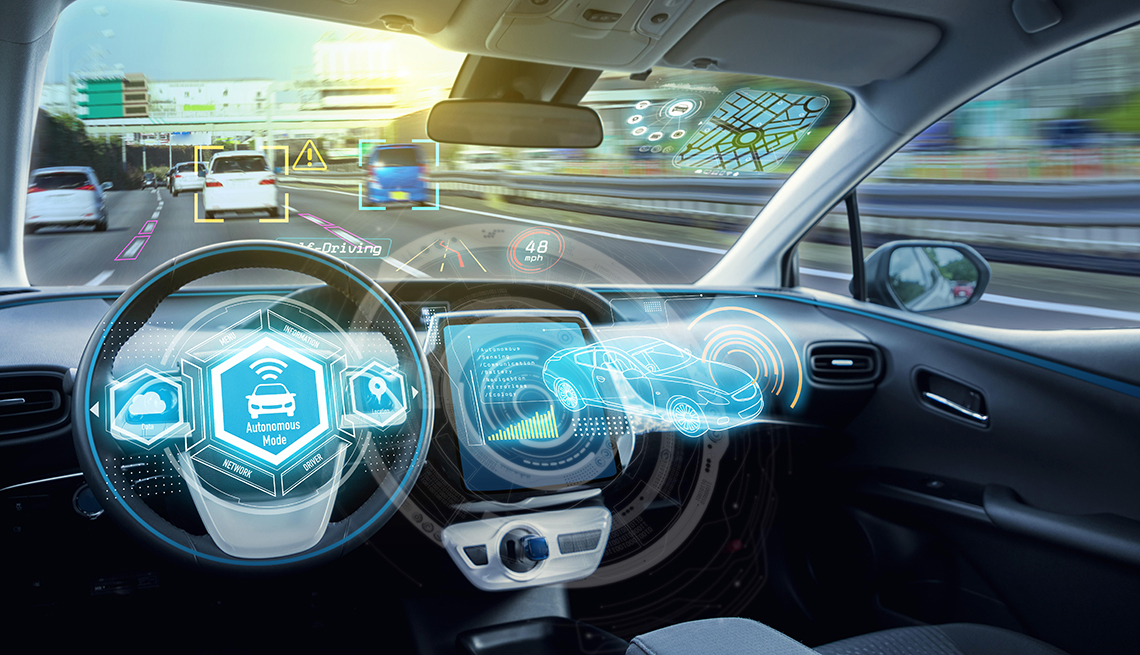
In a landmark achievement, Indian autonomous driving startup Swaayatt Robots has claimed to have developed a Level 5 autonomous vehicle, surpassing the efforts of industry giants like Tesla and Waymo. This breakthrough marks a significant milestone in the global race towards fully autonomous driving and positions India as a major player in the field of AI and robotics.
The Levels of Autonomy: A Primer
To understand the significance of Swaayatt Robots‘ achievement, it‘s important to first understand the different levels of autonomy as defined by the Society of Automotive Engineers (SAE). The SAE has established six levels of autonomy, ranging from Level 0 (no automation) to Level 5 (full automation).
| Level | Description |
|---|---|
| 0 | No automation. The human driver is responsible for all driving tasks. |
| 1 | Driver assistance. The vehicle can assist with some driving tasks, such as steering or acceleration, but the human driver is still in control. |
| 2 | Partial automation. The vehicle can perform some driving tasks, such as lane centering and adaptive cruise control, but the human driver must remain engaged and monitor the environment. |
| 3 | Conditional automation. The vehicle can perform most driving tasks, but the human driver must be ready to take control when requested by the system. |
| 4 | High automation. The vehicle can perform all driving tasks under certain conditions, such as on highways or in good weather, but a human driver may still be required in some situations. |
| 5 | Full automation. The vehicle can perform all driving tasks under all conditions, without any human intervention required. |
Achieving Level 5 autonomy is considered the holy grail of autonomous driving, as it would enable vehicles to operate safely and efficiently in all environments and under all conditions, without any human input.
The Global State of Autonomous Vehicle Technology
While several companies have made significant progress in developing autonomous vehicle technology, most are still at Level 2 or Level 3 autonomy. Tesla, for example, currently offers Level 2 autonomy with its Autopilot system, which can perform tasks like lane centering and adaptive cruise control but requires the human driver to remain vigilant and ready to take control at any moment.
Waymo, the self-driving subsidiary of Alphabet (Google‘s parent company), has achieved Level 4 autonomy in some limited contexts, such as in its autonomous taxi service in Phoenix, Arizona. However, the company has not yet demonstrated Level 5 autonomy and still requires human safety drivers in some situations.
GM Cruise, another major player in the autonomous vehicle space, has also achieved Level 4 autonomy in some contexts, such as in its autonomous ride-hailing service in San Francisco. However, like Waymo, the company has not yet demonstrated Level 5 autonomy.
Swaayatt Robots‘ Breakthrough: The Technology Behind Level 5 Autonomy
So how did Swaayatt Robots achieve what many considered to be an impossible feat? The answer lies in the company‘s innovative approach to AI and machine learning.
At the core of Swaayatt Robots‘ technology is a sophisticated sensor fusion system that combines data from multiple sensors, including cameras, LiDAR, and radar, to create a detailed and accurate representation of the vehicle‘s environment. This data is then processed by a suite of AI algorithms that enable the vehicle to perceive, understand, and navigate its surroundings.
One of the key techniques employed by Swaayatt Robots is reinforcement learning, a type of machine learning that enables the vehicle to learn from its own experiences and improve its performance over time. By continuously training its algorithms on real-world data, the vehicle can adapt to new situations and make better decisions in complex and dynamic environments.
Another important technique used by Swaayatt Robots is deep learning, a subset of machine learning that involves training artificial neural networks on vast amounts of data. By leveraging deep learning, the vehicle can recognize patterns and objects in its environment with high accuracy, enabling it to navigate safely and efficiently.
Finally, Swaayatt Robots has developed advanced computer vision algorithms that enable the vehicle to detect and track objects in real-time, even in challenging lighting conditions or in the presence of occlusions. These algorithms are critical for enabling the vehicle to avoid obstacles and make safe and timely decisions.
Navigating India‘s Unique Challenges
One of the reasons why Swaayatt Robots‘ achievement is so significant is because of the unique challenges posed by Indian roads. Unlike the well-structured and predictable roads found in many developed countries, Indian roads are often chaotic, crowded, and unpredictable.
Some of the specific challenges posed by Indian roads include:
- Unstructured lanes: Many Indian roads do not have clearly defined lanes, making it difficult for autonomous vehicles to navigate safely and efficiently.
- Mixed traffic: Indian roads are often shared by a wide variety of vehicles, including cars, trucks, buses, motorcycles, and even animal-drawn carts. This makes it challenging for autonomous vehicles to predict and respond to the behavior of other road users.
- Unpredictable pedestrian behavior: Pedestrians in India often cross roads at unexpected locations and times, making it difficult for autonomous vehicles to avoid collisions.
- Poor infrastructure: Many Indian roads are poorly maintained, with potholes, debris, and other hazards that can be difficult for autonomous vehicles to detect and avoid.
Despite these challenges, Swaayatt Robots has developed a robust and reliable autonomous driving system that can navigate Indian roads safely and efficiently. By leveraging advanced AI and machine learning techniques, the company has created a vehicle that can adapt to the unique challenges posed by Indian roads and make safe and timely decisions in complex and dynamic environments.
The Potential Impact of Level 5 Autonomy in India
The potential impact of Level 5 autonomy in India is significant, both from an economic and social perspective. Some of the key benefits of fully autonomous vehicles include:
- Improved road safety: Autonomous vehicles have the potential to significantly reduce the number of traffic accidents and fatalities on Indian roads. According to a report by the World Health Organization, India has the highest number of road traffic deaths in the world, with over 150,000 fatalities per year. By eliminating human error and improving the accuracy and reliability of driving decisions, autonomous vehicles could help to save countless lives.
- Increased access to transportation: Autonomous vehicles could help to increase access to transportation for underserved communities in India, particularly in rural areas where public transportation is limited or non-existent. By providing a safe, reliable, and affordable means of transportation, autonomous vehicles could help to improve social and economic mobility for millions of people.
- Job creation: The development and deployment of autonomous vehicles in India could create thousands of new jobs in fields like AI, robotics, and software engineering. According to a report by KPMG, the autonomous vehicle industry could create up to 1 million new jobs in India by 2025.
- Environmental benefits: Autonomous vehicles have the potential to reduce traffic congestion and improve fuel efficiency, leading to significant environmental benefits. By optimizing routes and reducing idling time, autonomous vehicles could help to reduce greenhouse gas emissions and improve air quality in India‘s cities.
Of course, the deployment of fully autonomous vehicles in India also raises important ethical and social questions. One of the key challenges is the so-called "trolley problem," which refers to the ethical dilemma faced by autonomous vehicles in situations where they must choose between two potentially harmful outcomes (e.g., hitting a pedestrian or swerving and risking the lives of the vehicle‘s occupants).
Swaayatt Robots is actively engaged in addressing these ethical challenges and has developed a robust ethical framework for its autonomous driving system. The company is also working closely with regulators and policymakers to ensure that the deployment of autonomous vehicles in India is safe, responsible, and beneficial to society as a whole.
The Future of Swaayatt Robots
With its successful demonstration of Level 5 autonomy, Swaayatt Robots is well-positioned to become a major player in the global autonomous vehicle market. The company has already received significant investment from major firms like Mahindra & Mahindra and is actively exploring partnerships and collaborations with other companies and organizations.
Looking ahead, Swaayatt Robots plans to commercialize its technology in a range of applications beyond autonomous vehicles, including agriculture, mining, and construction. The company‘s ultimate goal is to create a world where intelligent machines can work alongside humans to solve complex problems and improve quality of life for people around the world.
Some of the specific milestones on Swaayatt Robots‘ roadmap include:
- Launching a fully autonomous taxi service in select Indian cities by 2025
- Expanding its technology to other markets, including Southeast Asia and Africa, by 2030
- Developing intelligent robots for use in agriculture, mining, and construction by 2035
- Achieving Level 5 autonomy in all applications and environments by 2040
While there are certainly challenges and obstacles ahead, Swaayatt Robots‘ achievement of Level 5 autonomy represents a major breakthrough in the field of AI and robotics. With its innovative approach and commitment to social responsibility, the company is well-positioned to play a leading role in shaping the future of intelligent machines and transforming the way we live and work.
Conclusion
Swaayatt Robots‘ successful demonstration of Level 5 autonomy is a testament to the power and potential of AI and machine learning. By leveraging advanced techniques like reinforcement learning, deep learning, and computer vision, the company has created an autonomous driving system that can navigate even the most challenging environments with safety and efficiency.
The implications of this achievement are significant, both for India and for the world as a whole. Fully autonomous vehicles have the potential to save lives, increase access to transportation, create jobs, and reduce environmental impact. At the same time, they also raise important ethical and social questions that must be addressed carefully and responsibly.
As Swaayatt Robots continues to refine and expand its technology, it has the opportunity to become a major player in the global autonomous vehicle market and to help shape the future of intelligent machines. With its commitment to innovation, social responsibility, and collaboration, the company is well-positioned to lead the way in this exciting and transformative field.