
A Deep Dive into Image Segmentation Techniques: Insights for Python Developers
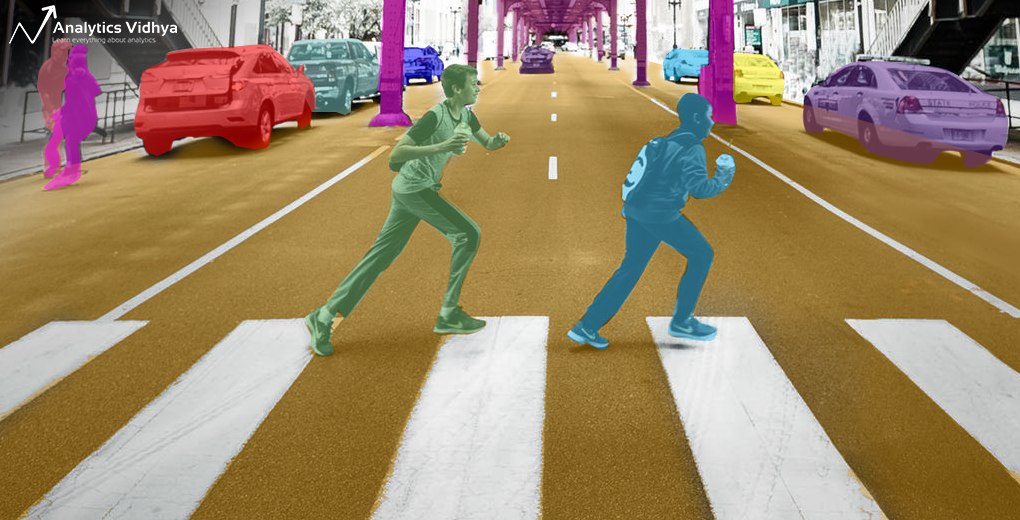
Image segmentation, the process of partitioning a digital image into multiple segments or regions, has been a fundamental problem in computer vision for decades. The goal is to simplify and/or change the representation of an image into something more meaningful and easier to analyze. Segments often represent objects, parts of objects, or regions of interest.
Over the years, image segmentation techniques have evolved significantly, driven by advancements in machine learning, especially deep learning. Today, image segmentation is a critical component in a wide range of applications, including medical image analysis, autonomous vehicles, video surveillance, and augmented reality.
In this article, we‘ll explore the landscape of image segmentation techniques, with a focus on their implementation in Python. We‘ll cover traditional methods like thresholding and clustering, as well as more advanced deep learning-based approaches. Along the way, we‘ll provide code examples, discuss trade-offs and considerations, and highlight some of the latest research breakthroughs.
The Evolution of Image Segmentation
The earliest image segmentation techniques, dating back to the 1970s, were based on thresholding. These methods involve setting a threshold value and classifying each pixel as either foreground (object) or background based on whether its intensity is above or below the threshold. While simple and computationally efficient, thresholding methods often struggle with images that have uneven illumination or low contrast between objects and background.
In the 1980s and 1990s, researchers developed more sophisticated techniques based on edge detection and region growing. Edge-based methods aim to identify points in the image where the brightness changes sharply, which often correspond to object boundaries. Region growing methods start with seed points and iteratively expand the regions by adding neighboring pixels that satisfy certain similarity criteria.
The 2000s saw the rise of graph-based techniques, which treat the image as a graph where each pixel is a node and edges connect similar pixels. Segmentation is then formulated as a graph partitioning problem. Popular graph-based methods include the normalized cuts algorithm and the efficient graph-based segmentation algorithm.
In recent years, the advent of deep learning has revolutionized image segmentation. Convolutional Neural Networks (CNNs) can learn hierarchical features from large datasets, enabling them to effectively recognize and localize objects. Architectures like Fully Convolutional Networks (FCNs), U-Net, and Mask R-CNN have pushed the state-of-the-art on benchmark datasets.
Image Segmentation by the Numbers
The image segmentation market is projected to grow from USD 8.3 billion in 2020 to USD 13.8 billion by 2025, at a CAGR of 10.7% during the forecast period (MarketsandMarkets, 2020). This growth is driven by increasing demand for image segmentation in healthcare, automotive, and surveillance applications.
In healthcare, image segmentation is crucial for analyzing medical images like X-rays, CT scans, and MRIs. It enables the identification and quantification of anatomical structures, lesions, and tumors. The global medical image analysis software market, of which segmentation is a key component, is expected to reach USD 4.4 billion by 2025 (Grand View Research, 2019).
Autonomous vehicles rely heavily on image segmentation for perceiving their environment. Segmentation helps identify roads, lanes, vehicles, pedestrians, and obstacles in real-time from camera feeds. The global autonomous vehicle market is projected to grow from 6.6 million units in 2020 to 67.5 million units by 2028 (Fortune Business Insights, 2021).
The academic research community has also witnessed a surge of interest in image segmentation. A search for "image segmentation" on Google Scholar returns over 1.3 million results, with the number of publications growing exponentially over the past two decades.
Traditional Segmentation Techniques
Thresholding
Thresholding is one of the simplest and most widely used image segmentation techniques. The idea is to classify each pixel as foreground or background based on its intensity value. If the pixel‘s intensity is above a certain threshold, it‘s considered part of the foreground; otherwise, it‘s part of the background.
There are several ways to determine the threshold value:
- Global thresholding: A single threshold value is used for the entire image. This works well if the image has a clear intensity difference between foreground and background.
- Adaptive thresholding: The threshold value varies across the image based on local neighborhood characteristics. This can handle images with uneven illumination.
- Otsu‘s method: The optimal global threshold is automatically selected by maximizing the inter-class variance between foreground and background pixels.
Here‘s an example of global thresholding using OpenCV in Python:
import cv2

# Read the image in grayscale
image = cv2.imread(‘image.jpg‘, 0)

# Apply global thresholding
threshold_value = 127
max_value = 255
_, thresholded = cv2.threshold(image, threshold_value, max_value, cv2.THRESH_BINARY)

# Display the results
cv2.imshow(‘Original‘, image)
cv2.imshow(‘Thresholded‘, thresholded)
cv2.waitKey(0)
Edge Detection
Edge detection methods aim to identify points in the image where the brightness changes sharply, typically corresponding to object boundaries. The main steps are:
- Smoothing: Reduce noise in the image to prevent false edge detection.
- Gradient calculation: Compute the gradient magnitude and direction at each pixel.
- Non-maximum suppression: Thin the edges by suppressing non-maximum gradient magnitudes.
- Thresholding: Classify pixels as edges or non-edges based on gradient magnitude thresholds.
Popular edge detection algorithms include Sobel, Prewitt, Roberts, and Canny. Canny edge detection, developed by John F. Canny in 1986, is widely considered the optimal edge detector. It uses a multi-stage algorithm to detect a wide range of edges in images.
Here‘s an example of Canny edge detection using OpenCV:
import cv2

# Read the image in grayscale
image = cv2.imread(‘image.jpg‘, 0)

# Apply Canny edge detection
low_threshold = 50
high_threshold = 150
edges = cv2.Canny(image, low_threshold, high_threshold)

# Display the results
cv2.imshow(‘Original‘, image)
cv2.imshow(‘Edges‘, edges)
cv2.waitKey(0)
Region Growing
Region growing is a pixel-based image segmentation method that starts with a set of "seed" points and grows regions by incrementally adding neighboring pixels that satisfy certain similarity criteria.
The key steps are:
- Seed selection: Choose initial seed points, which can be manual or automatic.
- Similarity criteria: Define a criteria for including pixels in the region, such as intensity, color, or texture.
- Region growth: Iteratively add neighboring pixels that satisfy the similarity criteria.
- Stopping: Terminate the growth process when no more pixels can be added.
Region growing can effectively segment regions with similar properties, but the results depend heavily on the choice of seed points and similarity criteria.
Here‘s a simple example of region growing using scikit-image:
from skimage import data, filters, color
from skimage.segmentation import flood

# Load an image
image = data.astronaut()

# Convert the image to grayscale
image_gray = color.rgb2gray(image)

# Apply edge detection for better segmentation
edges = filters.sobel(image_gray)

# Select a seed pixel
seed_point = (220, 220)

# Perform region growing
segmented = flood(edges, seed_point, tolerance=0.05)

# Display the results
fig, ax = plt.subplots(1, 2)
ax[0].imshow(image)
ax[1].imshow(segmented)
plt.show()
Advanced Deep Learning Methods
In recent years, deep learning has emerged as the dominant paradigm for image segmentation, achieving state-of-the-art results on benchmark datasets. Deep neural networks, especially Convolutional Neural Networks (CNNs), can learn hierarchical features directly from data, enabling them to effectively recognize and localize objects.
Fully Convolutional Networks (FCNs)
Fully Convolutional Networks, introduced by Long et al. in 2015, were one of the first deep learning architectures for semantic segmentation. FCNs adapt existing CNN architectures like VGG or ResNet for dense prediction by replacing the fully connected layers with convolutional layers.
The key ideas behind FCNs are:
- Convolutionalization: Replace fully connected layers with convolutional layers to output spatial maps instead of classification scores.
- Upsampling: Use transposed convolution (deconvolution) layers to upsample the coarse outputs to pixel-dense outputs.
- Skip connections: Combine semantic information from deep, coarse layers with appearance information from shallow, fine layers to produce accurate and detailed segmentations.
FCNs achieved significant improvements over traditional methods on benchmark datasets like PASCAL VOC and COCO. They laid the groundwork for subsequent architectures like U-Net and DeepLab.
U-Net
U-Net, proposed by Ronneberger et al. in 2015, is a popular CNN architecture for biomedical image segmentation. It builds upon the FCN architecture with a symmetric encoder-decoder structure and skip connections.
The main components of U-Net are:
- Encoder: A series of convolutional and max pooling layers that capture hierarchical features at different scales.
- Decoder: A series of upsampling and convolutional layers that gradually restore the spatial resolution.
- Skip connections: Direct connections between corresponding encoder and decoder layers to combine high-level semantic features with low-level spatial features.
U-Net has been widely adopted for a range of medical imaging tasks, including cell tracking, lesion detection, and organ segmentation. It has also been extended to 3D volumetric segmentation.
Mask R-CNN
Mask R-CNN, introduced by He et al. in 2017, is a powerful architecture for instance segmentation, which aims to identify and segment individual object instances in an image. It extends the Faster R-CNN object detection framework by adding a branch for predicting segmentation masks.
The key components of Mask R-CNN are:
- Backbone: A CNN like ResNet is used to extract features from the input image.
- Region Proposal Network (RPN): A small convolutional network that proposes candidate object bounding boxes.
- RoIAlign: A bilinear interpolation operation that aligns the extracted features with the input to preserve spatial information.
- Bounding Box Head: Fully connected layers that predict the class and bounding box coordinates for each RoI.
- Mask Head: A small FCN that predicts a binary segmentation mask for each RoI.
Mask R-CNN achieved state-of-the-art results on the COCO instance segmentation benchmark, with a mask AP of 37.1%. It has been widely used for applications like autonomous driving, robotics, and video analysis.
Choosing the Right Technique
With the plethora of image segmentation techniques available, selecting the appropriate one for a given application can be challenging. Here are some key factors to consider:
- Image complexity: Simple images with clear foreground-background separation may be handled effectively by thresholding or edge detection. Complex scenes with multiple objects and occlusions may require deep learning methods.
- Computational resources: Traditional methods like thresholding and edge detection are computationally efficient and can run in real-time on CPU. Deep learning methods typically require powerful GPUs for training and inference.
- Training data: Deep learning methods need large amounts of annotated data for training. If labeled data is scarce, traditional methods or transfer learning may be preferred.
- Explainability: Traditional methods like thresholding and region growing provide more transparent and interpretable segmentations. Deep learning methods can be more opaque and harder to debug.
- Application requirements: The choice of technique should be guided by the specific requirements of the application, such as accuracy, speed, memory constraints, and real-time performance.
It‘s often helpful to start with simpler methods and progressively move to more complex ones if needed. Experimenting with different techniques and hyperparameters is crucial for finding the optimal solution.
Future Directions and Challenges
Despite significant advancements, image segmentation remains an active area of research with many open challenges. Some key directions for future work include:
- Weakly supervised and unsupervised learning: Developing methods that can learn from limited or noisy annotations, or even from unlabeled data, to reduce the reliance on expensive and time-consuming manual labeling.
- Domain adaptation: Improving the generalization of segmentation models to new domains, such as from daytime to nighttime scenes, or from simulated to real-world environments.
- 3D and volumetric segmentation: Extending 2D segmentation techniques to handle 3D data, such as medical scans or point clouds, for applications in healthcare, robotics, and virtual reality.
- Real-time performance: Optimizing segmentation models for efficient inference on resource-constrained devices like mobile phones and embedded systems.
- Multimodal fusion: Combining information from multiple imaging modalities, like RGB, depth, and thermal, to improve segmentation robustness and accuracy.
Addressing these challenges will require interdisciplinary collaborations between computer vision, machine learning, and domain experts. Advances in computational hardware, like GPUs and neuromorphic chips, will also play a crucial role in enabling more powerful and efficient segmentation methods.
Conclusion
Image segmentation has come a long way from the early days of thresholding to the current state-of-the-art deep learning methods. Today, Python developers have access to a wide range of segmentation techniques and libraries, making it easier than ever to integrate segmentation into their applications.
However, image segmentation is not a solved problem. There are still many challenges and opportunities for improvement, especially in terms of robustness, efficiency, and generalization. As the demand for intelligent visual perception systems grows, image segmentation will continue to be a critical area of research and development.
We hope this deep dive into image segmentation techniques has provided you with a comprehensive understanding of the field and inspired you to explore further. Whether you‘re a researcher pushing the boundaries of computer vision or a practitioner applying segmentation to real-world problems, the future is full of exciting possibilities.
So go forth, experiment with different techniques, and contribute to the advancement of image segmentation! The Python ecosystem and the computer vision community are here to support you every step of the way.
Further Reading
- Thresholding: https://docs.opencv.org/master/d7/d4d/tutorial_py_thresholding.html
- Edge Detection: https://docs.opencv.org/master/da/d22/tutorial_py_canny.html
- Region Growing: https://scikit-image.org/docs/dev/auto_examples/segmentation/plot_region_growing.html
- Fully Convolutional Networks: https://arxiv.org/abs/1411.4038
- U-Net: https://arxiv.org/abs/1505.04597
- Mask R-CNN: https://arxiv.org/abs/1703.06870


