Introduction to Softmax Activation Function for Neural Networks

Understanding the Softmax Function
The softmax activation function, also known as softargmax or normalized exponential function, is a fundamental building block in many machine learning and deep learning models, particularly in neural networks. Its primary purpose is to convert a vector of real numbers into a probability distribution, making it highly suitable for multi-class classification tasks.
At its core, the softmax function takes an input vector z of real numbers and transforms it into a vector of probabilities. Each probability value in the output vector represents the likelihood of the input belonging to a specific class, with the sum of all probabilities equal to 1. This normalization property ensures that the output can be interpreted as a valid probability distribution.
Mathematical Definition
Let‘s delve into the mathematical definition of the softmax function to gain a deeper understanding of its workings. Given an input vector z = (z_1, z_2, …, z_K), where K is the number of classes, the softmax function σ(z) is defined as:
σ(z_i) = exp(z_i) / ∑ⱼ exp(z_j)
Here, exp(z_i) represents the exponential function applied to the i-th element of the input vector z, and the denominator ∑ⱼ exp(z_j) is the sum of the exponentials of all elements in z.
The softmax function has several notable properties:
- The output values are non-negative, as the exponential function always yields positive values.
- The sum of the output values equals 1, making it a valid probability distribution.
- The output values are monotonically related to the input values, meaning that a higher input value leads to a higher output probability.
Softmax vs. Other Activation Functions
To appreciate the significance of the softmax function, let‘s compare it with other commonly used activation functions in neural networks:
| Activation Function | Output Range | Purpose |
|---|---|---|
| Sigmoid | (0, 1) | Binary classification |
| Hyperbolic Tangent (tanh) | (-1, 1) | Hidden layers |
| Rectified Linear Unit (ReLU) | [0, ∞) | Hidden layers |
| Softmax | (0, 1) | Multi-class classification |
The sigmoid function squashes real numbers to a range between 0 and 1, making it suitable for binary classification tasks. However, when extended to multi-class problems, sigmoid treats each class independently, leading to issues like the lack of competition among classes and the possibility of multiple high probabilities.
On the other hand, softmax considers all classes simultaneously and produces a valid probability distribution. The exponential function in softmax amplifies the differences between the input values, and the normalization step ensures that the probabilities sum up to 1. This introduces competition among the classes, as an increase in the probability of one class necessarily decreases the probabilities of other classes.
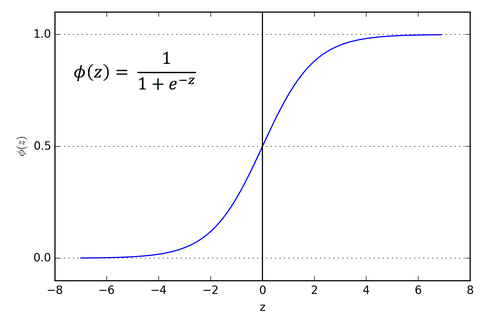
Visual comparison of common activation functions. Source: Medium
Numerical Stability and the Log-Sum-Exp Trick
One practical issue that arises when implementing the softmax function is numerical instability. When dealing with large input values, the exponential function can yield extremely large numbers, leading to overflow errors or loss of precision.
To mitigate this issue, a common technique known as the log-sum-exp trick is employed. Instead of directly computing the exponentials, we first subtract the maximum value from all inputs, compute the exponentials, and then add back the maximum value to the logarithm of the sum of exponentials. Mathematically:
softmax(z) = exp(z – max(z)) / sum(exp(z – max(z)))
This trick ensures numerical stability and avoids overflow errors, making the softmax computation more robust.
Softmax Temperature
The softmax function has a hyperparameter called the temperature, denoted as T, which controls the "confidence" of the output probabilities. The softmax function with temperature is defined as:
softmax(z/T)_i = exp(z_i/T) / ∑ⱼ exp(z_j/T)
A higher temperature (T > 1) produces a softer probability distribution, making the output probabilities more evenly distributed among classes. Conversely, a lower temperature (T < 1) results in a sharper distribution, accentuating the differences between classes and making the highest probability class more prominent.

Effect of temperature on softmax output probabilities. Source: Medium
Softmax in Deep Learning Frameworks
When implementing neural networks in popular deep learning frameworks like TensorFlow and PyTorch, the softmax function is readily available as a built-in layer or activation function. Here are a few examples:
TensorFlow:
import tensorflow as tf

logits = tf.random.normal([4, 10])  # Example logits
probabilities = tf.nn.softmax(logits)
PyTorch:
import torch
import torch.nn.functional as F

logits = torch.randn(4, 10)  # Example logits
probabilities = F.softmax(logits, dim=1)
In these examples, the logits variable represents the raw outputs (activations) of the last layer in a neural network, often referred to as logits. By applying the softmax function to the logits, we obtain the class probabilities.
Real-World Applications and Case Studies
Softmax has found widespread adoption in various domains where multi-class classification is required. Let‘s explore a few real-world applications and case studies:
-
Image Classification: Softmax is extensively used in convolutional neural networks (CNNs) for image classification tasks. In a seminal paper titled "ImageNet Classification with Deep Convolutional Neural Networks" by Krizhevsky et al., the authors employed softmax in the output layer of their CNN architecture, achieving groundbreaking results on the ImageNet dataset. Their model, known as AlexNet, attained a top-5 error rate of 15.3%, significantly outperforming previous state-of-the-art methods.
-
Natural Language Processing (NLP): Softmax is a fundamental component in many NLP tasks, such as sentiment analysis, language modeling, and machine translation. For instance, in the paper "Attention Is All You Need" by Vaswani et al., the authors introduced the Transformer architecture, which heavily relies on softmax for computing attention weights. This architecture has revolutionized NLP and achieved state-of-the-art performance on various benchmarks.
-
Recommender Systems: Softmax is employed in recommender systems to model user preferences and generate personalized recommendations. In the paper "Neural Collaborative Filtering" by He et al., the authors proposed a neural network-based approach that utilizes softmax to predict the probability of a user interacting with an item. Their model outperformed traditional collaborative filtering methods on several recommendation datasets.
These case studies highlight the significant impact of softmax in advancing the state of the art across different domains.
Advanced Topics and Extensions
Hierarchical Softmax
When dealing with large-scale classification problems involving thousands or millions of classes, the standard softmax function becomes computationally expensive. Hierarchical softmax is an extension that addresses this issue by organizing the classes into a tree-like structure.
Instead of computing the probabilities for all classes at once, hierarchical softmax traverses the tree and computes the probabilities at each node. This approach reduces the computational complexity from O(K) to O(log K), where K is the number of classes, making it more efficient for large-scale problems.
Mixture of Softmaxes
Another extension of softmax is the mixture of softmaxes, which combines multiple softmax functions to model more complex probability distributions. Each softmax component in the mixture has its own set of parameters, allowing for greater flexibility in capturing the underlying data distribution.
The mixture of softmaxes is particularly useful in scenarios where the data exhibits multimodality or when there are subgroups within classes that require separate modeling.
Frequently Asked Questions
-
What is the intuition behind using the exponential function in softmax?
- The exponential function in softmax serves two purposes. First, it ensures that the output values are always positive, as the exponential of any real number is positive. Second, it amplifies the differences between the input values, making the higher values more prominent and the lower values less significant. This amplification helps in distinguishing between classes and creating a more pronounced probability distribution.
-
Can softmax handle imbalanced datasets?
- Softmax itself does not inherently handle imbalanced datasets. It simply converts the input values into a probability distribution based on their relative magnitudes. If the dataset is imbalanced, meaning some classes have significantly more samples than others, softmax may be biased towards the majority classes. To address this issue, techniques like class weighting, oversampling, or undersampling can be applied in conjunction with softmax to balance the class representation during training.
-
How does the softmax output change when the input values are scaled?
- Scaling the input values by a constant factor does not change the softmax output probabilities. This is because the exponential function and the normalization step in softmax are both scale-invariant. Multiplying all input values by a constant will result in the same probability distribution after applying softmax. However, adding a constant to the input values will shift the output probabilities, as the relative differences between the inputs will be affected.
-
What is the connection between softmax and the cross-entropy loss?
- Softmax is often used in conjunction with the cross-entropy loss function in neural networks for multi-class classification. The cross-entropy loss measures the dissimilarity between the predicted probabilities (softmax output) and the true class labels. It quantifies the error in the predictions and provides a training signal to update the network‘s weights. The combination of softmax and cross-entropy loss is a powerful approach for optimizing neural networks in classification tasks.
Conclusion
The softmax activation function is a cornerstone of neural networks for multi-class classification tasks. Its ability to convert real-valued inputs into a valid probability distribution makes it an essential tool in various domains, including image classification, natural language processing, and recommender systems.
By understanding the mathematical properties, numerical stability considerations, and extensions of softmax, practitioners can effectively harness its power to build accurate and robust classification models. The widespread adoption of softmax in state-of-the-art deep learning architectures underscores its significance in the field.
As we continue to push the boundaries of machine learning and explore new frontiers, the softmax function remains a fundamental building block, enabling us to tackle complex classification problems with confidence and finesse.