Kickstart Guide to Becoming a M-A-D Programmer in 2026
Introduction
Welcome to the exciting world of M-A-D programming! If you‘re reading this, you‘ve likely heard the buzz around machine learning, artificial intelligence, and data science (M-A-D for short) and are curious to learn more. These cutting-edge fields are transforming industries and opening up incredible new possibilities. As an aspiring M-A-D programmer, you‘ll have the opportunity to work on some of the most interesting and impactful challenges out there.
In this guide, we‘ll cover everything you need to know to get started on your journey to becoming a M-A-D programmer. We‘ll discuss the key skills and knowledge required, the best tools and resources for learning, and the amazing career prospects available. By the end, you‘ll have a clear roadmap for kickstarting your M-A-D programming career in 2024 and beyond. Let‘s dive in!
What Does It Mean to Be a M-A-D Programmer?
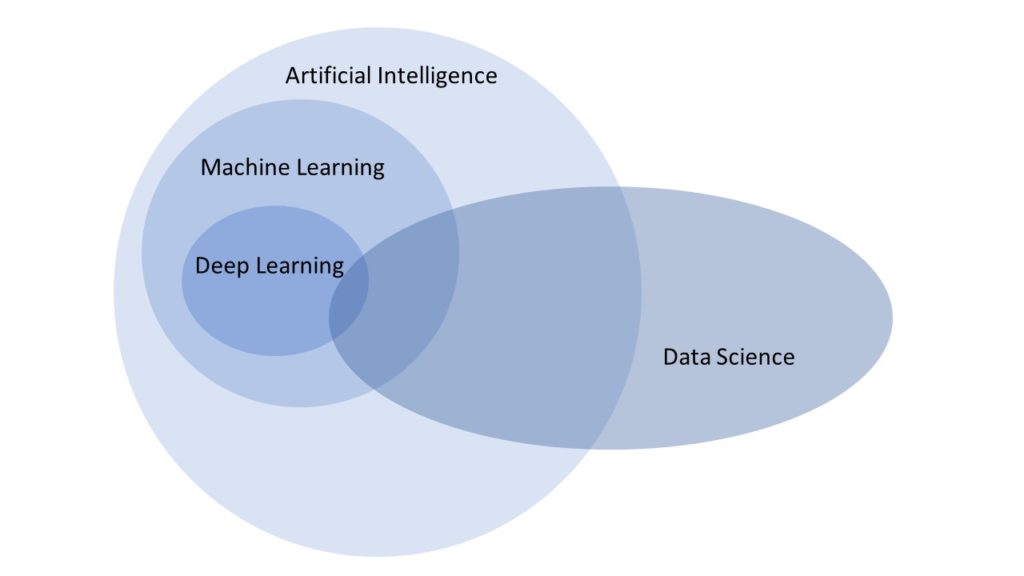
First things first, what exactly do we mean by "M-A-D programming"? At a high level, it refers to the fields of:
- Machine learning (ML): Teaching computers to learn and improve from data, without being explicitly programmed
- Artificial intelligence (AI): Creating intelligent machines that can perform tasks that typically require human intelligence
- Data science: Extracting insights and knowledge from data using scientific methods, algorithms, and systems
While these fields have a lot of overlap, they each have their own specific focus areas and techniques. As a M-A-D programmer, you‘ll likely specialize in one or more of these domains. But having a solid foundation across all three will make you a more well-rounded and effective practitioner.
Some common applications of M-A-D include:
- Developing recommendation systems for e-commerce or content platforms
- Building predictive models for finance, healthcare, marketing, and other domains
- Creating intelligent chatbots and virtual assistants
- Analyzing large datasets to uncover patterns and insights
- Automating decision-making processes and workflows
- Detecting anomalies and preventing fraud
- Powering autonomous vehicles and robotics systems
The possibilities are endless, and new use cases are emerging all the time as the capabilities of M-A-D technologies advance. It‘s an incredibly exciting space to be in!
Skills and Prerequisites for M-A-D Programming
So what does it take to become a M-A-D programmer? While you don‘t necessarily need to be a coding genius or math whiz, having a solid grasp of certain key skills will set you up for success:
Programming languages: Python and R are the most popular languages for M-A-D programming, thanks to their simplicity, power, and extensive libraries for data science and ML. Familiarity with other languages like Java, C++, or Scala is also helpful. Focus on learning the fundamentals of programming – variables, data types, conditionals, loops, functions, etc. – rather than getting hung up on language-specific syntax.
Mathematics and statistics: Many M-A-D algorithms and techniques have their roots in mathematics, particularly in the areas of calculus, linear algebra, probability, and statistics. You don‘t need a PhD in math, but comfort with concepts like derivatives, matrix operations, probability distributions, hypothesis testing, etc. will make learning M-A-D a lot smoother. If you need to brush up on your math skills, there are plenty of great online courses and resources available.
Data skills: As an M-A-D practitioner, you‘ll spend a huge portion of your time working with data – collecting it, cleaning it, exploring it, transforming it, visualizing it. Strong skills in data manipulation, querying (e.g. SQL), and analysis are a must. Familiarity with big data tools like Hadoop and Spark is also increasingly important as datasets continue to grow in size.
Machine learning & AI fundamentals: To be an effective M-A-D programmer, you need to understand the core concepts and techniques of machine learning and AI. This includes topics like supervised vs. unsupervised learning, classification vs. regression, feature engineering, model selection, neural networks, deep learning, natural language processing, etc. Focus on gaining a solid intuition for how these methods work under the hood.
Problem-solving mindset: Perhaps most importantly, M-A-D programming requires a curious, analytical mindset and a knack for creative problem-solving. You need to be able to break down complex problems, ask the right questions, formulate data-driven solutions, and communicate your findings effectively. Critical thinking and attention to detail are key. Ultimately, M-A-D is more about the approach than the tools.
The Typical M-A-D Workflow
While every M-A-D project is different, most follow a common workflow:
- Problem definition: Clearly articulate the business problem and objectives
- Data collection: Gather the relevant data needed to solve the problem
- Data exploration: Understand the data‘s structure, quality, and relationships
- Data preparation: Clean, preprocess, and transform data into suitable format for modeling
- Modeling: Train machine learning models on the data to uncover patterns
- Evaluation: Assess model performance and refine if needed
- Deployment: Integrate models into production applications to drive decisions
Notably, the vast majority of time in M-A-D projects is spent on data-related tasks rather than actual coding. It‘s not uncommon for data collection and preparation to take up 70-80% of the overall effort. Building effective models requires having high-quality, well-understood data first and foremost. Keep this in mind as you‘re honing your skills!
Resources for Learning M-A-D
One of the great things about learning M-A-D is the wealth of resources available online, many of which are free or low-cost. Some top recommendations:
Online courses & bootcamps:
- Coursera: Andrew Ng‘s classic Machine Learning course; deeplearning.ai specialization
- Udacity: Intro to Machine Learning; Data Scientist Nanodegree
- Kaggle: Courses on Python, ML, data visualization (plus competitions for practice!)
- Fast.ai: Top-notch deep learning courses
- DataCamp: Interactive courses on data science and ML
Books:
- "Python Machine Learning" by Sebastian Raschka
- "Hands-On Machine Learning with Scikit-Learn and TensorFlow" by Aurelien Geron
- "Data Science from Scratch" by Joel Grus
- "Pattern Recognition and Machine Learning" by Christopher Bishop
Websites & blogs:
- Machine Learning Mastery
- KDnuggets
- Towards Data Science on Medium
- Analytics Vidhya
- Dataquest
YouTube channels:
- sentdex
- 3Blue1Brown
- StatQuest
- Corey Schafer
- Tech With Tim
The key is to mix passive learning from courses and books with hands-on practice through projects, competitions, and experiments. The more you get your hands dirty with real data and code, the faster your skills will grow!
M-A-D Career Opportunities
The demand for M-A-D talent has exploded in recent years and shows no signs of slowing down. According to LinkedIn, AI and machine learning jobs have grown 74% annually over the past few years and are consistently ranked among the top emerging jobs. Data scientist has been named the #1 job in America by Glassdoor for several years running.
Some common job titles in the M-A-D space include:
- Data Scientist
- Machine Learning Engineer
- AI Specialist
- Business Intelligence Analyst
- Statistician/Data Analyst
- Research Scientist
- Data Architect
Salaries are highly competitive, with median base pay in the $100-150k range in the U.S. for data scientists and ML engineers. Top companies hiring for these roles include Google, Facebook, Amazon, Microsoft, IBM, Uber, Airbnb, and many more. There are also plenty of opportunities at smaller startups, labs, and research institutions working on cutting-edge applications.
As M-A-D technologies continue to advance and mature, the types of problems we‘ll be able to tackle will only grow in scope and complexity. From healthcare to finance to entertainment, virtually every industry is being transformed through the power of data. There‘s never been a more exciting time to dive in and make your mark!
Conclusion
Becoming a M-A-D programmer takes dedication and hard work, but the payoff is well worth it. You‘ll get to work on some of the most fascinating challenges out there and directly impact the ways we live and work. By committing to continuously learning, staying abreast of the latest techniques, and honing your craft, you‘ll be well on your way to a fulfilling career at the forefront of innovation.
We covered a lot of ground in this guide, but it‘s really just the tip of the iceberg. There‘s so much more to learn and explore in the world of M-A-D programming. The most important thing is to get started and keep pushing forward, one day and one project at a time.
Remember, everyone starts as a beginner. With curiosity, persistence, and a growth mindset, you‘ll be surprised how quickly you can level up your skills and start tackling real problems. The world of M-A-D programming is waiting for you. Are you ready to dive in?