
Jepson Taylor: Trailblazing the Path from Chemical Engineering to AI Entrepreneurship
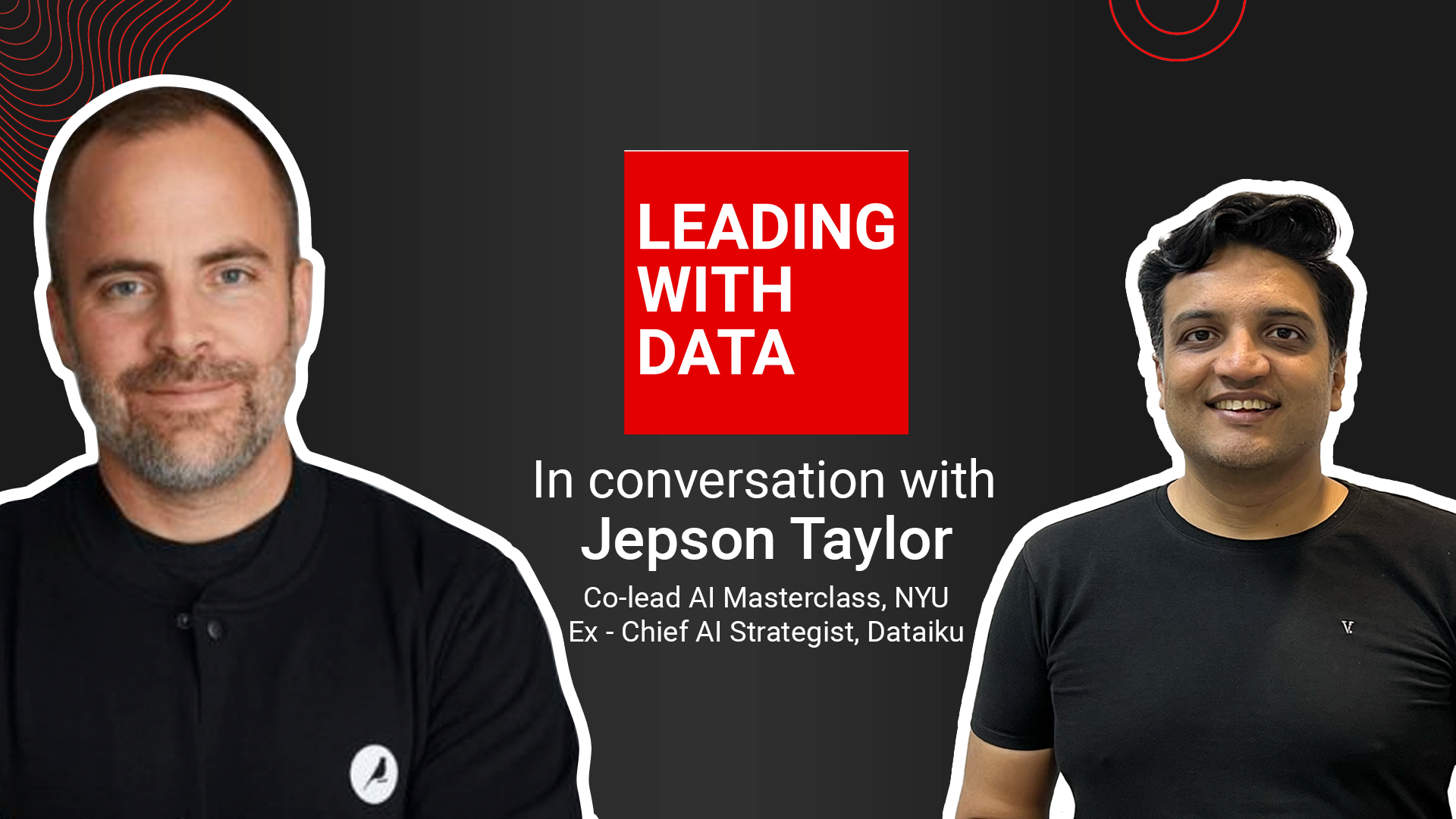
In the dynamic and rapidly evolving world of artificial intelligence (AI), Jepson Taylor stands out as a true visionary. With a remarkable journey that began in chemical engineering and led to his current roles as the Co-lead of the AI Masterclass at NYU and former Chief AI Strategist at Dataiku, Taylor has consistently pushed the boundaries of what‘s possible with AI and machine learning.
Throughout his career, Taylor has demonstrated a unique ability to bridge the gap between cutting-edge technology and practical applications, driving innovation in fields ranging from healthcare to drone technology. His insights into the future of AI, particularly the rise of generative AI and its potential to pave the way for artificial general intelligence (AGI), have positioned him as a leading voice in the industry.
In this comprehensive article, we‘ll delve into Jepson Taylor‘s fascinating journey, exploring the pivotal moments and key lessons that have shaped his path. From his early experiences with programming and AI to his successful startup acquisition and current ventures, we‘ll examine how Taylor has consistently stayed ahead of the curve in this fast-paced field. Along the way, we‘ll highlight his groundbreaking work, share his predictions for the future of AI, and provide actionable insights for aspiring AI entrepreneurs and professionals.
The Foundation: Early Experiences with Programming and AI
Jepson Taylor‘s journey into the world of AI began during his time as a chemical engineering student. Despite limited exposure to programming in his coursework, two formative experiences ignited his passion for the field.
The first was an e-commerce company he founded while still in school. This venture provided Taylor with a solid foundation in web programming and introduced him to the challenges and rewards of entrepreneurship. The second was a transformative numerical methods class, where an inspiring professor introduced him to genetic algorithms and simulated annealing. This exposure to the potential of autonomous computing systems sparked Taylor‘s fascination with AI and set him on a path that would define his career.
As Taylor progressed through his engineering studies, he began incorporating programming extensions into his projects, even when they weren‘t strictly required. His enthusiasm for the field was so great that he once received a reprimand for doing satellite image processing during a chemical engineering internship. These early experiences laid the groundwork for Taylor‘s transition from chemical engineering to AI, a journey that would be filled with both challenges and triumphs.
Navigating the Transition: From Chemical Engineering to AI Entrepreneurship
The decision to pivot from a career in chemical engineering to one in AI was not an easy one for Jepson Taylor. Initially, he had planned to pursue an MD-PhD, combining his interests in medical research and programming. However, as he delved deeper into the world of AI, he realized that he could potentially make a more significant impact in this field than in healthcare.
This realization marked a turning point in Taylor‘s journey, but the transition was not without its obstacles. Leaving behind the stability of a traditional engineering career path to pursue a relatively new and rapidly evolving field required a leap of faith and a willingness to embrace uncertainty.
One of the most significant challenges Taylor faced during this transition was the need to continuously update his skills and knowledge in a field that was advancing at breakneck speed. The rise of deep learning, in particular, represented a major shift in the AI landscape, and Taylor recognized the need to quickly adapt to this new paradigm.
To navigate this transition successfully, Taylor drew on his entrepreneurial spirit and his passion for continuous learning. He sought out opportunities to collaborate with like-minded individuals, attended conferences and workshops to stay up-to-date with the latest developments in AI, and was not afraid to take calculated risks when presented with promising opportunities.
The Deep Learning Revolution and Taylor‘s Startup Success
One such opportunity arose in 2016 when Taylor and his co-founder participated in a pitch competition in Utah. They presented an innovative AutoML solution that leveraged the power of deep learning to deliver analysis results in under 40 seconds. The data quality achieved by their solution was remarkable, and it quickly became clear that deep learning was the way forward.
Recognizing the immense potential of this technology, Taylor and his co-founder made the bold decision to quit their jobs and pursue their startup full-time. This move, which Taylor describes as the defining moment in his transition from an "entrepreneur" to a true entrepreneur, was not without risk. However, their gamble paid off when they secured a contract with Teal Drone to develop deep learning applications for drone technology.
From there, the startup‘s growth was meteoric. They successfully raised $600,000 in funding and built a talented team of AI experts. Despite receiving multiple acquisition offers in their first year, Taylor and his co-founder chose to hold out for the right opportunity. Three years later, their patience was rewarded when they sold the company to DataRobot, a leading enterprise AI platform.
The success of Taylor‘s startup can be attributed to several key factors. First and foremost was the team‘s deep expertise in AI and their ability to stay at the forefront of the rapidly evolving field of deep learning. Additionally, Taylor‘s experience in entrepreneurship, gained through his early e-commerce venture, provided a solid foundation for navigating the challenges of running a startup.
Another critical factor was the startup‘s focus on practical, real-world applications of AI. By partnering with companies like Teal Drone, they were able to demonstrate the tangible benefits of their technology and attract the attention of investors and potential acquirers.
The acquisition by DataRobot marked a significant milestone in Taylor‘s career, but it was far from the end of his journey in AI. In his role as Chief AI Strategist at DataRobot, he would go on to make significant contributions to the field, particularly in the area of generative AI.
The Rise of Generative AI and the Path to AGI
In recent years, the development of generative AI has been one of the most exciting and transformative aspects of the field. Generative AI refers to AI systems that can create new content, such as images, music, or text, based on learned patterns and rules. The potential applications of this technology are vast, ranging from creative industries to scientific research and beyond.
For Jepson Taylor, the rise of generative AI represents a crucial stepping stone on the path to achieving AGI. AGI, or artificial general intelligence, refers to the development of AI systems that can perform any intellectual task that a human can. While the creation of AGI has long been a holy grail of the field, many experts believe that generative AI could be the key to unlocking this potential.
Taylor‘s "aha" moment regarding the potential of generative AI came with the release of ChatGPT, a state-of-the-art language model developed by OpenAI. ChatGPT‘s ability to engage in human-like conversation and perform a wide range of language tasks, from answering questions to writing creative fiction, was a revelation for Taylor.
Seeing ChatGPT‘s remarkable knowledge retrieval capabilities convinced Taylor that the path to AGI might be shorter than previously thought. He describes generative AI as the "crack in the dam" that could lead to a full AGI or singularity, a hypothetical future point at which AI surpasses human intelligence and transforms society in ways we cannot yet imagine.
Taylor‘s fascination with generative AI led him to explore the technology further, pushing the boundaries of what was possible. In one particularly remarkable experiment, he prompted GPT-4, an advanced version of the language model, to ask its own questions out of curiosity rather than simply responding to human input. When GPT-4 inquired about the possibility of sentient beings in a parallel universe where time moves backward, Taylor was struck by the profound implications of this technology.
The potential of generative AI is not limited to language tasks. Taylor envisions a future in which generative algorithms revolutionize fields such as healthcare, finance, and scientific research. By enabling AI systems to generate novel solutions to complex problems, generative algorithms could accelerate innovation and discovery in ways that were previously unimaginable.
Generative Algorithms and the Future of AI-Written Code
Looking to the future, Jepson Taylor predicts that the next major breakthrough in AI will come from the development of generative algorithms. Unlike traditional AI algorithms, which are designed and implemented by human programmers, generative algorithms would be created by AI systems themselves.
The concept of AI-written code may seem like science fiction, but Taylor believes that it will become a reality within the next three years. He envisions a future in which every significant algorithm is rewritten by AI, rather than by human programmers. This shift could have profound implications for the field of software development, potentially reducing the time and cost of creating new applications while also enabling the development of more sophisticated and efficient algorithms.
One potential application of generative algorithms that Taylor is particularly excited about is in the field of healthcare. By enabling AI systems to generate novel drug designs or treatment protocols, generative algorithms could accelerate the pace of medical discovery and help to address some of the world‘s most pressing health challenges.
Taylor also foresees the development of SaaS (Software as a Service) platforms that allow users to input a specific problem or use case and receive a custom algorithm generated by AI in response. This could democratize access to advanced AI capabilities and enable businesses and organizations of all sizes to harness the power of AI to solve complex problems.
Educating the Next Generation of AI Leaders
In addition to his work as an entrepreneur and AI strategist, Jepson Taylor is passionate about educating the next generation of AI leaders. As the Co-lead of the AI Masterclass at NYU, he shares his expertise and insights with students and professionals looking to stay at the forefront of this rapidly evolving field.
The AI Masterclass focuses on the latest developments in AI, with a particular emphasis on generative AI and the emerging field of generative algorithms. By providing students with hands-on experience working with cutting-edge AI technologies, the program aims to prepare them for the challenges and opportunities of the AI-driven future.
One of the key themes of Taylor‘s teaching is the importance of ethics and responsible AI development. As AI systems become more powerful and autonomous, it is crucial that the next generation of AI leaders is equipped with the knowledge and skills necessary to ensure that these technologies are developed and deployed in a way that benefits society as a whole.
To this end, Taylor emphasizes the importance of diversity and inclusion in AI. He believes that bringing a wide range of perspectives and experiences to the field is essential for creating AI systems that are fair, unbiased, and aligned with human values. By actively working to promote diversity in AI education and research, Taylor hopes to contribute to a future in which AI benefits all of humanity.
Lessons from an AI Pioneer: Insights for Aspiring Entrepreneurs
For aspiring AI entrepreneurs and professionals, Jepson Taylor‘s journey offers a wealth of insights and lessons learned. Perhaps the most important of these is the value of continuous learning and adaptation in a field that is constantly evolving.
As Taylor‘s own experience demonstrates, the key to success in AI is not just technical expertise but also the ability to stay ahead of the curve and anticipate the next big breakthrough. This requires a willingness to take risks, embrace uncertainty, and continuously update one‘s skills and knowledge.
Another key lesson from Taylor‘s journey is the importance of building a strong and diverse team. The success of his startup can be attributed in large part to the expertise and dedication of the team he assembled, which included seasoned professionals from a range of backgrounds and disciplines.
Taylor advises aspiring entrepreneurs to prioritize hiring individuals who are not only technically skilled but also able to take ownership of their roles and contribute to the overall vision and strategy of the company. He also stresses the importance of creating a culture of collaboration, experimentation, and continuous improvement, in which team members feel empowered to take risks and learn from their failures.
Finally, Taylor‘s experience highlights the importance of effective communication and storytelling in the world of AI. As he discovered during his time at DataRobot, the ability to translate complex technical concepts into compelling narratives that resonate with diverse audiences is essential for driving adoption and investment in AI technologies.
For aspiring AI leaders, developing strong communication and storytelling skills can be just as important as technical expertise. By learning to craft compelling narratives around the potential of AI to transform industries and solve real-world problems, entrepreneurs and professionals can help to build broader support for and understanding of these technologies.
Conclusion
Jepson Taylor‘s remarkable journey from chemical engineering to AI entrepreneurship is a testament to the transformative power of passion, perseverance, and a willingness to embrace change. Through his groundbreaking work in generative AI, his successful startup, and his ongoing efforts to educate and inspire the next generation of AI leaders, Taylor has established himself as a true pioneer in the field.
As we look to the future, the insights and predictions that Taylor offers provide a glimpse into a world in which AI is not just a tool but a collaborative partner in solving some of humanity‘s greatest challenges. From healthcare to finance to creative industries, the potential applications of generative AI and generative algorithms are vast and exciting.
For aspiring AI entrepreneurs and professionals, Taylor‘s journey serves as a roadmap and an inspiration. By embracing continuous learning, taking calculated risks, and staying at the forefront of the latest developments in the field, they too can shape the future of AI and make a meaningful impact on the world.
As the field of AI continues to evolve at a rapid pace, the importance of leaders like Jepson Taylor who can bridge the gap between cutting-edge technology and practical application will only continue to grow. By following in his footsteps and building on his legacy, the next generation of AI pioneers will help to ensure that the transformative potential of this technology is realized in a way that benefits all of humanity.


