Microsoft Azure Brings ChatGPT to the Enterprise, Unleashing a New Wave of AI Innovation
In a move that is set to accelerate the adoption of conversational AI in the business world, Microsoft has announced the general availability of ChatGPT through its Azure OpenAI Service. This powerful integration allows enterprises to access the state-of-the-art natural language capabilities of OpenAI‘s flagship model within their own Microsoft cloud environments. By bringing ChatGPT to Azure, Microsoft is providing organizations with a secure, scalable, and compliant path to unlocking the immense potential of generative AI.
Seamless Integration with Azure Services and Tools
One of the key advantages of ChatGPT on Azure is how seamlessly it integrates with the rich ecosystem of services and tools already available on the platform. Developers can access the model through a set of simple REST APIs, making it easy to embed conversational capabilities into applications built with popular frameworks like .NET, Java, Node.js, and Python.
But the integration goes much deeper than just API access. ChatGPT can be combined with other Azure cognitive services like speech recognition, computer vision, and language understanding to create even more sophisticated AI systems. It can also be trained on enterprise-specific data using Azure Machine Learning, allowing companies to create highly customized conversational experiences.
For example, a retailer could use Azure Cognitive Search to index its product catalog, customer reviews, and support articles, then train ChatGPT on this data to provide instant, personalized shopping advice. A healthcare provider could combine ChatGPT with Azure Text Analytics for health to build a virtual assistant that can triage patient inquiries and provide basic medical guidance. The possibilities are virtually endless.
Under the Hood: A Closer Look at the Technology
So what exactly is ChatGPT, and how does it work? At its core, ChatGPT is a large language model (LLM) – a deep learning system trained on a massive amount of text data to predict the likelihood of a given word or phrase appearing in a particular context. By ingesting billions of pages of web content, books, articles, and other sources, ChatGPT has developed a remarkable ability to understand and generate human-like text.
The model architecture used by ChatGPT is known as a Transformer, which has become the dominant approach for building LLMs in recent years. Transformers rely on a mechanism called self-attention to weigh the relevance of each word in an input sequence to every other word, allowing the model to capture long-range dependencies and generate more coherent output.
ChatGPT takes this architecture to new heights with its unprecedented scale. The model contains 175 billion parameters – the mathematical weights that determine its behavior – making it one of the largest AI systems ever created. This scale allows ChatGPT to perform at a level that was previously thought impossible, exhibiting remarkable fluency, knowledge, and even reasoning abilities.
On Azure, ChatGPT is implemented using the InstructGPT technique developed by OpenAI. This approach fine-tunes the base model using human feedback, allowing it to follow instructions and align more closely with user intent. The result is a more controllable and stable model that behaves in predictable ways and can be customized for specific use cases.
Empowering Enterprises Across Industries
The potential applications for ChatGPT in the enterprise are vast and span virtually every industry. Here are just a few examples of how this technology could transform key sectors:
-
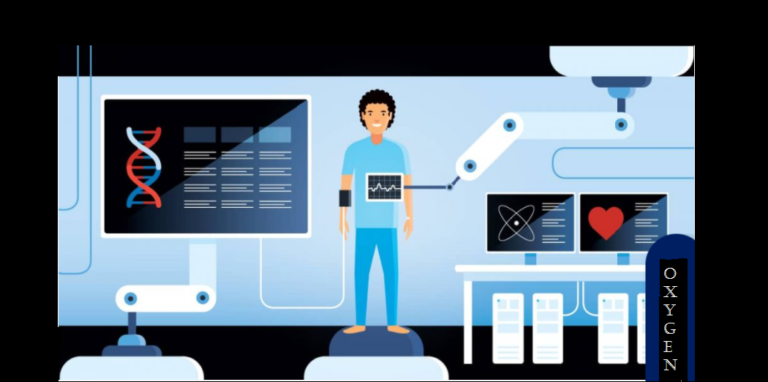
Healthcare: ChatGPT could be used to build virtual health assistants that can provide basic medical advice, triage symptoms, and guide patients to the right care. It could also assist with clinical documentation, helping doctors generate more accurate and complete notes from patient encounters.
-
Financial Services: Banks and insurance companies could use ChatGPT to provide personalized financial guidance, answer customer questions, and automate routine tasks like account updates and claims processing. The model could also be trained on market data to provide instant insights and recommendations to traders and investors.
-
Retail: Retailers could harness ChatGPT to create intelligent shopping assistants that can provide product recommendations, answer questions, and even handle customer service inquiries. The model could also be used to generate product descriptions, marketing copy, and other content at scale.
-
Manufacturing: ChatGPT could be integrated with industrial IoT platforms to provide predictive maintenance guidance, assist with troubleshooting, and optimize production processes. It could also be used to create intelligent chatbots for field service technicians, providing them with instant access to manuals, schematics, and expert knowledge.
The list goes on – from education and government to transportation and media, there is hardly a sector that couldn‘t benefit from the power of conversational AI. And with Azure OpenAI Service, enterprises now have a clear path to realizing this value while ensuring the highest standards of security, privacy, and compliance.
Navigating the Challenges of Enterprise Deployment
Of course, implementing ChatGPT in an enterprise setting is not without its challenges. Like any powerful technology, it requires careful planning, governance, and oversight to ensure responsible and effective use.
One key consideration is data management. To get the most value from ChatGPT, organizations will need to train the model on their own proprietary data – a process that involves significant data engineering and quality control efforts. They will also need to establish clear policies around data privacy and security, particularly when dealing with sensitive customer or patient information.
Another challenge is user education and change management. While ChatGPT is remarkably capable, it is not a magic bullet. Employees will need guidance on how to effectively prompt the model, interpret its outputs, and incorporate its insights into their workflows. Organizations will also need to be transparent about the limitations and potential biases of the technology, setting clear expectations for what it can and cannot do.
Finally, there are important ethical considerations to navigate. Like all AI systems, ChatGPT has the potential to amplify existing societal biases and produce harmful or misleading content if not properly controlled. Organizations will need to work closely with their AI governance teams to establish guardrails and monitoring processes to mitigate these risks.
The Competitive Landscape: Microsoft‘s Leadership in Enterprise AI
Microsoft is not the only tech giant vying for leadership in the enterprise AI space. Google, Amazon, IBM, and others have all released their own powerful language models and AI platforms in recent months. And a new crop of well-funded startups like Anthropic and Inflection AI are nipping at the heels of established players.
But Microsoft has several key advantages that position it well for success. First and foremost is its close partnership with OpenAI, the creator of ChatGPT and other cutting-edge AI technologies. Microsoft was an early investor in OpenAI and has collaborated closely with the company to bring its models to Azure. This gives Microsoft a level of access and expertise that is hard for competitors to match.
Microsoft also benefits from its deep experience serving enterprise customers and its comprehensive portfolio of cloud services. With Azure, companies can access not just ChatGPT but a full suite of AI and machine learning tools, as well as core infrastructure and platform services. This allows for a level of integration and customization that is difficult to achieve with standalone AI products.
Perhaps most importantly, Microsoft has demonstrated a genuine commitment to the responsible development and deployment of AI. Through initiatives like its AI Principles and Office of Responsible AI, the company has taken a leadership role in addressing the ethical and societal implications of this powerful technology. As enterprises grapple with these complex issues, they are likely to gravitate toward partners who share their values and can help them navigate uncharted waters.
The Economic Impact: Projecting the Growth of Enterprise Conversational AI
The market for enterprise conversational AI is poised for explosive growth in the coming years. According to a recent report by Grand View Research, the global chatbot market is expected to reach $102.29 billion by 2030, representing a compound annual growth rate (CAGR) of 34.6% over the forecast period.
But this may just be the tip of the iceberg. As language models like ChatGPT become more advanced and accessible, they have the potential to transform knowledge work across industries. By automating routine tasks, augmenting human creativity, and providing instant access to expert knowledge, conversational AI could drive unprecedented gains in productivity and innovation.
Consider the impact on customer service, for example. A recent study by Juniper Research found that chatbots are expected to save businesses $11 billion annually by 2025, up from $6 billion in 2022. But cost savings are just part of the story. By providing instant, personalized support 24/7, chatbots can dramatically improve the customer experience and drive higher satisfaction and loyalty.
Similar transformative effects could be seen in areas like healthcare (improved patient outcomes and reduced provider burnout), education (personalized learning and instant feedback), and finance (faster, more accurate decision-making and risk assessment). The potential economic impact is staggering.
Of course, realizing this value will require significant investment and effort. Enterprises will need to build new capabilities in areas like data management, AI governance, and user experience design. They will also need to rethink traditional organizational structures and processes to take full advantage of AI-powered automation and augmentation.
But the rewards for those who get it right could be immense. According to a recent report by McKinsey Global Institute, AI could deliver an additional economic output of around $13 trillion by 2030, boosting global GDP by about 1.2% annually. And conversational AI is likely to be one of the key drivers of this growth.
Looking Ahead: The Future of Human-AI Collaboration
As we look to the future, it‘s clear that conversational AI will play an increasingly central role in the way we work and live. But it‘s important to remember that this technology is not a replacement for human intelligence, but rather an augmentation of it.
At its best, ChatGPT and other language models will serve as powerful tools for enhancing human creativity, knowledge, and decision-making. They will take over the mundane, repetitive aspects of knowledge work, freeing up people to focus on higher-level tasks that require judgment, empathy, and imagination. And they will provide a natural, intuitive interface for accessing the vast stores of information and expertise that reside within organizations.
But to get there, we will need to approach the development and deployment of these systems with great care and intentionality. We will need to prioritize transparency, fairness, and accountability at every step of the process, from data collection and model training to user interface design and outcome measurement.
Microsoft‘s release of ChatGPT on Azure is an important step in this direction. By providing enterprises with a secure, compliant, and customizable platform for building conversational AI applications, Microsoft is helping to democratize access to this transformative technology. And by leading the way in responsible AI development, the company is setting a positive example for others to follow.
As more enterprises adopt and scale ChatGPT and other language models in the coming years, we can expect to see a profound shift in the way work gets done. But this shift will be driven not just by the technology itself, but by the choices we make around how to use it. By keeping human values and needs at the center of the conversation, we can ensure that the future of enterprise AI is one that benefits us all.