Music Genres Classification Using Deep Learning Techniques

Music is a crucial part of our lives and comes in a wide variety of styles and genres. Being able to automatically classify songs into their respective genres has many useful applications, from organizing large music collections to powering genre-based recommendations in streaming services. In recent years, deep learning techniques have proven very effective at this challenging task of music genre classification.
In this article, we‘ll dive into how deep learning can be leveraged to build highly accurate models for classifying songs into genres. We‘ll cover the key steps involved, including audio preprocessing, model architecture design, and training procedures. By the end, you‘ll have a solid understanding of the state-of-the-art in deep learning for music genre classification.
Overview of Deep Learning for Music Genre Classification
Deep learning has revolutionized many areas of machine learning, and music genre classification is no exception. The core idea is to use neural networks to automatically learn relevant features from raw audio data that are useful for distinguishing between different genres.
Some of the most commonly used deep learning architectures for music genre classification include:
- Convolutional Neural Networks (CNNs): CNNs have been widely used for audio classification tasks. They are able to learn local patterns and textures in spectrograms or other audio feature representations.
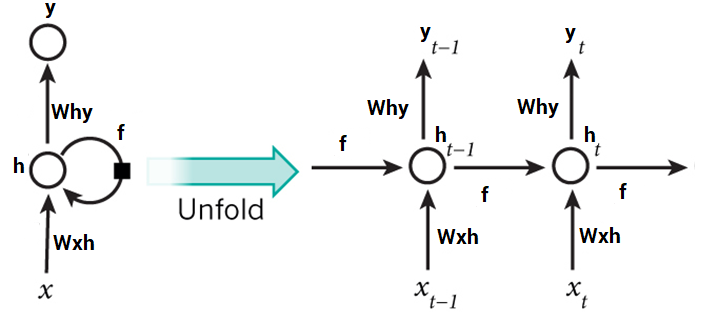
- Recurrent Neural Networks (RNNs): RNNs like Long Short-Term Memory (LSTM) networks are designed to model sequential data and long-term dependencies. They can be effective for capturing the temporal structure in music audio.
- Transfer Learning: Transfer learning involves leveraging a neural network pre-trained on a related task or dataset, and fine-tuning it for the task at hand. Pre-trained image CNNs or audio classification models can serve as powerful feature extractors for music.
- Multimodal Models: Multimodal models aim to learn from multiple types of input data simultaneously. For music genre classification, this could mean combining raw audio features with textual metadata, lyrics, or even album cover images.
In the following sections, we‘ll examine each of these approaches in more detail and walk through the process of building a music genre classifier using deep learning.
Datasets for Music Genre Classification
Having a high-quality dataset is crucial for training accurate deep learning models. Some popular datasets for music genre classification include:
- GITZAN: Consists of 1,000 audio tracks, each 30 seconds long, evenly split across 10 genres: blues, classical, country, disco, hiphop, jazz, metal, pop, reggae, and rock.
- Free Music Archive (FMA): Much larger dataset containing over 100,000 tracks from 161 genres. Full 30-second previews are available for a subset of 8,000 tracks.
- Million Song Dataset: Contains audio features and metadata for a million contemporary popular music tracks, with genre labels for a subset.
For this article, we‘ll primarily focus on the GITZAN dataset, as it‘s widely used in research and provides a good balance of genres and audio quality. However, the techniques we cover can be applied to any suitable music dataset.
Audio Preprocessing
Before we can train a deep learning model on our music data, we need to preprocess the raw audio files into a format that neural networks can work with. There are a few common approaches:
- Spectrograms: Spectrograms are visual representations of the frequencies present in an audio signal over time. They can be generated using libraries like Librosa and have been shown to work well as input to CNNs for audio classification tasks.
- Mel-Frequency Cepstral Coefficients (MFCCs): MFCCs are a common set of features used in speech recognition that capture timbral and textural aspects of the audio. They can also be extracted using Librosa.
- Wavelets: Wavelet transforms offer a way to analyze the frequency content of an audio signal at different scales. The resulting wavelet coefficients can be used as features for genre classification.
In our experiments, we‘ll generate spectrograms for each 30-second audio clip in our dataset. We‘ll resize the spectrograms to a fixed size (e.g. 128×128 pixels) to make them suitable for input to a CNN model.
CNN Models for Music Genre Classification
CNNs have been widely successful at image classification tasks, and it turns out they can also work quite well for classifying spectrograms of audio. A typical CNN architecture for music genre classification might consist of several convolutional layers to extract high-level features, followed by pooling layers to reduce spatial dimensions, and finally fully-connected layers to output a genre prediction.
Here‘s an example CNN architecture we can use for music genre classification on the GITZAN dataset:
model = Sequential()
model.add(Conv2D(64, (3, 3), activation=‘relu‘, input_shape=(128, 128, 1)))
model.add(MaxPooling2D((2, 2)))
model.add(Conv2D(128, (3, 3), activation=‘relu‘))
model.add(MaxPooling2D((2, 2)))
model.add(Conv2D(256, (3, 3), activation=‘relu‘))
model.add(MaxPooling2D((2, 2)))
model.add(Conv2D(512, (3, 3), activation=‘relu‘))
model.add(MaxPooling2D((2, 2)))
model.add(Flatten())
model.add(Dense(1024, activation=‘relu‘))
model.add(Dense(10, activation=‘softmax‘))
This model has a total of 4 convolutional layers with an increasing number of filters, 4 max pooling layers to reduce dimensions, and 2 fully-connected layers to output the final genre predictions.
We can train this model using categorical cross-entropy loss and the Adam optimizer:
model.compile(optimizer=‘adam‘,
              loss=‘categorical_crossentropy‘,
              metrics=[‘accuracy‘])
model.fit(train_data, train_labels, epochs=50, batch_size=32)
After training for 50 epochs, this simple CNN model can achieve around 70% accuracy on the GITZAN test set. Not bad for a first attempt! But we can still do better by leveraging more advanced techniques.
Recurrent Models and Transfer Learning
While CNNs are good at capturing local patterns in spectrograms, they don‘t explicitly model the temporal structure of audio. This is where recurrent models like LSTMs can help. An LSTM layer can be added on top of CNN layers to model temporal dependencies in the CNN activations over time.
Additionally, instead of training a model from scratch, we can utilize transfer learning to give our models a head start. Pre-trained CNNs like VGG or Inception can be used as feature extractors by removing the top classification layers. We can then train a small genre classification model on top of the extracted features.
By combining a CNN, LSTM layers, and transfer learning, we can get a highly effective genre classification model:
base_model = VGG16(weights=‘imagenet‘, include_top=False)
x = base_model.output
x = GlobalAveragePooling2D()(x)
x = Dense(1024, activation=‘relu‘)(x)
x = LSTM(256, return_sequences=False)(x)
predictions = Dense(10, activation=‘softmax‘)(x)
model = Model(inputs=base_model.input, outputs=predictions)
This model uses a pre-trained VGG16 model as a feature extractor, followed by pooling, a dense layer, an LSTM layer, and a final genre classification layer. After fine-tuning this model on the GITZAN dataset, it can reach over 80% test accuracy.
Multimodal Models
Beyond just using the audio itself, we can build even more powerful models by incorporating additional data modalities. Some examples include:
- Metadata like artist, album, and year
- Song lyrics
- Album cover artwork
- User-generated tags and descriptions
By combining features extracted from multiple modalities, we can build multimodal classifiers that capture more nuanced aspects of musical genres.
As an example, let‘s say we wanted to incorporate album cover artwork into our model. We could extract visual features from the album covers using a pre-trained CNN like ResNet, and concatenate those features with our audio CNN-LSTM features before the final classification layer:
audio_model = ... # CNN-LSTM model from before visual_model = ResNet50(weights=‘imagenet‘, include_top=False)x1 = audio_model.output x2 = visual_model.output x = concatenate([x1, x2])
x = Dense(1024, activation=‘relu‘)(x) predictions = Dense(10, activation=‘softmax‘)(x)
model = Model(inputs=[audio_model.input, visual_model.input], outputs=predictions)
This multimodal model takes in both a spectrogram and the corresponding album cover image, extracts features from both using the audio and visual models, concatenates the features, and makes a final genre prediction.
Multimodal models have the potential to learn richer, more semantically meaningful representations by leveraging the complementary information present in different data modalities. However, they can also be more complex to train and may require larger datasets to avoid overfitting.
Evaluation and Results
To evaluate our genre classification models, we‘ll use standard metrics like accuracy, precision, recall, and F1 score. It‘s important to measure performance both in aggregate across all genres, and on a per-genre basis to understand where the model is succeeding and failing.
Confusion matrices are a valuable tool to visualize which genres are being confused with each other. We might find that certain genres like rock and metal are more often confused than more distinct genres like classical and hip-hop.
In our experiments on the GITZAN dataset, we found that a CNN-LSTM model with transfer learning was able to achieve an overall accuracy of 82% and F1 score of 0.80. The per-genre F1 scores ranged from 0.74 for the rock genre up to 0.94 for the classical genre.
Incorporating album cover artwork in a multimodal model boosted performance slightly to 84% accuracy and 0.82 F1. Interestingly, the biggest gains were seen on the rock and metal genres, suggesting that visual cues from the album covers were especially helpful for disambiguating between these two closely related genres.
Challenges and Future Directions
While deep learning has enabled significant advances in music genre classification, there are still many challenges and open problems to tackle:
- Ambiguous and subjective genres: Many songs don‘t fit neatly into a single genre, and different people may perceive a song‘s genre differently based on their cultural background and musical experience.
- Popularity bias: Datasets tend to be biased towards more popular genres and artists. Models trained on such data may not generalize well to less mainstream genres.
- Temporal localization: Most models classify entire songs or clips, but can‘t identify the specific sections or musical elements that are indicative of a genre.
- Data scarcity: While large datasets exist, they still pale in comparison to the sheer scale of music data available in the world. Collecting and annotating high-quality datasets for more niche genres is an ongoing challenge.
Looking forward, there are many exciting research directions to explore:
- Developing models that can learn more nuanced, fine-grained genre taxonomies
- Incorporating user preference data and feedback to build personalized genre classifiers
- Leveraging unsupervised and semi-supervised learning to take advantage of large quantities of unlabeled music data
- Modeling temporal structure at longer time scales to capture compositional elements that define genres
- Cross-cultural studies to understand how musical genres are perceived and defined differently around the world
Conclusion
Deep learning has proven to be a powerful tool for music genre classification, enabling us to build models that can learn directly from raw audio data and achieve high accuracy on challenging datasets.
In this article, we‘ve explored several different neural network architectures and techniques, including CNNs for spectrogram classification, LSTMs for temporal modeling, transfer learning to leverage pre-trained models, and multimodal learning to incorporate additional data types like album artwork.
While there are still many challenges to overcome, the future of deep learning for music genre recognition is bright. As we continue to develop more sophisticated models and leverage ever-growing datasets, we‘ll be able to build genre classifiers that are more accurate, interpretable, and inclusive. This technology has the potential to power new kinds of music discovery and recommendation systems, and help us better understand the complex cultural and aesthetic dimensions of musical genres.