Sentiment Analysis with LSTMs: A Comprehensive Guide

Sentiment analysis, the task of automatically extracting opinions and emotions from text, has become a crucial tool across industries for understanding customer feedback, social media conversations, and more. And one of the most powerful approaches for building highly accurate sentiment models is using long short-term memory (LSTM) neural networks.
In this in-depth guide, we‘ll cover everything you need to know to get started with LSTM-based sentiment analysis, including:
- The evolution of sentiment analysis techniques and the rise of deep learning
- A primer on how LSTMs work and what makes them uniquely suited for NLP tasks
- Key considerations in designing LSTM models for sentiment classification
- A step-by-step walkthrough of implementing an LSTM sentiment model in Python
- Strategies for optimizing LSTM performance, including data augmentation, transfer learning, and multi-task learning
- Real-world applications and case studies of sentiment analysis in action
Whether you‘re an NLP researcher, machine learning practitioner, or business leader looking to extract insights from text data, this guide will equip you with the knowledge and code to build state-of-the-art sentiment models using LSTMs. Let‘s dive in!
The Evolution of Sentiment Analysis
Sentiment analysis has come a long way since its origins in the early 2000s. Early approaches relied on simple rules and heuristics, like counting words associated with positive or negative sentiment. These lexicon-based methods were easy to implement but struggled with the complexity and ambiguity of natural language.
The next major phase was the rise of classical machine learning in the 2010s. Algorithms like Naive Bayes, Support Vector Machines (SVM), and logistic regression were trained on hand-engineered features like bag-of-words vectors to detect sentiment. While these models outperformed rule-based systems, they still often failed to capture context and nuance.
The 2010s also saw the emergence of deep learning for NLP, which quickly eclipsed classical ML performance on many tasks. Rather than relying on manual feature engineering, deep neural networks could automatically learn rich representations of text data. Convolutional Neural Networks (CNNs) and Recurrent Neural Networks (RNNs), including LSTMs and GRUs, became the go-to models for sentiment analysis.
In the late 2010s, even more powerful approaches based on pre-trained language models and transfer learning revolutionized NLP. Models like BERT, GPT, XLNet, and RoBERTa, trained on massive web-scale datasets, could be fine-tuned for sentiment analysis and other tasks with relatively little labeled data, achieving new state-of-the-art results.
However, LSTMs remain essential to the NLP toolkit and are still widely used in industry and research. In the rest of this guide, we‘ll focus on how to get the most out of LSTM-based sentiment models.
How LSTMs Work
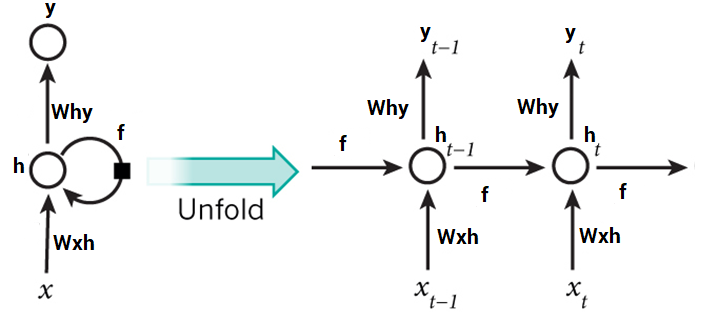
LSTMs are a type of RNN architecture designed to handle the challenges of modeling long-term dependencies in sequential data. They work by maintaining a cell state that acts as a memory, allowing the network to selectively read, write, and forget information over time.
At each timestep, an LSTM cell takes in an input vector x_t (e.g. a word embedding) and the previous hidden state h_t-1, and computes the following (details omitted for brevity):
- Forget gate: Controls what information to discard from the cell state
- Input gate: Controls what new information to add to the cell state
- Output gate: Controls what information from the cell state to output
- New cell state: The updated memory after applying the forget and input gates
- New hidden state: The output of the LSTM cell at this timestep
Mathematically, the updates can be summarized as:
f_t = σ(W_f * [h_t-1, x_t] + b_f)
i_t = σ(W_i * [h_t-1, x_t] + b_i)
o_t = σ(W_o * [h_t-1, x_t] + b_o)
C̃_t = tanh(W_c * [h_t-1, x_t] + b_c)
C_t = f_t ⊙ C_t-1 + i_t ⊙ C̃_t
h_t = o_t ⊙ tanh(C_t)
Where W_f, W_i, W_o, W_c are learned weight matrices, b_f, b_i, b_o, b_c are bias vectors, σ is the sigmoid function, and ⊙ is element-wise multiplication. By learning to control the flow of information through the cell state over time, LSTMs can capture long-term dependencies and contextual information.
This ability is crucial for sentiment analysis, where the overall sentiment of a text often depends on the interaction of words and phrases across the full sequence, not just local patterns.
Designing LSTMs for Sentiment Analysis
When building an LSTM for sentiment classification, there are several key design decisions and hyperparameters to consider, including:
-
Embedding layer: The first layer of the network, which maps input words to dense vector representations. Pre-trained word embeddings like Word2Vec, GloVe, or FastText are often used, but the embeddings can also be learned from scratch on the training data. The choice of embedding dimension is a key hyperparameter.
-
LSTM architecture: The number of LSTM layers and the size of the hidden states in each layer. Deeper, wider networks have more representational power but are also more prone to overfitting. Techniques like dropout and recurrent dropout can help with regularization.
-
Bidirectionality: Whether to use a unidirectional or bidirectional LSTM. Bidirectional LSTMs process the input sequence both forwards and backwards and can often capture more contextual information, but are more computationally expensive.
-
Attention: Adding an attention mechanism on top of the LSTM outputs can help the model focus on the most salient parts of the input for sentiment prediction. There are many different attention variants, such as additive, multiplicative, and self-attention.
-
Output layer: The final layer that maps the LSTM outputs to sentiment labels. For binary sentiment classification (positive/negative), this is typically a single sigmoid output unit. For multi-class sentiment (e.g. very negative, negative, neutral, positive, very positive), a softmax output layer is used.
The optimal hyperparameters will vary depending on the specific dataset and task. Careful experimentation and tuning are often required to get the best performance. Here are some common settings for sentiment analysis:
| Hyperparameter | Typical Settings |
|---|---|
| Embedding dim | 100-300 |
| LSTM hidden dim | 128-512 |
| LSTM layers | 1-3 |
| LSTM dropout | 0.2-0.5 |
| Batch size | 32-128 |
| Learning rate | 0.001-0.01 |
Implementing an LSTM Sentiment Model
Now let‘s walk through an example of implementing an LSTM binary sentiment classifier in Python using the Keras library. We‘ll use the popular IMDB movie review dataset, which consists of 50,000 labeled reviews split evenly into train and test sets.
from tensorflow.keras.datasets import imdb
from tensorflow.keras.preprocessing import sequence
from tensorflow.keras.models import Sequential
from tensorflow.keras.layers import Embedding, LSTM, Dense

# Load the IMDB dataset
max_features = 10000
maxlen = 500
(x_train, y_train), (x_test, y_test) = imdb.load_data(num_words=max_features)

# Pad sequences to a fixed length
x_train = sequence.pad_sequences(x_train, maxlen=maxlen)
x_test = sequence.pad_sequences(x_test, maxlen=maxlen)

# Build the LSTM model
model = Sequential()
model.add(Embedding(max_features, 128))
model.add(LSTM(128, dropout=0.2, recurrent_dropout=0.2))
model.add(Dense(1, activation=‘sigmoid‘))

model.compile(loss=‘binary_crossentropy‘,
              optimizer=‘adam‘,
              metrics=[‘accuracy‘])

# Train the model
batch_size = 32
epochs = 10
model.fit(x_train, y_train,
          batch_size=batch_size,
          epochs=epochs,
          validation_data=(x_test, y_test))
This simple one-layer LSTM achieves around 88% accuracy on the IMDB test set after 10 epochs of training. Not bad for a few lines of code! However, there are many ways to improve on this baseline result.
Strategies for Optimizing LSTM Performance
To get the most out of your LSTM sentiment models, here are some key strategies to consider:
-
Data preprocessing: Proper preprocessing of the input text is crucial for good performance. In addition to tokenization and padding/truncation, steps like lowercasing, removal of punctuation and special characters, and normalization of numbers and URLs can help. For IMDb-style datasets with HTML formatting, be sure to strip out HTML tags.
-
Embedding and vocabulary optimization: Using pre-trained word embeddings like GloVe or FastText can provide a big boost over just learning embeddings from scratch on the training set. However, the pre-trained vocabulary may not be optimal for the specific domain. One strategy is to start with pre-trained embeddings but fine-tune them during training. You can also prune the vocabulary to focus on the most informative words for sentiment.
-
Improved LSTM architectures: There are many LSTM variants beyond the vanilla model we used above, some of which are especially well-suited for sentiment analysis. Bidirectional LSTMs (Bi-LSTMs) run two LSTMs in opposite directions over the input and can capture more context. Tree-LSTMs operate on tree-structured inputs like the sentiment parse trees and can model syntactic composition more directly. Other options include multi-layered LSTMs, residual LSTMs, and LSTMs with attention.
-
Ensembling: Training multiple LSTM models with different random initializations or architectures and ensembling their predictions can provide a significant boost in accuracy. For example, an ensemble of 5 Bi-LSTM models achieved 92.1% accuracy on the SST-5 sentiment dataset, compared to 90.6% for a single model.
-
Transfer learning: Fine-tuning pre-trained language models like BERT or XLNet for sentiment analysis has become the go-to approach for state-of-the-art performance in recent years. However, these models are very large and computationally expensive. An alternative is to use the pre-trained model as a fixed feature extractor and train a smaller LSTM on top of the extracted embeddings. This can still provide a big boost over training from scratch, while being much more efficient.
-
Data augmentation: Sentiment datasets are often relatively small, which can lead to overfitting. Data augmentation techniques like synonym replacement, random insertion/deletion, and back-translation can help increase the effective size of the training set and improve generalization. For example, EDA (Easy Data Augmentation) achieved 88.3% accuracy on the SST-2 dataset using only 500 labeled examples, compared to 81.8% without augmentation.
Applications and Case Studies
LSTM-based sentiment analysis has been successfully applied across a wide range of domains, including:
-
Social media monitoring: Companies use sentiment models to track brand perception, identify customer complaints, and detect emerging crises on platforms like Twitter and Facebook. For example, Samsung used an LSTM model to analyze customer sentiment about the Galaxy Note 7 battery issue and guide their response strategy.
-
Customer feedback analysis: Sentiment models can automatically process large volumes of customer reviews, surveys, and support tickets to identify areas for improvement. IBM‘s Watson Natural Language Understanding service uses LSTM-based sentiment analysis to extract insights from unstructured customer feedback.
-
Financial analysis: Sentiment analysis of news articles, earnings calls, and social media chatter can provide valuable signals for stock trading and risk assessment. Hedge funds and banks use LSTM models to track sentiment about companies and sectors in real-time.
-
Political analysis: Sentiment models can be used to gauge public opinion on policy issues, track voter sentiment during elections, and identify signs of social unrest. Researchers have used LSTM models to analyze sentiment in political tweets and predict election outcomes.
-
Healthcare: Sentiment analysis can be applied to patient reviews, doctor notes, and medical literature to assess treatment effectiveness, identify side effects, and monitor mental health. A Stanford study used an LSTM model to detect signs of depression from Facebook posts with high accuracy.
Ethical Considerations
As with any AI application, it‘s important to consider the potential ethical implications of sentiment analysis. Some key concerns include:
-
Bias: Sentiment models can inherit biases present in their training data, leading to unfair or discriminatory predictions. It‘s important to use diverse, representative datasets and test for bias before deploying models.
-
Privacy: Sentiment analysis often involves processing sensitive personal data, like social media posts or customer feedback. Care must be taken to protect user privacy and obtain appropriate consent.
-
Misuse: Sentiment models could potentially be used for malicious purposes, like suppressing negative opinions or spreading misinformation. Responsible development and deployment practices are essential.
-
Transparency: The complexity of deep learning models like LSTMs can make their predictions difficult to interpret and explain. Work on explainable AI and model transparency is an important direction to build trust and accountability.
Conclusion
LSTMs are a powerful tool for sentiment analysis that can achieve impressive results across a wide range of applications. By understanding the core concepts of how LSTMs work, tuning hyperparameters effectively, and applying training strategies like transfer learning and data augmentation, you can build highly accurate sentiment models to extract insights from text data.
However, it‘s also important to keep in mind the limitations and potential risks of these models, from biased predictions to privacy concerns. As an AI practitioner, it‘s crucial to develop and deploy sentiment analysis models responsibly and ethically.
Here are some key resources to dive deeper into LSTM sentiment analysis:
- Colah‘s blog post on Understanding LSTMs
- Keras LSTM sentiment classification example
- Kaggle sentiment analysis competitions
- Hugging Face Transformers library for state-of-the-art language models
I hope this guide has been a helpful starting point for your journey into LSTM sentiment analysis. Feel free to reach out with any questions or feedback. Happy modeling!