Sora AI: A Deep Dive into OpenAI‘s Groundbreaking Text-to-Video Model
Introduction
In May 2023, OpenAI unveiled Sora AI, a revolutionary text-to-video model capable of generating high-definition, minute-long videos from natural language prompts. Sora represents a major leap forward in generative AI, enabling users to create highly realistic video content with unprecedented ease and flexibility.
The potential applications of Sora are vast, spanning domains such as entertainment, education, advertising, and design. With Sora, users can generate animated stories, game cutscenes, product demos, visual effects, and more, simply by providing a textual description of the desired scene.
Sora builds upon OpenAI‘s prior work on generative models like GPT-3 for text and DALL-E for images, but takes these capabilities to the next level by outputting temporally coherent video. Under the hood, Sora likely combines state-of-the-art techniques from language modeling, computer vision, and video prediction in novel ways.
In this deep dive, we‘ll explore the technical underpinnings of Sora, its strengths and limitations, potential use cases and impacts, and future directions for the model. As an AI/ML expert, I‘ll aim to provide an informed analysis of Sora‘s capabilities and situate it within the broader landscape of generative AI research.
How Sora Works
At a high level, Sora takes a text prompt as input, encodes it into a rich semantic representation, and then generates a corresponding video as output. This is a highly complex task that requires understanding the meaning of the prompt, translating that into visual concepts, and then realizing those concepts in a realistic and temporally consistent way.
To achieve this, Sora likely leverages a number of key techniques:
Diffusion Models
Diffusion models have emerged as a powerful framework for generative modeling of images and video. Models like DDPM and DDIM work by learning to reverse a gradual noising process, starting from pure noise and iteratively denoising it to generate a sample.
Sora likely uses a cascade of video diffusion models, starting with a low-resolution model to capture the coarse structure and then progressively upsampling and refining it with higher-resolution models. This allows for efficient and scalable generation of long-duration, high-definition videos.
Transformers
Transformers have revolutionized natural language processing with models like GPT and BERT, and are now making inroads into computer vision as well. Transformers excel at modeling long-range dependencies and can be scaled up to very large model sizes.
Sora likely uses a transformer architecture to jointly model the text prompt and the generated video frames. The transformer‘s attention mechanisms allow it to reason about the relationships between different elements of the scene and maintain consistency over time.
Spatiotemporal Conditioning
To generate coherent videos, Sora needs to be able to model the spatial and temporal dependencies between frames. One way to achieve this is through spatiotemporal latent conditioning, where the model is provided with a latent code that encodes information about the previous frames.
By conditioning the generation of each new frame on the latent codes of the preceding frames, Sora can ensure that the video maintains consistency in terms of the characters, objects, and scene dynamics over time. This is crucial for generating videos that make sense and don‘t devolve into random noise.
Adversarial Training
Adversarial training has been a key technique in generative modeling since the introduction of GANs. The idea is to train a generator network to produce samples that are indistinguishable from real data, as judged by a discriminator network.
Sora may use adversarial training to improve the realism and fidelity of its generated videos. By training the model to fool a discriminator that tries to distinguish real videos from generated ones, Sora can learn to produce videos that look increasingly realistic.
Training Data and Compute
Training a model like Sora requires an enormous amount of data and compute. While the full details of Sora‘s training setup have not been disclosed, we can make some educated guesses based on prior work and public benchmarks.
In terms of training data, Sora likely leverages large-scale video datasets like:
- Kinetics-700: A dataset of 650,000 video clips covering 700 human action classes, totaling 1,800 hours of video.
- Moments in Time: A dataset of 1 million labeled 3-second video clips covering 339 classes of actions and events.
- HowTo100M: A dataset of 136 million video clips with narrations, covering a wide range of instructional activities.
- AudioSet: A dataset of 2 million 10-second YouTube clips with 527 audio event classes, providing multimodal information.
These datasets provide a diverse range of video content spanning different domains, lengths, and resolutions. By training on such large-scale datasets, Sora can learn rich representations of the visual world and generalize to a wide variety of prompts.
In terms of compute, training Sora likely requires a massive amount of GPU/TPU resources. Based on the scale of models like GPT-3 (175 billion parameters) and PaLM (540 billion parameters), it‘s plausible that Sora‘s model size could be in the range of 100 billion to 1 trillion parameters.
Training such a large model on millions of videos would require hundreds of petaFLOPs of compute, which is only feasible with state-of-the-art hardware and parallelization techniques. OpenAI likely leverages its cluster of NVIDIA A100 GPUs and/or custom accelerators to train Sora.
Evaluation and Results
Evaluating the quality of generated videos is a challenging problem, as it requires assessing not only the visual fidelity of individual frames but also the temporal coherence and semantic consistency of the entire video.
Some common evaluation metrics for video generation models include:
- Fréchet Video Distance (FVD): A metric that compares the distribution of features extracted by a pre-trained video classification network between real and generated videos. Lower FVD scores indicate better quality.
- CLIP scores: A metric that uses a pre-trained image-text matching model (CLIP) to assess the semantic similarity between the generated video and the input prompt. Higher CLIP scores indicate better alignment.
- User studies: Subjective evaluations where human raters are asked to judge the fidelity, consistency, and coherence of generated videos, often in comparison to real videos or those from other models.
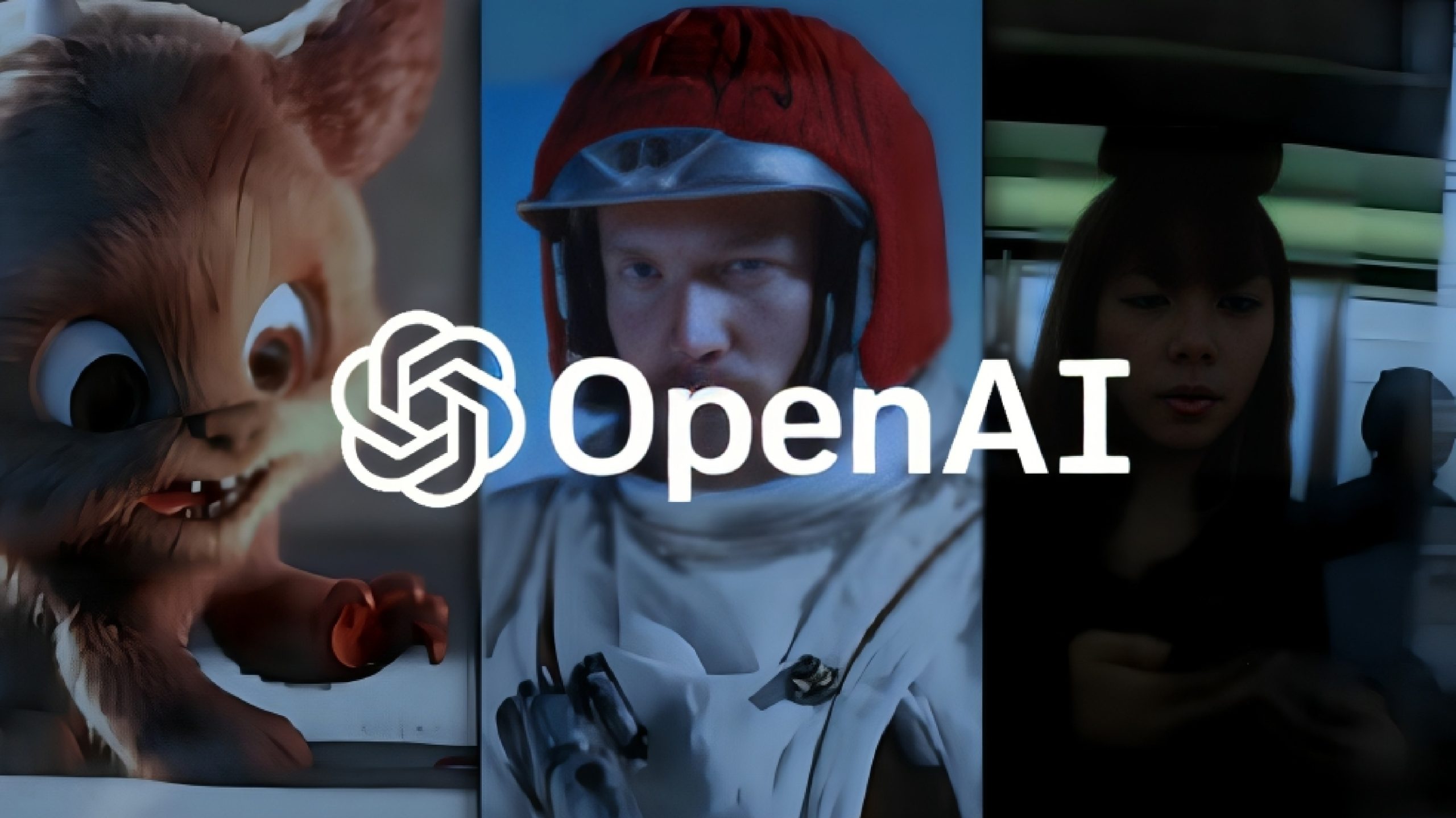
Based on the sample videos shared by OpenAI, Sora achieves impressive results across a range of prompts and styles. The generated videos exhibit high visual fidelity, with realistic textures, lighting, and motion. They also maintain good consistency over time, with characters and objects behaving in coherent ways throughout the scene.
However, Sora is not perfect and still exhibits some artifacts and inconsistencies, particularly for more complex prompts or those involving intricate physical interactions. The model can sometimes struggle with fine-grained details, spatial relationships, and timing of events.
Compared to previous video generation models like Phenaki and CogVideo, Sora achieves state-of-the-art results in terms of both visual quality and semantic alignment with the prompt. However, there is still room for improvement in terms of fully capturing the nuances and complexities of the real world.
Limitations and Future Directions
While Sora represents a major breakthrough in text-to-video generation, there are still some key limitations and open challenges:
- Sora struggles with modeling complex physical dynamics and interactions, such as objects breaking or characters grappling. The generated motion can look simplified or implausible compared to reality.
- Sora can get confused about spatial relationships, like relative positioning and occlusion. The layout of the scene may not always make perfect sense.
- For longer videos with intricate event sequences, Sora can lose track of the exact timing and pacing. The chronology of actions may seem a bit jumbled or misleading.
- Sora is not always able to maintain the correct number of entities (characters, objects) throughout the whole video, with items sometimes popping in or out of existence.
- Generating very long videos (several minutes or more) with perfect consistency is still an unsolved challenge. Sora is currently limited to relatively short clips of around one minute.
To address these limitations, there are a number of promising future directions:
- Incorporating stronger inductive biases and structured representations (e.g. scene graphs, object-centric representations) into the model to better capture the underlying composition and dynamics of the scene.
- Leveraging multimodal prompts (e.g. text + images, text + audio) to provide additional conditioning information and control over the generated video.
- Exploring few-shot learning and unsupervised learning techniques to enable more sample-efficient and flexible video generation, without relying solely on large-scale supervised datasets.
- Developing interactive video editing interfaces that allow users to modify and manipulate the generated video at different levels (e.g. scene composition, character actions, camera angles).
- Scaling up the model size and training data even further to capture more of the nuances and complexities of the real world, while ensuring that this additional capacity translates into improved generalization and consistency.
Ethical Considerations and Societal Impact
As with any powerful generative model, Sora raises important ethical considerations and potential risks that need to be carefully addressed:
- Misinformation and deepfakes: Sora could be used to generate fake or misleading videos that spread disinformation or harass individuals. We need robust methods for detecting and attributing synthetic media.
- Copyright and intellectual property: Sora is trained on a large corpus of web-scraped videos, which may include copyrighted material. There are open questions around data ownership, credit assignment, and fair use in generative AI.
- Bias and fairness: The training data reflects the biases and skews of the real world, which may lead to generated videos that perpetuate harmful stereotypes or underrepresent certain groups. We need ways to audit and debias these models.
- Transparency and accountability: As generative models like Sora become more realistic and influential, it‘s important to have transparency around their capabilities, limitations, and potential impacts. Users should be empowered to make informed decisions about when and how to use these tools.
On the positive side, Sora has the potential to greatly democratize access to video creation and lower the barriers to creative expression. It could enable new forms of storytelling, education, and entertainment that were previously out of reach for most individuals.
However, as with any automation technology, there are also concerns about job displacement and the changing role of human creativity in an age of AI. We need proactive policies and social norms to ensure that the benefits of these tools are distributed equitably and that human creators are still valued and rewarded for their work.
Conclusion
Sora is a groundbreaking achievement in generative AI that pushes the boundaries of what‘s possible with text-to-video synthesis. By combining state-of-the-art techniques in diffusion modeling, transformers, and spatiotemporal conditioning, Sora can generate highly realistic and coherent videos from natural language prompts.
The potential applications of Sora are vast and exciting, from entertainment and education to advertising and design. However, realizing this potential will require careful consideration of the ethical risks and societal impacts, as well as continued research to address the current limitations and failure modes.
As an AI/ML expert, I‘m deeply impressed by the technical achievements of Sora and eager to see how this technology will evolve and mature over time. At the same time, I believe it‘s crucial that we approach these powerful tools with a sense of responsibility and humility, recognizing both their incredible potential and their inherent limitations.
Sora gives us a glimpse into a future where the boundaries between language and vision, imagination and reality, are increasingly blurred. It‘s up to us as a society to navigate this new landscape with wisdom and care, harnessing the power of generative AI for the greater good while mitigating its potential harms.
As we stand on the cusp of this new era of AI-generated content, let us proceed with a spirit of curiosity, creativity, and ethical reflection. The story of Sora is still being written, and it‘s up to all of us to shape its narrative towards a future we can be proud of.