
The No Code Machine Learning Revolution: Democratizing AI Development

Introduction
The field of machine learning is undergoing a seismic shift. Thanks to the rise of powerful new no code ML platforms, a wider range of people than ever before are able to leverage the technology to solve business problems and drive innovation. No longer the exclusive domain of highly-skilled data scientists and ML engineers, machine learning is rapidly becoming a core capability and key source of competitive advantage for organizations of all kinds.
Traditionally, machine learning has had a high technical bar to entry. Building models required extensive coding skills, deep knowledge of statistics and algorithms, and command of complex tools and infrastructure. This meant ML was largely inaccessible to most business professionals and domain experts who had the knowledge and insight to put it to use most effectively.
Enter no code machine learning. Inspired by the low code revolution in software development, no code ML tools are making it possible for users without specialized technical skills to quickly build and deploy models via simple, intuitive graphical interfaces. By abstracting away the underlying complexity and automating key parts of the ML workflow, these platforms are putting the power of AI into the hands of exponentially more people.
The Rapid Rise of No Code ML
The no code ML space has absolutely exploded in recent years, with a slew of startups and major tech players alike rolling out new platforms and tools. Some of the leading solutions include:
-
Google Cloud AutoML: Offers a suite of no code ML tools for building models in areas like vision, language, and structured data.
-
Microsoft Azure ML: Includes a no code "designer" for building models with a drag-and-drop interface.
-
IBM Watson Studio AutoAI: Automates the entire model building lifecycle, from data prep to deployment.
-
DataRobot: End-to-end no code platform for building and deploying models across a wide range of use cases.
-
Akkio: No code tool focused on making computer vision and natural language processing accessible to business users.
-
Obviously.AI: Offers a simple, intuitive interface for building models to do things like predict churn and lifetime value.
The market for these tools is growing incredibly fast. According to Algorithmia‘s 2021 Enterprise ML survey, 62% of companies are now using or evaluating AutoML platforms. And that figure is only going to grow. Emergen Research projects the global AutoML market, which includes no code tools, will reach over $14 billion by 2030, expanding at a blistering CAGR of 43% (see Figure 1).

Figure 1: Projected growth of the AutoML market from 2021 to 2030. Source: Emergen Research.
The Transformative Benefits of No Code ML
The skyrocketing adoption of no code ML is being driven by some truly transformative benefits the tools offer compared to traditional ML development:
Democratizing Machine Learning
First and foremost, no code ML platforms make machine learning dramatically more accessible to business and domain experts who previously couldn‘t leverage the technology directly. Given robust training data, folks like marketers, salespeople, financial analysts, and healthcare professionals can now build models to inform decisions and automate processes without writing a single line of code.
This is an absolute game-changer in terms of empowering more people to solve problems and create value with ML. The people closest to the business challenges can directly translate their insight into predictive models. And those same people can continuously monitor and refine the models as conditions change.
Accelerating Value Creation
No code ML platforms also allow models to be developed and deployed far faster than traditional approaches. Many include features like automated data prep, feature engineering, model selection, and hyperparameter tuning, which dramatically reduces the time and specialized expertise needed to get a model into production.
For example, global company Jabil used DataRobot‘s no code platform to build and deploy over 50 high-value models in its first year using the technology, something that would have taken far longer with traditional data science approaches. Similarly, fast-growing DoorDash used Akkio‘s no code computer vision capabilities to get an ML-powered food scanning system up and running in a matter of days.
By making the full ML lifecycle more efficient and accessible, no code tools can shrink model buildout times from months to weeks, days, or even hours in some cases. This allows companies to be far more agile in capturing the value of AI and reacting to changing market conditions.
Reducing Costs
This acceleration, along with the reduced need for specialized technical talent, can translate into significant cost savings as well. By enabling business users to take on work previously done by expensive data scientists and ML engineers, no code platforms allow companies to scale their AI efforts without proportional increases in headcount.
This operating leverage will only become more impactful as the platforms grow more sophisticated. A 2021 report from Deloitte predicted that companies using AutoML technology, including no code ML, would see a 40% reduction in the cost of developing ML solutions compared to traditional methods over the next two years.
Enhancing Collaboration
No code ML tools also have the potential to greatly enhance collaboration between technical and non-technical teams. Traditionally, ML projects have been solely owned by data science teams, with business stakeholders only involved at the beginning and end of the process. This waterfall dynamic often resulted in models that didn‘t fully meet business needs.
With no code ML, business experts and data scientists can work side-by-side to build solutions, each playing to their strengths. Business users can directly scope problems, provision data, and give feedback, while data scientists can provide guidance, oversight, and customization as needed. Technical and non-technical teams become equal partners in the process, iterating together to create the most impactful models.
Case Studies: No Code ML in Action
These combined benefits have led to an increasing number of organizations capturing incredible value from no code machine learning. Here are a few examples of the technology in action:
-
Snowflake: The cloud data platform company used Dataiku‘s no code tools to rapidly prototype and productionize multiple models to predict customer health and reduce churn. The models are now used by non-technical customer success managers to proactively identify and help at-risk customers.
-
Avon: The cosmetics company leveraged BigML‘s no code platform to build models for predicting sales volumes, forecasting demand, and optimizing pricing and promotions. Business analysts are able to constantly refine the models to adapt to changing consumer behaviors.
-
Decathlon: The world‘s largest sporting goods retailer built computer vision models to analyze in-store shopper behavior using the no code tools from Prevision.io. The models were built by business teams without any data science support and deployed in a matter of weeks.
-
Goldman Sachs: The investment bank created a no code ML platform called Neon that allows business analysts and traders to quickly build, test, and deploy models for things like portfolio optimization and risk assessment. Over 5,000 employees now use the platform to build models.
While these companies are using different no code ML platforms to address different use cases, they all highlight the technology‘s ability to put ML capabilities in the hands of more employees and accelerate time-to-value. And this is likely just the beginning.
The Future of ML Talent in a No Code World
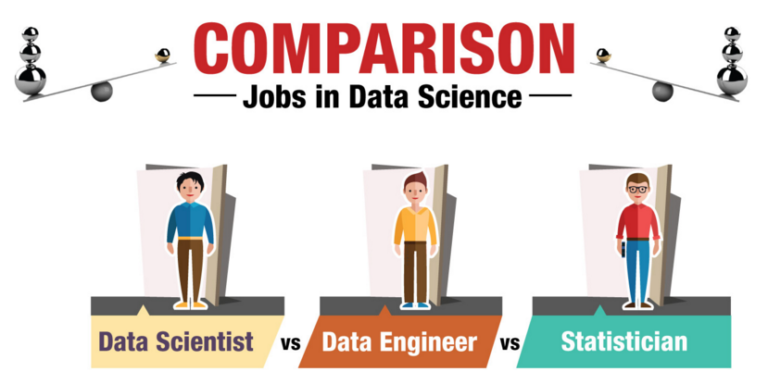
As powerful as no code ML tools are becoming, they are not going to replace the need for expert data scientists and ML engineers any time soon. For the foreseeable future, there are still going to be many complex, high-stakes use cases that require the customization and optimization that only human experts can provide.
But the rapid rise of no code ML will transform and expand the nature of data science and ML engineering roles. Rather than directly building models for every use case, data scientists will increasingly serve as teachers, collaborators, and guides, helping business teams effectively leverage no code tools as part of a "citizen data science" culture.
ML engineers, meanwhile, will need to become experts in evaluating, integrating, and customizing the most powerful no code platforms. In some cases, engineers may even build bespoke no code tools tailored to the specific needs, data, and use cases of their organization.
Succeeding in this new world will require changes to how data science and ML talent is developed. Boot camps, university programs, and on-the-job training will need to put a greater emphasis on skills like:
- Business acumen to effectively collaborate with business users and connect technical concepts to real-world value
- Coaching and consulting abilities to guide and empower business teams to solve their own problems with no code tools
- Expertise in specific no code platforms to help customize them and expand their capabilities
- Holistic understanding of the ML lifecycle and MLOps to help organizations scale no code usage
Universities and companies are already evolving their curricula and upskilling programs to meet these needs, with more "bilinguals" who can translate between technical and business concerns. This new breed of data science and ML talent will be key to fully capturing the value of no code tools.
Building a No Code ML Culture
For companies to maximize the potential of no code ML tools, they can‘t just roll out the technology and hope for the best. They need to intentionally build what might be called a "no code ML culture" across the organization. Some of the key elements include:
-
Executive sponsorship: C-suite leaders, especially the CDO and CIO, need to champion the value of no code ML and empower teams to experiment with the tools to solve business problems. They must make the technology a strategic priority.
-
Enablement at scale: To get value from no code ML, companies need a critical mass of "citizen data scientists." This means making training available to a wide range of business and technical employees, creating a baseline of data and ML literacy across the org.
-
Collaborative teaming: Organizations must rethink their delivery models to enable more fluid, cross-functional collaboration between business experts, data scientists, and ML engineers throughout the model lifecycle. Agility is key.
-
Governance and reuse: As the number of no code use cases scales, companies will need robust governance frameworks to ensure security, fairness, and regulatory compliance. They‘ll also need to facilitate reuse of data, models, and learnings.
-
Value measurement: None of these investments will be sustainable without clear measurement of the concrete business value no code ML is delivering. Teams must relentlessly track the results of their no code initiatives against KPIs.
The most mature enterprises will go even further, using no code ML as a catalyst to reimagine legacy processes and innovate entirely new offerings. They‘ll use the technology to unlock the latent knowledge and creativity of employees in every corner of the company, turning ML from a niche capability to an organization-wide competency for value creation.
Conclusion
In the end, the rise of no code machine learning represents both a great democratizing force and an exciting competitive frontier. By making ML dramatically more accessible, these tools have the potential to spread AI capabilities far and wide, empowering legions of non-technical employees to put the technology to use to solve problems close to them. At the same time, they offer a tantalizing opportunity for organizations to rapidly scale the impact of ML and gain an edge over rivals.
But fully capitalizing on the potential of no code ML will take more than just good technology. It will require a fundamental reshaping of organizational cultures, skills, and ways of working. Companies will need to cultivate citizen data scientists, reimagine the role of ML talent, and hardwire collaboration between business and technical teams. Most of all, they will need bold leadership to chart a course for the no code future.
The no code ML revolution is already well underway. The market is growing explosively and forward-leaning companies are leveraging the tools to drive transformative value today. By putting the right skills, structures, and mindsets in place now, organizations across industries can ride this wave to step change increases in agility, innovation, and competitive advantage. The democratization of machine learning has arrived – it‘s now up to companies to seize the opportunity.

![[‘Natural‘, ‘language‘, ‘processing‘, ‘is‘, ‘a‘, ‘subfield‘, ‘of‘, ‘linguistics‘, ‘,‘, ‘computer‘, ‘science‘, ‘,‘, ‘and‘, ‘artificial‘, ‘intelligence‘, ‘.‘, ‘It‘, ‘deals‘, ‘with‘, ‘the‘, ‘interactions‘, ‘between‘, ‘computers‘, ‘and‘, ‘human‘, ‘language‘, ‘.‘]](https://33rdsquare.com/wp-content/uploads/2024/12/20241210091957-675807bdbe215-768x380.png)


