
What is Pattern Recognition? Applications and Examples
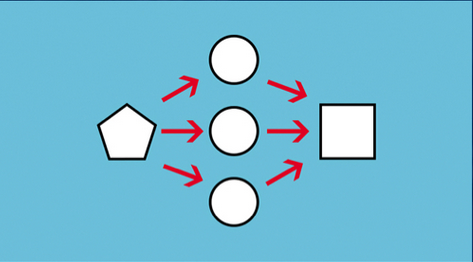
Pattern Recognition: The Key to Human and Machine Learning
The world around us is full of patterns – from the familiar structure of human faces to the predictable ebb and flow of ocean tides. The ability to recognize and make sense of these regularities is a fundamental skill for both biological and artificial intelligence. Pattern recognition, or the identification and interpretation of recurring elements in data, forms the very basis of learning and enables humans and machines to make sense of the complex world we inhabit.
As humans, we are exceptionally adept at recognizing patterns. From a young age, our brains are wired to seek out regularities in the constant stream of sensory information we encounter. A baby quickly learns to recognize its mother‘s face and voice. A child discovers the predictable patterns of language that allow it to communicate. As adults, we draw upon a vast repository of patterns – accumulated over a lifetime of experience – to navigate social interactions, solve problems, and make decisions.
At its core, human pattern recognition involves matching input from our senses to stored memories and knowledge. When we see a dog, for instance, we don‘t just perceive an arbitrary collection of shapes and colors; we recognize the familiar pattern of a four-legged creature with fur, a tail, and a particular set of behaviors. This matching process allows us to quickly categorize and understand what we are experiencing.
Our pattern recognition abilities are honed through repetition and experience. Each time we encounter a given pattern, whether it‘s a sequence of musical notes or the layout of a city block, we reinforce and enrich our mental representation of it. This iterative process of learning allows us to recognize patterns more quickly and accurately over time, often without conscious effort.
Humans are so predisposed to seek out patterns that we often find them even where they don‘t exist – a phenomenon known as apophenia. We see faces in clouds, detect conspiracy in coincidence, and imbue random events with meaning. This tendency underscores just how essential pattern recognition is to the human mind – for better or for worse, we are always trying to impose order on the chaos of existence.
The patterns we recognize take many forms, from concrete visual and auditory regularities to abstract concepts and social norms. Visual patterns allow us to instantly recognize objects, faces and scenes. Auditory patterns underpin our ability to comprehend speech and music. Linguistic patterns – the grammar and cadence of language – enable us to communicate. Logical patterns help us solve problems and reason about the world. Even the consistency of human behavior itself is a type of pattern we rely on to navigate social interactions.
In the realm of artificial intelligence, pattern recognition is the key that allows machines to learn from data and solve complex problems. Machine learning algorithms are designed to automatically discover and exploit patterns in data, much like the human brain does, in order to make predictions or decisions.
The process begins with feature extraction, where relevant attributes or properties are identified and quantified in the input data. For visual data, this might involve detecting edges, shapes and textures. For text, it could mean identifying keywords and grammatical structures. The goal is to distill the raw data down to a meaningful representation that captures the essential patterns.
Next, machine learning models use these extracted features to discover the underlying structure and relationships in the data. This is where the actual "learning" takes place, as the algorithm uncovers patterns and builds a mathematical representation of them. Different types of algorithms approach this in different ways – some look for linear correlations, others identify clusters of similar examples, while neural networks learn layered hierarchies of increasingly abstract patterns.
The power of machine learning lies in its ability to generalize these learned patterns to new, unseen data. Once a model has been trained on a dataset, it can apply the patterns it has discovered to make predictions about novel examples. This allows machines to exhibit a form of intelligence, as they can autonomously extend their knowledge to new situations.
There are three main paradigms of machine learning, each suited to different types of pattern recognition tasks:
-
Supervised learning is used when the data has been labeled with the correct answers. The algorithm learns to map input features to known output categories or values. This is ideal for tasks like spam email detection, where a model can be trained on a dataset of emails that have been manually labeled as spam or not spam.
-
Unsupervised learning is applied to find hidden patterns in unlabeled data. Without any predefined categories, the algorithm seeks to identify inherent structures or groupings within the data. Clustering algorithms, for instance, discover natural partitions that separate similar examples. This is useful for exploratory analysis, customer segmentation, or anomaly detection.
-
Reinforcement learning takes inspiration from behavioral psychology, learning optimal patterns of action through trial and error. By receiving rewards or punishments from its environment, an agent learns to take sequences of actions that maximize its performance. This paradigm has achieved remarkable successes in complex domains like game-playing and robotic control.
In recent years, a subfield of machine learning called deep learning has revolutionized pattern recognition, achieving human-level or even superhuman performance on tasks like visual object recognition and speech transcription. Deep learning uses artificial neural networks – layered computational models loosely inspired by the structure of the brain – to automatically discover hierarchical patterns in raw data.
A deep neural network for image classification, for instance, might learn to detect simple visual features like edges and corners in its first layer, combine these into more complex shapes and textures in the next layer, and gradually build up to abstract concepts like faces or buildings in its final layers. By learning such rich, layered representations, deep learning can identify intricate patterns in data that traditional methods struggle with.
The applications of machine-based pattern recognition are vast and varied, touching nearly every industry and domain of knowledge. In healthcare, pattern recognition algorithms can identify cancerous lesions in medical scans or predict patient outcomes from electronic health records. In finance, they are used to detect fraudulent transactions and make stock market forecasts. E-commerce platforms rely on pattern recognition to recommend products to customers and personalize user experiences.
One of the most active areas of research and development is computer vision, which aims to give machines the ability to interpret and understand visual information. Powered by deep learning, computer vision systems can now detect and classify objects, recognize faces, and read handwritten text with remarkable accuracy. These capabilities are being integrated into everything from smartphones to self-driving cars to factory robots.
Another domain where pattern recognition is indispensable is natural language processing (NLP). NLP algorithms use patterns in text and speech data to enable machines to understand, generate, and translate human language. This includes tasks like sentiment analysis (determining the emotional tone of a piece of writing), named entity recognition (identifying mentions of people, places and organizations), and machine translation (automatically converting text from one language to another). NLP technologies power virtual assistants like Siri and Alexa, as well as countless customer service chatbots.
Despite its immense power and potential, machine-based pattern recognition is not without challenges and limitations. Perhaps the biggest caveat is that the performance of machine learning models is heavily dependent on the quantity and quality of data they are trained on. If a dataset is too small, noisy or biased, the patterns a model learns may not generalize well to real-world situations. Data scientists must be careful to collect representative samples and preprocess data appropriately.
Another challenge is the interpretability of complex models. While deep neural networks excel at pattern recognition, their inner workings are often inscrutable – a characteristic referred to as the "black box" problem. It can be difficult to understand why a model made a particular prediction, which is problematic for high-stakes applications like medical diagnosis or criminal sentencing. Researchers are actively exploring methods to make machine learning more transparent and explainable.
Privacy is also a major concern, as pattern recognition often involves collecting and analyzing large amounts of personal data. There are risks of data breaches, misuse, and unintended inferences that could harm individuals. Regulations like GDPR in Europe and CCPA in California aim to give users more control over their data and hold companies accountable for their data practices.
As artificial intelligence continues to advance, the capabilities of machine-based pattern recognition will only grow. With the proliferation of big data and the increasing sophistication of algorithms, machines will be able to discover ever more subtle and complex patterns. This could lead to breakthroughs in scientific understanding, medical treatments, and technological innovation.
At the same time, the expanding reach of pattern recognition raises important ethical questions. As algorithms are entrusted with more consequential decisions, it is critical to ensure that they are fair, unbiased and transparent. We must grapple with the implications of machines that can read our emotions, predict our behaviors, and influence our choices.
Ultimately, the story of pattern recognition is the story of intelligence itself – the eternal quest to understand and adapt to the world around us. From the first glimmers of cognition in living organisms to the most advanced artificial neural networks, the ability to learn from patterns has been the driving force of intellectual evolution. As we continue to unravel the mysteries of the mind and build ever more intelligent machines, pattern recognition will undoubtedly remain at the forefront, guiding us towards a future of unprecedented insight and discovery. Our capacity to recognize patterns is not just a tool for navigating the world – it is the very essence of what makes us intelligent beings.


