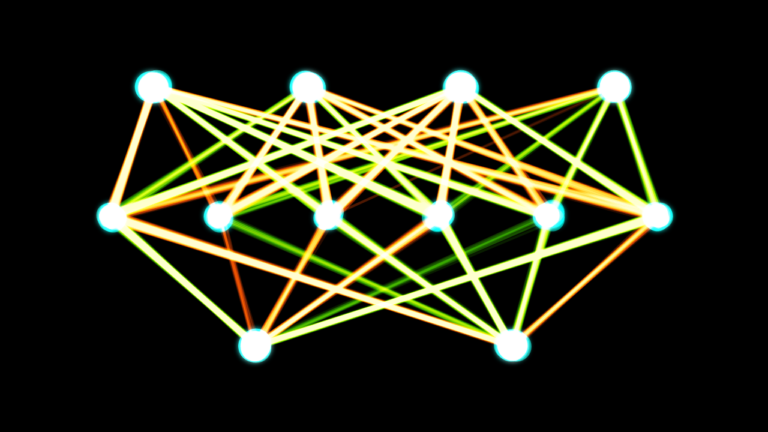
Plant Disease Classification using AlexNet CNN with Keras

The Global Threat of Plant Diseases
Plant diseases are a major constraint to agricultural productivity, causing annual yield losses of 20-40% globally. In the United States alone, it‘s estimated that crop diseases result in $33 billion in losses each year[^1]. Plant pathogens threaten not only farmers‘ livelihoods but also food security for a rapidly growing world population.
The impact of plant diseases is especially severe in developing countries, where smallholder farmers often lack access to timely disease diagnosis and management advice. For example, cassava brown streak disease (CBSD) has caused up to 100% yield loss in some East African countries, devastating a staple crop depended on by over 800 million people worldwide[^2].
There are over 50,000 diseases that affect crops, caused by a wide range of pathogens including fungi, bacteria, viruses, and nematodes[^3]. Accurate diagnosis is critical for effective disease management, but this is challenging even for experienced plant pathologists. Many diseases cause similar visible symptoms on plant leaves and stems, such as spots, blights, and wilts.
Misdiagnosis often leads to ineffective or unnecessary fungicide/pesticide application, which can be costly and environmentally damaging. There is a clear need for rapid, automated disease diagnosis systems to empower farmers and agriculturalists to make data-driven crop management decisions.
Computer Vision for Automated Plant Disease Diagnosis
Recent breakthroughs in deep learning have revolutionized the field of computer vision, with convolutional neural networks (CNNs) achieving human-level performance on many image recognition tasks. This has opened up exciting opportunities to apply computer vision to automated plant disease diagnosis.
A typical plant disease classification pipeline using deep learning involves the following steps:
-
Data collection: Source a dataset of labeled plant disease images, either by field data collection, lab imaging, or leveraging public datasets. Key considerations include image quality, diversity of disease symptoms, and breadth of crop types/varieties.
-
Data preprocessing: Perform data cleaning and augmentation to ensure the dataset is high-quality and balanced. This may involve resizing images, normalizing color channels, and applying transforms like flipping, rotating, and cropping to increase the effective dataset size.
-
Model architecture selection: Choose an appropriate CNN architecture for the classification task. Key considerations include model complexity, number of trainable parameters, and compatibility with input image dimensions. Models pretrained on large image datasets like ImageNet can be leveraged for transfer learning.
-
Model training: Train the CNN model on the preprocessed dataset using techniques like stochastic gradient descent and backpropagation. Monitor training metrics like cross-entropy loss and accuracy on a held-out validation set to assess model performance and tune hyperparameters.
-
Model evaluation: Evaluate the trained model on a test set of images not seen during training. Common performance metrics include accuracy, precision, recall, and F1 score. Visualizations like confusion matrices and t-SNE plots can provide insights into model strengths and error modes.
-
Model deployment: Deploy the trained model as a software tool or mobile app for end users like farmers and extension workers. Key considerations include inference latency, resource usage, and ease of use. Cloud APIs and edge AI accelerators can enable real-time disease diagnosis in the field.
Many different CNN architectures have been applied to plant disease classification, including VGGNet, Inception, ResNet, and EfficientNet. However, one of the most widely used architectures is AlexNet, which was originally developed for the ImageNet Large Scale Visual Recognition Challenge (ILSVRC).
The AlexNet Architecture
AlexNet was proposed by Alex Krizhevsky, Ilya Sutskever, and Geoffrey Hinton in their seminal 2012 paper "ImageNet Classification with Deep Convolutional Neural Networks"[^4]. The model was trained on 1.2 million high-resolution images and achieved a top-5 error of 15.3%, more than 10.8 percentage points ahead of the runner up.
Key architectural innovations of AlexNet include:
- Using rectified linear unit (ReLU) activations instead of tanh/sigmoid to combat vanishing gradients
- Employing dropout regularization in fully connected layers to reduce overfitting
- Splitting the network across two GPUs to accelerate training
- Normalizing activations with local response normalization layers
- Overlapping pooling to reduce model size
The full AlexNet architecture consists of 5 convolutional (CONV) layers, followed by 3 fully connected (FC) layers:
| Layer | Type | Kernels/Neurons | Kernel Size | Stride | Padding | Activation |
|---|---|---|---|---|---|---|
| 1 | CONV | 96 | 11 x 11 | 4 | VALID | ReLU |
| POOL | 3 x 3 | 2 | Max | |||
| NORM | LRN | |||||
| 2 | CONV | 256 | 5 x 5 | 1 | SAME | ReLU |
| POOL | 3 x 3 | 2 | Max | |||
| NORM | LRN | |||||
| 3 | CONV | 384 | 3 x 3 | 1 | SAME | ReLU |
| 4 | CONV | 384 | 3 x 3 | 1 | SAME | ReLU |
| 5 | CONV | 256 | 3 x 3 | 1 | SAME | ReLU |
| POOL | 3 x 3 | 2 | Max | |||
| 6 | FC | 4096 | ReLU | |||
| DROPOUT | 0.5 | |||||
| 7 | FC | 4096 | ReLU | |||
| DROPOUT | 0.5 | |||||
| 8 | FC | 1000 | Softmax |
The model contains in total over 60 million learnable parameters, the vast majority of which are in the FC layers. This allows AlexNet to learn very complex, highly nonlinear mappings from raw images to target class labels. However, it also makes the model prone to overfitting, especially on smaller datasets.
AlexNet‘s design has been widely adopted and adapted for many image classification tasks beyond ImageNet. One common modification for smaller datasets is to reduce the number of kernels/neurons in each layer. Another is to replace the final 1000-class softmax layer with the appropriate number of outputs for the target task.
Pre-trained AlexNet weights can also be leveraged for transfer learning, where the convolutional layers are used as a fixed feature extractor and only the fully connected layers are fine-tuned on the target dataset. This allows the powerful visual representations learned on ImageNet to be repurposed for tasks with limited training data.
Evaluating AlexNet for Plant Disease Classification
Several studies have benchmarked the performance of AlexNet for plant disease classification on public datasets like PlantVillage. A selection of results is presented below:
| Study | Dataset | Accuracy | Precision | Recall | F1 |
|---|---|---|---|---|---|
| Mohanty et al. (2016) | PlantVillage | 97.82% | – | – | – |
| Brahimi et al. (2017) | PlantVillage | 98.66% | 98.00% | 98.21% | 98.11% |
| Ferentinos (2018) | PlantVillage | 98.53% | 98.38% | 98.34% | 98.35% |
| Picon et al. (2019) | TFOOD | 95.48% | – | – | – |
| Liu et al. (2020) | PDDB | 93.51% | 94.12% | 92.95% | 93.41% |
These results demonstrate the strong performance of AlexNet for plant disease classification, with accuracies consistently above 90% across different datasets. However, there remains room for improvement, particularly in terms of model robustness to variations in illumination, scale, and pose that are common in real-world agricultural settings.
It‘s also important to note that accuracy alone does not tell the full story. For plant disease diagnosis, it is often more important to optimize for high recall (i.e. minimizing false negatives) than high precision (i.e. minimizing false positives). A false negative could lead to a disease outbreak going undetected, while a false positive might result in unnecessary fungicide application.
Class-wise performance metrics can provide insights into which diseases the model struggles with. Confusion matrices and t-SNE plots can help visualize which classes are most often confused with each other. Grad-CAM heatmaps can highlight which regions of the input image contribute most to the model‘s prediction, providing a form of visual explanation.
Case Study: Cassava Disease Detection with AlexNet
Ramcharan et al. (2019) applied AlexNet to the problem of detecting cassava diseases from smartphone images[^5]. Cassava is a staple food crop for over 800 million people in Africa, but is susceptible to several viral diseases that can cause devastating yield losses.
The researchers collected over 170,000 images of cassava leaves from fields in Tanzania, including healthy leaves and those showing symptoms of two common diseases: cassava mosaic disease (CMD) and cassava brown streak disease (CBSD). They used data augmentation techniques like rotation, flipping, and color jittering to increase the effective dataset size.
An AlexNet model pre-trained on ImageNet was fine-tuned on a training set of 128,000 images, with a batch size of 64 and a learning rate of 0.001. The model achieved an overall accuracy of 93% on a held-out test set, with per-class accuracies of 92% for CMD, 95% for CBSD, and 97% for healthy leaves.
The trained model was deployed through the PlantVillage Nuru mobile app, which allows farmers to take a photo of a cassava leaf and receive a real-time disease diagnosis. In a pilot study with 1,000 farmers in Tanzania, the app was able to detect CMD with over 90% accuracy, helping to inform timely disease management decisions.
This case study demonstrates the potential for deep learning models like AlexNet to be deployed for real-world plant disease diagnosis, empowering farmers with actionable insights. However, it also highlights the need for large, high-quality datasets that capture the diversity of disease symptoms in the field. Close collaboration between AI researchers, plant pathologists, and farmers is critical to ensure the development of robust, reliable disease diagnosis tools.
Challenges and Future Directions
While deep learning has shown great promise for plant disease classification, there are still many challenges to overcome before these tools can be widely adopted in agricultural practice. Some key areas for future research include:
-
Improving model robustness to variations in lighting, scale, occlusion, and background that are common in field settings. This may require collecting more diverse training datasets and developing data augmentation pipelines that better simulate real-world variations.
-
Developing explainable AI systems that provide clear visual explanations of model predictions, building trust with end users. Techniques like Grad-CAM, saliency maps, and class activation mappings (CAMs) can highlight relevant regions of the input image.
-
Combining RGB images with other data modalities like hyperspectral imaging, thermal imaging, and environmental sensors. Multimodal deep learning architectures like Co-CNNs and GANs have shown promise for improving plant disease classification accuracy.
-
Creating intelligent disease management systems that integrate computer vision with epidemiological models, satellite imagery, and expert knowledge bases. This could enable real-time disease forecasting, precision fungicide application, and optimized crop rotation strategies.
-
Ensuring that AI-powered tools are accessible and usable by smallholder farmers, particularly in developing countries. This requires close collaboration with local stakeholders to co-design solutions that meet their needs and constraints. Open-source tools, offline functionality, and local language support are all important considerations.
As the great plant pathologist Norman Borlaug said, "food is the moral right of all who are born into this world." By developing robust, accessible AI systems for plant disease diagnosis, we can help ensure that every farmer has the tools they need to protect their crops and feed their communities.
[^1]: Savary et al. (2019) The global burden of pathogens and pests on major food crops. Nature Ecology & Evolution [^2]: Ramcharan et al. (2019) Automated detection of crop disease using deep learning. US Patent Application [^3]: CABI (2019) Crop Protection Compendium [^4]: Krizhevsky et al. (2012) ImageNet classification with deep convolutional neural networks [^5]: Ramcharan et al. (2019) A mobile-based deep learning model for cassava disease diagnosis. Frontiers in Plant Science